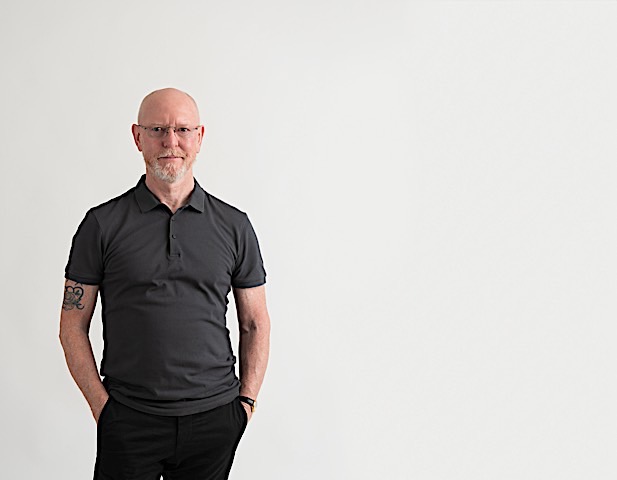


Ben Legg Portfolio Careers After Corporate: From Google COO to The Portfolio Collective
Portfolio careers for experienced professionals offer a strategic alternative to traditional employment in an era of AI disruption and corporate uncertainty. In this episode of the Wisepreneurs Podcast, Nigel Rawlins speaks with Ben Legg, former COO of Google Europe and co-founder of The Portfolio Collective, about why seasoned professionals are leaving corporate roles and how to design a fulfilling independent working life.
Ben shares practical frameworks for building a personal brand, leveraging AI to find clients, and creating community-driven support through his 16,000-member global network. Drawing on a career spanning the British Army, McKinsey, Coca-Cola India, and Google, he explains how to shift from being a cog in the corporate machine to designing the machine itself.
Key themes
Portfolio careers as a strategic response to corporate instability and AI disruption
The Designer vs Hamster shift: moving from executing inside the machine to designing it
Thinking of yourself as a company of one and becoming the CEO of your own career
Building a personal brand and online presence to attract fractional and consulting work
Using AI as a practical tool for personal branding, pipeline building, and client preparation
The Portfolio Collective: a 16,000-member community for portfolio professionals worldwide
Intergenerational collaboration between experienced professionals and younger AI-native workers
Networking as the primary source of work opportunities (50% word of mouth, 30% online, 20% listed)
The Second Curve: starting your portfolio career at least two years before leaving the day job
Cognitive vitality through walking meetings, fitness, and intentional life design
The future of work: designing, imagining, building, fixing, storytelling, and empathising


Ben Legg served as COO of Google Europe, led Coca-Cola's India turnaround, worked at McKinsey, and served in the British Army's Royal Engineers before co-founding The Portfolio Collective, a 16,000-member community for portfolio professionals.
Ben explains why experienced professionals are leaving corporate careers for portfolio work, covering the practical mechanics of building advisory practices, keynote speaking, and consulting across multiple clients. He introduces the Designer vs Hamster framework for working on your career rather than inside it, and shares how fractional work actually finds people: 20% through listings, 30% online presence, and 50% through networking. The conversation includes a specific example of using Gemini to audit his personal brand, the Catapult course for launching a portfolio career, and why thinking of yourself as a company of one with strategy, brand, products, and continuous improvement changes how you approach independent work. Ben also discusses cognitive vitality practices including walking meetings and intentional day design.
Wisepreneurs explores how independent professionals turn accumulated expertise into sustainable practice.
Mentions and references
Books
Marketing for CEOs: Death or Glory in the Digital Age by Ben Legg
People mentioned
- Charles Handy — Second Curve concept and Shamrock Organisatio (referenced by Nigel)
- Richard Susskind — thinking about AI and tasks (referenced by Nigel)
- Filip Drimalka — referenced by Nigel from a previous podcast episode on AI; author of The Future of No Work
- Paul Jarvis — referenced by Nigel (Company of One).
- Fiona Chorlton-Voong — co-founder of The Portfolio Collective
How to Connect with Ben Legg
- The Portfolio Collective — community of 16,000+ portfolio professionals (portfolio-collective.com)
- Ben Legg on LinkedIn https://www.linkedin.com/in/benlegg/
Connect with Nigel Rawlins
website https://wisepreneurs.com.au/
Linkedin https://www.linkedin.com/in/nigelrawlins/
Twitter https://twitter.com/wisepreneurs
Downloads
- Embodied Intelligence Self-Assessment
- Professional Reputation Audit
https://wisepreneurs.com.au/free-assessments/
Please support the podcast
https://www.buzzsprout.com/2311675/supporters/new
Stay one step ahead with The Wisepreneurs Insider newsletter
As a subscriber, you'll get:
- Sneak peeks at upcoming must-listen podcast episodes and guests
- Bonus wisdom straight from recent guest experts
- Marketing tips to attract your ideal clients
- Productivity hacks to streamline your independent business
- And more exclusive insights are delivered right to your inbox!
- Don't miss out on these invaluable resources
- Subscribe now and gain the edge you need to survive and thrive as a wisepreneur
Ben Legg
Nigel Rawlins: Ben, welcome to the Wisepreneurs Podcast. Can you tell us something about yourself and where you are?
Ben Legg: Thanks Nigel, yeah, good to be here. So I am based in London. A little bit about me, so, you can think of my background in decades 'cause I've got a few, and I seem to get bored about every 10 years and change industries as well. So, the first decade of my working life, I was in the British Army.
So, growing up as a kid I wanted to do two things, be an engineer and join the army. And then I discovered there was this career track where you get sponsored through university on full pay, which was kind of nice. So basically went straight from school to Sandhurst for officer training and then picked up a civil engineering degree along the way and spent 10 years in the Royal Engineers traveling around the world building things and blowing things up.
That was decade one. Decade two, was kind of big business. So I went from the Army to McKinsey as a strategy consultant, officially based in London, in reality, all over the world. And then went from there to Coca-Cola, did various sales and marketing jobs in Greece, then Poland, then India.
Ended up running Coca-Cola India in a big turnaround. So decade three was kind of big tech, ad tech. So I was headhunted by Google, went back to London. Spent a few years there ending up as the COO of Europe. And then I did a bunch of tech CEO jobs after that, mostly in the US. so that was decade three, decade four, which isn't over, started in 2019 when I just thought I don't wanna work for other people anymore.
I launched what I now know is called a portfolio career. Back then, I just did a bunch of stuff and my portfolio career has three parts. It always has done, although they're always evolving. Part one is advisory, so a mixture of board jobs, mentoring, consulting, et cetera. Part two is quite geeky, I do a lot of work with Wall Street investors, helping them understand what's going on in Silicon Valley.
So almost like the translator that explains how tech turns into money as it were. And then part three is just keynote speaking at various conferences. So I launched that in 2019, was kind of winging it every day 'cause you do. And then in early lockdown, I had a whole load of friends ask me for career advice, and
in essence, it was along the lines of, Ben, I've quit, or I've been laid off, or I've been reflecting on life. I'm done with corporate careers. You know, your career is kind of fun. How do I do that? And, pretty quickly in various conversations realized what I had was called a portfolio career. Started helping my friends one to one have portfolio careers.
But basically there was too much demand and I couldn't do it all one-to-one. So launched a workshop called the Portfolio Crew Workshop that got bigger and bigger. And then a few weeks into that, launched the Portfolio Collective with with my co-founder Fiona, and we've been building ever since.
So we now have a, a community of 16,000 portfolio professionals around the world and we help each other succeed. So it's a mixture of networking, training, learning, sharing best practices. So whizzing forward to now, there are two parts to my, to my life, my working life. I still have my portfolio crew.
It's about 20 hours a week, and I build the portfolio collective, that's the rest of the week. I live in London with a lot of time in New York, my wife's from New York. I used to live there. I've got five kids. The oldest is 31, the youngest is five. So, basically two batches with a big gap in in between.
Nigel Rawlins: Oh, that's lovely, my youngest is, uh, 33, I think, or 34. I, I forget. The oldest is 41. So yeah, that, hang on tight. They go. They grow quick.
Ben Legg: Yeah.
Nigel Rawlins: So you came to a point, and, and I'm seeing this a lot more, uh, because I have been talking to business coaches for consultants and things like that.
Same thing, people come to a point in corporate career, they've had enough, what, what is it about corporate that they say, I can't do this anymore?
Ben Legg: I think there's an element of just saying, what am I actually doing at work? I've heard from all sorts of different angles, but one is often working for a company where you've forgotten the mission or don't care about the mission or whatever. It's like the work is just making my shareholders richer, but I don't really feel like I'm making the world a better place.
There's a lot of feeling about time wasting. Pointless commutes because you have to be in the office to do something you could have done from home. Or, meetings about meetings or you know, projects that never go anywhere because of it, you know, organizational inertia. So there's an element of, I just wanna do something more meaningful with my life.
I think there's also an element of, during lockdown, a lot of people saw a different way of working where you blend work and life more seamlessly and said, yeah, I kind of want some of that. And that comes with a mixture of working from home, working remotely, you know, picking the hours you work, et cetera.
And I think, you know, a lot of you obviously during lockdown also thought, right, I'm working from home, I can start up a side hustle and at some stage the side hustle sometimes becomes more interesting than the day job. So I think there's a whole load of things, but it's mainly that a large part of corporate careers seems kind of fruitless.
Nigel Rawlins: That's the worry, isn't it? You, you get a job and, but then again, how long do jobs last anymore?
Ben Legg: Exactly, there's also insecurity that comes with it too.
Nigel Rawlins: But I think that's maybe not so much Australia. 'cause I think we're a big public service country. So I mean some people get into the public service and that's their whole lives. I think we we're very different here in Australia, that that's why when I look overseas and see the Americans, people get laid off quick. And I'm assuming that's happening in Europe. Maybe there is more uncertainty there. Um, do, do you think it's just as you get older, you just get bored with this stuff?
Ben Legg: Boredom is an interesting one, it's not a word that comes up proactively. I think the insecurity point is absolutely there. a lot of people in big corporate jobs are thinking, where's the ax going to fall next? And am I ready for what's next? So should I jump before I'm pushed?
And if you think about it, even in some of the world's most successful companies, you know, the big tech companies, Google Meta, Amazon. They're having layoffs because, you know, with AI they can do more with less. And so it's like if the world's biggest, most successful, richest companies are doing layoffs, nowhere's safe, and even government jobs that people used to think are safe, most governments are close to bankruptcy.
They will have to lay people off or countries will go bust. And so like, there's nothing safe anymore. And it also links with the pace of change in the world. Geopolitics is in flux, global supply chains are in flux. AI is, is turning a lot of things on its head or certainly accelerating the pace of change.
And so realistically, I think a lot of people are thinking there is no such thing as safety, with the protection of a big organization, I need to build safety in myself, you know? And that also means build your personal brand, develop your skills at your pace, work out how to have a side hustle, even if it's only a parachute, just in case you get laid off.
But start thinking through how do I future proof myself, my family, and my income, et
cetera.
Nigel Rawlins: I love reading Charles Handy and he talked about the second curve. He said, you gotta move before you get to the peak. Otherwise,
you know, energy's gone, money's gone, and you're stuffed. So, you talk about, um, the hamster wheel and shifting to designing your life. Can you talk a little bit about that?
Ben Legg: So if you think about work really since the industrial revolution, most work for most people has been doing stuff, you're, you're a cog in a wheel basically. So you know there, there's a factory, there's an office, there's a business process, and you are in the process turning A into B by using muscle and brain and whatever it might be.
Now, simplistically, the way I look at the future of the world is between AI and robots, most of that stuff within the machine is automatable. And even if it takes 10 years, you do you really wanna say, I'll wait 10 years, 'cause what it means is there'll be less and less jobs and opportunities in the, in the roles where you are just a cog in a wheel, because company by company will say, I think I need less head headcount there each year.
Uh, a bit more AI a bit less humans. So when you really think about what is the future of work. It is things like designing new stuff, imagining new stuff, building new stuff, fixing old stuff, reconfiguring things, storytelling, empathizing. None of that's really being a cog in a wheel. Most of it is designing the wheel, you know, building a new wheel, or, or whatever it might be.
So you're working on the machine, not in the machine. Now I realize, you know, some jobs might just last, but there won't be many, of, of the ones that are in the hamster wheel. So in my mind, as much as people can, they need to say, you know, I just get outta the wheel and design a new wheel or a better wheel.
So as a very simple example, being a copywriter is quite risky right now because AI can write a lot of copy. But companies still need content strategies. So rather than be the writer, you are the content strategist, you're saying, okay, you want loads of free traffic from Google and brand authority for this subject.
I'll help you think through what you write where. You know, where you post, what you do on social media. There's so much to think about, that's relatively safe. Writing the copy is at risk. And again, it's not like you don't need human interaction to write a copy. You do, you know, the brief and the quality control, but there's less work there.
So better to redefine yourself before you find yourself in
trouble. As a civil engineer, I appreciate that.
Nigel Rawlins: Yeah, Gemini helps me do that research, deep research, and then I go through it and then I talk with them. So what what AI's doing is, is, is changing everything. I was listening to Richard Susskind the other day on a podcast and he was talking about tasks. And in his book, he wrote a book about how to think about AI and said, really, you need to start thinking about getting rid of some of these jobs or tasks or things.
So that's a bit scary. What sort of mindset do you have to have to realize this and make that shift? 'Cause you are a comfortable, well off executive, and you're working hard and then you've gotta do this shift because you know something might be coming. What, what's involved in that?
Ben Legg: There's a few, but I think to me the biggest one is to stop thinking of yourself as an employee. Start thinking of self as, as a company or as an entrepreneur. And then you need to say, okay, if I'm a company, I need a strategy. I need a brand. I need a distinctive products or services that I, you know, value that I add to the world.
I need a continuous improvement plan. I need an economic plan. You know, how I'm gonna generate revenue, what are my costs going to be? I need to sort out my finances, my taxes. So whichever way you do it, if you start thinking of yourself as a company and basically thinking like an entrepreneur, even if you don't want employees,
you'll start saying, okay, yeah, my brand's kind of rubbish. I need to focus on external networking, or, you know, a lot of what I do, I can't explain to the outside world. I need to learn to explain it, or how do I know if my market values any good? I'll try and get a consulting gig on the side and see if it works.
How do I expand my network beyond my current peers at my current company? I'm gonna start networking, but whatever it is, you just start becoming more like a one person company and your current employer, you know, doesn't implode or fire you, you've still made yourself more useful and more employable.
There's nothing wrong with staying in a company with a great personal brand, a great network, rapidly developing skills, et cetera, but not doing that is highly dangerous. It's like flying in a really dodgy plane with no parachutes, you know, at the very least, get the parachute ready.
Nigel Rawlins: And look, I think for some people that's gonna be really, really hard. I, I live in a little country town out of Melbourne, which is in Victoria, Australia. I really don't go anywhere. Most on my networking is, well, believe it or not, podcast guests
who I talk to and, and, the articles I write on LinkedIn.
And if I'm lucky enough, the author of the book I read and was writing about will come back in as well, which is really good and maybe become a guest. But, um, that doesn't lead to more work. 'cause most of my clients I've had 20 years and I, I really don't want any more.
Ben Legg: Mm-hmm.
Nigel Rawlins: I do want different types of clients, which I'm looking at.
So I only want one or two. But coming back to that person who's gotta see themselves, that company of one, I think it was a chap called Jarvis, wrote that book, uh, a company of one. Uh, I've been thinking again, Charles Handy talked about the Shamrock organization. That was in 1986 or 1989,
Ben Legg: Yep.
Nigel Rawlins: But with AI and a network, I think you can run a one person shamrock.
Ben Legg: Oh yeah. Big time.
Nigel Rawlins: I've been looking at that and, and exploring what that means. I call it the Neo Shamrock. So if you are gonna become a CEO of yourself, what does that mean?
Ben Legg: Well, so it does come back to if you think about what does a CEO spend their time doing? It's making sure that everything's working symbiotically. If you think about in a company the strategy set by the company, the brand's built by the marketing team, finance pays people and bills people.
I.T. decides what software to use. The product team or engineering team decide what product you're selling, but really again, it comes back to you're a bit of a cog in a wheel when you are a CEO of a company of one. All of those are your decisions.
And it is also, it's work and life. It's like, okay, where am I gonna base myself? You know, what, who am I? What am I selling? Who am I selling it to? How am I going to build a pipeline? How am I going to pitch, price, deliver, you know, how will I do my finances? What bank account will I use?
What software will I use? How will I leverage AI? Yeah, how will I ensure I have continuous improvement? All of that's on you. You know, it's also quite a nice way to live. And if you get it right, it's rewarding, you feel much safer because you understand your value. And because you can, for example, you can learn at your own speed in a company.
You learn at the speed the company wants you to learn, and you learn the skills they want you to learn. When you're independent, you can learn whatever you want at any pace you want. It's, it is quite
liberating.So I think that's really it is saying how does it all stitch together and making all those decisions
yourself.
Nigel Rawlins: Isn't that a bit hard though for some people? 'Cause working in a company and it's all done for you. I mean, I've heard of people coming out and they don't even know how to set up their word documents or anything like that. Now if you look at my desk I've got wires everywhere. I would love a person to come in and sort out all the wires and computers and screens and just make sure they all work. So, I have been talking to people who are coaches and, and you've got a, an organization, does your organization help them sort out all this stuff?
Ben Legg: Yeah, very much so. So we have a course called Catapault, which is like the eight steps of launching a portfolio career. And it does go through roughly those questions of who am I? What am I selling, who am I selling to, what's my elevator pitch? And real pragmatic stuff like what do I do on LinkedIn? How do I build my web presence?
How do I build my pipeline? How do I pitch price, et cetera. It's like an eight week course, a few hours a week, all remote. So it's kind of nice. Or you can even just do it self directed and things. So there's that. But obviously that's only getting up and running, which is great. You know, you, you're right.
The most daunting time is when you step outta corporate, uh, I would actually go back to something you said earlier, which is, you know, I think you mentioned Charles Handy earlier, it's like, I think the best time to start a portfolio career is at least two years before you ditch the day job if you can,
That doesn't mean kick it out. It means get started. But you know, start working on your personal brand. Start working on your, your network. Start winning the odd thing on the side and at some stage then it gets kind of easy to ditch the day job because you've got, you know, a bit of extra income, everything in place.
And with ditching the day job, you have more time you can jump in. So yeah, it is absolutely daunting. I think imposter syndrome is possibly the, biggest problem of, you know, people early in their portfolio career. And obviously there, there you can look at that and say, that's bad or it's good. I think a little bit of imposter syndrome can be quite healthy because it kind of says you could do more, you could do better.
Well, that's not a bad thing. I can learn more about AI. I can build a better personal brand, I can know, be more active networking, whatever, but you can't be paralyzed from it. I think too many people, just because they've never tested their market value, they've always just been a cog in a wheel. Kind of think, well, no one knows who I am, you know, no one knows my value yet, just 'cause you didn't work in sales doesn't mean you can't sell. You know, quite frankly, if you have some domain knowledge, which might be functional industry or whatever, if you are intelligent, hardworking, organized, reliable, you can add value, you know, everyone can. And then it's really what's my configuration going to be?
Nigel Rawlins: That was the thing I was thinking is having enough domain knowledge. One of the concerns I'm seeing out there at the moment is young graduates can't get work. Uh, so they're not gonna clock up this experience. So at what point is somebody with a decent amount of domain knowledge, now you've had several different career paths, um, so you would have quite a depth of knowledge from a number of domains.
But somebody who stayed in the one job and got to the age of 40, have they got sufficient domain knowledge, do you think? Or what do they need?
Ben Legg: Yeah, so it's a good question and the answer, if they don't, they need to, you know, put their foot in the gas and learn it. Um, so hopefully if you've got any experience, I, I, we'll come back to the early graduates because I think that's a, a, a different problem. But anyone who's got, you know, 10 plus years of work experience has certainly got knowledge of how to build things, solve problems, you know, run projects, whatever.
There's some kind of domain knowledge there. Now they may not know what the market value is 'cause they only know how one company does it. But you can quite quickly work out well, how do other companies do it? Using a mixture of networking and AI you can find out, you'll quite quickly learn when you start pitching.
Oh, do I look like a genius or an idiot? And if, if it's genius, great. Sell that stuff. If if you, if people don't wanna buy it, you need to think through why not, you know, is my approach or my knowledge outta date. But the good news, especially with AI is you can get your knowledge up to date, you know, in seconds.
So I totally appreciate everyone comes from a different place. But getting yourself up to speed is really easy these days, and I'd argue that most portfolio professionals should find it very easy to be ahead of most company employees because of the fact that company employees are still the cog in the wheel, still thinking and learning at the speed their company tells 'em, which is slower than the market.
So as an independent professional, you can learn about any subject anytime as fast as you like.
Nigel Rawlins: And we we will come to AI, but let's go back to the, the poor old graduates who've just spent a lot of money and in a lot of debt and suddenly finding that future's not there. I mean, how's that going to affect, or, benefit the older consultants or independent professionals, because they're there.
Ben Legg: I would agree with that. And actually there's some data that I, I found the other day that sort sort of backs this up, and it was from the US but it said for lower level freelancers doing more, let's say inexperienced work, the market's been flatlining for the last five years. For higher level work the freelancers that earn over a hundred thousand a year, it's doubled in the last five years. Definitely there's more and more demand for people with meaningful skills, in, in a fractional way. So yes, it's hard if I, I've got a lot of kids, but luckily three are in their twenties and got into the job market before AI kicked in.
And two and five and six, I'll worry about them in the future. But if I'm giving career advice to people in their early twenties, typically what I'll say is like you, you're not gonna build, let's say, domain knowledge, like knowledge about an industry very easily. Or a function, but what you can learn is how to help other people, whether it's companies or individuals, do things different. So for example, I've seen a, a lot of success is young people who actually just become better at AI than older people. And then for example, they will partner with portfolio professionals. I can help you automate your work. It actually becomes a two-way mentoring is the, the older person's probably teaching 'em about how industries work and how to network and that kind of thing.
And the younger person saying, do you realize you could do that work in, in 25% of the time that you're taking and learning together. So I think this kind of teaming up of young, but scared of nothing and good with tech versus older, not necessarily scared of tech, but not necessarily embracing it at the same speed.
That can be a really good way of working. I think the, the whole communication, how people communicate, whether it's social media or whatever. Most young people are much better at that than old people. Um, so that's kind of areas for help. So I see a lot of collaboration across generations as a really healthy win.
One of the things we do in the portfolio search, we started with mainly senior successful people in the community, but we're now rapidly expanding with people in the twenties because we kind of said that makes it a richer community. If you think about it, you don't want a community that's all rainmakers that can win the work, but maybe are too expensive to do all the work.
And so if we can get a mixture of senior, junior, industry experts, functional experts, you can kind of collectively solve any problem. But what it does mean for those young people is they need to get out there and network too. And don't just network with their buddies from university, network with people who are older and different and plugged in and work out ways to add value.
Yeah, we've done a lot of research into how does fractional work find humans, as it were, you know, how does the matchmaking happen? And we read a lot of research too. There's some great stuff from Forbes and others, and basically it nearly always comes back to the same three buckets, with the same three ratios.
Only 20% of fractional work ever gets listed. You know, job board recruiter, headhunter or whatever. And there's a few reasons for that, but the big one in my mind is the problem owner, the client doesn't understand the problem well enough to write a job description. So when they have a problem, they just wanna talk to someone, as opposed to write a job description about a subject they don't even understand.
By the way, there's also a hundred to two hundred applicants for every post. So, you know, you can spin your wheels forever, get ghosted by AI, It could be a very miserable life. So in my mind, what I say to most portfolio professionals is, if you really wanna be successful, try to get to a point where you never need to apply for anything.
And that's a fun goal to do 'cause it makes you say, well, okay, how do the other 80% opportunities happen? 30% literally find you online. So this is, it starts with LinkedIn, but it's not just LinkedIn, it's your online presence. You need to really clearly define who are my target clients, and then say where do they look for people like me?
And it's probably gonna be a combination. It'll be LinkedIn, it'll be Google, Gemini Chat, GPT, maybe there are some specialist job boards for certain types of roles. And you basically say, I'm gonna have a really clear, compelling, you know, profile in all those places and be reasonably active, et cetera.
Now that takes time, but you know, for example, I've got about 25, 30 profiles. So for example, when I do keynote speaking, it's normally booked through a speaker bureau. I found about 15. I didn't know which ones have given me work. So I built 15 profiles. Only four have given me work, but I didn't know which ones,
And, and you know, by the way, once you've built one good profile, it's, it's not quite copy paste, but it's not far off, you know, for other places. So that's 30%. And then 50% of opportunities come from networking, word of mouth referrals. And that's where you just need to get out and, and, you know, build your network.
And I realize a lot of people, whether it's young people coming outta university or maybe people coming out of a corporate career where they didn't network. The, the, the word networking fills 'em with terror. And I, and I get it. And because they think about walking into a room full of strangers drinking terrible wine, forgetting everyone's names and thinking I could have been home with the kids or whatever.
The essence of networking is one-to-one small group, having a chat, having a brainstorm, adding a little bit of value, you know, and good questions like, what are your goals for 2026? How are you gonna achieve them? Can I help? You know, what keeps you awake at night, et cetera.
And then after you've had that chat, send a friendly email or WhatsApp message with a useful link or an intro or whatever. Now, 90% of those meetings won't go anywhere. You've just left a good impression and had a nice hour, but 10% will, and that's where they say, have you got more time? You say, sure, let's scope out a project.
Oh, and by the way, there's a price tag with that project. You've just won some work. All you're doing is being helpful. So I think these are the skills that everyone needs to learn, whether they're coming fresh outta university or out of a big corporate, is how would you just build your personal brand and build your network in a way where opportunities just start coming to you?
Nigel Rawlins: And that, that's where I keep thinking that most of us do need some sort of coach to help us do that, just to keep us on board, 'cause one of the biggest issues, um, now I've run a marketing services company now for 25, probably 30 years. I was a primary school teacher and I just jumped out many years ago with no idea.
But luckily I, I came across a former Hewlett Packard marketing manager, who was quite gifted, who quit and ran business simulations. So I would work with him, he would do the consulting, I would get the backend stuff done. But for the last 20 years, I've been doing websites and I've kept every one of those clients, looking after their websites and doing their writing.
But see, I think anyone can do that now because of AI I mean, they can't quite do what I do, but, but most people aren't lucky like I was.
I seriously had no idea what I was doing or 'cause I thought I could, this is the problem with some people in their heads thinking, oh, I can do that, but they can't.
Ben Legg: Yep.
Yep. Or the opposite, I think I can't do it when they can, but yes, I agree. Yes.
Self knowledge is hard.
Nigel Rawlins: So, yeah, and, and that's why I think your organization is probably a good place so, do they find mentors inside your organization or do they pay for it?
Ben Legg: So it basically to join our community is literally five pounds a month. So it's, it is simple as it's a
price of a fancy coffee. On the grounds. Yeah. if you want a successful portfolio career, you need a pretty good coffee budget because so many good things start with a coffee, frankly. So the way we look at it, we want to be as successful as we can to everyone, including people fresh outta university or just laid off and worried about money.
And if you have one interesting conversation a month that's worth five pounds, so typically when people find their mentors, their accountability buddies, et cetera, it's just another member. You're both paying your five quid and then you hold each other accountable. We do have events and other stuff where people can use to check in, problem solve and things like that, but the main thing is,
we we're pretty good, I think at stimulating, you know, people, members, meeting other members and then at some stage you find, you know, whether it's one or four or five other members saying, let's collaborate, let's hold each other accountable. So it's really just a recognition that portfolio careers are hard and lonely and we are trying to make them less hard and less lonely.
So, you know, less hard, meaning, you know, we've got lots of content and courses and things and, and, and we're always sharing tips and tricks 'cause let's face it, it keeps changing, you know? And then less lonely as in you got a bunch of people to say, right, let's all work this out together.
Nigel Rawlins: Well, that's the main thing, like you're talking about the young person who knows their way around AI and automation, working with maybe an older person who's, who's clocked up their careers, but also networking in a group like that, you know, you can form a team that seeks work together and work together on
bigger
contracts
Ben Legg: Oh, big time. Yeah.
Yeah, it, it's almost like a new form of village. It's kind of virtual by design, but if you think about in a village, you need, you know, the the the owners, the doers, the leaders, the geeks, geeks the whatever. and and we're just trying to create that in a way saying, look, collectively we can solve any problem.
Now let's work out, you know, in a sort of organic way. How do we do it?
Nigel Rawlins: All right, let's move on to AI because honestly, the last two years and even in the last two weeks or so, things are happening very fast. I notice young people, whenever they're on a computer or on their phones, they click buttons. And I've, I've been using Claude and I hadn't noticed the two buttons up the top cowork, and I think it was, uh, code. Filip Drimalka wrote a book, The Future of No Work, and believe it or not, I saw him responding. 'cause in the notifications on LinkedIn, I went in, now it was all in Czech, but you can click the translate. Now I talk to quite a few Czech people, I think they're very interesting, uh, on the podcast. But this person, um, because they're Czech, um, they had a, a book in English. After a long day, the Czech people don't wanna read English because it's too hard mentally. So he was translating using AI and Filip said, oh, why didn't you just put it into code and go and have some lunch?
It would've been done. And I thought, what?
And that's when I started asking code to do stuff. And it automated stuff, as I said, I mean, we talked earlier, um, a process that took me two days, um, manually down to four to six hours with a bit of AI down to to 90 minutes.
Ben Legg: Yes. Yeah.
Yeah.
Nigel Rawlins: So AI, that sort of stuff. How did, how should we be using it and what do you think the effects are gonna be?
Ben Legg: Yeah. I, it is such a big question. Uh, I, I, if, if we talk about how should we be using it as portfolio professionals, let's say. I think there's a few things. Number one, and it's the easiest place to start is use AI to make yourself your, your personal life more productive, which then frees up a lot of, you know, drudgery. So you know, whether that's using AI to do your accounts or whatever, but there's a whole load of stuff that you can use AI for that just kind of frees up time. And by the way, when I use AI, sometimes it's like AI built into software, sometimes it's an AI tool like Gemini or Chat GPT or whatever it might be.
So it is hard to say sometimes, which ones which, but basically there are tools to, you know, tidy up your calendar, scan your emails, organize your notes, et cetera. So I think there's a whole load of stuff we can do. And then there's all the, probably the, the, the bigger question that you're asking is, well, how do you use AI to either find clients or deliver work or whatever it might be? And again, there's a lot there. So if I start with the two biggest things of build your personal brand or find clients. On building your personal brand, you can do loads with AI. So I, I'll give you a simple example for me. So I do a bit of keynote speaking and I just thought, okay, when someone's organizing a conference, how do they look for a keynote speaker?
So I literally went to Gemini and said, hey Gemini, imagine you are a conference organizer, organizing a conference in London with 200 people, um, on AI and the future of work. How would you find a speaker and give me 10 names? So it literally does it and it's, it says, right? Well, typically as a comfortable guy, I would use a speaker bureau.
I've researched all the speaker bureaus in the uk. There are five that are come top and there's a bunch of others, you know, further down the food chain. And so I would look at those. I've scanned those and scanned LinkedIn, blah, blah, blah, blah, blah. And you know, these are the names that come up.
And I wasn't on the list and I wanted to be on the list. And so I also said gimme the LinkedIn profiles each them, so I clicked on them all, connected with everyone. I thought they're all gonna be interesting people I would love to chat with. Realized four weren't in London. They went to London Business School or something else.
So yeah, AI's always a bit lazy, so you gotta, you know, whip it into shape. So like, come on, check where they live before you give me links. It gave me four fresh names. I still wasn't on the list. Kind of getting really annoying. I thought I want to be on that list. Um, so basically what I noticed is there are pretty much all academics who'd written books on AI and or the future of work, and I do know that with conferences they do like people who've, you know, been business leaders or, or government leaders or military leaders, whatever, people who've done stuff.
So I said, look, can you mix the list up and shake it up and have a few people who've done other stuff beyond academia? And I came in at position number nine, thought, okay, finally, third iteration position number nine. But the best question, wasn't that the best question was the next one? Okay, that's me in position number nine.
What do I need to do to get to position number one? And literally it explains its logic. And do you know how basic some of it is? It says, all the others say keynote speaker on their LinkedIn. You don't say it anywhere. I mean, I thought osmosis was a thing. Turns out not, said all the others are listed with the top five speaker bureaus. You're only listed with one. Okay. That's an easy remedy. All the others talk about their books. You wrote a book. It's great. It won awards. You haven't talked about it for 10 years. Okay, fine. But it's like. literally asking AI to explain its logic so that you can do a better job. Now, anyone can do that. You know, you work out other things you can do. Unfortunately most AI can't crawl LinkedIn properly, but you can create a PDF of your LinkedIn profile and say, look at this and tell me what you see? Or if you were this type of company looking for this kind of skill, how would this profile stand out against the others? And there's all sorts of stuff with AI that you can do to either come up with ideas for your personal brand, review your personal brand, help you get found. Build copy on a website,
if you're building a website. So effectively is AI can really be your friend on building a personal brand. Then on pipeline, once you've worked out and you do need to do some thinking in between, who is my target customer? Yeah, and it's, it's what type of company, what size, what industry, what location, who within the company is a decision maker.
You can then say, find me those people and get me a link to their LinkedIn or find me their email address, whatever it might be, and a I will literally do it for you. That's your prospect list. And then you can say, well, what's the best way to outreach? And it will tell you, don't do this, it's spammy, try that, it's much more human. Try to actually, um, find an excuse for meeting or be helpful before you ask for anything, but it'll give you advice. And then you take the advice and maybe once a week you say, this isn't working. What else can I try? AI is there for you. And before you know it, you are building your network and your pipeline in all the right ways.
And then for delivering work, it's like, you know, with every task you can work out what do I do myself, what do I use AI for? So really simple thing for me is that I, um, do quite a lot of mentoring and have a few board jobs and some of 'em mentoring is with public companies and, but I only typically get one hour a month with the CEO of a big company. In between, a lot of stuff happens. Now what I do before every mentoring call is I use AI to say, okay, what are all the news articles, analyst reports and speeches, you know, of the CEO, whatever in the last, um, let's say month. Um, what do you think would be the top issues on his or her mind? And do me some research and literally it would've been three hours and I probably wouldn't have done it in the past.
It's 15 minutes and I'm fully prepped for a meeting. So there's so much, and literally the list is endless, but it, I think a lot of it is around, definitely use it for building your personal brand. Definitely use it for building your pipeline. Definitely use it for being more productive with clients, but then also use it to tidy up the backend.
And if you're not sure what to do, go to AI and say, I think I want to tidy up the way I manage my personal finances, give me ideas and AI will help you work out how to use AI.
Nigel Rawlins: Yeah, on that point you just made asking how to do things. One of the things that's coming up now is, uh, not just coming up in Google, but it's coming up in Perplexity or Chat GPT when you ask it a question, and that's another dimension. But again, AI will help you figure that out. I, I've have to do that for all my clients that I now want them to start showing up in AI search.
And that's a whole new game. Interestingly, uh, the software, the backend software, say the back of WordPress, the SEO type things, already starting to incorporate that, but you use AI to start feeding it. And Gemini's brilliant at telling you how to do stuff. Um, yeah, that's a whole new world for people.
So where does the human come in, and where does the AI and are we gonna get rid of, say, some human jobs or where does the human fit
in?
Ben Legg: So I think one of the things that pretty much all the research I've read suggests is there's no whole job that's going to go. It is tasks within roles that go, so everyone will be partially redundant because AI will be able to do some of your job. Now in big companies what that means is if you used to have a team of 20 doing a job, you might need a team of 10 or whatever, depending on what the job is.
But as a portfolio professional, it just means it frees up time from the doing to have more time around thinking or client management or whatever it is that you do. So I think if the main thing is how do I free up time? The primary human stuff is asking the right questions.
So what's the right way to get this job done? First of all, what's the task I'm trying to solve? That's not a question that AI can particularly help with, you know, and it might be a problem for yourself, like, how do I find more clients? Or how do I build a better personal brand? Or it might be a problem for clients. They're running outta money or whatever it might be. But, you know, defining the problem you're trying to solve is a relatively human thing. Then working out what should be done by humans versus AI that's a very human thing. Then even when you give work to AI, working out, well, how do I get the most out of AI?
That's a very human thing. And then fine tuning and massaging and, and quality controlling it. That's also a human task. And then ultimately, once you've got the output of AI. Saying, what happens next? That's a human task. Now you, you can link together workflows within AI to have a few, but ultimately there's an output that requires another human decision, which is, okay, I've got a report? Now what happens with that report? Okay, I need to present it. We need to reorganize, we need to, you know, run a new marketing campaign, whatever it might be. So there's still loads of human work, but again, as much as possible, it's not doing the routine tasks or the drudgery, it's, it's doing much more of the thinking, syndicating, inquisitiveness, et cetera.
Nigel Rawlins: Listening to you, you're full of beans and it's what, nearly seven o'clock in the morning. So we started at six o'clock your time. It was 5:00 PM my time in Australia, you've got lots of energy. So you know what, if you are that 40-year-old and you, you haven't got the energy, how do you sort of keep this energy? And I think you are in your fifties or.
Ben Legg: Yeah,
55. Yeah.
Nigel Rawlins: so you're full of beans. You look lean, you're fit, you're very fit from what, what, what I've read. I did do my research, like you said. I think I used Gemini or I used Claude Code, but I think Claude Code's set up a system where I can just put names and emails in and it'll find everything.
The energy part too, because one, one thing, especially as you get older, um, you know, our thinking does change. Our bodies have changed in the majority of cases. Where does, well, I call it cognitive vitality, that we've gotta keep our body and our mind alert and alive. What are you doing and what do you suggest people do?
Ben Legg: Yeah, so, so I think I'm probably lucky. I was born with a lot of energy, but I also put a lot of effort into making sure that continues. So if we start with, with health and fitness, obviously it's massively important that the fitter and healthier are the more energy you have. So, yeah, for me personally, my biggest thing I think that drives my fitness is just walking meetings.
So I I aim for 10 walking meetings a, a week. So the dream would be one at 10:00 AM one at 3:00 PM every day to break up the morning zooms and break up the afternoon zooms. It's never quite that neat, and I'm quite lucky, I live in Central London and most people are happy to come to meet me, but we'll literally meet at a tube station, go for a walk, I drop 'em back to the tube station.
We've just had a lovely hour and it's work and it's exercise and like getting the steps in, getting some fresh air. And I think a combination of exercise, human connection, fresh air is just very energizing. So that's a big one. I also do go to the, to the gym. I, I'm a big fan of Barry's Bootcamp which is kind of like a HIIT class.
Do three of those a week and just kind of eat sensibly. I have a standing desk, which, you know, I, I used to get a bad back for the sitting desk, So, that's great. So so I think in a way that isn't massively time consuming. Think about it. Walking meetings, they're still meetings. Yeah. Most people would do those, you know, over a coffee in a cafe.
Well, I, I'll go for a walk. It's no time waste at all. Standing desk, no time waste, eating healthily, no time waste. So really, other than the three hours a week in the gym I'm kind of mixing work and exercise in a way that really helps and social life as well. It kind of really energizes it.
I think the other thing is to really do work and have a life, or at least build towards a life that you really want. And I would never be as naive to say, you know, never work with companies whose mission you don't love. Sometimes you need the money, but as much as you can steer the work towards stuff that you find genuinely fascinating. Um, you know, I find AI in the future work genuinely fascinating. I've always found the evolution of society and work and other things fascinating. So, this is just the next, you know, chapter as it were. So I find it just exciting and intellectually stimulating. I like helping people.
Well I built the portfolio collective so I can help people. Um, so I think the more you are doing stuff that just feels good, you say, I can see an impact on other people, on society, on the planet, whatever it is that motivates you. Amazing. But I also designed my day to incorporate the family stuff too. So I'm a morning person, as you've noticed. Um, uh, but, uh, I'm up working five till seven every morning, but then seven till, you know, 8:39 I'm having breakfast with the kids, walking them to school. Both of those make me happy. I've got, you know, energy and no one hassling me early morning. I I like taking my kids to school. During the day it's mostly zooms with a couple of walking meetings. Great evenings. I, I work a couple evenings a week because I'm, I've got clients in New York, so it's evening stuff, but again, it's all enjoyable. It's intellectually stimulating. It's people who I like and respect and learn from. And then if ever you get down, 'cause let's face it, sometimes things don't work.
That's where you need community, friends, et cetera to say this isn't working. And obviously AI is good, but AI at the end of day is just a problem solver. Sometimes you need a hug or a walk or a laugh or a cry or whatever it might be. And so you just need to have that network of people.
Who, who've got your back and, and obviously it can just be family, I think other portfolio professionals is, is even better for when you're really trying to problem solve 'cause they'll say, have you thought about X? Or do you know something I did last week that really seemed to work? And then you get re-energized with ideas from your network.
Nigel Rawlins: Yeah, I can hear the energy. I, I think most of the listeners are gonna be able to hear it. Did you say you have a 2-year-old, a 5-year-old, and a 6-year-old?
Ben Legg: No. So five and six, they're the young ones at home, and then, uh, 31, 29 and 23, they have flown the nest as it was, with a very big, big, gap between number three, number four.
Nigel Rawlins: A 5-year-old and a 6-year-old, What do you see their future? I mean, can you look into the future?
Ben Legg: So, even, I don't think I would want to really forecast what the world of will looks like in 15, 20 years time. 'cause everything's changing so fast. What I can do is focus on the skills that I think are the most, um, uh, useful. And so whether it's the skills of teaching 'em at home or, or picking schools or clubs or whatever, it does come back to a lot of the work in the future is imagining new things, designing new things, building new things, fixing old things, reconfiguring things, storytelling, empathizing, et cetera. And within that there's also working with AI, virtual teamwork and collaboration, uh, et cetera. So when I'm working with my kids, you know, I see scary things coming from politicians and, and, uh, journalists sometimes that take AI outta schools. No, teach people to use AI intelligently. You know, I totally get that you use AI in a dumb way you get slop and people become brain dead. But at the end of the day, if you don't use AI you're unemployable. So it, so for example, with my young kids we chat to AI actually using Gemini, and we invent, uh, bedtime stories together and we chat to the AI and normally my son's a superhero, because he wants to be a superhero, but save the world, et cetera.
But, you know, we, we, we sort of work out how to get good things out of AI whenever there's a, a club that involves teamwork. I'm, I'm more drawn towards that because that is just a massive part of things. So I think I'm focusing more on skills and employability as opposed to, let's say, what domain knowledge do they need?
Because as just domain knowledge, it's probably something that will be very different as to what's valuable in 15, 20 years time. But I'd like to think that the skills of emotional intelligence, creativity, teamwork, problem solving, leveraging AI will be skills that will make them employable.
Nigel Rawlins: You know, the other thing I keep thinking about is who's gonna dig the ditches?
Ben Legg: Yeah, maybe robots.
Nigel Rawlins: Where are we gonna get the the electricians? Well, there's a good chance there, you know, most of these things will be a robot that's able to do them. That, you know, as humans, we might just have to be able to get on with other humans.
Ben Legg: Yeah. Yeah. And look, there is a scenario, which would be lovely if it ever happens that one day we really don't need to do any boring work and we can all have vegetable gardens and lovely community activities. My instinct and history suggests that humans will find other ways to be busy. Um, so I think we'll probably still all end up working, but hopefully working on more interesting creative and human stuff because the drudgery will be done by AI or robots.
Nigel Rawlins: Yeah, I think the fact that we cannot imagine it, we know that it won't be something that we could even imagine. I mean, we read science fiction and it's amazing. But, I think about space travel to the galaxies and all that out there. I don't think it'll be humans going out there.
It'll be a humanoid robot with, you know, advanced AI.
Ben Legg: Right. Possibly because they, they live forever too. You can go further when you, when you're not worried about dying.
Nigel Rawlins: There'll be what, what do we call it? An embodied mind in, in a robot body that that might be the future of humanity, that we might not even exist
Ben Legg: Oh, well that's a pretty big thought. Yeah. Yeah. Yeah.
Nigel Rawlins: The more I'm reading and I'm thinking, well, that's the other thing I think of actually reading books, um, thinking about books, reflecting on stuff.
The other issue too is, I know we use an AI a lot, but being able to write,
Ben Legg: mm-hmm.
Nigel Rawlins: You know, I see some fabulous writers and you know, they're not using AI. I mean, I use AI a lot now, but then I look at it and I think, oh, that sounds like too much AI. I mean, I, I did do some writing the other day. I had to go through every paragraph and just, um, collaborate with AI to get it to say what I want.
Ben Legg: I know one thing, as I was thinking about, you know, the future, I was having this debate with friends over the weekend. If you could have a robot kind of slave for your house. You know, would you let it do everything? And my answer is no. I would totally let it stack the dishwasher, empty the dishwasher, vacuum, whatever.
But I'm not sure I'd let it cook. 'cause cooking's a nice process. I wouldn't get it to take the kids to school. 'cause I love that. And so I think with AI on robots, we're not gonna suddenly just be stuck on the sofa watching TV or whatever, or, or stuck glued to a screen. I think we're gonna pick and choose the things we do in our life versus the things we, we give to others. And, you know, I would, I think most people would probably love more time walking, socializing, cooking, chatting with their family and friends and kids and stuff like that, being creative. So it is not like everything's gonna be automated. It's the stuff we don't want to do will be automated, which is kind of nice.
Nigel Rawlins: Well, I, I guess it's just like AI now and how we use it. That'll, that's what's gonna happen with the robots. But I am looking forward to autonomous cars that if I want to go somewhere, I'll just call it up on an app. It turns up, takes me somewhere so I don't have to have a garage or a car. I just hate driving and I hate, I hate sitting in cars.
cars
Ben Legg: And car ownership is is definitely something that's gonna go, I think, uh, other than maybe in insanely remote places,
car ownership will just won't happen.
Nigel Rawlins: Well, even there, as I get older, move to a, an out of the place location, how do I get anywhere? Especially as I get older and, and probably not such a good driver. I'm not a good driver now anyway. I still wanna be able to call up something. Okay. We're probably coming to the close now. Is there something else you'd like to talk about that we haven't mentioned?
Ben Legg: I don't think so. I'd probably come back to something we said earlier, which is just get started. Even if you think I'm working in a corporate job, in a company I like, that's pretty safe, you'll find that life becomes much more enriching and you feel much better about life and you have way more options in life by behaving as if you're gonna have a portfolio career in the not too distant future.
You'll have a richer network, a better personal brand, you know, some really interesting conversations. You'll make a bit of money on the side. What's, where's the
harm in that?
Nigel Rawlins: I just wish I had done that when I was younger, but I'm doing it now, but I, I, I totally agree you've gotta create a path and you've gotta go down it. And you've done that with most of your careers. You've gone down a pathway and it's sent you places and then you've come back. So let's tell people about the portfolio collective, how they can join it. Is it for people across the world or just London?
Ben Legg: Yes it is. So we founded it during lockdown, so it's global by design.Um, and there are people all over the world who join. So basically you can just Google the portfolio collective. You'll find us, uh, or even Google anything to portfolio careers. You'll generally find us, 'cause we've written lots of articles. And that in terms of joining if you are just what we call portfolio curious you, you can join for free. You get access to all the content. If you want to join the community, chat to other members, build a profile, uh, attend events, et cetera, it's that five pounds a month. We also do have a course which you can either do as part of the five pounds a month in a self-directed way, or in cohorts which is 400 pounds basically for a module a week for eight weeks in a row. And that's like the eight steps of launching a portfolio career. Lovely bunch of humans from every industry, every geography, every business function. And it's just a really, um, good attitude of we all help each other because what goes
around comes around
kind of thing.
Nigel Rawlins: That sounds fantastic. And what about you? How would people find you? I know they could find you in there. Where else?
Ben Legg: Yeah, so you can actually, I have a profile within the portfolio collective, so you can meet me there or on LinkedIn. They're probably the two
easiest
ways.
Nigel Rawlins: That's fantastic. So thank you very much Ben for joining me. It's wonderful that you accepted my invitation and I appreciate you talking to me.
Ben Legg: It's lovely to be here.
Nigel Rawlins: Thank you.
Ben Legg: it's a pleasure.
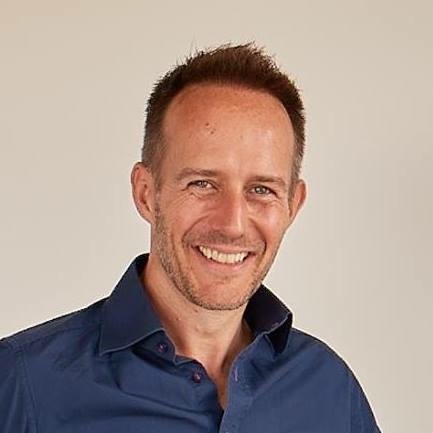
Helping CEOs build agentic organisations & Wall St anticipate Silicon Valley | Keynote Speaker: AI & Future of Work | Ex-COO Goo
Ben Legg brings a rare breadth of experience to the conversation about independent professional practice. His career began with a decade in the British Army's Royal Engineers, where he trained at Sandhurst, completed a civil engineering degree, and served in operations including the relief of the Siege of Sarajevo in 1995. He then spent a decade in corporate strategy and marketing, moving from McKinsey to Coca-Cola, where he held sales and marketing roles in Greece, Poland, and India before leading the Coca-Cola India turnaround.
His third career decade focused on technology. He was headhunted by Google and rose to COO of Europe (2007–2009), where he tripled revenue by engineering the blueprint for how Google monetises audiences. He then served as Group CEO of Adknowledge, a PE-backed ad tech company, growing revenue from $120 million to $350 million and preparing the company for an IPO before market conditions led to a strategic pivot.
In 2019, Ben made the deliberate decision to leave corporate employment and build a portfolio career combining advisory board roles (MoneyPlus, Hypervolt, GALLOS Technologies), mentoring senior executives, consulting with Wall Street investors on technology trends through Digital People International, and keynote speaking at international conferences on AI, the future of work, and human-AI collaboration.
When friends began asking for help making the same transition during lockdown, Ben first ran the Portfolio Crew Workshop, which grew rapidly.
He then co-founded The Portfolio Collective with Fiona Ch…Read More
