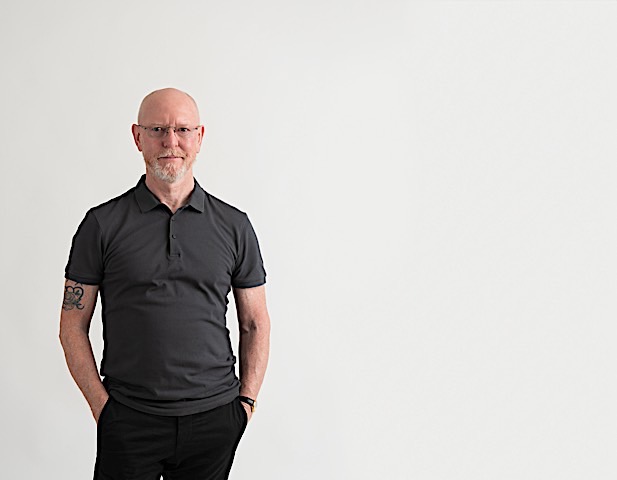




Dante St James The Generalist Advantage: Building Systemised Independent Practices
Dante St James has lived nine careers before most people settle into one. From psychiatric medicine to radio to digital marketing to cafes and menswear chains, he has built a portfolio of businesses from the ground up in Darwin. In this episode, he makes the case for the generalist — the professional who synthesises divergent experience into frameworks others can follow. He also unpacks his 20/20/60 daily discipline, his honest take on imposter syndrome, and how vibe coding allows him to build software products that solve real business problems at minimal cost.
Key Themes
The rise of the generalist over the narrow specialist
Portfolio careers and diversified income as deliberate strategy
Crystallised intelligence: pattern recognition built through failure and iteration
Productising expertise into teachable, repeatable frameworks
Daily discipline and self-management for neurodiverse entrepreneurs
Vibe coding and AI-powered product development for solopreneurs
Personal branding as systematic 30-day process (BrandSpark)
Partnerships as primary growth strategy for independent professionals
Effectiveness over efficiency: finding what you will actually sustain
Imposter syndrome reframed as predictable result of pretending to be someone else






Dante St James has lived the kind of career that makes most CVs look cautious. From psychiatric medicine and radio in the early 2000s to digital marketing, cafe ownership, menswear retail, and AI-powered software products, he has built a portfolio of ventures from Darwin that largely runs without him at the centre of daily operations.
In this conversation with Nigel, he traces the arc from a $150,000 failed startup to a digital marketing business he sold just before the buyer went into liquidation — and explains how an $18,000 cafe purchase during a pandemic quietly became the foundation of a growing hospitality group.
The episode is as much about thinking architecture as business history. Dante explains his 20/20/60 daily discipline — learning first, marketing himself second, then working — his McDonald's-informed approach to systemising cafe operations, and how vibe coding allows him to build software products in hours rather than weeks.
He currently trains executives across Australia on LinkedIn and AI through ClickStarter Education, runs a public speaking programme through SpeakStarter, and is developing a suite of solopreneur software tools including Quotaroo and Content Steps.
His most useful observations arrive when discussing the concept he calls the era of the generalist — the idea that professionals with diverse, synthesised experience are now more commercially valuable than narrow specialists — and his frank assessment of imposter syndrome, which he reframes not as a psychological condition but as the predictable result of pretending to be someone you have not yet become.
Tools and Products Mentioned
- Quotaroo
- Content Steps
- BrandSpark
- SpeakStarter
- ClickStarter Education
Wisepreneur Episodes Mentioned
- Episode 82: Melissa Liberman
- Episode 83: Darren Waldron
Connect with Dante St James
Connect with Nigel Rawlins
website https://wisepreneurs.com.au/
Linkedin https://www.linkedin.com/in/nigelrawlins/
Twitter https://twitter.com/wisepreneurs
Downloads
- Embodied Intelligence Self-Assessment
- Professional Reputation Audit
https://wisepreneurs.com.au/free-assessments/
Please support the podcast
https://www.buzzsprout.com/2311675/supporters/new
Stay one step ahead with The Wisepreneurs Insider newsletter
As a subscriber, you'll get:
- Sneak peeks at upcoming must-listen podcast episodes and guests
- Bonus wisdom straight from recent guest experts
- Marketing tips to attract your ideal clients
- Productivity hacks to streamline your independent business
- And more exclusive insights are delivered right to your inbox!
- Don't miss out on these invaluable resources
- Subscribe now and gain the edge you need to survive and thrive as a wisepreneur
Nigel Rawlins Dante St James
Nigel Rawlins: Dante, welcome to the Wisepreneurs Podcast. Can you tell us something about yourself and where you're from?
Dante St James: Yeah. originally grew up in Sydney, but have not lived in Sydney since the nineties, so I left, as soon as, pretty much as soon as I could finish my studies. Off I went. I've always wanted to head to the north of the country. I started off in Brisbane, worked my way up through very many places, then back down again, back up again.
And currently in Darwin this time around, I've been here nine years. but this is my fourth time living in Darwin. So in, in essence, I've been here on and off since, 2003.
Nigel Rawlins: So what is it about Darwin that, you like?
Dante St James: It sounds horrible to say, but I'm not a fan of people, especially big crowds of them. I don't like to be in anywhere where I have to commute with people, and, and Sydney, for me was just this nightmare of packing into a tin can and being shuffled from one place to another every single day of the working week, and that just wasn't how I wanted to live my life. So I've got a, a five minute commute here in Darwin. Five minutes from, you know, from the home to the, to the office. Deliberately got myself an office here because I got a little weird living, working from home over a number of years.
So I just went, oh, probably need to get out and see more people. But the beautiful thing is no traffic, no big crowds, unless you really want to go to some big event. But then you don't have to be in crowds just to go about your day-to-day life. And that's what I really enjoy about being in a place, not just Darwin plus plenty of places like it, but for me this is a good place, you know, easy access to Southeast Asia, flights daily to Bali, flights daily to Singapore and East Timor.
So there's easy to get out, but also connected enough to the south of the continent so I can, you know, get around and do business when I need to.
Nigel Rawlins: So is that a view behind you, out your window or.
Dante St James: That's the Smith Street Mall, in, in Darwin City. So that's, it's, I work out of the Darwin Innovation Hub. I've got a, an office here, and I'm in one of their rooms here where, I get a bit of peace and quiet and I can have a nice view in the background. So it's actually quite nice to have some, you know, daylight to work
Nigel Rawlins: Yeah, I was, I was gonna say what unfortunately, 'cause we're audio people can't see it, but this is beautiful, tropical, tropical sort of like gardens out there.
Dante St James: it is. It's quite nice.
Yeah. Across the road is the, the power and water corporation, head office. So it's like, well, I, not a big skyscraper, we don't really have them here, but I'd say this one's probably about a 10 story building behind me. But the beautiful thing is I've got three layers of plants between, you know, between me and that building and a mall.
And you do occasionally hear some, some noises coming from the mall, but overall it's pretty nice.
Nigel Rawlins: So what have you been doing since you left Sydney?
Dante St James: Oh gosh, there's so, so many things. So I, I originally got my qualifications in, what was it in? It was in, in medicine, so medicine and psychology. So that was, my original studies was in that. And then from there I decided about three years into practicing that I didn't want to be just pumping people up through with drugs just to keep them quiet.
'cause I was working in psychiatric medicine. And yeah, medicine is a, a horrible world full of bullying and harassment and just nasty people. You're working with nasty people, and it's, it's accepted. It's just accepted as part of what you do. It's kind of like, you know, the trades some years ago where it's like, oh, you're gonna work on a building site.
You've gotta learn to have a thick skin. In medicine it was just surgeons and, and and consulting doctors are just awful. They're just awful to work with. And I, I did not have a single positive experience in that whole thing, so I didn't wanna spend the rest of my life doing that. So I got out of there and went into a bit of IT, call centrey kind of work with Optus back in the day, Optus Vision, actually the cable TV. and then from there off to various telcos until I just sort of went, well, I don't wanna do this with my life either, because it felt kind of soulless and, and, and I felt like I'd reached sort of the peak of where I could go without becoming a full-time nerd and constantly being, you know, hunched over a computer and, and, and typing.
And so then I went into radio. I volunteered in the community radio station on the Gold Coast at the time. it was a a Christian radio station, 'cause they provide the best free training. You know, they're the best professionally run community radio stations you can imagine.
They're incredible. They are run like commercial entities, so I wanted to get in there. There's things about my life they didn't agree with. I didn't tell them about those things. They found out about those things and I was promptly removed and that was my first jump up to Darwin as a, what they would call a creative director and, a fill-in announcer at the Hot 100 FM in Darwin in 2003, which, um, creative director was a very creative way of describing someone who just pumps out a lot of really like quick 30 second ad scripts that are pretty much, you know, how many times can you mention the client's name, phone number, and address, and
that's what it really was, and nothing really creative about it. You're pretty much told this is what the client wants to say. And I went, well, that's pretty much the entire 30 seconds, so here we go. That led me to Darwin Radio. after that, probably eight years in, I think it was, around about 2008, where I, started making the websites.
I was in Tasmania at this time, working with 7HOFM. And the company I was with just bought, another nine radio stations, needed a bunch of websites. I was the one person in the network who seemed to know how to build websites. So they said, well, you are now doing that rather than being on air.
Because on air we can replace you with anyone. It doesn't really matter, but you've got this valuable skill over here that we know we can probably pay you a lot less than getting other people in. And that led to running a team of. About 12 different people around the country, as we sort of expanded that into social media, digital marketing, digital products for that radio network until such time where I guess I, a mix of me becoming, very,
cynical and skeptical. I was in a position where I was, you know, not just running this team, but I was trying to protect the business from its own sales reps. And, you know, you can't say no to sales reps in, in media. So the more I would say no, the more I get overruled to the point where they just said, look, you're now just a roadblock.
We need to get you out of the way. Here's someone else we're gonna put in there who's more friendly towards our sales reps and says yes more often. And was, you know, $30,000 cheaper a year. 'cause they were 30 years younger and, huh? There we go. I was completely outta that. So at that point I was like, well, I need to do something and began a startup, the startup without knowing anything about what I was doing, I, I'd tried some little side gigs and side hustles here and there, but never a full-time business.
So I took this massive payout I got from them and pumped it all into, let's just say it was like the, the, the small business version of flybys or Woolworths rewards. Build a great app, build a great system, tested it out in a northern New South Wales town where I could give it a good pilot test. It led to basically a crime wave where a whole bunch of people broke into those stores, stole the iPads that I provided to them,
Was a complete failure and I lost $150,000 just on, you know, something that I had no idea what I was doing. Did it all by myself, coded it myself, all that sort of stuff. learned very quickly that, yeah, business is a bit more complicated than what
I thought it was, and that's, yeah, the point where I just went, well, firstly I need to go and learn how to sell and I need to learn about business. So I gave myself about a year, I moved back to Darwin with my tail between my legs at this point, 'cause I've moved around a bit and then said in Darwin, well, I'm gonna do some sales work for a Channel 10 affiliate here.
Knew I would hate it, but I also knew it would introduce me to all the people who will become clients of this new digital marketing agency I was gonna build called Click Starter. And it certainly did that. Not even a year later, I had to go full-time my own business because, well, basically, you know, the cost of getting results was way lower using Facebook ads than what it was using local television ads, and you didn't have all the production cost inherent with that.
And so that's what I did. Partnered up with Channel 10, was able to cross sell that as well. And that's been a feature, this partnership with lots of different people. That's actually, you know, been very much my way forward and that was probably the first partnership I could say that really led me to where I am.
And then fast forward, until, what was it, 2022 when I sold that business, or at least that client list, to a much larger firm in New South Wales. Who took that client list and I just kept the very oldest, lowest value clients for myself. Just out of a sense of loyalty. 'cause they were, you know, the first to come on board and still got them today.
And then, yeah, used that money to go and buy a cafe in North Queensland. That cafe was, was so successful that it were bought a second and a third, and now that's group has become successful enough so that I've been able to then buy into a men's wear chain in, in country New South Wales. Which, we're currently refitting some of those stores to get them into menswear store, cafe, barbershop, three in one venues, which, the first two are done and doing really, really well.
So, never planned to become a retailer, never to become a, a hospitality person. But, that's what I've become. That said, I don't have anything to do with those businesses. I sign off on payroll and that's pretty much it. There's, I don't run them. I've got a team to do that. I do the things I like to do, which is, you know, some of this stuff that we're doing right now, personal brand, marketing myself as an expert in these, in these areas.
Taking all that combined knowledge and going, well, you know what, this is something that other people need to know. There's a ton of solopreneurs out there. We've got a situation where the full-time job in 10 years will be like hen's teeth. There won't be many of them. So we've gotta prepare people to be taking much more control of their own work lives and their own careers.
And that is teaching them entrepreneurial skills. Everything from how to speak publicly, how to sell, how to promote themselves, personal brand, digital skills, and then the classic business skills, you know how to balance your checkbook at the end of the month.
Nigel Rawlins: That's an amazing story when you think about it. You've been just about everywhere. You've blown the dough, which I hate to say a lot of us do when we first start out, if we've got no idea what we're doing. I was in the same boat. I must have gone through a lot of money. my superannuation, when I quit teaching many years ago, I just blew it to try and survive.
But luckily, I mean now, but like you, I mean, I've still got clients from 20 years ago that I'm still working with and I'm probably still charging the same amount just about, but, but you know, they've stayed with me. What's interesting about what I'm hearing is, one, you did some studies and, and you became a, a medical doctor.
You didn't like that you moved on to some other things, so you've tried and sampled a whole lot of things, but you haven't stopped learning.
Dante St James: Never, never.
Nigel Rawlins: But you've also got what we call a portfolio career, which is the greatest thing as you get a bit older because if something goes wrong, you've got something else.
So why retail? What was, what was the drive there?
Dante St James: Well, it's a business that really just had a problem. So I bought an initial retail, or not retail, hospitality business, a cafe in the Cairns region, in the very beginning of the pandemic, and it was a couple that, you know, had to get outta the country, from Brazil. people were dying in the streets in Brazil at the beginning of the pandemic.
So they were like, well, we need to get outta the country. And they were trying to sell this thing for three months, 'cause they could see this thing bubbling away, we want to go home, we to go, couldn't sell it. Finally just said, whoever pays for our airfares to get home you basically got a turnkey business.
And I was in a Facebook group that saw that. Everyone else was just like, yeah, scam, scam. And I was like, I wanna find out more about this. And did my due diligence. It was for real. Worked out that, you know, next door to this cafe in an industrial area was a building going up a a six story building.
And I'm like, what's gonna be in that six story building? Turns out it was an administration block for a whole bunch of vital Queensland government workers, about 300 of them that are gonna have a voracious appetite for coffee and for what cafes serve. And there's not another cafe within at least 600 meters of where we were.
If I can hold onto this thing for just a while of making no money and just blow the rest of my savings that I had at that time, I might actually be able to make a fortune out of this. And it turns out that it took a little bit of asset financing that I had to get hold of a bunch of coffee carts and, and put staff inside Queensland government buildings around that region with coffee carts being approved to be there and selling coffee and, and toasties and all that kind of thing.
Basically something which was definitely gonna be struggling, especially during that first lockdown period, the national lockdown. We got through that and when, you know, Queensland started opening up again, we had everything we needed to basically just go, whew. So by 2022, of course, I was more involved in trying to make that work than what I was in wanting to run a, a digital marketing business that I didn't particularly like doing anyway, and there we go.
I like doing the digital marketing work. I love digital marketing. Love all the web design, love all that stuff. I just don't wanna do it for other people. I wanna do it for me. And what I found is the love I had for it was me tinkering and playing and being a technician, not me being a, an entrepreneur of a team of five full-timers and 30 contractors going off and doing, you know, $5 million worth of contracted work around the country.
So yeah, that little, investment of $18,000 in 2020. Meant that in 2022 I was able to confidently step away and go, well, at least I've got what looks like is gonna be a good retirement investment, a good super plan in, in these, in these business.
I might be able to actually do pretty well and came away with a really good amount. Like seriously, I got paid too much for that client list, but that was, you know, 2022. Pandemic was sort of winding down, but it was still very hot. Agencies were looking to get more and more clients as they saw that their client acquisition was slowing down.
So a quick way for them, let's buy that at an inflated price. I'm like, great, take it. I don't care. It's one thing I don't have to worry about. And then six months later, that business actually went outta business. So they actually, you know, their client list ended up being swallowed up by another firm who had to take over in the liquidation process,
'cause they spent too much on acquiring clients.
Nigel Rawlins: Yeah. Isn't that interesting how that happens? 'cause you often hear about businesses being sold and the new owners come in and they screw it up completely.
Dante St James: Absolutely.
Nigel Rawlins: But the interesting thing about the retail is there are obviously retail businesses if, if they're managed properly, 'cause you, you often hear about some of these cafes going broke 'cause they stupidly go out and buy BMWs as the company car.
But. They are good cash flow businesses. I mean, often better than, say the consultancy business where you have some big jobs and there are some really, well paid consultants out there who work for themselves, but it's not consistent. Whereas a good little cafe, but that must have been pure luck just finding that next to a building that's gonna have 300 people in it.
Dante St James: That's what it was. And, and look, I wouldn't have known that if I hadn't have done the due diligence to go and search for that. Nobody else had bothered to do that. Otherwise there would've been a thousand other people knocking on the door to say, I'll take it, I'll take it. But I took it seriously, did the research, made the phone calls.
Sent the emails and within 48 hours I had basically a business plan in place so I can go, I think I can make this work. And I think that's, you know, at that stage was also working in a number of, business support programs through the federal government, consulting to those. So I had lots of exposure to what people do wrong in these things.
I had plenty of exposure to things I'd done wrong and, and where I'd fallen short. So I had this big bundle of knowledge I could go, well, if I was the person, if I was advising someone on this business and I was the advisor, not the person doing it, what would I tell them to do and then go and do that.
So I take my own advice. Did that, I'm so glad it turned out the way it did.
Nigel Rawlins: Well, that's the sort of thing I've been writing about lately is this experience is wisdom and when you're older you sort of know stuff and it's that you recognize the patterns that you've seen, what we call crystallized intelligence as well. It's in there and it bubbles up and you go, oh, this is not quite right.
But it's the pattern recognition that you've seen, but had you not tried all these things that you've done and failed at some. None of that would've probably made sense. So you are also running a whole lot of other things, so tell me about some of the other things you're doing up there.
Dante St James: Yeah, so QuickStarter. I've actually kept the name QuickStarter, so they just bought the, the, the client list basically, and I kept the name. I've pivoted QuickStarter into a digital training business. So now it provides digital skills training more recently AI training as that's become significant.
So for the last two years, that's been probably the most of the training, but it's providing training in, in organizations for things like getting your executives together on LinkedIn and making it work for them because they're absolutely woeful at it. And, and no one is worse than governments and local governments and big not-for-profits that just do not know what they're doing with it.
Probably because most of them, you know, are my age and up and they're not particularly keen on social media. But you know, it's one of these boxes that someone has to tick for them. So they hand it off to the, the personal assistant who goes and does a dog job of it and wonder why nothing ever happens and no one ever takes it seriously.
So there's a lot of training in that. Public speaking training, so I formed a new business called Speak Starter that's related to it. That is a public speaking training. So I started up a public speaking club, 'cause at the time there was no Toastmasters Club in Darwin. So I thought, oh, I'll fill that gap.
That's now been going for a few years. I almost shut it down like literally last week, and then I had a bunch of clients come in and say, Hey, we were trying to, we wanna book with you. And I'm like, oh, okay, there's still some life in this old dog, so shutting down my shutting down and bringing that back to life again. So that was, you know, really intense in person. But I've also got a method and like Toastmasters has got a method for their meetings. I've got a method for our public speaking classes and now expanding out in March into a business speaking class.
So you can come once a month and learn business public speaking as, as a very specific method that I've tried and tested and used on a lot of clients, now productizing it into something which can be, you know, repeated, repeated, repeated. And eventually the plan there is sell the method to others so they can sort of either franchise it or, you know, license that, that method elsewhere.
Nigel Rawlins: I dunno if the listeners are picking this up, but what I'm hearing is frameworks, you are productizing your frameworks. So you've, you've learned the hard way for a lot of this and you've got your system or your techniques. My late mentor used to talk about making things visible, logical, and repeatable.
Yep.
And he developed frameworks 'cause he, you know, he looked at things and he thought about things, just like you're doing, and he could see, well this is how it works. And the fact that they're successful, you're, you're doing it in your cafes, sounds like you're doing it in your men's wear things that you've got this, brain.
And that's probably why you couldn't keep in the medical profession 'cause that sort of brain is very logical as well. Okay, so you've done Click Start education, which is still going and that's doing the AI 'cause you picked up on that, but you prefer to do the AI teaching than the digital stuff. Is that like an evolution In many ways.
Dante St James: Yeah, it is, it's really just, I guess it's the same thing, but now sprinkle with AI. So the AI will accelerate the process for a lot of people. Funnily enough, the same frameworks for digital marketing work very, very similarly for AI content as well, if you're using it to help with content creation or even with, you know, brainstorming.
So I've got a whole bunch of playbooks and all that sort of thing that I roll out through workshops and webinars. Run about two to three webinars a week, at least one workshop a week, locally in Darwin and now beginning to do, I've been always doing some workshops interstate, but now I'm starting to bring those as well.
I've got one in Perth coming up next week, Brisbane, the week after that, and then moving into, I think Melbourne, Canberra, and Sydney after that. So yeah, I'll be around.
Nigel Rawlins: So is that the solopreneur systems you've got in place?
Dante St James: Solopreneur Systems is a funny beast 'cause I started that up because of Vibe Coding became a thing and I was able to roll out several pieces of software, as you know. Ideas that I go, well here's, here's a problem I need to solve in one of my businesses, so I'm gonna code, vibe, code up a solution for it.
Then found that that worked and it was really actually very effective, and go, okay, well how about I package this up and sell this to anyone who wants to use it? An example would be a piece of software called Quotaroo. I was using a New Zealand based software called Quotient, which, was for producing quotes that we'd send out a link, here's click the link to read it, approve it, all that sort of thing.
But the problem with Quotient is that at $33 Australian a month, it was very limited that you could only have one business associated with your account. You couldn't flip between businesses. Now my unique problem is got 17 other things and I need to flip between multiple ABNs, all that sort of thing. I don't want to buy 17 different licenses with that piece of software to fast produce quotes.
So I went, well, I'm gonna take all the functions they have, plus the functions I want. Which included that ability to brand and rebrand, select who I'm sending, like which business is producing it for. So I put that out there the world and a few hundred people picked it up within a couple of weeks, and then that's grown now to about three and a half thousand subscribers.
About half of those are now paying me a certain amount per month for it, which is about $5 a month. I'm looking to make my millions from it, but that's pretty. That's, yeah, I know. And that's, that's because it costs me practically nothing to run it. It costs me about $50 a month to run all of the different software I'm running.
So I'm looking at it going, well, that's easy money, I'll just keep doing that. And then they, someone would come to me and say, hey, have you ever considered including invoicing in that as well? Because you know, people who need to quote also need to invoice. And if they're not quite at the Xero, QuickBooks kind of level, they're really small solopreneurs and they
wanna have those both things available to them. You know, why not build that in? So I did, it took me 35 minutes to get it vibe coded in there, tested and ready to go, and like, there you go. Done. And now that's now gone to well over 4,000 subscribers now. So, well, 4,000 people are, many of those are free.
But yeah, again, about half of those are paying around $5 a month or $50 a year.
Nigel Rawlins: So what are some of the other little AI products you've got in that? Now what I want, just recap this. You've got click Starter Education, which is basically taking around Australia, coming up. You've got the local Speak Starter, which is, helping local business people learn to public speak.
Because that's one thing we encourage people. If you're gonna try and get some work, you've gotta get out there and you've gotta speak. Then you've got your Solopreneur Systems and you've talked about your vibe. You've talked about Quotaroo, what are some of the other ones you're doing in there?
Dante St James: So there's a few other little AI things. I've got one called Content Steps, which is taking my framework for content creation and building that into a process you follow through. So you set up a profile of, you know, your key topics you wanna talk about, your core values or principles that you have that you know, color, everything you do as a business owner and as a person and then building in a bunch of questions. So five key questions that I've got in there. You know, what can I teach? What have I noticed, how do I think differently about this than other people? How can I produce this as a quick, short set of tips and what happened and how, and that's the five questions all bundled together.
So as you choose your way through that, it then is giving that thing that nobody does with ChatGPT, which is giving it context. So people go on ChatGPT and say write me a post for LinkedIn about this, and they give it no context, no clarity on, on who it's trying to represent. So this then sets that into a framework, a set of steps, which then forces you through.
And then at the end it will use, you know, at the moment it's using Google's Gemini 'cause it seems to be the, the most powerful tool there at the moment. It uses that to then generate something in your voice, in your tone with your values, on your topics, and with your input to really just make something that's far superior than just simply telling ChatGPT to write something for you.
It just makes it easier for someone who doesn't really deal well with just a flashing cursor in an empty box. They need a process to go through. And so that's been an interesting one. It's probably about, oh, about 1500 people using it at the moment, and I usually give it away for free 'cause to me it costs me, again, it's part of
what Quotoaroo is paying for at the moment, so I don't really need to make money from it. I just like to see people getting some value out of it, giving me feedback, and then I can update it with further frameworks as I develop them over time as well.
Nigel Rawlins: Melissa Liberman, on episode 82, was talking about consultants getting leads that that's the hardest thing is to get people onto a mailing list or you can sell 'em stuff. So even if you've got free users using this stuff, you know, if you come up with a product that might be interesting to you, you, you've got people to communicate with.
That's, that's the hardest thing out there at the moment is to get that attention, especially on LinkedIn, even.
Dante St James: Yeah, I'm doing pretty well with the attention on LinkedIn, I'm getting quite a lot of input. I've got a good number of followers. The northern Territory's only LinkedIn Top Voice, so that's also opening a few doors for me, which has been really, really good, aside from that though, you know, again, this is those partnerships.
So that sort of, that's not really a partnership with LinkedIn, but I get on really well with the team in Sydney, at LinkedIn and constantly communicating with them. I trained for Meta, so I'm a contracted trainer for Meta Australia and New Zealand, so that has been for like the last six years.
So that's another partnership that's helping open doors. But what you're saying there is really around, you know, going back to the frameworks is, is taking all those pieces and going, well, how I got here by doing this, how do I help others get here, hopefully a little quicker than what I got here?
And don't take 20 years to do it, but you know, bring it down to something which is a framework you can follow and avoid the pain I went through.
Nigel Rawlins: Oh, I think it sounds fantastic. I just think, well, it, unfortunately people can't, well, they can hear you, but they can't see the energy that you've got in this. But, you know, this is pretty intelligent stuff too, because to, to, I don't know how you keep a handle on all these different businesses. I know with the retail group, you said that you've got management doing that, but you've still gotta, it's still in your head, isn't it?
Dante St James: Well, I'm still strategizing everything. As I take on more of these cafes, three in North Queensland, we've got another three, soon to be four in New South Wales, so that requires you to think in terms of systems and someone who sits in a cafe doesn't think in terms of systems.
They think in terms of just what that little cafe is gonna do. I think in terms of the systems, what point do I get to where I have enough cafes at the price of the bag of coffee comes down an extra 20%. What is, what can I do to see what works over there in that Cairns Cafe. What can I do with that that will work in this one in Northern New South Wales?
So how can I then take those systems? And simply it's learning enough about retail and watching YouTube video. I love watching YouTube videos on failed retail businesses. There's a couple of guys, who do Australians actually produce some documentary style videos on YouTube? Around, you know, how Red Rooster is being like the cockroach that cannot be killed in Australian fast food and how Burger King failed to take control of Hungry Jackson, Australia and, and why Starbucks continually fails to get any traction in Australia and what they're actually doing about it.
So there's a lot of this stuff I learned from other people's obs observations and one of the greatest lessons in terms of retail, and, and, and in terms of, I guess, hospitality has been watching McDonald's. McDonald's and, and that brilliant movie The Founder, all about Ray Kroc and the McDonald's brothers, a fantastic movie and I will re-watch that a hundred times if I need to, just to learn the power of systems and that speedy system that you know is what has helped McDonald's be what they are today.
That's something I just took on. I went, well, what we need to do is have a repeated system in every one of these kitchens, have those kitchens set up in such a way that anyone can jump out of this one in Cairns, and immediately can get to work if we need them to without having to train and retrain and have all sorts of clunkiness.
Get the menus, all the suppliers, like aligned through all these places because you are saving so much money when you buy in volume. You are often saving up to 30, 40% when you're buying things in volume. Coffee. Why are we using this stupid boutique inconsistent, bitter tasting, local roasted coffee, which is utterly awful. And our tradies that come into our cafe, just want something that tastes like McDonald's. Well, what does McDonald's do? What's their flavor profile? Hey, Coffee Commune in Brisbane, can you make me a flavor profile like Macca's? Yeah, sure, that's a pretty easy, pretty good blend.
We'll just, you know, produce that and I'm going from $72 a kilo to $29 a kilo straight away. And you are buying in our case 180 to 200 kilos of coffee a week. Well, it makes sense. You're saving a hell of a lot of money by aligning everything together. So what works in one will work in the others, but you don't do the Starbucks thing.
You don't make all the stores look the same. You keep every store with its own staff, its own way, its own feel, its own music, its own seating, its own environment. But the back of house is running a system. And that's the difference between what I'm doing and what say a Starbucks would do.
Nigel Rawlins: I hope people are hearing your thinking here. Um, I've got a little story about when I was working with my late mentor, we were working with a, a client, a particular client, but we went into McDonald's just to sit there and have a look at some of the systems. One of them was about cleanliness.
And what do the McDonald's stores do about cleanliness? Is that if it's quiet, the kids clean, they get out and they clean stuff. But we also looked at how they cleaned windows. Did you see smears on those windows? Is the door smeared?? Because a lot places you go into, they don't clean them properly.
And that was the thing we taught this particular client because the place was filthy, but you'd start at the front door, you'd start at the gutter and you'd walk towards it. Is there rubbish? Is there weeds? Is it well swept? Are there smears? Is there graffiti? Is there rubbish on the ground?
Is there rubbish on the floor in the, in the thing, you know, is the table sticky? Just those little things, those consistent things, and, and that's what McDonald's is, brilliant. Yeah. So we're talking about your solopreneur systems, and I think one of them you've got called is Brand Spark. What's that?
Dante St James: Yeah, so brand Spark is again, taking a framework of learning, of teaching other people how to develop personal brands to go beyond just simply being someone who posts stuff here and there, to being someone who becomes the chosen and selected expert in whatever industry they're in. Just simply because they have the best reputation, they're the most visible, and the person who is the no brainer, you know, look at them and go, of course I'll choose them because I know who they are.
They that whole know, like, trust thing that comes in, particularly with those who are selling services, we want to get into that trust and part of that is you need to, yeah, make sure you're visible and but visible with some kind of substance. You can't just be an influencer. that doesn't create trust.
So what we're trying to do is, how do I systemize the process of building a, a personal brand, that's a 30 day process with very small steps you take along the way that will build up everything from, you know, all those things, like, you know, the starting with your 'Why' from Simon Sinek moving through to, you know, several other frameworks that others have used, including some of my own, to fill a 30 day period where you're just going, okay, if I spend 15 to 20 minutes a day on this, I'll come out of this at the end with
a headshot, a style of colors, a palette, a font. I'll have, what the different social networks I'm going to be doing this on. I'll have a pitch, I'll have a one-liner, I'll have a very clear picture about who it is I'm selling to, what I'm selling to them, how it's gonna help them, and what it means for the world.
And why you choose me. All those things have been systematically done over a 30 day period and I've never charged for that. That's something I've just released as completely free. I tie it into a lot of the workshops I run on personal branding. So whilst you know the very basic framework of how I do personal branding, you can sit there at a one hour workshop, but this is a systematic way of then going, do this, do this, do this, do this, do this.
Each individual step won't makes much sense, but then after the first week, you'll notice, oh, that's cool. After week two, you go, wow, this is really making sense. After week three, you're going, I'm feeling great, and after week four you go, I've got my toolkit now to move forward and be the selected and preferred option when it comes to whatever the industry happens to be.
Nigel Rawlins: That, that's a really good framework. I know when I spoke with Melissa Liberman, again, we were saying that she works with consultants and they've gotta work on those leads, but she says what they don't do is treat their business as a client and spend that time on the marketing side. And I'll be really honest,
that's the hardest, I look after 18 websites. Now, mind you, two of those are mine, uh, the Wisepreneurs Podcast one and my Wisepreneurs website where I do all the writing. Um, but I, I spend a lot of time on that, but with the other websites for, I won't mention who they are, but, I can wait weeks before they'll get back to me about the content.
I've developed all the frameworks and the stuff, but I just want some input, but trying to get the input. So that's why I'm very reluctant to, like you, probably, to take on particular clients because that can really kill the deal. And so I only work on retainers, so I won't work unless they're paying me and I'm not gonna wait
six months before they give me stuff and then charge them, I'm, I won't even bother. And, and that's the problem. They've gotta do this work and if you give them a little systematic, system to do that and they do it, then they'll get the results. But unfortunately, a lot of people won't do that 'cause they're too busy doing other stuff.
Dante St James: So they're too busy working in the business, not on it. And that's a big trap for, particularly for a solopreneur or a small business owner, is that you are going to spend so much of your time working on putting out fires and not spending any time on building something that doesn't catch fire in the first place.
And that's, yeah, the big difference between the way, I guess I approach it and the way a lot of others do. I've made enough mistakes to see what the fires are and I can see them coming from a mile away before they even spark. So that's part of the brand Spark naming came from that is 'cause I could, you know, I feel like I can see the spark before it happens.
When it comes to the problems that can occur down the track, with things like marketing particularly and with solopreneurs forming these little one person businesses where they could do amazingly great things with them, but they get in their way all the time by refusing to spend enough time on the business itself, and especially in the early days, you know, 50% or more of your time should be spent just on you.
You know, I spend 20% of my time learning, every day. Every day, 20% of my time is spent learning. Another 20% of my time is spent on me, marketing me. Then I get to work on the 60%, which is working in the business of it. But none of that happens until that first 20% of the day of learning is done before I take my first email.
And that's non-negotiable. Every morning after gym, get home, have breakfast, go in the office. Number one thing is before I open the emails, do my learning.
Nigel Rawlins: Okay. And that's a real, that, that's a discipline in itself. But what I was gonna comment on that, when you see stuff, my, again, my former mentor was Dennis Hitchens. He used to say, you could know things without seeing or knowing without seeing, and, but that's, that really is wisdom. That's that stuff I'm talking about that you've, you've embedded it, but your, I'm not trying to flatter you here, but you're pretty smart to pick up all this stuff in the first place. Alright, let's talk about, I think you talk about efficiency versus effectiveness. Is that something you talk about? I.
Dante St James: Yeah, that's definitely in my life. Efficiency is a, productivity is another term for, it is a bit of a catchphrase I think in today's life where we're always trying to squeeze more blood out of the stone. Always trying to get more out of that 24 hours and realize you don't have 24 hours, you actually have
eight, because at some point you have to shut down. At some point you have to sleep. So you've only really got about that eight hours of really good, solid, productive time that you can work with. And even then, probably about five of those are really, truly productive. So you go, how can I make that five do five hours more productive?
So we look for tricks, and hacks, and we're looking for, you know, little techniques and things that are gonna help us get that done. And then we try that for a day or two. We don't see a result straight away. So we then go, well that's rubbish. And we go back to whatever we were doing before, time blocking in our calendars or overbooking or something like that.
So I've, I tend to aim for what's effective, but secondly on that, not just what's effective, but also what are you likely to keep doing? Because if you don't like this thing, all these productivity hacks and all these efficiencies and all that, they sound amazing when Cody Sanchez says something about it online or Gary V says something about it online.
But the reality is if your name is Doug and you're living in Maribyrnong, and all you want to do is just get through your day when you've got too much work in your mechanics workshop. These hacks mean nothing to you. Pomodoro timers mean nothing to you. What you need is something that's gonna effectively get you there and something you actually enjoy doing.
If you don't enjoy doing it, if it's just an annoyance to you, then you've gotta find something else. So a lot of the consulting I'll do with, I guess, consultants, coaches, but also with tradies as well, is trying to get them to that point where they actually love what they're doing instead of
always just constantly battling the things they hate and finding it doesn't just take up, you know, 10% of their day, it takes up 70% of their day because it's wrecked the rest of the day for them. And if you're gonna work for yourself, you need to bloody love what you're doing, 'cause if you don't, you're gonna give it up really soon, or you become old and bitter and twisted and you won't want to give back to the world.
You know, you don't want to go down that path. You want to be someone who has some sense of freedom and some sense of love for what you're doing. And so I find effectiveness something if you, if I can find the thing that you, you, you think you might try it, but you actually really enjoy doing it, it will be more effective.
And 'cause you'll keep doing it because nothing works straight away, but you still need a quick win. And so effectiveness is two lots. It's effectiveness in the moment. Do I feel good? Do I get the dopamine hit that makes me feel good about this? And then there's the longer, more substantial effectiveness is does this help move my business forward or does this make me feel happier?
Nigel Rawlins: I think that's perfect. Alright. The other one is the imposter syndrome.
Dante St James: Yeah, I've written about that many times and I've kind of, my whole view on imposter syndrome has shifted over time. So much of imposter syndrome is not a psychological thing at all. It's just that people are trying to pretend to be someone they're not. Because they saw someone on TikTok.
They, well, I need to be like that influencer in order to be successful and happy 'cause they're successful and happy and that's where I want to get to. And so what they'll do, they'll copy what that person's done without realising that everything on that feed that they're getting is a highlight reel and doesn't tell the true story of how they got there.
So they do the thing, don't get the results, and then become depressed. And you have, you know, the epidemic of TikTokitus that you've got in younger people these days. So they can't get the things their influencer people have got because they're trying to be someone else. Imposter syndrome is essentially not really a syndrome, it's because you're being an imposter.
It's not a syndrome, if it's what you're doing, you're faking your way through to be a certain person that you're not, you're faking your way to try and be someone else, and because of that, you think, oh, I must be imposter syndrome, you know, because what I aspire to be and what I am don't align. I'm like, that's because you haven't done the work.
You haven't trod the path. You haven't done the journey. Once you've done all those things, you find that you've got this, and this is the, you know, wisdom of age, I guess, and the experiences that you get to look back and go, well. I don't get imposter syndrome anymore because I don't talk about things I don't know anything about.
I don't get imposter syndrome anymore 'cause I don't pretend to be someone else that I'm not.
Nigel Rawlins: I think that explains it pretty well because a lot of people who are experts in their field get to a point where they're thinking, surely I'm not the expert, but they are. They're just in that uncomfortable place where they just don't recognize themselves. But there's an interesting thing there when you're saying about people see a good idea and they think they'll copy it, or they might look at what you are doing and say, oh, I could do that.
Not realizing that, you know, you started off as a medico and you've worked in a number of places and you've bought this business, and you found out that there's no way that they could accumulate that wisdom and then copy what you're doing. So, you know, it's, as I say, it is necessarily going to be incomplete.
Dante St James: Pretty good. Pretty good. I, I'll expand on, yeah, I'll expand on that a little bit. That really brings me to the, the fact that we're coming into the era of the generalist. The, the generalist, the person who's had many different experiences that they can synthesize into something, whether that's a product or a service or a consultation business or something.
These generalists, like myself, I'm not a expert in any one thing with any great depth, but I'm a, I'm a definitely an expert in what I've done. I'm definitely an expert in me, so I can sell that. I can package that up. And this is the, the era of the generalists. We come outta the era of the specialists and we see that in the collapsing of university budgets and the collapsing of this whole scam that we've got running in this country of importing 400,000 students to go and learn at universities.
They get pumped outta these universities at a rapid rate. And these poor kids who their parents have paid a fortune to move them to a country to get an education. Then just go, well, I think I'll just drive Uber. Uber or, or I'll just, you know, work as an aged care worker because that's what's needed,
and it pays well and it will still get me across the line with my permanent residency, 'cause it's a skill shortage area. So we've got these hyper overqualified engineers who are turning into NDIS care workers because that's the easiest path to get there. So where university has become this scam because we're teaching things in universities that were never meant to be taught in universities.
We're teaching vocational level job readiness skills without actually any job readiness skills. You know, IT graduates are coming outta universities with no IT skills. They're unemployable. Yet you go into a cert three or cert four at the local TAFE and you're infinitely more employable. 'cause you know what to do.
You can hit the ground running.
Nigel Rawlins: Hmm. That's definitely become an industry in Australia. I mean, listeners to the podcast know that I encouraged both my boys to become tradies rather than go to university, 'cause many, many years ago
I
Dante St James: would do the same.
That's what I saw many the same.
as a teacher and both, have never been outta work and, doing interesting things.
One of the guests, Darren Waldron on episode 83. He's a tradie in work, started in Hamilton, in Victoria. Traveled a bit, met a Swiss girl, married her, and he's working in Switzerland in the building trade as a carpenter. But at night he's been running an AI business, which is really quite interesting.
So, you can be a tradie, not necessarily be academic or through university, but you can still do interesting things. And I was saying to him, you know, school gives you a qualifi, well, a bit of paper, doesn't mean you can do anything, which is precisely what you said. You know, you can go to the local TAFE, what do we call 'em?
Um, I dunno what the Americans would call it. Yeah, something like
a technical trade area and learn practical skills and you can be employable. Whereas if you go to university, you've got a debt.
Crippling that debt. You know, that's the great scam of university in the western world is to have convinced people in developing nations that somehow they have got a, a, a way into these glittering and glamorous careers. And these things they've learned about back at home, they come to Australia, get qualifications they simply can't get jobs for because there aren't enough entry level jobs to take them on because they're only qualified in on paper, but they have done none of the work. This is another area of work I do, I volunteer a lot of time with international students here in the Northern Territory to help prepare them for this reality and to help them through this big transition they're going to have when they realize, to their horror, that they've just wasted three or four years of their life to basically drive Ubers.
And so what I try to do is get them multi-skilled, get them across a lot of their soft skills so that they can, at least when they hit that interview, be a little bit ahead of the other others in the crowd who are coming in with the same certificate and the same degree, and the same lack of experience.
At least I can get these kids to a point where they can talk and communicate and have enough soft skills to be able to get through those interviews and be considered at least in the short list.
Nigel Rawlins: Yeah, well that's gonna be the big issue today, very obviously, and be some of the conversations I'm gonna have with other Australians. I speak people across the world, but at the moment, I'm lucky enough to find the Australians to talk to, even though I live in Australia, but this is gonna be the issue of young people who've gone through university, getting those entry jobs.
If they exist anymore, especially with AI and that's, that's concern I have. Where do you get the skills to become like you, where you, you know, you get some experience and you've had a number of jobs and you're in that position, so where do you get the energy to do all this?
Dante St James: Uh, look a little bit of ADHD. I'd have to say probably I was, I wasn't diagnosed with it until I was in my, mid forties. So for me it was like this little thing that's always been there, all my life has always been, you know, a mix of, oh, you can do so much stuff, but also you're absolutely crippled by this thing at times.
And, and then, finally going, okay, I probably should get this looked at, and they go, ah, okay, this makes sense. Now I know what it is. I then put my systems to work. So then I did that same thing I do for business. I put a system in my life and that system means that I need routine. If I don't have routine, everything will go to absolute wrack and ruin because I don't have those structures in place.
So I almost have to, you know, infantalize myself to the point of set the alarm, get up at 5:00 AM be at the gym at 5:30, have my routine to do, be back at home at about 7:40 AM make my breakfast, then go to work. And when I'm at work, first thing is learning. I have to spend time learning because that gets me interested in the rest of my day.
If I don't do the most fun thing first, I will not do the other things. I do the fun thing. Then I start the emails and I do the non-fun stuff for a while and right through that, and it's even right down to the point where I have to schedule in time for me to do certain things that take me away from the computer.
So three or four times a week I've scheduled in, I go for a walk by the waterfront. If it's raining, I go for a drive by the waterfront and then go and sit in a shelter by the waterfront, so I can watch the rain, enjoy it. Just get away from the computer for a while. So it's almost like, you know, I've learned that I'm very much a systems thinker.
I never look at any one thing in isolation. I go and say, well, if you are really feeling very fidgety today and you're, you're, you're stimming yourself by grabbing things and, and fidgeting all the time, what, what led to that and what can you do to get out of that? 'cause you can't just sit here and do that all day,
'cause you'll get nothing done. So I look at it and go, okay, I did that. Oh, that's because I had that conversation with mom and I was really worried about it, 'cause her health hasn't been really well. And that sort of put me off, 'cause that's normally the time I would be learning. I need to get back into my routine.
Okay. Go back into learning and then start the routine over again. And then that way I just basically treat myself like a 2-year-old who needs a little bit of discipline and structure and I'm, I'm able to get all this stuff done.
Nigel Rawlins: Isn't that interesting? Because basically you said the big thing there is you have to be able to manage yourself.
Dante St James: Yeah, it's all about self-regulation. I'm a bit of a stoic in that matter that I, I don't believe that, you know, making excuses for, oh, my, my, my brain is weird and I'm a, I'm neuro spicy and all that, and therefore I can't achieve anything. I'm basically disabled. I think that's a load of crap. I think that there is, you know enough, I'm not disabled in any way, shape or form.
I have agency. I know I have, I've been able to, you know, as a kid I was a national level runner and swimmer and triathlete. So I, I know what I'm capable of doing, so I go, well, in that case, take some control, but first of all, take some responsibility. I can't just blame everything on past trauma and my spicy brain and say that's enough to excuse me from having to do the work.
It doesn't excuse me from anything.
Nigel Rawlins: That's brilliant. So what else would you like to talk about? Because we are coming close to the end now.
Dante St James: Yeah. Yeah, that's, it's been fun, been fun. I've had a couple of really, really interesting podcast interviews lately, which are gone splendously off track, and they've just been beautiful with the directions they've gone. And some of the things that they've gone into really taking advantage of that neurodiversity I've got in there.
Being able to have an overarching story that can go, you know, I started here and here's where I am. There's some lessons in that that I can teach you, but honestly, what you don't wanna do is do it the way I did it, do it this way, and I suppose that's where it is. Having that wisdom to be able to take the experiences, channel that into something which is a much better framework that people are much more likely to enjoy and get some success out of.
Nigel Rawlins: But they still need a little bit of a challenge, don't they?
Dante St James: Of course, in fact, they usually step one is the, it's like trying to lose weight. All weight loss programs give you a three to five kilo weight loss in that first week by shocking your system and losing all your border weight because you step on the scales at the end of the week and go, ah, I've lost weight.
I feel motivated. Let's do week two. And then you start, you know, week three, week four, you start to plateau. It's very, very similar with any of these things. Yeah, the first step on any of the frameworks I do is really, really simple. And you're gonna get an immediate dopamine hidden result from it. But then you've gotta actually do the work for the rest of it.
But you need that first step to feel fun and achievable and like you're getting something out of it in order to do the second step.
Nigel Rawlins: Wow. This is great. Well, where are people gonna find you and find the details of your programs they can sign themselves up to?
The best place to go is probably just my LinkedIn profile. It's where the most complete version of me is. You know, if you're an organization, you would like to be able to work with me in some way, shape, or form. clickstarter.com.au is a good place to start. That's all about to be refitted with all my new programs for 2026 and what training I do provide all across the country, remotely, in person, all that sort of thing. And then Dantestjames.com So Dante, D-A-N-T-E-S-T james.com is where you see a lot of the, the, the, the more one to one stuff that I'm doing. But again, that will change as well.
Solopreneur systems at the moment is like a software house, which is converting into something else. So I won't send you there. But, do watch that space because that's where the next thing will happen.
That is fantastic. I, hope everyone can hear the energy that you've got and the enthusiasm, and I can see why you're so successful. You are just, you've just got it. Thank you very much, Dante, for being my guest. It's been fabulous.
Dante St James: It's been a pleasure, Nigel. And, and yeah, anytime you wanna call me back, feel free. I'm, I'm always, uh, love a good chat.
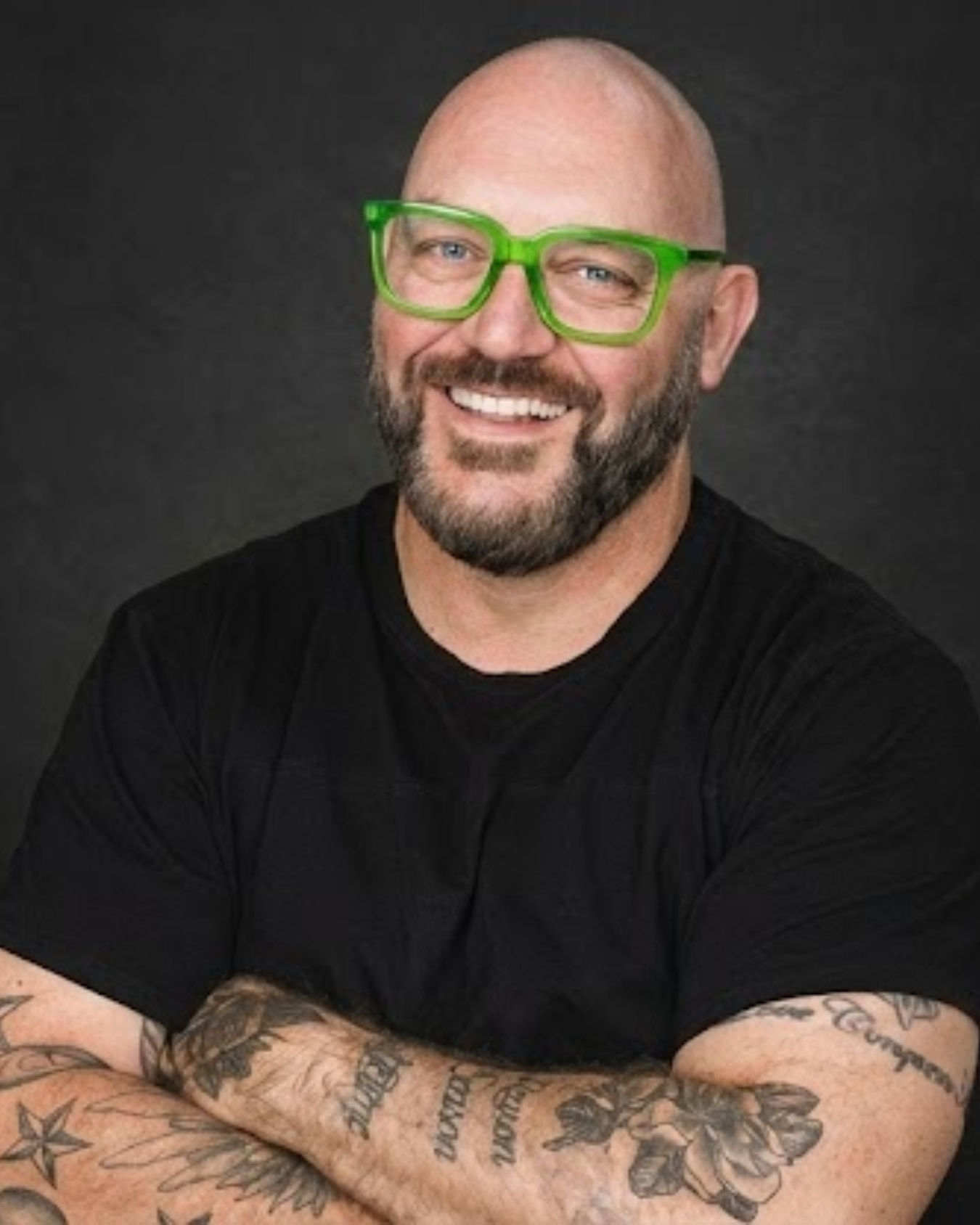
Educating entrepreneurs, speakers & leaders
Dante St James is one of Australia’s most prolific solopreneurs. After training in medicine and psychology, he spent two decades moving through radio, digital marketing and hospitality — accumulating a portfolio of hard-won experience that he now distils into frameworks, tools and training programs for small business owners and solopreneurs across Australia.
Based in Darwin, he operates from the Darwin Innovation Hub and runs multiple businesses simultaneously, maintaining strategic oversight while delegating day-to-day operations. He is a contracted trainer for Meta Australia & New Zealand, the Northern Territory’s only LinkedIn Top Voice, and an increasingly in-demand workshop facilitator and keynote speaker.
