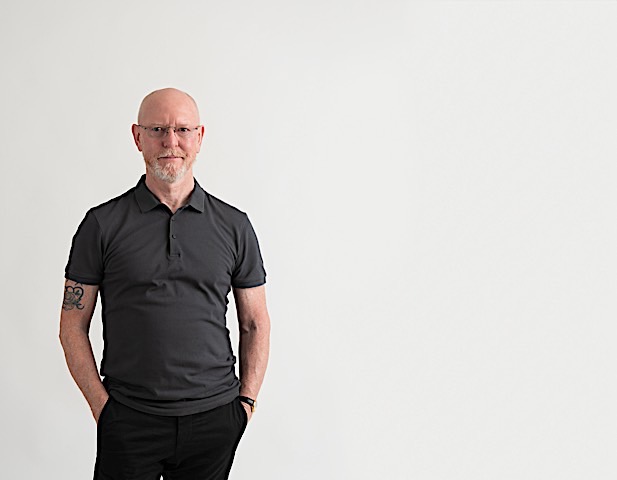




Ella Zhang Inner Operating Systems: Building Leadership Capability Through Micro Habits
Sustainable leadership starts from the inside out,
Ella Zhang on inner operating systems, burnout recovery, and building capability through micro habits.
Leadership capability is not built in annual programs or off-site workshops. It's built on the foundation of four inner operating systems: mental, emotional, spiritual, and physical. Ella Zhang, organisational development consultant and author, has spent a decade helping organisations understand this simple truth.
For experienced independent professionals managing teams or navigating their own resilience, Ella's systems-thinking approach offers a different diagnostic lens. Rather than treating burnout as a personal failing or a work-life balance problem, she treats it as a signal about how your operating systems are functioning. Drawing on neuroscience research, Chinese medicine frameworks, and her own recovery from burnout in 2007, Ella explains why sustainable change happens through micro habits, not wholesale transformation.
In this conversation, you'll hear about the framework beneath sustainable performance, why one operating system out of alignment disrupts the whole system, and why she's sacked only one client in 10 years of consulting—it came down to values alignment. This is a conversation about the architecture of resilient leadership, rooted in both science and practice.
In this episode you will hear about
The four inner operating systems and how they shape sustainable performance
Burnout as a diagnostic signal about your system's misalignment
Why micro-habit change works where transformation programs fail
Values alignment as the foundation of sustainable leadership
Systems thinking vs. reductionist approaches to organisational challenges
Ella's 10-year consulting journey and what she's learned about working with organisations
How to recognise when your inner operating systems are out of balance






Ella Zhang practised law in China for three years before relocating to Australia 25 years ago, where she built a 10-year consultancy in Sydney around leadership capability development using inner operating systems and micro habits drawn from neuroscience and Chinese medicine.
Ella explains how four inner operating systems—mental, emotional, spiritual, and physical—shape sustainable performance.
She covers her approach to diagnosing organisational issues using root-cause analysis rather than treating surface symptoms, why micro habits build lasting capability where one-off training programs fail, and how values alignment prevents burnout.
The conversation includes her own burnout recovery in 2007, her book Upgrade: How to Outperform Your Default Self to Gain Your Super Powers, her annual Vipassana meditation practice in the Blue Mountains, and why she has sacked only one client in 10 years because their values clashed.
Wisepreneurs explores how independent professionals turn accumulated expertise into sustainable practice.
Mentions and References
Upgrade: How to Outperform Your Default Self to Gain Your Super Powers by Ella Zhang |
Luc P Beaudoin — productive practice research
Vipassana meditation
Neuroscience research on burnout and recovery |
Systems thinking (Chinese medicine approach)
How to Connect
Website: ellazhang.com.au | LinkedIn: Ella Zhang
Connect with Nigel Rawlins
website https://wisepreneurs.com.au/
Linkedin https://www.linkedin.com/in/nigelrawlins/
Twitter https://twitter.com/wisepreneurs
Downloads
- Embodied Intelligence Self-Assessment
- Professional Reputation Audit
https://wisepreneurs.com.au/free-assessments/
Please support the podcast
https://www.buzzsprout.com/2311675/supporters/new
Stay one step ahead with The Wisepreneurs Insider newsletter
As a subscriber, you'll get:
- Sneak peeks at upcoming must-listen podcast episodes and guests
- Bonus wisdom straight from recent guest experts
- Marketing tips to attract your ideal clients
- Productivity hacks to streamline your independent business
- And more exclusive insights are delivered right to your inbox!
- Don't miss out on these invaluable resources
- Subscribe now and gain the edge you need to survive and thrive as a wisepreneur
Nigel Rawlins: Ella, welcome to the Wisepreneurs Podcast. Could you tell us where you are and something about yourself?
Ella Zhang: Okay, first of all, really appreciate for having me on this podcast. I love the name already, but you have a wisdom and wise in it. So I'm currently based in Sydney, Australia, and my background has been a little bit messy. I used to practice law before I came to Australia, but in the last 25 years living here, I navigate my career paths into financial industry as learning development, organizational development. So, um, I shifted from working on the dark side of the society into the potential of a human being in the corporate and also the society. So that pretty much what I do every day on the daily basis, I, I love to see human being. It's more like mining ground that we need to navigate and discover and continue to reveal and grow, um, until probably the last day of our life on this planet.
So, yes, that's pretty much me.
Nigel Rawlins: So you started off early in your career, I think, in law. Was that the case? What happened there?
Ella Zhang: Okay, law practice was my dream since high school. And I remember the day, probably in my 16 or 17, I had a dream that when I grow up, I will have a legal firm for female, um, probably recruit all the female lawyers. We speak for the woman who cannot speak for themselves. So that is one major dream I had.
And the other dream is to have a school and have a school, not to teach the normal technical stuff, but to teach something, back then I came from China. In China, I think it teaches something that is not in the curriculum, for example, qualities, for example, virtues. But when I was 16 I don't have the language system to help me to articulate, but I just have this vague vision that these are the two things I wanna do when I grow up.
And when I finished the university and passed my examination and worked in the legal industry. Just a six or 12 month into it, I start to notice one thing that I probably do not have the personality that is required to become the lawyer that I wanted. So it is truly take lots of courage and, uh, have to overcome lots of resistance,
to move myself out of the industry. So that's the reason I come to Australia. My first intention is come here to study master of finance because mathematics, I'm Chinese, but don't get me wrong, mathematics is not my forte. So I came here with the intention to study finance, then go back to China to practice law in the financial industry.
But as you know, um, Sydney has put a special spell on me that make me stay for 25 years and never regretted that I restart to build my career here.
Nigel Rawlins: So with the legal career, you found you didn't like it.
Ella Zhang: I, I love law. I have very strong justice kind of quality inside of me, which is inherited from my parents, I believe. But practicing law is very different. It does require different kind of, I would've say, qualities. But back then, uh, my limited three years experience in the industry make me feel, um, it's more like a one person fight with the system and my mom used to say, oh, you choose to become a lawyer because you think your working hours is flexible, but your flexible means you are working 24/7.
And the other thing I think I was the person, I am still that kind of a person that I can never separate my work, my passion, and who I am. These are three things need to be aligned. So practice law back then is quite aligned, but this also means in the industry there's lots of conflict. About value system, but back then, I don't have the language to describe that.
I just have this feeling, okay, if I need to be successful in this vocation, I probably need to cut off arms and limbs to feelings or to learn from whoever is successful in this industry. But in the early stage, back then, there's always a voice inside of me questioning is that the price you are willing to pay.
So back then I, I told my parents, I can see clearly in this industry if I continue to operate the way I operate, that after 30 years or 40 years, how my life, how my career might look like. Which probably is not going to make me satisfied with myself because I wanna achieve, achieve, achieve back then. But if I want to really go down the path as a certain examples in front of me to really be successful in the industry, then I know clearly I need to let it go, part of me. But the, the question back then is, do I really want to pay that price? So my choice back then is, can I find a third way? So I need to remove myself from certain kind of a practice of the law and probably move myself into the corporate as an in-house council in the financial industry,
so we dealing with numbers rather than dealing with humans, even though human behind of those numbers. But, uh, when I practice as a, as a lawyer, I do have very close interaction with human. And most of the time I feel there's a torn between my heart and my mind and, in my twenties, that can be very, very consuming, but I guess at the end it is more like, okay, do I truly have the personality that is required by this industry or this practice to be successful, or at least to be successful at the level that I can envision myself?
Nigel Rawlins: That's very interesting 'cause you talk about torn between what's in your mind and what, I guess what's in your heart? Um, one of my other guests, Dante St. James, he became a doctor in Sydney and he couldn't stand it either. So he left and he's, uh, um, people are gonna have to listen to his story because similar situation to you, it wasn't what he thought it would be.
So intellectually and, um, you spent a lot of energy becoming a lawyer and then it wasn't what you thought it would be. The same thing with Dante. Um, and, but now he's, uh, living up in, uh, Darwin and he's running a range of businesses and he looks and he sounds very, very happy. You, you are known as the Chinese doctor for sustainable growth. So tell us about that.
Ella Zhang: Okay. Um, I have a few encounters with my clients when I work with them, either as in-house consultant or external consultant. They always use the comments as, Ella, you are the Chinese doctor. The difference between Chinese medicine and the western medicine is they treat the conditions, rather than just to treat the symptoms because when the condition is improved, a certain kind of symptoms will let it go, will walk away, will disappear immediately. But the Western medicines sometime probably purely focus on relieve the systems. And relying on the operation when the system getting more serious.
So we have to take the options to do whatever we need to do to stop it. But the one thing besides practicing law, I think my experience of resigning from the bureau back then also planted significant seeds in my mind seeking what could be the better way. Because back then I worked for the Bureau Bureau, never have anyone resign from them before me.
And for me to, um, submit a resignation, it feels like a slap on their face. And also my parents, this is a good job, why you do this, you are ruining your life. Um, so back then, one thing make me concentrate or contemplate in my early career is, is it possible for organization that we create conditions that all those individual employees, they feels like
they have the right support for them to do right thing, and they can continue to explore and grow and stretch. At the same time, the organization does not feel I need to manage you. I need to control you. I need to shape you. I need to cut you off. Rather than just seeing this is a beneficial practice from both end.
My resignation took two years to really get out. So at that time, naturally I start to read lots of a books, start to understand what is the personal value, what is the value for the business, what could be the organizational behavior. That's why I continue educating myself in the next 10 or 15 years, even when I was working full-time, late in organization on the behavior science, on the organizational behaviors.
I still working on that. The beauty is back then when I was law student or practice law, I don't even know the existence of this industry. But I'm really appreciate that currently I met so many people, so many role models, so many giant on this path that I can learn from them.
But my main point is, these days I still working in big organizations, small organization, the team setting, in the organizational setting. What other alignment between the individual, between the team, between the organization, so we can have the alignment to make sure when we work together we don't consume ourselves unnecessarily or unproductively because we all come here, do kind of work, do certain kind of work.
So how can we make sure the process of producing the work actually is, I will use the words, with less waste. Don't waste the time, don't waste the energy. But how can we find that kind of alignment so we can work towards the same goal? And at the end, we can all feel very proud of the time and energy and effort we put forward.
Nigel Rawlins: Yeah, this is, um, what I'm seeing out there now is that we, we've come to the point where most of our work is knowledge, unless you're working with your hands, well, even with your hands, there's still knowledge there. But organizations that are purely working on knowledge, they've got problems and issues coming in, and it depends how they are managed in many ways.
So if they're managed in, uh, autocratic way and they're expected to be productive and sitting there all day working and solving problems, that's not how you know creative people, well, when I talk about creative people, I'm not just talking about inventing new things and great artwork is actually solving sometimes simple problems that's creative, but that takes energy, doesn't it?
Ella Zhang: I do agree because I think for a job to exist, no matter what level of the job, a role exists in the organization. It's just required to solve certain kind of a problem. Right, so I personally feel, um, problem solving, not just as a skill, as a normal training that is necessary and useful, but it is also come down to the intention.
Are we going to solve the problems that we can make sure we prevent the problem to happen again? Because I remember back then in my legal education, what are we talking about for us to practice law is not to succeed in the court. If we can help our client prevent them to even go to the courtroom.
And that's the success of us because we educate them, we put the right merit into the right place so you guys don't have to spend the time and the money and the energy go to the courtroom. So that's the successful lawyer rather than just to fight with each other in the court-room to feel, oh, look how wonderful I am.
So I guess that kind of a mindset stayed with me, um, in my practice when I was in the corporate as a learning development, they always figure out what could be the systematic issues we need to solve here and what could be the best solution for that because we are not going to enjoy solving the problems repetitively just to keep our position secure. No, we would love to be challenged to solve different problems. So when I do coaching, sometime I even give the task to my coachee. I said, now you see we can solve this problem. So next month before you come to the next session, I'll create some new problem for you to solve.
Because that is how we testing the system, how we testing the interaction. But do not bring back the same problem, uh, or bang our head on the same spot on the wall. Let's find another spot on the wall to bang on. Um, different.
Nigel Rawlins: Well, yeah, that makes me think that, um, some people they just get into a job and they just don't really bring themselves to it or, or to start reflecting on, gee, I've done this 20 times before, how come I keep doing that? What causes that to happen Where I, I guess it's a bit of burnout or, or what's causing them not to be able to face what they're doing and deal with it.
Ella Zhang: Okay. I think this, the reason could be on different levels. I do see different people come to the workplace to do a certain job with a different purpose. Some people come to do certain work because they wanna feel sense of proud of themselves. They wanna achieve something, they wanna leave some legacies.
So they wanna create evidence to show that I'm capable enough to do this kind of job. But I also feel it's quite natural and quite normal and quite acceptable for some people come to the workplace just to do the normal basing on instruction, order, I just wanna spend a minimum of time and energy and effort to get job done and the organization, all the organization, we still need a percentage of the people to do that, to have the grounds covered.
So no problem at all because imagine that you have a busy family life, you have many people in your family that you need to care about, um, then how much energy, how much you can put into your eight hours, even four hours as a part-time. So totally get it. Sometime I see that as a learned, um, behavior, because for example, many organizations, sometime I provide a consultancy to, if they are so massive, so big, um, it is very hard for a decision to be made. There's a lots of conversation, lots of discussion, but there's a lots of constraints as well.
So sometime I also appreciate employees working or managers working in that kind of environment that they come to this kind of organization, with the passion that my expertise can help to solve certain kind of problems you guys are facing. But when they start to do the work, they start to notice, oh, there's so many blocks on their way, and some of the blocks probably cannot be solved at their level.
And so they articulate, they escalate that take a longer time. So very quickly, like a six months, one year gone. But the problems is still the problem. And also then the senior levels, they constantly have changes in terms of who is doing what. So there's lots of issues probably raised and there's some suggestions probably already provided, but it's easily get lost, um, in the process. So I guess for some employees, if, if they do have the responsibility or if they have limited choice of the opportunities of the job because they have a family to help themselves, to go through the day, to get the job done, they have to nagging themselves, okay, what can I control?
What can I focus on? Do I need to control and focus on the things that I have no, or limited influence? So how can I focus on today just to make sure that I don't get a burnout? I don't feel so disappointed that I wanted to walk out because lots of people probably don't have the luxury to make the choice like that.
So I do see different reason, different contributors and the different background, different context to make that happen. But for me to do my work is more like, let's understand where does this come from and, uh, are you happy with the outcome of that? If you personally have very high level of unsatisfactory about the outcome in terms of the work yourself, in terms of how you see yourself in this process, then let's reverse engineer back to see which part, um, that you made a choice in the past. Now condition of the environment may have some changes. Then what different choice we can make over there.
Nigel Rawlins: So do you do this at an organizational level or on a personal level?
Ella Zhang: Organization level, usually I do lots of consulting with big organization, it is all about capability development. With a smaller size, I do work with lots of SMEs. They have a team, the quite profitable business, um, at a certain stage that they feel, okay, internal capability need to be uplifted. 'cause we either want to scale up the business as fast as possible, or the owner would love to, uh, develop, uh, his successes so they can get retired. So those are the moment, um, that engage people like me to get in to understand what could be the capability required internally. This capability also involves, so what could be the management cadence?
What could be the habits we put in place? The habits probably is on the individual level, but also on the team level. So I'm also about the real growth of the capability. We have so many theories, so many teachings, so in any kind of situations we have to make effort to remind ourselves.
I tend to think the way we help individual employee or managers to grow the capabilities is we help them to build lots of micro habits When these habits are very strong, um, when the situation calls, it's come out naturally. It comes naturally does not consume any kind of energy for you to contemplate, but it contemplate, which means okay, certain part of us still need to be solid.
Yeah.
Nigel Rawlins: Okay, so let, you mentioned the word micro habits. So, um, is this something that you teach your clients and why is that a good idea?
Ella Zhang: Oh, okay. Um, I have been through learning development for many years. Usually we do lots of leadership trainings and management trainings, and the businesses also invest a lots of money to do the workshops and the trainings and the coaching and the mentoring. And what I noticed for certain people, they can really take the content, um, from the training sessions and then apply them in their life.
This is not events that happen as a one off. Events happen repeatedly in the next, uh, XY months, sometime years. So because they need to make effort at the beginning to embed some new learnings into their current routine, the routine of a practice, the routine of the way of thinking, the way of doing, until they shift to that this, this new learning could be
part of them, and they can also be more creative in different situations. So how I'm going to do this because I already understand this theory, this theory, this principle. So I can be more creative in terms of the approach I'm going to take in this situation. So in the past, I see people just purely copy paste or whatever the trainer, the teacher taught in the classroom into their reality without their personal
touch. When there's no personal touch, it is not yours. So back then, when I was in corporate, I always said, sharing this thought in the induction with the new employee. I said, whatever you learn here, take your time to practice it because the more you practice it, knowledge going to be the living organ inside of you.
So that becomes your asset. So wherever you go, you go with it. You don't need to go back to the textbook or the slides to copy paste something, come out from others. You will be extremely creative and you can create unique approach, unique way of articulation because it's come from inside of you because this is something no one can steal, so don't feel afraid to share either.
Because this is come out from inside of you. It's never copy paste from somewhere, but we all start from copy paste from somewhere until we created this living organ inside of us.
Nigel Rawlins: What you're talking about is the micro habits that you need to practice to bring them in. And I guess that's like a lot of learning. There's a chap called Luc P Beaudoin, a Canadian guy who calls that productive practice. It's, it's not like, you know, learning to do that tennis playing or anything like that where you've got a coach.
This is where you take something and you actually spend some time learning to do it. And this is one of the big things about knowledge work is that we've got so much information out there and so many new tools, and I've, I suddenly realized this whole thing about, um, the learning organization or continuous learning is that there's new tools all the time, and you've gotta be careful.
You've, you've got to learn them properly, for example, AI, and we'll talk about how that's affecting your potential clients or clients, is we have to learn to use this stuff and bring it in and, you know, you can't just ignore it, um, or in your work. And so, yes, so I, I think that you hit the micro habits on the nail. That's exactly what that is, that you know, but getting them to do it.
Ella Zhang: Yeah, because of micro habits, I recently, I just released some resource to my clients and some previous clients I work with just a very simple, one of the habits that we identified for a team when they have lots of team frictions and also very poor quality conversations. You know, Asians like a Buddhist teaching.
We have this teaching saying, assuming positive intent. So just to simply create, uh, three questions that you guys can use in different scenarios, different situations. How can I hold myself accountable to assume positive intent? Um, because in my view, lots of a conflict in the workplace is not caused by bad intention.
But because we don't pause long enough to write, to ask a right question, we just jump into the conclusions. So we start to fight with each other. So what could be the three prompts or questions you guys should use in different situations to give you the breathing space to ask proper questions or right questions to challenge your own assumptions. So those are the, um, micro habits that I mentioned because it's probably only take you if you are practice enough, it's probably just take you two steps, pause myself, think about those questions, let go. So that's easy.
Nigel Rawlins: Oh, I, I totally agree with that because I had an argument with my neighbor the other day, and, and I got defensive and attacked back. And I thought with hindsight, why didn't I just listen and think about it before I responded? 'cause then we would have, um, 'cause she avoids me now. So,
Ella Zhang: Yeah, yeah,
Nigel Rawlins: which is, but that must happen at work all the time.
You get this in your head that that person doesn't like you and, and that's not gonna be conducive, is it? So when you go into an organization, they call you in and they want to talk to you, can you sense what's wrong? Straight away?
Ella Zhang: Okay, I usually offer a free consultation, free conversation before we really talking about what we need to talking about. So usually at the time, the manager, the people will bring me the problems they're facing and, uh, honestly, most of the time they're thinking the problems is sitting in their team, uh, in the employees, uh, particularly small, medium sized, they always want to say, hey I have a team member such and such,
I need you to help. I need your help to fix 'em. So rather than respond as a yes or no, I always ask, oh, tell me more. Tell me more what he did, what does she does? What does the situation, oh, that this happen quite often. What could the background, what could be the context? What, how did you interact? So that kind of a conversation
uh, will help me and also help them to review what could be the root cause of this kind of difficult employee or difficult behaviors. So yes, that's how I, um, diagnose, um, briefly on the spot with them if they're very happy with that conversation with me. Most of the leaders, they are, for example, SME leaders or founders, they are very practical people.
They're not going to spend time and energy, superficial stuff because the revenue is all relying on their work. So if they see the value of that conversation, they're usually going to invite me and depends on the size of the business and the issues that we identified. I usually request to have more conversation with the people because I wanna get a different side of the stories, a different
perspective. And that also helped me to understand what is the way that each individual managers or team leaders or employees, they processing information here. So that will give me the snapshot about whatever we need to propose to do, uh, is a certain kind of change. The change the way of thinking, way of doing, way of collaborating, way of maybe verbalizing the situations.
So I need to understand all those people's style and a tendency. Then we can design what could be the best way. Make it less threatening for those people, would love to open to see or to talk, or to discuss something they haven't discussed in the past.
Nigel Rawlins: Well that's reflection back onto your micro habit of just not assuming, 'cause you know, you said the magic word that they often want you to fix a problem. You know, they point. away from themselves to start with. I mean, when I was used to work with my former mentor for many, many years, he would never believe anything they'd say.
He would have a number of conversations to pull it out and that, and they often don't recognize what they're telling you, but if, if you know your, your business and you do, from what I'm hearing, um, you are hearing where the problems are and you can ask the right questions. And I think that's wisdom for me anyway, so I can see where the Chinese doctor for sustainable growth comes from.
'Cause you're not just, well, you, you are seeing and hearing Well, my, my mentor, Dennis Hitchens would say he often could know without seeing.
Ella Zhang: I also do shadowing because I, regardless what you guys have told me, I also do shadowing. I need to observe, I need to collect data for myself. So that's also one of the approach that a Chinese doctor does. They need to look at you. They probably see different colors on your face. Then they know what could be the symptoms.
So I guess, um, Chinese Doctor, the only difference comparing to Western is, uh, we are the people I think in the system. I love to think in the system. I'm not motivated to solve the problem on the surface level, but, uh, I willing to attract more business who wanna solve the problem in one go, so we don't need to repeat in a two or three years time later on.
So we need to take time to understand what is the real problem that we need to solve here. So usually, um, people I take on board to be my clients, we probably going to spend a little bit longer time to identify what is the real problem and when we can really pin-point the real problem, solution is usually quite easy, but I, I feel lots of the people, lots of the business, sometime they don't have the patience.
So if they engage the consultant, they know the problem, they think they know the problem. They just bring the problem to you, and expecting you resolve that as fast, as quick as possible without a proper diagnose. So I found sometime, I think this is really the personal preference. I used to have lots of discussion with the business in that way, but then I realized maybe that's also the life lessons people need to learn, uh, in their own time.
Nigel Rawlins: Well, there's a couple of things there. Time is an issue. They, they want a quick fix, but quick fixes never work. We know that, and they know it from even at home trying to do a quick fix. If they don't do it properly, it breaks again. So it, it sounds very much like, what you offer to start with is that diagnostic.
Have you ever had to walk away saying, you know, this person's not taking any responsibility. He just wants me to come in or she and fix that problem. But it's going to continue because that person doesn't want to get involved with, with, with the long term change.
Ella Zhang: Majority of my clients, when I finish the first diagnose with them, I will offer them two or three quick fix because there are quick fix available on the superficial level. On the individual level, if they, for example, if they change their way of conducting the feedback or performance management, that will change the reaction immediately.
Besides much more deeper issues that we need to solve. Um, I've been running my consultancy for 10 years. I only sacked one client, um, this one client is not about they don't do what we want them to do, or I think it's the right thing to do. It's more like we did some work together then I realized our value system does not align. Our values clashed, so I just pay back the money they paid and just say, I'm probably, it's not the right person to help you to achieve this goal, because I, yeah, I didn't even explain why, because I guess in that kind of a situation, it's unnecessary to tell right or wrong, but it's just a personal choice.
Nigel Rawlins: And you felt that inside.
Ella Zhang: Yeah. Yeah, because back then I feel, wow, I, this is the first time I need to do that, but I have to do it because I know if I continue the project with them, I'm not going to be fulfilled. And this, this tension doesn't come from personality style. No, no. It comes from the values. Um, if I can see clearly our value clash with each other, um, it's better we we part ways. Yeah.
Nigel Rawlins: Alright, let's, let's have a look at some of the things that you, you talk about. The inner edge or the inner operating systems. Can you tell us what you mean by that?
Ella Zhang: Okay, this is the idea I put in my book, which was published probably two or three years ago, just right before ChatGPT was available. I wondered back there sort of, wow, if I have a AI to write, how easy going to be? Because English is my second language.
Nigel Rawlins: Hmm.
Ella Zhang: I think a human being, you and I, everyone, um, simultaneously, internally, there's a certain system is constantly operating without awareness, without our awareness. If we do not to make effort to understand them, they probably just charge our life and deliver the result we are unnecessarily happy about.
So in my view, there are four in a operating system, mental: the way we think, the way we analyze, the way we interpret, the way we appraise the situation. And the second is emotion. I think lots of other people now these days are great human being, we're emotional animal, so emotion motivated us to make choices, make decisions.
So emotion, then the way of thinking these two are very close connects to each other. And the third in my view, is very important. And in my book I use the word spiritual, um, spiritual actually in the workplace, what I use is more like the value system. Your value system, we do need to have the value system to fill out why and how we do or do not do certain things in certain ways because that our values in actions.
So, if we can have the clarity about the values and put through our actions through that test, actually we can have a lot of more joy, have more confidence in ourselves because we are internally aligned. And the fourth system I put down is the physical system, because you probably already know people like me, we are higher achievers in the younger days.
So in my younger days I was the person that I think walking in the office is a waste of time. So I run in the office. So the result of that, I had a episode of burnout in 2007. I had a burnout back then. 'Are You Okay Day' is not as popular as it is now, so we don't talk about it. Um, but I start to search how can I get healed from that? Because I still love doing the work I do, but I realized I just need to find another way to respect my body because in your younger days, you think as long as you don't go to the doctor, you're healthy. But actually it's not. Um, so that's the time I start to explore neuroscience, to understand, uh, physical intelligence, practice and meditation.
So these days, a passion, I'm in Sydney, so I go to Blue Mountain for Vipassana Center every year, 10 days. I used to think that is a torture, but after three years, I think that that's the best gift I can give to myself, which is 10 days spend with my mind and with myself. So all those four, four things in my view, they work simultaneously, individually, but also collectively.
And this is how we operate internally. And if I look from the outside, um, for the people I work with the leaders and the managers, I guess, there are two biggest challenges for them, which is outside the world, truly change so damn fast.
Nigel Rawlins: Hmm.
Ella Zhang: And there's a change, um, probably by nature that a human we don't like it.
And also the senior you get, um, the complexity of the situation you're facing is getting even more complicated. So there's no certainty and there's no clear yes or no answer. Nothing is going to be black and white. So in that kind of a situation, how do I filter out my choice and the decisions so the value system becomes even more important?
And also because, and uh, this is the one thing I reflected the other day. Lots of organization now require a lot of people to work more flexibly, but incident doesn't happen flexibly. So I see lots of teams sometime, I'm amazed, if you guys receive the sick leave request on the morning every day, then who's going to be there to solve the problem that are brought to the business by external clients or by your employees?
So if you only have to relying on one or two person continue to perform at a highest level to have everything done, even other people have reasonable reasons not to be there and how, how can we make sure we can help them to sustain the high performance without burnout. So that's a physical part also coming to play.
So the more I look at how we work these days, I just hope if we can have more clarity about how we work internally underneath the surface, so if we can really create a daily routine and the daily ritual and the daily habits or weekly habits and the ritual to make sure we give enough of oil to these four internal operating systems, then we can expect ourselves have the capacity to dealing with the pressures.
Because I always feel, um, by doing so many trainings to the leaders, sometime their behavior collapse, it's not because the lack of knowledge. But it is because in those demanding situations and moments, they lack the inner capacity to have the access of that knowledge. And that's also why, um, in my current work, one of the offerings is let's do lots of micro habits practice.
Because when you have lots of habits embedded in your daily routines, we build a certain solidarities in that areas. So when the challenging situation happens, we probably have enough of internal resource allow us to make right choice rather than react to the situation, then feel regret, then have to invest more time, energy to repair.
Nigel Rawlins: Yeah, I, I think that's perfect. It's, um, Luc P Beaudoin, he makes the point that we know stuff, but we don't always do it. We don't always
Ella Zhang: Access.
Nigel Rawlins: and, and that's where your micro habits come in. But obviously to get those micro habits working, how long do you have to work with these people?
Ella Zhang: Depends. Some people are really good when I, 'cause I have a model of Inner Edge Capability. We interpret that to the four levels of capabilities for each domain and those four levels also matching to the positions in the organization, like a junior level team leader, head of function, and the senior leaders.
So each of them, each level have a different habits. Usually I just give like a foundational level, junior level, we probably need to have more habits to practice because we are shaping our view, our way of thinking and doing. The senior you get and probably the number of the habits we reduce a lot.
But it's really depends, for example, last year I did a pilot of consulting work with the organization about quality conversations. We only use three months, and I only give that, they can choose the habits as a team, as individual. They practice individually and collectively because we have this dashboard, they can, they can view each other what kind of habits you choose to practice.
So we can keep each other accountable for that, right. And also as a team, what could be the habits we build together. So when we work together, we could use these habits to help us to deal with different, um, conflicts, the disagreement, whatever it is. So I only give them three months of time, and for each habit, maximum, probably less than sometime, probably just two weeks, sometime probably one month maximum.
And for each of them, I borrow this practice from a guru, I forgot his name, at the beginning could be challenged, but all the questions internally we need to ask ourselves is, have I done my best? Have I tried my best to do this today? So we give the rating of the efforts that we put forward to build this habits and we can remove this habits,
when we notice, actually I don't need much effort to do this. For example, um, in real life, for example, I'm training to run half marathon this year. At the very beginning of the year, I do need have a calendar, say, oh gosh, did I get up at six o'clock and to run 5K, 6K today? Or I need to make effort for whatever reason.
But these days I already achieve the target if I woke up in the morning, I don't feel sore or pain anywhere. I feel the urge that I need to go out to have a run. So this is the process, Yeah.
Nigel Rawlins: Alright, so Ella, that's your work when you go out, but you work for yourself, don't you? So you, what we I call an independent uh, professional. mentioned that you go off to a, a meditation retreat for 10 days. How do you keep yourself at best self so you don't burn out?
Um,
Ella Zhang: Okay. I have been very stingy, so every single client I take on every single project I do, I easily get into the flow moment of doing that because I take long time in the past 20 years to choose the career path, and then now every single day I feel privileged to work on the things that I'm working on and I can work on this path.
So my joy comes from no matter in other people's eyes, how tedious the work I do. But for me, that's a lot of joy. For example, creating the content or writing the post, even writing a blog in that process, you do research, you trick your words. I have lots of enjoyment in that kind of a process. Um, so I do suggest whatever kind of vocation people choose to do, take some time, minimum, probably five to 10 years coming in the early stage of your career. Try to do variety of things. Then identify what kind of tiny task give you the joy, which means when you're doing that, you have lots of pleasure. And, uh, the effort you put in, um, give you the result that probably is easier for you to achieve than others.
So that also the indicator that could be your talent. And in terms of how to make myself not going to get a burnout again, uh, I guess there's a couple of things. First of all, this is also comes from experiment. We do need to understand how our energy flows because our energy level does not come in as a flat line every day or every week.
So it does take some experiment and trial and error to understand during the week, during the day, what is the peak and the valley of your energy. I put this in my book as well, so you understand how your energy flows. Then the next thing to do is to matching the task with your energy levels. Because what I notice, I'm the morning person.
I work up at five or six naturally, so I'm very stingy about my morning time because during those first three to four hours, if I can do some deep thinking and the writing and the creation kind of work, um, super productive. I probably just took two or three hours a day, even when sometime when I finished I feel, oh my gosh, it's just a nine o'clock, but I can have a joy.
A pleasure, kind of a feeling that I had a big bite of the biggest challenging, difficult task of the day. Then I can go out to meeting people and I have sessions. So currently all my clients knows, coaching clients knows, um, they won't be able to see me before 11 because I blocked those time to do lots of deep thinking type of work.
And then after 11 or in the afternoon, that's my time to meeting people, to have coaching sessions because that's time I'm more open awareness kind of focused. But, uh, in the morning I need to dive very deep. And the other thing I make sure is I use to really just whatever the work request, no matter what time of the day of the week, I will respond immediately. But these days I learned to have separate account, only check this, um, during the working hours sometime. I probably still do some work on the weekend, but I will make sure my weekend activity does not, um, involve computer and a screen because I spend more like 8–10 hours a day on that is enough.
So my weekend now is more like a bush walking, hiking and running and catching up with friends. Just, don't talk about work. And I even made this rule with some of my clients slash friends because we become friends or becomes clients because we are friends. I don't know which way round.
Uh, we make a pact. So if we catch up, on the weekend, of course, they can use me and we can use them to process some work related issues. No problem at all. But let's focus on what could be the outcome of this short conversation. If it's needed and urgent, we do that. Otherwise, we also have other parts of the life they can update each other.
So yeah, make that rule. And also the other thing, I think very necessary. If I'm speaking, if your audience, other people working in organizations, they have a job, one thing I learned back then is one of the major reason that we can easily get a burnout is because we're driven people. We wanna solve problems as fast as quick as possible.
So we don't give ourself time to take a break. And this take a break can be as easy, as simple as not talk to your colleagues about work, during the lunch hour, even just that 30 minutes, don't talk about work at all. Could give us some breathing moment or breathing windows to help us renew our system.
Nigel Rawlins: I totally agree with that. So do you work with corporate and small to medium enterprises. Do you also take on, um, individual clients.
Ella Zhang: Yes, I do. Last year I even do some public programs about leadership management and uh, because the topic is designed in sequence and the topic that I have already run many times in the corporate, but because I collaborate with some career development groups or multicultural groups here. So I was asked to run them publicly and some of the students go through different programs with me learning how to manage up their managers.
Then also learning how can I be the best manager for my people. Um, so yeah, we doing that and some of them they wanna have more individual one-on-one support. So we engage as the coaching and uh, I also do individual coaching, mostly because the managers or the leaders in the organization, they want external support for their managers.
So I also get some organization, even small business, assign me to be the coach for their management team individually or collectively because they need some uplift of the capability.
Nigel Rawlins: Yeah.
I'm definitely coming to the conclusion that that, you know, if you want to work at a high level, you do need to connect with somebody who works with you as a coach, as a sounding board to give advice. Um, to listen, um, and more and more. And I don't think it matters what age you are, um, it's, it's becoming more and more important.
Um, Ella, is there something else you'd like to say? Because we are really at the end here now.
Ella Zhang: I truly hope, um, I truly hope whoever is listening to your podcast, they have this belief. Life experience here is not to torture us. Life experience here is to give us the learning ground to understand how can we, what kind of skills, what kind of tools, what kind of support, what kind of environment, what kind of conditions we can create for ourselves to be better so we can manage those challenging situations in way much better way. Eventually, if they are as old as I am, no matter how they know, if they are as old as I am, they'll understand. The inner peace actually is created by constantly sharpen and uplift other inner capabilities so we can maintain the inner peace no matter how messy the outside world is.
Nigel Rawlins: I agree with that. So, Ella, where can they find you?
Ella Zhang: Um, I'm on LinkedIn. If you search Ella Zhang you will find me. And I also have a website, ellazhang.com.au/
Nigel Rawlins: And I'll have all that in the show notes. So Ella, thank you very much for being my guest.
Ella Zhang: Thank you so very much for having me. Like we only just start a conversation, but it's already one hour.

Consultant, Coach, Trainer, Author ★ Guiding Bold, Ambitious and Humble business leaders to scale sustainably
Ella Zhang is an organisational development consultant and author based in Sydney. She brings 25 years of professional experience spanning law practice in China, a career transition into the financial industry, and a decade operating her own consultancy.
Her work centres on leadership capability development, burnout prevention, and sustainable organisational growth.
Ella's distinctive methodology integrates neuroscience research on burnout recovery with systems-thinking frameworks drawn from Chinese medicine. She developed her framework of four inner operating systems (mental, emotional, spiritual, and physical) following her own burnout in 2007, which became a turning point in her approach to capability development. Rather than treating organisations as mechanical systems, she recognises them as networks of individuals whose operating systems shape team performance.
She is the author of Upgrade: How to Outperform Your Default Self to Gain Your Super Powers and offers individual coaching, team consulting, and public programs on leadership and management. Ella is known for her root-cause approach to organisational challenges and her commitment to values alignment—in 10 years of consulting, she has sacked only one client, citing values mismatch. She is available for speaking engagements and consulting. Contact: ellazhang.com.au | LinkedIn: Ella Zhang
