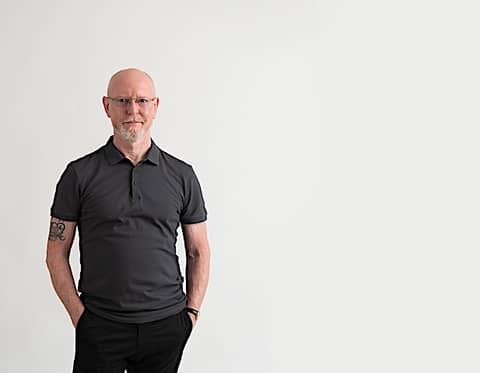


Meredith Fuller OAM Invisible Expertise: How Introverted Professionals Articulate What They Know
In her fourth appearance on Wisepreneurs, psychologist Meredith Fuller addresses a problem many experienced professionals face: contributing significant value while feeling completely invisible.
Drawing from over 45 years counseling individuals who "don't quite fit," Meredith explains why reflective thinkers struggle in organisations that reward quick responses over deep insight.
She introduces the concept of "liminal space" – that uncomfortable period between who you were and who you're becoming – and reframes it as productive territory rather than professional limbo.
The conversation provides practical language for articulating pattern recognition capabilities, explains how physical sensations function as legitimate business intelligence, and offers Monday-morning strategies for making your distinctive contributions visible. If you take time to process information, sense organisational dynamics others miss, or feel exhausted from pretending to be someone else at work, this episode validates your approach and provides frameworks for positioning accumulated wisdom as premium capability.


Psychologist Meredith Fuller returns for her fourth Wisepreneurs conversation to address a challenge facing many experienced professionals: feeling invisible at work despite making substantial contributions. Drawing from over 45 years counseling individuals who "don't quite fit,"
Meredith explores why reflective, introverted thinkers struggle in organizations that reward rapid-fire responses over deep insight. She introduces the concept of "liminal space"—that uncomfortable transition period between who you were and who you're becoming—and reframes it as productive territory rather than professional limbo.
Listeners will learn practical language for articulating pattern recognition capabilities, understand how physical sensations function as legitimate business intelligence, and discover concrete strategies for making invisible work visible.
The conversation connects to Jean Boulton's complexity science framework, showing how organizations function as adaptive systems rather than machines, and why your need for processing time produces insights others cannot generate.
Books & Authors
- Jean Boulton - The Dao of Complexity (referenced in episode introduction regarding organizations as adaptive systems vs machines)
- Carl Jung - Referenced for work on shadow work, reflective self, and archetypal self
- Gabor Maté - Mentioned for work on addiction and the need for feeling loved and valued
Related Episodes
- Episode 78: Mayumi Kataoka on forest therapy and why your brain needs trees (complementary discussion of slowing down and attunement)
Concepts & Frameworks
- Liminal Space - The transitional period between identities or states of being; productive uncertainty rather than professional limbo
- Congruence - Maintaining authentic self across all contexts (work, rest, home, with friends, with colleagues); being comprehensively true to yourself
- Embodied Intelligence - Physical sensations and somatic awareness as legitimate business data
- The Fallow Period - Necessary reflection time where nothing much appears to be happening before breakthrough thinking emerges
- Heart-Mind Integration - Chinese concept that rejects Western mind-body dualism; thinking and feeling as unified process
- Reflexive Interweaving - Creating stability through patterns that repeat but adapt, maintaining core identity while responding to context
Practical ideas for independent professionals building practice on their own terms. Arrives Tuesday. Subscribe free at wisepreneurs.com.au
Connect with Nigel Rawlins
website https://wisepreneurs.com.au/
Linkedin https://www.linkedin.com/in/nigelrawlins/
Twitter https://twitter.com/wisepreneurs
Please support the podcast
https://www.buzzsprout.com/2311675/supporters/new
Stay one step ahead with The Wisepreneurs Insider newsletter
As a subscriber, you'll get:
- Sneak peeks at upcoming must-listen podcast episodes and guests
- Bonus wisdom straight from recent guest experts
- Marketing tips to attract your ideal clients
- Productivity hacks to streamline your independent business
- And more exclusive insights are delivered right to your inbox!
- Don't miss out on these invaluable resources
- Subscribe now and gain the edge you need to survive and thrive as a wisepreneur
Nigel Rawlins: Welcome Meredith to the Wisepreneurs podcast. our listeners might like to know that you were the second podcast guest ever back in 2020, and you've been on a couple of times since then as well. So welcome back. So Meredith, can you tell us where you are and something about yourself?
Meredith Fuller: Yes, I've been working as a psychologist for over 45 years and my main interest has always been in counseling and vocational counseling for individuals who feel a bit different or they don't quite fit in the world, or they're not sure how to use their gifts or the challenges they have working with other people where they feel very different.
And, that's led to my particular interests these days in doing salons, discussion groups, activities, creative activities where I seek to connect up with a lot of individuals who are feeling very lost, very concerned about their world, their place in the world, what they have to offer, and how to be their best selves.
How to have hope, because a lot of people who are quite unusual or different don't feel that they have a tribe. They don't feel connected to other people. So they're feeling very distressed and they're often very misunderstood by others. And so, um, you know, if you're a Martian standing in a field of earthlings, it's hard, but when you find a few more Martians it's much easier to understand your place and that you do have something to offer and how to be your best self in doing that.
And that's what I'm very interested in, particularly at the moment where we've got, massive changes like AI, people working from home, people working in little clusters collapsing and then connecting with other people and people being on their own, between their creative bursts and how do they manage feeling depressed or anxious or lost when the rest of the people all around them seem so purpose driven and focused and high achieving, and they're feeling quite concerned about how to maintain their sense of self.
So they're the sorts of projects that I work on, and there are a lot of community related things where we get together with unusual groups of people. One example, a salon that I have coming up next month, I have a colleague who's a clever HR specialist, and she's also an artist, and she works in what we call the liminal space.
And the liminal space is betwixt and between almost like the doorway you stand in as you move from one sense of self or one environment to the next. You haven't quite manifested what it is yet, but you're leaving behind where you've come from. So you are really not sure what's happening. And it's a, a state of hesitation or a state of respite or a state of wondering and how might we manifest that in art and what does that mean in terms of a lot of Carl Jung's work about shadow work and reflective self archetypal self.
So we are having my friend Julie come to talk about her art and discuss what it means for people who have a sense that they're here to do something, they're just not sure how they're gonna do it, and how can they make money out of doing something that's so unusual. And she does a lot of large artworks for organizations and big spaces like, you know, entire walls of art.
And it's fascinating abstract work. So we've got about 30 people booked in now. They're broad range of people, from executives to artists, to individuals who work part-time in a range of non-for-profit and business settings. We're all gonna talk about what's this thing called art?
And what does abstract art mean and what does it mean when you just don't feel understood by most other people? And what triggers this for me is a couple of people I know who are very creative and they work in the marketing and media and communications industries, and they're feeling a little invisible because the colleagues who seem to be getting on a very extroverted, loud dynamic, hitting goals all the time, and they feel that they have a great deal to offer, but they just feel invisible and helping them to actually be more robust about what it actually is that they do.
Because a lot of the people I'm talking about they feel how they're different and not what other people seem to be wanting, but they have less capacity to articulate what's special about them. So I'm very interested in helping those people who feel a bit lost and stuck and invisible to be clearer about what it is they offer.
Particularly now because we're in the liminal space of moving towards a new way of living, a new way of working, and this is such a great opportunity for those people who have felt lost and invisible.
Nigel Rawlins: It's something I've been following recently in some of the reading I've been, looking at is how we view the world. What our viewpoint of the world is, and what you're explaining or saying there to me that I'm hearing is that you've got people who are in an organization, they're working, but they feel out of place.
So it's something inside them that's telling them this is not quite right. And they're viewing people who are just cruising through this and working quite well. It's a word called ontology that I've been exploring, but it's also that embodied feeling that they're hearing something in themselves and they're actually getting the message, whereas other people are not hearing those internal messages.
And a really important thing you said there is how do they articulate what it is that they're feeling and knowing? Because one of the problems that, when you said that they're seeing other people getting ahead because they've got the gift of the gab or something like that. I think you're also identifying is that our organizations are not the same anymore.
Work is not the same. But there seems to be a thing where it's predictable and you do okay, but the organization's not necessarily doing okay. It might be dysfunctional in many ways, but some people can cruise through that and others are saying, well, what's going on? One of the things that is disturbing me today is how do people explain their value to an organ organization or to their job or to their community or something like that.
Is that the articulation that we're talking about here?
Meredith Fuller: That's a lovely comment you're making, Nigel, because we do need to understand and comprehend what our value actually is and when our value is symbolic. Hence my interest in the creative arts and how that connects to very sensitive people. And, the way in to try and help explain what it is that they bring in terms of value, but also to understand what their values mean for our society and where we're moving towards.
That's a really, really important point you're making, Nigel, what is our value? And in order to understand our value, we need to understand what our values are, and where it becomes quite fraught is for people who value authenticity, being themselves, like being their true selves and remaining their true self, whether they're at work, at rest, at home, with friends, with colleagues, being comprehensively congruent.
And a lot of people find it difficult to maintain their congruence because they feel as though they are not wanted for being congruent and they can't relax into having that relaxed alertness at work, which picks up your point, I think, about how we need to bring our bodies to work. And part of being embodied is to actually be congruent.
How I am, how I feel, what I do, and what I say. And not trying to be the false self, which is what can happen if you are not able to articulate what your values are, what value you bring to your group, your team, your organization, your social group. And so you are, rather than feeling able to articulate who I am and what I bring and how to use me best, there's a sense of I can see what I'm not.
And that can cause some anxiety. And that can also encourage a sense that I have to try and be these other people, be like these other people. And I can't do that because it goes against my values, my value being authenticity is the most important thing and being real. And so a way of enabling those individuals who are quite different, and they might be about 5, 6, 7, 8, 10% of the population.
So they do, have a different way of operating in the world. How can they actually stay true to themselves? All the time. And that enables them to relax and do what they do best rather than be aware of their gap, their loss, what they're not. And that's something very important to me as far as helping people with their careers and their vocation.
Nigel Rawlins: Yeah. And that's the view that what I call the ontological view is that they're working in an organization and feeling out of place, we've still got this industrial age idea of work where you do this and that's your output and you're productive.
But really we are living in a knowledge world, where pe-people are using their knowledge to solve problems or deal with information, process it, and uh, deal with something. The issue that I'm hearing there also, it's these people have a divergent viewpoint, an intellectually divergent viewpoint, which is very, very powerful.
But if they're being overlooked because the organization's set up structurally, then they're definitely gonna be feeling out of place because this whole idea of being embodied is that they're actually present. They're, they're hearing and they're feeling and they're sensing and it's coming up. But if they're not being heard, then they're gonna feel lost.
So what do you think we need to know nowadays to survive in this world that really has become quite complex and is either changing very rapidly or slowing and then rapidly changing again? And especially with AI coming out, and changing the nature of work too, which I'd like to talk to a bit further on.
So what do you think.
Meredith Fuller: If I'm different, if I'm a little more sensitive to picking up nuance, to picking up symbolism in how I think, rather than a linear way of functioning, if I'm aware of the unconscious motivations that are occurring in a room, in a meeting, if I am a person who needs a lot of time to reflect or be or wait for my inspirations.
I can feel quite overwhelmed in a lot of work groups where we're supposed to get together, snappy talks, snappy action, do it immediately, quickly, get that done, move on to the next thing. There's a frenzy of functioning and someone who, for example, takes time and needs to have a flow, which includes what I'll call that space of fallow period, where nothing much is happening before the big drop into great ideas.
It can feel as though, well, maybe you're not contributing. It seems that other people aren't aware of what you do, and it can be very disheartening. Particularly there might be performance reviews or appraisals or discussions, and you can feel as though your contribution isn't seen at all. And yet, you know, there are things you do that no one else does, but it is as though it's not recognized.
So one of the things that's important is to understand, and name what it is you do, rather than feeling that you should be apologizing because of what you don't do like everyone else. So I'll give you some examples. Let's say you are in a creative team and you are doing media, communications, coming up with ideas, and you are a person who likes to dig very deeply and try to understand what's going on in the world at a deeper level than right now.
You might be someone who reflects on where we are heading rather than what the immediate need is. And you might be someone who has their best thought after a period of reflection that could take days. When you're in meetings and people are jostling to be heard and you know who speaks the loudest and who's the most enthusiastic, who's the most vocal about what should happen, seems to take the airspace.
And it can be seen by your managers or leaders that, well, don't you have any ideas or aren't you excited or aren't you interested? Or you seem a bit flat and in actual fact you're not flat at all. So much is going on internally and you are having technical dreams and you're getting lots of symbolic, ideas about symbols and parallels and what that might mean for all manner of people. But it's almost as though the whole meeting's moved on to something else, and you are neglected. Also, it can be that you are very perceptive about the unconscious behavior of other colleagues in the team. You notice who has a need to be recognized or to be heard.
Someone who has a need to talk a lot, someone who has a need to control others, someone who needs to be the leader, someone who doesn't wanna do the, finishing tasks. And you are aware of what people seem to be doing unconsciously, but you wonder whether anyone else in the room's aware of it and you are wondering, why am I feeling all these feelings when everyone else seems to be in their head and they're so logical and they're so
articulate, and yet I'm feeling pain even in my body with some things, and I feel as though people don't even see me in the room. I go away and I start to worry about, well, who am I anyway? How can I keep this up? I'm getting tired trying to be like others. I can't do it. And what I'm recommending is, please stop trying to be someone else.
Please learn to be yourself. One of the reasons that that's difficult is that our current society doesn't appreciate, it's almost like the shamanistic part of our society. The healers, the wise ones and often the wisest people speak the least. We're a society who seems to like lots of chat quick and so if you are a thinker and a reflector and a feeler,
who takes a lot of time to assess what's really going on, and then when you've absorbed all of this and interconnected it all, you can come up with the most brilliant assessment or the most brilliant key word, or the most brilliant image to explain what are we all doing? What needs to be done? Where's our group going?
Where's this project going? What are we missing? But you need to have the space. So space is a very important thing to understand and people who are more sensitive and almost like, um, prophetic in where we're headed, need a lot more space to get a sense of it all and then mirror that back. So I'm inviting people to stop hurrying.
There are some people who are very, what we call twitchy. A little bit like, you know, with races, there are some bodies that are very twitchy and they run fastest and they need to run, a little bit like harnessing the energy of, um, ADHD people who can be just when they're excited, they're so twitchy and they make it happen in their dynamic, and they're great for that here and now,
what do we do right now? But these other people are more for, let's look at the bigger picture. Let's sit in that liminal space while we work out where we come from and where we are going. And then when they do offer some ideas, possibilities, ways forward, they're very grounded in truth because they've been able to attach mind, body, soul, spirit, heart, the whole thing.
So how do we enable groups to slow enough? To take into account these thoughts and how do we make sure that they're appreciated in terms of their worth? Because it's not about rapidity and it's not about how many hits you get, tick, tick, tick. It's about the quality of your contribution and I think when you were talking before about the massive paradigm shift that's occurring, we are changing how we function and we need to become wiser in truth.
And that means we need to understand a little is a lot. And people run round like their chooks flap, flap, flap, but they don't stay still enough to recognize we shouldn't even be in this. We should be doing something different or something else, or it needs a different way forward. And so I'm very struck by how we can educate others to appreciate the more introverted way of being in the world. The first way that we need to do that is for the introverted person to articulate who I am and what I bring and how I operate, and why you need that. If we can't articulate it, we become invisible. So one of the ways can be having conversation with others, the person you directly report to, the colleague you work beside the small group that you are with the larger group, A meeting to actually say, this is how you get the best out of me.
I bring A, B, C, D. And in order to do that, I need you to ask me last if you're doing a round robin, I need you to say, we are flagging this because a decision will be made in three days. Let's get back together in three days. And let's ask you first how have you perceived this period of time? And that's interesting because a lot of extroverts won't have given it any thought.
They've had their best thought, yada yba, it's out. But the introverted preferred will really think deeply and feel deeply and in their bodies, they'll experience all sorts of aches and pains and visions and ideas connected to how we communicate, what we need to say, what we need to do, who needs to do what, and so allowing us to sit with it.
Often our bodies can become conduits for what's going on in a room and where we need to head. If you are a very feeling sensitive person in a group and you are having a meeting and you are starting to feel distressed and upset and certain parts of your body are aching, that can be a metaphor for what's going on at work, what's going on in the room, what's going on with this topic, and it can be helpful to sit with it and ask it,
what am I being told? What am I hearing? Rather than thinking, oh my God, there's something wrong with me. I don't fit. I'm exhausted. I go home and I'm so spent, I feel dreadful. So I'm inviting people to be able to say, I bring something less tangible. I bring something more etheric. I bring something that is glue, and that glue is what keeps us together as people.
That glue is what keeps us connected to our own bodies, because if we are at work and we're not connected, heart, mind, head, physicality. We're only getting a certain proportion of ourselves at work, and it's not our best self. Our best self is always being authentic and true. And if we're able to be relaxed alert, we can not have to spend ages gearing up to walk into a meeting and cope with feeling anxious or distraught.
We can actually walk in being ourselves and sit with being ourselves and know that we're understood and valued, and that people will ask us, well, how does it seem to you? Or, gee, I've noticed that you've been scratching your neck a lot, or you've been furrowing your brow a lot. I'm just wondering what's going on for you.
That others can actually invite us in to articulate what we are feeling and help us to actually explain what the symbolism, what the metaphor is, what the analogy is that's going on for us, and then help us to get to our best thoughts more reasonably. And that's an important thing because particularly with the development of technology.
Um, some very deep questions sometimes fail to be asked. We all love a bright new, shiny toy. Oh, quick, that'll save us time. Great. Let's jump on AI and let's get them to do everything. Well, their techniques are good for lots of things, particularly repetitive, formulaic things. Fantastic. But that needs to be freeing you up for more disparate, unusual things, rather than being the way we tackle everything.
So it's helping us to understand that people in our society at the moment don't wanna use AI and technology so that they've got more time to run around and do the dishes or put their clothes on. What they want is to have the luxury of deep thinking and deep pondering and wondering, and making deep connection with each other.
One of the things that we miss is eye to eye contact with each other as our groups and areas get bigger, we don't have that touch feel of being in the orbit of another person and staring into each other's eyes and getting that truth of really seeing each other and communicating. The problem with Zoom and things like that is, it's very 2D, so you're not getting that deep embodied emotional experience.
And when we can actually talk from our thinking, our emotions, our heart, our head, our hunches, how our body's reacting, we get a bigger truth about what's happening in our society, our world, our job, our project, what we want to do next. And so I'm encouraging people to take more time to actually physically be together for intense periods of
exploring, communicating, some of the time, and we seem to have lost this. We don't even have time with friends when we have a social activity. It's almost like we have to rush in, rush around. We've got three things to visit, can't really say more than, hi, how are you? Oh yes, my kid's doing this at school.
Oh, it's really busy at work and it's chaos. And there's no real time to actually be with each other and say, how are you as a person? What's your journey? What's happening for you internally? Let's talk about the bigger picture issues, not the superficial.
Let's explore what it is to be human right now in this liminal state where a whole sense of where the world's headed is so different. And the only thing we can trust is being congruent with ourselves. But we need to recognize it's okay not to know everything. It's okay to sit and wait. It's okay to read books, to sit and look clouds, sometimes the most brilliant leaps of innovation come in the stillness and the quiet.
And this is why, introverts are absolutely essential in our work world at the moment, and often being misunderstood and overlooked. And it's also why anything creative, artistic, whether it's painting, drawing, language, dance, music is so critical. Music's a language that's very important because there's something about waves and sound waves.
And hearing at that deep level, almost that universal level that requires us to actually be in a state of flow. It's very hard to be in a state of flow when you're all jostling to get the best position sitting at the meeting and make sure that your ideas are picked and your team's picked. And, it's much more difficult for groups to say, let's take it more slowly and come up with something comprehensive that's going to work, rather than just have a big idea.
Some people have great ideas, but they haven't thought through how will it be implemented and how will it impact on individuals and people? How will it affect their bodies, their minds, their souls, their thinking, their day to day, and who will be affected? And they jump off with a great plan that doesn't work.
And then everyone's saying, well, you didn't sit with it. You didn't wonder about it, and you've wasted millions of dollars. You've wasted millions of hours. Gee, I wish we'd asked those two quiet people over there who were trying to say, hang on a minute, hang on a minute. So I'm encouraging people to get clearer about
it's okay not to know, and it's okay to wonder. It's okay to sit with a process. Most brilliant leaps happen in space. The space where nothing much is happening because you are enabling a space in your body, your mind, your heart, your soul to bring in inspiration. So we need to take some things more slowly.
Those of us who need to operate that way, enable the twitchers to get on with things, but that they need to check in with us before action and consequence is occurring.
Nigel Rawlins: You know, on episode 78 I spoke to Mayumi Kataoka and it was about when your brain needs trees and she does forest bathing or forest therapy,
and she takes people out, they spend three hours in a forest and they do a maximum walk of a kilometer and a half. And at the end of it, they say, we only walk a kilometer and a half.
And what she does, she attunes them into, sounds, the wind, the colors, by doing a number of things. So she disconnects them from the digital world, but, what I'm hearing too is, um, people need to learn to make sense of what's going on, but again, the organization from the sounds of it, is still in that industrial model.
Come up with an answer, let's do it. And mistakes are being made. And in many ways that that comes across to me as, um, mismanagement in many ways because that's what's being rewarded, whereas the quiet, thoughtful, nature of the work is not being rewarded. And to me it sounds like, um, a word I use, there's wayfaring, but wayfaring for me is more about doing your own personal journey, but way making in an organization is making sense.
I don't think that's occurring a lot. And I think, um, one of the biggest dangers also is that people are supposed to be productive, like you said, coming up with an answer, coming up with a solution. All very quickly and I think we know nowadays that doesn't work anymore.
Meredith Fuller: Yes, very good points Nigel, because what we are finding is, um, invention innovation, comprehensive way of bringing new thought into an action that will actually make people connected again and inspired to be involved is critical. And it comes from being a part of, and one of the problems that occurs is we can feel so alone that we are not a part of, and we don't understand that personal touching, whether it's cognitively or emotionally or in real time physically, is what engages us as humans, the social part of us.
The comment you made about the tree therapy is very good because we are actually connected to everything with the planet. There are people who are very good communicating with animals like dogs, for example. Well, dogs don't use our language, but they use language that we can understand, and people who have a way of connecting with animals and perhaps they're very close to their dog, or, animals come up to them and it's like they're talking with each other.
It's like there's a conversation and they're understanding each other. And animals, like dogs and others, have a lot of wisdom to share with us. And if we can listen and we can hear and we can respond, they are our companions, they're our accompanists as we go through this thing called living. Same with trees.
Trees communicate with each other, they communicate with us. everything that's living that has a vibration is alive, and we want to invite ourselves to be part of the planet that we're living in and part of the society we're in. And if we can connect with just a cluster of people that we feel very close to, it helps us stay enlivened in the world.
So coming back to the introvert, preferred more sensitive person, they just need a couple of people that they feel very close to who see them, who are mindful in the group, in the meeting, in the organization, that, hey, you do these amazing things and I want to check in. I notice you are doing this. What's going on for you?
Or what's your thought? Or, can we come and ask you to embed that a little more later? Or are there things we haven't thought about? What do you think might go wrong? And invite them as well as the introvert preferred per person being able to say, I wanna write about this and I'm gonna write some notes down and send them around.
So that we can talk about them next time, and I'm gonna lead a process discussion to go deeper into this issue. Um, I'm gonna share my observations about what I think's going on in the room right now. All of these things are tremendous, wonderful things. A lot of consultants do that. A consultant will come in and say, okay, maybe this is a dysfunctional team, or we're not as good as we could be, what's going on?
And they're actually able to hear each person look at the process of each person together and feedback what's missing, what's too much of, what's too little of, do things differently by taking that group into another context, for example. And it's almost like saying, yes, a 2D world's interesting, and it's, it's there as our servant to help us
be the best human we can be. So in order to do that, we don't wanna get caught up in the detail of a digital world. We wanna use our digital world to enhance us so that we can spend more time in this big leap we are making because we are making a huge leap in how we understand being human. And we've lost sight of individual relationships with each other, with their friends, with their colleagues, with their bosses, with their supervisees, with their mentors, with our multi-generational families, with our children, with our babies.
There's so much that is being way waylaid because everyone's running around looking at all their gadgets and we're not looking at each other. And there's a lot of incredible communication that goes on when two people sit and look at each other eye to eye and just notice each other. And so I'm encouraging people to see the value and the power of being
introverted, of being sensitive of feeling what goes on in organizations and taking that into the organization, but also recognizing, and I think this is very important, um, people get together to do something. You don't get together to not do anything. So obviously something's brought you all together.
It could be a purpose, an interest. You need some kind of money to live. You believe in something, whatever. You do have to do something. So I'm not suggesting that we all stop doing, I'm suggesting that we connect, doing and being. So it's about integration. And I suspect what's happening is in this rush to get ahead, be the first to use all the new technology, be the first to do this, the first to do something else.
We're not actually sitting back and asking the deeper questions. And I'm really interested in, um, some of my colleagues are actually now working in Denmark where they're doing post-doctoral research on, you know, the ethics of AI, the ethics of everything that is coming up, and the impact that it does have on the individual.
And so we're almost saying, if we can do it, let's do it. Rather than saying, what are the consequences, what are the implications? And when do we do it? Maybe we're all rushing in to do too much too quickly and nothing much is stable enough. We're not grounded. And I love the notion of the trees. What's special about a tree is they're so well rooted.
The roots of the trees go down very deeply to find the water and their roots intermingle with each others. So trees communicate with leaves, with roots. Small communities do the same thing, but if there's no time to be together and just be aware of who we all are, then something's lost. And in this rush, people who are prophetic sensitive, empathic, significant to other people can get trampled.
And a little children and sort of teenagers, adolescents, young people, young adults, they're feeling unloved love. And it can be love for a topic, love for a passion, love for a person, love for an ideal, love for your family, your partner, your children, your best friend.
That is the glue. And if we lose that, we're at the danger of, you know, jumping into a Doctor Who world. So I, I guess what I'm saying is I've always loved imagery that that comes to mind like the different iterations of Dr. Who and the quirkiness, the symbolism, what's the symbol of Tom Baker's scarf?
There's so many things that are interesting about the unusual people and I, I really wish we could have more space and time to honor the unusual people and sit with them, not because we wanna buy the latest book they've written, the latest application, they've created the latest, you know, money making activity, the latest course, but to actually imbibe very deeply their message.
And what we look at when we look at a lot of people like uh, Gabor Maté, who's interested in things like addiction, are aware of this terrible lack of feeling loved and wanted and valued. And it's as though the majority of people are so busy trying to get ahead and fill up the emptiness, they don't recognize that in the rush they're not paying heed or mindfulness to other people around them who are significant. It's almost as though, you know, we hear a lot about people are busy and they're busy with the people who do something for them, and as soon as that's been, um, exercised, they don't bother with them anymore.
And I think there are some people who have a tremendous gift to value and validate others and somehow pull together people who need to find each other in a subterranean way. I often think of the work you do, Nigel. Your care and concern for the health of people is very critical. And one of the things that you do that is a beautiful example of what I'm talking about, modeling.
You honor individuals who are very bright, very different, intelligent, wise, heart as well as soul, as well as head. And you honor them forever. So your idea of friendship or collegiate ability, friends at work, extends beyond, oh, I'm on a project with you right now and we'll be finished in a month and I won't bother with you for five years unless I hear that you are in a new job.
You actually maintain a deep connection with a core group of people and then another connection with, you know, 50 others where it's not about what you can do for me. It's about honoring other people. And I think this honoring of other people is something we need to find out about again.
And in the honoring it's, it's a way of loving, it's a way of loving other human beings and that can really help us appreciate the more gentle, the more quiet. And it's also interesting with leadership. The greatest leaders I've ever met, say very little, observe a lot. They know what everybody in their group or their organization contributes and they somehow maneuver to make sure everyone is validated and used in the way that's best to bring out the best in them.
They're very aware. Great managers are paid for understanding all the different people with them, and the greatest managers can manage difference. And unfortunately, where a lot of organizations are struggling at the moment is everyone's gotta be the same. This is our culture, this is our value.
And if you are different, you are a pariah, you are out, you don't get rewarded, you don't get promoted, we don't listen to you. And unfortunately, um, they tend to do a repetitious-mistake-making-activity and they collapse. So what I'm suggesting is, we get together with people who somehow enhance whatever it is that we're wanting to do and learn how to use each other well and realize that it, it isn't how many things you say, it isn't how many goals you kick, it's how you contribute to the greatest, the biggest outcomes that are longevity outcomes that actually enhance people.
So I'm suggesting that one of the paradigm shifts that's coming up is to actually learn how to connect with individuals and small groups in real time with real people, and thus use all of the great technology and our 2D work to give us the space to do that.
Nigel Rawlins: I'm agreeing with that, I think um, the technology allows us to do it, but one of the problems with, people working from home is they're not having that face-to-face contact. They're just having the 2D, and it's being encouraged in our state here, that people will work from home. Well, the government's saying they wanna legislate it, which makes it really difficult.
Meredith Fuller: Well, it's about balance, isn't it, Nigel? So people who work from home, if they know their own rhythm, and we know that an introvert preferred person can work really well for hours and hours and hours alone when they're ready, and they'll get a lot of work done. We also know that very extrovert preferred people waste a lot of time working alone because extrovert people tend to like to talk about themselves to other people.
So when you get together with a room full of extroverts, they're all chatting about what they're doing and what they're up to, and chat, chat, chat. An introvert doesn't say much. But they're interested in finding out about other people. So what can happen is an introvert by themselves doing work from home will accomplish a lot and will reflect on other people and their needs.
An extrovert person working from home alone, the phone isn't ringing, they're not having a chat, they're not sharing um chat about themselves and they wind down. Their energy gets desiccated and they don't do much and they feel quite depressed. So what I'm suggesting is know your rhythm. If you are an introvert preferred and you wanna spend three days hidden away in a room because that's when you really go down deeply, that microscopic way of thinking, great.
Maybe the other two days you go into work or maybe you say, I just wanna connect up with three or four other colleagues. They're not even at my workplace, but they work in another field that when we get together, we toss around the philosophy of what we are doing. I'm gonna have lunch with them. And you do that.
And if you are an extrovert preferred, you say, well, look, I'm okay for two hours alone, max. And after that, I've gotta stop. I've gotta go and meet some people for a problem solving business lunch, or I've gotta get on the phone and talk to someone, or goodness, I'm better just one day at home and I need to be out with people four days a week.
Learn what your rhythm is and work with it and be respected for how we are different in this essential dynamic. So, for example, I'm very introvert preferred, and I need to reflect on things a lot. And if I don't have enough time after being out with people for a few hours, I feel quite distraught because so much has happened and I wanna go deep within and really pull out some very deep thinking.
I can't do that if I'm getting interrupted every five minutes with chatter, chatter, chatter, and small talk. It doesn't happen for me. So I make sure that I have that balance. A lot of people and then a lot of time alone. And I find it really funny with my extrovert friends who are always saying, I wanna talk to you on the phone.
I wanna talk to you on the phone, and let's do Zoom. Let's do Zoom. And I'm saying, I just like writing emails and I'm like having little written exchanges and then getting together with you once a month for a great big lunch. I love that, but I don't wanna talk to her every day for three hours. So trying to understand how we can best use our colleagues, I think is another very important thing.
And we don't know if we don't tell each other. Do we ever sit down with each other and say, this is how I want to be in our relationship. This is how you get the best outta me. This is how I feel, seen, wanted, loved, appreciated. What do you need? Let's work on that. What's okay? What's not okay?
How can we do this? And those conversations are really important because sometimes we need to remind our managers, our supervisors, our bosses, our partners, what we are really on about, and what we are really doing and what we need. If I can't articulate what I need, how can I expect you to guess? So this reflective space, this liminal space is really important because we are looking at a new way of living in the world, and we need to look at what are the problems that are going on at the moment.
Why is it there's so much crime? Why is it there so much Um, parting of relationships, why is it people keep running in and out of different jobs? What's going on? We need to think more deeply about what's going on and why are people feeling unloved?
Nigel Rawlins: What we're saying here then is there's an expectation on these people who feel different to be very much an adult. And be very mature and be very wise to deal with this. So let's think about this. This podcast will come out on a Friday. So over the weekend maybe they'll listen to this. What would you think that they should be doing the following Monday morning. Walking back into work and they've listened to us and they're, they're realizing, yes, I am different.
And yes, that's what's going on. What should they start doing differently?
Meredith Fuller: Firstly, I'd like to ask them to think about the people who are significant to them. Maybe you make a note of who are the five to seven people who are most important to you. If we have three to five to seven people who we really feel we can reveal ourselves to, we are connected to. They know us, we know them.
That's psychologically good health. If then there's another group, maybe 15, 20 where we feel, yep, they're good friends. And then over and above that there'll be another group who might be our work colleagues, professional association colleagues, our street, whatever. Go with the most critical to you and ask yourself, how well do I understand them?
How well do they understand me? How much do I articulate about who I am becoming? Because we're always in a process of becoming, how well am I listening to who they are becoming? How well am I able to talk about us in a sense of wanting to be the best we can for each other?
What do I need to communicate to this other person about me? What do I want to hear about from this other person about them? What am I longing for? Sometimes we are longing just to say, let's go off the work site. Let's go and sit in the sun, have lunch.
Just look at each other and just enjoy each other and then talk about what comes up for me when I sit with you. What comes up for you? When you sit with me, what are you noticing about what my eyes are telling you? It's almost like doing what we do with our dogs, communicating at another level. How are we feeling about our life stage?
How are we feeling about what we are juggling? How are we feeling about what's going on at work? Let's just play, it's almost like saying let's have a bit more of a play about how we are relating with each other and let's acknowledge the hard stuff. Gee, how can I have a relationship with my child, my partner, my sister-in-law, my cousin, my grandmother, when I'm so busy and so frantic, I can't even just sit with them for 45 to 60 minutes.
We know all the research tells us under 30 minutes with someone is nothing. You don't get a deeper appreciation or understanding. You know, when we are doing any kind of job interview, assessment at work under 30 minutes, we're not getting a real person. So you need at least 45 minutes to an hour with someone to really be with them.
How often do we say, I've got 10 minutes. I can talk to you for five minutes. Oh, sorry, um, can't spend more time. And so we're not actually nourishing how we know each other. So I'd be saying, can I really rethink how my diary looks? What am I trying to achieve? Am I trying to show how busy I am? But I'm not actually outputting anything.
I'm just trying to play busy, but I'm not doing anything significant, and so I need to have more time doing things differently. Also, I believe, change a lot of our deadlines. I think everyone's deadlines are too fast. People put a project together, the deadline's too quick, elongate it.
People assess, how long will I take to do that? Not enough time. Make it longer. People evaluate, how long will I have to have lunch with you to have dinner with you? Oh, I've got one hour. You know, it's not enough. So you actually elongate the timeframe so that you get a better quality. And that is critical because how often do breakthroughs occur when we can have enough time to go that deeper level of, hey, what is really going on between us?
What is really stalling this project? Why aren't you guys at work getting on with those guys? What's going on? And so deciding after listening, I'm gonna take more time to do things and I'm gonna have a more real conversation. And of course, you can only do that if the other person is willing and interested in doing it with you.
So you might have to say to yourself, do you know what? I've got a small band of people who I feel safe with, who are congruent with me, who know me. I can trust them. We can get together once a month, once a fortnight, every night for three hours, whatever it is, and be real. But I also understand there's 15 people at work who are not in a stage of wanting to do that with me, and that is not gonna help me or them.
So I'm not going to do that. Like work out who, who do you need to be with to have this deeper connection? And it only needs a few people. That's why so many people benefit from having an interest group that might connect to their job, but they're meeting people from different organizations or different clusters, different age groups, and they're doing something expressive.
How we find out who we are is to do something expressive. When you can be expressive, whatever that form takes, you are most in touch with your authentic self and what you bring. So I'm encouraging people to allow themselves to be expressive. And being expressive can mean doing things you love to do that are fun and you don't have to be perfect at them.
A lot of us give up because we don't allow ourselves time to practice, rehearse, learn. Oh, I'm too busy. I can't learn to play the guitar. I can't learn to write music. I can't learn to paint. I can't learn about AI. You know, well, of course we can. We just need to actually say to do this, I need to do less of that.
I'm always astonished about people who like doing things because they think they should, rather than they like them. Don't do things you think you should, you don't like and someone else loves to do it. Make that space better for you to do what you love.
Nigel Rawlins: Meredith, I think there's two things I'm hearing there is one, when some should somebody say, well, look, this doesn't work for me. I need to go out on my own. Or two, who could come in and sort this out in our organization 'cause we're not listening to each other or working. And another interesting thing you said about projects.
Projects are always underestimated, any long term project that's not taking more than a year. I mean, you'll hear a lot of people saying, oh, you've gotta move fast. Well, yeah, you can move fast, but as long as you're doing something really simple and then building on that as they say.
Meredith Fuller: Absolutely.
Nigel Rawlins: Any real long time project is 12 months to two years or even more. So two things. Should they leave? If they're finding that's the case, and if they do leave, what are they gonna do?
Or is there somebody who can come in and start seeing these and bringing the dynamics or the sense making back into it.
Meredith Fuller: I believe in both. One of the things that we're noticing about where we're moving towards in the future, is organizations as such are gonna be very different. What's happening now, little clusters are forming of people who come together for a reason or a purpose, and they might pull each other in from odd ways.
Often there'll be connectors, people like you, for example, who know, oh, if you're gonna do that project, you might wanna meet X, Y, and Z because they'll be really great for that. So there's connectors who you use to help find the right people, and you use different methods to find the right people, get together, do it, and then it's done.
And it may be time to finish. And you don't keep hanging onto something because you think, oh, we can't dismember it, we can't finish it. So you stay doing what we call busy work, but it's not really doing anything. The purpose is finished. You need to let it go, and you need to maybe have a fallow period of sitting and waiting to find out what's peaking our interest for the next big thing, or what do we need to consider next? And then having a ripple effect and moving on. And I love the um, example of theater colleagues who are involved in directing, producing, acting cast crew, ancillary processes. They come together because there's a purpose. We are going to perform a play, we are going to create a film, and we assemble the people.
We are clear with each other. We have processes that we use so that we get the best out of each other. So great leaders in these things spend a lot of time learning about each other and getting the best from each other so that they can be the best we do whatever it is. And that may take months, a year, two years, you know, films can take years, or a week.
And then we finish off. And then we move away to other things. But there's always different clusters who form. And often what I really love about what younger people are doing is they're not spending, you know, 3, 5, 10 years doing academic courses. They're learning on the job by getting together with friends and colleagues of all different iterations and working well together because they know each other and learning quickly together and helping each other and remembering each other when there's something else someone hears of and pulling people in because they know each other, they love each other so they can work easily, because where there's trust and comfort, ability and authenticity, you hit the ground running.
So I guess it really does make sense that we need this congruence. And one of the problems with organizations is they might say, this is our mission statement, this is our culture. But that's not how they're treating people. Well, that's not what they're really there for or their initial purposes moved and they haven't moved with it.
So it's about very here and now and connecting that to there and then and where in the future. So it's some sense of almost like time is fascinating really because we do need to be aware of the immediate, short, medium, long term effects. We do need those people who are quick, quick to action, but is that right for that particular task?
And if it isn't, get some other people involved if that is right for that particular task, but you've got a whole lot of people who wanna talk about um, the history of something for 10 years before they wanna act. Well, that's not gonna work either. So it's about understanding who we are, because then we can tell each other who we are.
We can show each other who we are. And the best way to do that is by expressing ourselves and doing what we do best. And I believe that's why it's very important these days to feel supported and secure enough to let yourself be who you are and do it. And one of the great things about technology and AI and everything else, the greatest thing, it enables us to get out whatever it is we are good at, because we've now got the mechanics and the bits and pieces to do it quickly.
And it sort of means that we can start manifesting our dreams faster and people can start seeing, well, gee, what are you good at? What is it about you and why do we need that? And how do we need that? I guess one of the things that I'm conscious of is, how important it is for people to understand having a good feeling in a work team because you trust each other.
And you know that you can speak without getting your head blown off, or that people won't criticize you, belittle you, give you a sort of contemptuous smile, knife you in the back, all that sort of thing. It's just so wonderful to be free enough to be able to say, we are gonna do something. We're gonna work out how we do it that's equitable and fair and financially, emotionally, time-wise, and get on with it.
And all of these things happen if we really know ourselves and know each other. And the biggest thing we've lost over this frenetic period is the capacity to say, but who am I really? Not, what does everybody else want? And we can get lulled into thinking this is the world because we go on LinkedIn and we go on Facebook and we go on all sorts of platforms,
Instagram, it doesn't matter what. And it's like people are putting stuff into us about this frenetic being um, first to do something, adopting this, getting that, it's all push, push, push. And I don't know, it's like we're not able to just actually sit with each other and, and acknowledge what we do well together.
And this is how great ideas are born. And it might be seven years from now that a conversation you've had with someone sparks something and you will get together with a group of people, and magic happens because unconsciously it's been filtered down through the time when things are occurring. So I, I'm big on saying, listen to your truth.
And if your truth is that you don't feel you're fit at work, if you feel sick having to go there, if you feel exhausted trying to pretend to be someone else, and if you feel hurt, well you've got some choices. Where am I feeling the best? Who is that with? How can I let people know what my needs are? Never assume anyone does know and never assume they can't change. People can change, but they need the wisdom and the knowledge. So you might have significant conversations and you might decide, do you know what? Being in large organizations isn't for me. I need to be with a small group of people and these are the people I'm planning to be towards and I'm gonna start looking for them.
Or you say, hey, our organization, I need to be with this, we've got the clout, we've got the resources, we've got the finances, we've got the expertise. We're doing big things. I don't wanna leave this. I need this, but we need to be doing it better. Let's bring in some thoughtful people who can help mirror back to us and help us move along in a different new way.
That's a good idea. Let's do that. I'm quite shocked at how we've lost a lot of training and consulting services. It's like everyone saying, we're too busy, that's too expensive, what a waste of time. Let's just get on with it and look people will fall by the wayside, sack them, move on.
Plenty of people looking for work. So there's a sense of not honoring all the wonderful material that we have together that we can do something really magical with. And you know what the biggest problem is? No one ever does an audit of who we've got in our group. No one except as I'm saying these new creative um, groups, who are saying, hey, what are you good at?
What are you interested in? What's your life story? What's the significant things you've done in your life? What are your hobbies? What are you interested in learning about? And you find out there are people in your organization who are just amazing, but you've never found out 'cause you've never asked.
And you can start harnessing all this new knowledge and put together unusual teams. Stop worrying about age, age together. Broad age ranges are great. Stop worrying about everyone has to be the same. Difference is great if it's managed by a great leader, manager, supervisor who understands who the people are that we have and how to get the best out of them.
And you know what? You don't have to be that bright. The greatest, managers I've ever heard speak say I don't have to be clever at everything. I don't have to know everything. I have to know the people, and I have to know how to get the best people for all the different tasks. That's what I have to know.
And it just really frees us up, I guess, to really wanna say, I wanna express myself and what I bring. And you know what? If this isn't wanted here, that's okay. It'll be wanted somewhere else,
Nigel Rawlins: That sounds pretty good. We've come to the end of our time, actually.
Meredith Fuller: Well, I just get so passionate about wanting the smaller cohort of people who feel like they're not okay to realize they're more than okay, and they're space for everyone. So I get very excited.
Nigel Rawlins: Meredith, where would you like people to find you?
Meredith Fuller: Well, I've got a website.
Nigel Rawlins: So that's meredith fuller.com au
Meredith Fuller: Great. And there are lots of free things we do. We've got groups that we put together as a free resource for people in Melbourne, obviously in real time and virtual time. And there's lots of projects that we're involved in. We make films, we do all sorts of things where people can come together and share ideas and thoughts, and we all help each other and share our skills.
So that's what I'm doing now in this period of time, of my life at my age.
Nigel Rawlins: And you're on LinkedIn as well, aren't you? Yes. So they can find you there. Well, Meredith, thank you very much for being my guest again.
Meredith Fuller: My great pleasure, Nigel.
