
 Apple Podcasts
 Spotify
 PocketCasts
 Castro
 RSS Feed
 Janine Garner Expertise Monetisation: How Women Build Independent Consulting Practices

Janine Garner arrived in Australia at 29 with a backpack, a resume, and a permanent residency visa — and rebuilt her career from nothing. After 20 years as Group Marketing Director for Oroton and Ralph Lauren, she walked away because, as she puts it, she had lost herself despite being awesome at her job.
What started as dinner conversations with women she admired became the LBD Group, a women's network, then five bestselling books tracing a single thread: From Me to We (real collaboration), It's Who You Know (intentional networking over transactional networking), and Be Brilliant (the four laws that shift you from striving to thriving).
Janine now mentors women consultants and advisors in their 40s and beyond — many exiting corporate through redundancy or burnout — to turn decades of experience into commercial businesses of their own. She believes that when women become financially independent, they give back to their teams, their communities, and the world. The conversation covers why most networking is surface-level sales, how to build a board of advisors who see what you cannot, and why the old rules of business were written by people whose lives look nothing like yours.
Wisepreneurs explores how experienced independent professionals position accumulated expertise and build sustainable practice.
Janine Garner helps women entrepreneurs over 50 turn accumulated expertise into independent consulting practices that charge what professional judgment is worth. After 20 years in corporate marketing, finishing as group marketing director for the Oroton Group overseeing Oroton and Ralph Lauren brands across Australia and Asia, Janine built a seven-figure mentoring business focused on expertise monetisation for experienced women leaving corporate careers.
In this conversation, Janine explains why experienced women consistently underprice themselves when starting independent practices, often earning less per hour than a fast-food worker despite decades of professional knowledge. She shares her days-down-dollars-up business strategy for restructuring consulting offers around value rather than time.
Janine breaks down the four-role network model from her book It's Who You Know: promoters who champion you, teachers who stretch your thinking, pit crew who keep you on track, and butt kickers who drive action. She explains why true collaboration requires curiosity rather than transaction, and how to codify implicit professional knowledge into saleable intellectual property.
The conversation also draws on Professor Ron Heifetz's work at Harvard Kennedy School on the professional, familial, and ancestral voices that shape career decisions. Janine describes building a business for a client in her sixties who wanted to work exclusively with CEOs from her caravan.
Mentions and references: It's Who You Know, Be Brilliant, and From Me to We by Janine Garner. Professor Ron Heifetz, Harvard Kennedy School. Melissa Liberman, executive coach.
Connect with Janine: janinegarner.com.au| LinkedIn: Janine Garner
Wisepreneurs explores how independent professionals turn accumulated expertise into sustainable practice. Subscribe for new episodes.
Connect with Nigel Rawlins
website https://wisepreneurs.com.au/
Linkedin https://www.linkedin.com/in/nigelrawlins/
Twitter https://twitter.com/wisepreneurs
Downloads
- Embodied Intelligence Self-Assessment
- Professional Reputation Audit
https://wisepreneurs.com.au/free-assessments/
Please support the podcast
https://www.buzzsprout.com/2311675/supporters/new
Stay one step ahead with The Wisepreneurs Insider newsletter
As a subscriber, you'll get:
- Sneak peeks at upcoming must-listen podcast episodes and guests
- Bonus wisdom straight from recent guest experts
- Marketing tips to attract your ideal clients
- Productivity hacks to streamline your independent business
- And more exclusive insights are delivered right to your inbox!
- Don't miss out on these invaluable resources
- Subscribe now and gain the edge you need to survive and thrive as a wisepreneur
Nigel Rawlins
If you've left a corporate career and caught yourself saying, I'm just starting out, this episode will change how you think about that. Janine Garner spent 20 years in marketing finishing as group marketing director for the Oroton Group. She's a bestselling author of three books and today runs a seven figure mentoring practice helping women over 40 commercialize their expertise. Janine shares why experienced women consistently under price themselves, her days down dollars up strategy for earning more, while working less, and the four roles every independent professional needs in their network. This is the Wisepreneurs podcast. I'm Nigel Rawlins. Janine, welcome to the Wisepreneurs Podcast. Can you tell us something about yourself and where you're from?
Janine Garner
Well, first of all, thank you for having me and thank you for all the work that you are doing. I think it's such an incredible gift to share people's stories and, uh, their thoughts on how they've built their careers and where they're going. So it's an absolute pleasure to be here. Um, so I am actually originally from the uk. I was born in the uk. Born to a farmer actually. So I grew up on a farm in the north of England, farmer's daughter. At the age of 18, I left home and moved to the Midlands where I started studying, and that actually opened my eyes to possibility in the diversity of the world. From there I started a career in London, and then at the age of 29. I arrived in Australia, um, and I arrived, literally no job, uh, nowhere to live. I had a Permanent residency visa, and I had my resume, and I had to start building my career all over again. Uh, from the age of 29. I now live in. Sydney in the northern beaches of Sydney, run my own business after a 20 year corporate career where I was group marketing director for Oroton Group looking after the Oroton and Ralph Lauren brands here in Australia and through Asia. And for the last 15 years, oh my goodness, uh, I've been running my own business. I've got three children, all still at home, 22, 20 and 17, we're about to enter our final HSC year and a menagerie of animals at home. Two dogs, two cats, a lizard, and a whole heap of fish. So life is a little bit crazy.
Nigel Rawlins
That does sound crazy. So what made you want to leave England at a at a young age?'cause that is a young age.
Janine Garner
Yeah, well I think for me, so I'd moved further and further south. You know, I'd, um, when I went to do my degree, I was the first girl in my family and the first girl that had actually gone to uni, we actually couldn't afford, my family, couldn't afford to send me to university. Um, and I actually ended up applying to the government at the time and was fortunate at the time to receive a grant to go to Aston University to study a Bachelor of Science Degree. And I specialized in, in marketing as part of that degree. Um, and I just never wanted to go home. I never really felt at home in the north of England. Um, loved it, you know, it is in my blood, but I just had this desire, my spirit just didn't feel settled and so I went from the Midlands down to London. I had a fabulous time in London working in the fashion industry. I think London is a brilliant place to live, um, as single person where you can, you know, party hard and enjoy life. And I became an international marketing manager in London looking after brands such as Jaeger and Viola, um, and at a very young age I was at the forefront of, um, loyalty programs. I dunno, I'm sure you can remember that far back when the first loyalty card came out and it's like, oh my god, technology And I launched a, uh, loyalty program for that company where we had 250,000 people on it. And it was that early stages of tracking data and being able to use the data to build the brand. And then I fell in love. I met my husband, um, in London, and we came over to Australia for for a holiday and I landed back in London in February, hit the M25 at three o'clock in the afternoon. It was pitch black and I went, I can't live here anymore. And so I applied, um, and I was fortunate enough to get into Australia on the point system, and I arrived as a permanent resident at the age of 29. Uh, literally packed everything in back in London, sold everything. Um. And as I said, arrived with a backpack, a resume, a permanent residency visa, and my now husband, the rest is history rebuilding my career from there.
Nigel Rawlins
That's a fabulous story. I was actually born in England in Southampton, but I left as a young child with my parents. Um, but again, the, the story is trying to afford it an education when your parents haven't had that sort of education. A a lot of Australians, baby boomers, got a free education from our government at that time and that that created a whole middle class. But one of the things I wanna talk to you about is working in London. I've had a couple of guests over, over the years who, um, I think one of them was Úna Herlihy, who's in Ireland, and there's another Australian girl, Tash Menon Verhul, whose, whose careers really took off in London. So there's something special going on in London in marketing especially. How did that affect you?
Janine Garner
Oh, I think you're spot on. Um, if I sort of jump ahead, it will then make sense to go back. So when I arrived in Australia, I first of all arrived in Melbourne and I found it really hard to get work. Um, you know, I arrived as a 29-year-old, um, I'd achieved some remarkable things. Yeah. Um, in England, um, in terms of great stuff to put on your resume. Um, and I couldn't find work and at the time, you know, I am now 50, oh gosh, I turned 55 this year, so this was a while ago. At the time I reached out to someone for some advice, somebody from professional services. And the advice I got at the time was, Janine, you need to wear a little bit of pink. If you could see me now, I'm wearing a bit of pink, but Janine, you need to wear a bit of pink and you need to pretend you don't have the answers. That was the career advice I got at the age of 29 when I arrived in Sydney and, if I then sort of track back, I think in the UK you know, through the university system, through your career, you are pretty much trained to know your stuff. You are trained to, when you go for an interview, be really prepared not only to answer the questions, but to have the depth to those answers. You are trained to be curious and to explore and, in work, maybe it's because of the sheer scale and size of the population. Um, you know, I dunno what the UK population is now, but compared to Australia, we're probably talking three times the size. The proximity to Europe and the US it's in, it's incredibly competitive. And so in the workplace, um, you say yes. You experiment, you put your hand up to do work, um, and you're prepared to go that extra mile. Now I'm talking obviously from my lens as a 29-year-old, and I think when I got here, I remember saying to someone, this is the hardest thing I have ever done. You know, prior to arriving in Australia, I'd run photo shoots around the world. Um, I'd done thousand, thousand print runs. You know, we were, as I said, I was managing a CRM system that had 250,000 customers and those transactions, and I'd pitched that into the board for revenue. And that was, you know, that was, that was a technological first at the time. And I came here and it was like the experience, it didn't matter, um, and I said to people, the hardest thing, one of the hardest things I've ever done is arrive in Australia because I thought it was gonna be easy. I speak the same language, um, tend to look like most Australians. Um, and I know that's a whole other conversation from a diversity perspective, but it was really hard. There was this unconscious, definite unconscious bias going on both from an age perspective and a gender perspective. Um, culturally, we operate really differently here. So if I think back to, to England, I remember those first six months being here. I was desperate to, to know what was going on around the world and the local news, the news at the time would tell me that Flossy two shoes had drawn the Mother's Day race, or the Johnny had hit the NRL Club, but there was no international landscape. Thankfully, that's changed now. Thankfully we've got more of an international lens on stuff. Um, and at the same time, I love being here. Interestingly, when I moved up to the northern beaches of Sydney, I didn't realize, but when I was 15 and my mom brought me to Australia for a visit, I remember being on a ferry from Manly going into Sydney and meeting this lady who was an air hostess. And I remember talking to her and I couldn't believe that she lived over here, and I couldn't believe that this was her commute. And obviously that planted a seed. Because I am living and commuting in the very way, when I was back at FIF in as a 15-year-old going, oh my God, this is amazing. This is my home. I class myself as Australian. My kids all born here. Um, and I am absolutely committed to the work that I do here. And I quite like, particularly the current climate that we're in right now, I've got a very international lens on the world. I, I invest in taking myself overseas to maintain that, but I feel incredible gratitude and appreciation for where we live right now.
Nigel Rawlins
It's a fabulous country. It is changing though, isn't it? And it is changing. We won't go into that, but
Janine Garner
no,
Speaker 2
there's some current concerns and I think they're worldwide concerns, and I'm hearing it from a lot of places now, but you've still got the energy after all this time. So let's, let's go into some of the stuff that you do. What I can say, um, I, I, I call you a portfolio worker,'cause you are a business mentor. Mm-hmm. A keynote speaker. Mm-hmm. A bestselling author, you've written five books, and I'm just wondering where the, and you've got three kids and all those edibles. Where the hell do you get time plus the podcast?
Janine Garner
Yeah. Um, I think I just, my why, my vision is what drives me. Um, you know, for the early stages of my career, the first half of my life, the first season of my life was very much following the corporate trajectory. That standard you leave university, I got myself on a graduate traineeship, I started doubling down and specializing in marketing and I worked my way up that standard corporate career. My entire corporate life was marketing, understanding consumers, um, and essentially driving activity on the back of that. And when I, if I go back to to childhood, that probably started because as I said, my dad was a farmer. So as a kid I'd be on the market stall and I was in charge of selling eggs. So from an early age, I learned the curiosity around human nature. Um, being interested in the stories that people would say, and obviously, you know my job was to turn them from a half a dozen eggs up to a dozen eggs. And I think my, my mastery started developing through my corporate career. I became known as, actually in hindsight, I think I was one of those inter in internal entrepreneurs because I couldn't, I couldn't, um, stay long anywhere. If anyone would tell me no, I'd find a way round. The beauty of working in retail is the budgets were never huge, so you had to be really creative and clever about how you would leverage the dollars that you had to have the biggest return possible. And I always had this, this vision in corporate, that marketing stood at the center. Our job was to interpret the, the desires of the board, the CEO, the CFO, the IT the retail, whatever it is. Our job was in the middle, bringing it all together and turning it into something that would attract clients into our world. Um, but for me, I would do a lot of things in two years that the majority of people would take five to do. And, and I would, I couldn't. I was restless. I, I could always see opportunity and I got to an age where, as I said, it would've been 29. Um, I'd had three children. But they were little at the time. I have still got them thankfully, but they were little at the time and life was mental. You know, I was a generation with my first child where I, the maternity leave pay wasn't a thing, so I actually had to go back to work'cause we arrived in Australia with no real money. And I just remember getting to the top corporately and going. I've lost myself.
Nigel Rawlins
Mm-hmm.
Janine Garner
I am awesome at my job. Tell, I can tell. Do that job standing up my head. I love it. But I've lost my passion. Yeah. I was, I was busy looking after the board and the shareholders and Mr. Lauren over in the US and my team, and then coming home and the family and kids, but I wasn't feeling inspired and yet around me, I was starting to have conversations with women that were building their own thing and I could sense that passion. Um, I was starting to become aware of what was happening outside the boundaries of the workplace and I believed at the time that there had to be more women out there like me, that wanted to have conversations that were intellectually inspired. Having depth of conversations, um, where I was being seen, and being engaged with as me, not as the mother, not as the wife, not as the international marketing director, as me. And so what I did, Nigel, is I, this is really sort of part of my story and where, what keeps me going, I, um, I reached out to people that inspired me, women, and I invited them to dinner. And that first dinner, there were six of us around the table, and I shared what I was feeling and the conversation just filled my soul from the possibility, the smarts, the intellect, the desire, the, the vision that people had and that dinner then became a second dinner. And that second dinner became the birthplace of my first business, which was the LBD group, which the, was a community of women like me, essentially a network of women helping each other in corporate. Um, and that's then where I then, when I've got to do this, I've got to do this. And so I took the leap and I left my corporate career at the age of 30. And started running my own thing from my kitchen table. And over the course of my career, I think what connects the, the passion has been there. I am relentless in my belief that so many women have more brilliance in them, than they currently see, and I dunno if you've read my piece today that I share or yesterday that I shared on International Women's Day. I did. You check me out on LinkedIn, you'll see it. I did. We have a voice, we have opinions, we have smarts. We have, we have so much more to give and my, my work, I totally, with every answer of my being, believe that when we unleash the brilliance that exists in women, we have the potential to change the world. Because the thing about women is unlike our beautiful men, which I love, I've got a gorgeous husband, I can tell from our conversations that, you know, you are, you are one of us, as in one of what wants the world to change. I know that women get to a point where they go if they are financially okay, and their family are okay, they don't acquire more stuff to show their success. What they do is they give back and they give back to their team, to the people around them, to their community, and I know that the work that I'm doing is fundamentally about helping women become financially and commercially smart. So that, that is how we create the ripple of change. And so when you look at my career, it's all sort of been part of that. Um, the first business I built was about women. I sold that business. I sold that business at the time because I, I'm a big intuitive feeler of when I need to make a move. My speaker bureau say, God, you're the queen of reinvention, because I tend to that, that that little girl that was on that market stall at the age of eight, she's still here. She's constantly watching the world. She's constantly connecting the dots. She's constantly being curious about what people are wanting now, and I see my role right now is about showing, uh, the pathway of hope and helping people, taking people on that journey. And if I can get this, this incredible community of women being financially independent. That is how we'll be able to collectively give back. So my books have followed that journey too. Um, so From Me to We, the first book I wrote was when I first came out of corporate, and it was very much about working together. It was about collaboration, it was about teamwork. And then I got curious and I went, why are people finding it so hard? Like, why, why is it all so surface level? And my mentor at the time said to me, Janine, how do you, how do you keep connected to so many people? How do you see opportunity? How do, how do you do it? And I'm naturally actually quite an introvert. I'd much prefer these one-on-one conversations than throw myself into a big room. And he said, you need to codify how you, how you connect. And that became my second book. Uh, it's Who You Know, which has been translated into multiple languages and is still selling around the world. And that's essentially about finding a network of you that, that networking, as we know it has become so transactional. It's become all about numbers. AI and technology, unfortunately is fueling that. And this ability to build this board of advisors around you is a real skill because it requires intentional connection. It requires continued support and input. And that's what I wrote about in that book. And then I got to the point of going, hang on, I was showing people how to connect and network. I'm talking to people about how to work together, but it's still, there's still something missing. And that's when I accidentally launched my podcast,'cause I went on a journey of talking to people that I believed was successful to try and understand what was the tipping point, what was the tipping point from striving and proving yourself to being in flow and being successful. And, I also backed that up by taking myself off to Harvard. You can see that hopefully you can see all the connection points here to, to just understand the latest thinking and leadership. And I codified those interviews into the four laws of brilliance and my book Be Brilliant, talks to that. And fundamentally, Nigel, it starts with who you are. And this is then what then led to my, uh, continuous work in this space. The keynote speaking I love, uh, my corporate work is being brought into organizations to help them unlock their internal leadership and brilliance and find the talent of the future. Um, and then I work directly with, um, 40 plus year old female consultants and advisors, essentially help them unlock their potential and build commercial businesses of their own. Most of my clients in that world have either been made redundant from corporate, um, because of age, let's say, um, or they struggled from burnout much like I did. I went, this is ridiculous. Or they're going, there's got to be a better way. And interestingly, most of them come to me thinking that they're just starting out. I call BS on that. Yes, I go, you're not just starting out. You have got decades of experience. What we're doing here is bringing together that decades of experience and setting you off in this next season of your life. Um, and that's where I am now. So I have no idea where I'll be in two years. I just know that this work is part of me and what I do, and I'm constantly curious and constantly, uh, looking at how I can do my best work, working with people that I adore working with, um, I'm working in the way that I want to work. I'm on a mission to help those women, but to also rewrite the rules of business. Like we don't need to build a business based on a 50-year-old white guys, we're all of running a business. Like we, we, we are multi-dimensional. We can't work in that way. And why should we? Uh, um, and you know, we were talking off air about, as a 55-year-old, there's no norm, there's no, there's no pathway to being 60, 70, 80 years old as a woman there, is there, there's nothing out there. There's, there are no role models. Yes, there are the odd few. Um, I'm fortunate to be part of an international community called the International Women's Forum, and there are amazing women in there, but there's very few women role models that are still operating and in work that publicly we know of um, that have paved, that are visually there in the spotlight for us to follow. So it's our job to do that. It's our job to, to create whatever that future looks like.
Nigel Rawlins
I think you've hit it on the nail there. The issue there is they, they've got this wisdom and, and they don't always recognize it when they come to you, but our job in many ways is to help them express that and explain why they can help so it doesn't get wasted. So I'd like to go back to some of your books. Um, you said the first one was from Me to We and I think, that's exactly what you've been doing, I think all through your career is the collaboration and finding collaborators. And I think one of the issues in Australia, probably when you first came here, it probably wasn't that way, inclined. We've got a, a bit of a strange culture in Australia. It's, it's not gungho like it is in America where I think, you know, you probably would've been huge there compared to here. And that that's the issue here is that it's, it is a battle. So tell me a little bit about what you mean commercial callaboration or, um, collective impact of, of working together.
Janine Garner
Yeah.
Speaker 2
And then I'd like to work through the other books as well.'cause I think they're brilliant.
Janine Garner
Well, the reality is we, no one can be successful alone. Um, and I think we're living in a world right now where we have no idea. Um, the, the adaptive landscape that we are in is forever changing. Um, we've only gotta think back to, let's say this time last year and where we're at this time last year, and the amount of change that has happened both on a macro scale, financially, economically, um, humanitarian, like there's, there's so much wobble going on in the world and because of the connectedness of the world, that macro challenge is now coming into us commercially here in business that, that businesses in Australia are fundamentally the big boy people, boys, girls, you see gendered language. There are still impacted by what's happening globally. And then it's coming into the home at a micro level that individuals are worrying about themselves as and their families as is right, as is truth. But what my fear is, is that it's actually leading to more siloed thinking, um, that in the fear, in the place of fear our solution is to go back into ourselves, into our me space, where it becomes all about me. It becomes, uh, competitive. It becomes protecting my own backyard. It becomes, you know, this is my my spot, and we are never going to resolve the challenges of the current without working together. Yep. And working together isn't just about putting people into a room to blue sky. That doesn't work. You know, white boarding and vision boarding and planning, it doesn't work because true togetherness requires us as individuals to really know ourselves with courage and bravery, get curious about the person across the table, and that is what is missing. So collaboration in the early days was fundamentally getting people together to work together. My view is, first of all, it has to be a willingness to ask those difficult questions to get to know each other. A willingness to be corrected, a willingness to relearn all the stuff that you thought to be true. To actually change it to move forward. And that's hard because generationally we are conditioned yes, in our belief systems generationally, whether it be through age, gender, uh, culture, where you've come from, whatever it is. Unconsciously, we've all been programmed and the hardest thing right now, true collaboration will only happen if we are willing to actually properly engage from a place of curiosity, a willingness to learn, a willingness to have our perspective change, a willingness to go, I don't know, as a 55-year-old woman, I'm shit scared of AI because I don't understand it, but I'm okay with that. Can you come and help me not stop looking at it because it's my way and this is the way I've always done. Now, as a woman in business, this is what we've faced for so many years that the, the way to do business, the way to build brands, the way to run our teams was very much, um, driven by a, a male dominated way of leadership. And, it that's not working anymore. And in this adaptive world that we are in, we have to be willing to sit in the uncomfortable. We have to be willing to not have the answers. We have to be willing to experiment and fail. We have to be willing to allow the next version of success to appear and to become. And that's really hard. That's really hard for leaders to get their head around. And I think back to my corporate days, and this is why I love my work right now, because in corporate I've been in those rooms where you can present the ideas, but at the end of the day, the majority of decisions, you can't sit there and go, well, I'm not sure if this is gonna work or not, but let's try. And then to back up, oh, it really failed, is really hard. Yeah. So, so we've got systemic issues and, until we get this next generation of leaders through it, it's gonna be like that. So when I talk about collaboration, it's not just about the, the transactional nature of getting people into room to work together. It's the transformational nature of when we get different thinking. And overlay a curiosity and overlay a learning from each other and the willingness to go, I'm curious about why you disagree with me there. Can you explain it? Oh, cool, let me think about that for a while. Until we get that beautiful melting pot of diversity around the table, collaboration is only ever going to be X percent. Yes, that's never gonna be that a hundred percent momentum. And so in From Me to We, I, I pretty much share it philosophically from that of, you know, the, the, the need for courage, the need for curiosity, the need for perspective gathering, the need to get different thinking around the table. Um, and when I talk to my clients right now where they'll go, I wanna work with X, or There's this opportunity to present at Y or have a standout, I go before you say yes, get clear on number one, why are you doing it? And ask the other person why. And it's okay that your whys are different,'cause for you it might be a commercial reason. For somebody else, it might be a learning opportunity. For someone else, it might be, I'm testing some IP, but get clear on the why and listen and own and understand each other's whys first. I then go, before you say yes, understand what success looks like for each other.'Cause it doesn't have to be the same. But ask, what does success look like for you in this space? Then get clear on who is involved in the work and who's bringing what to the work, and then how you're gonna behave before you say yes. Most people say yes because they're following shiny stuff. They're collaborating'cause of possibility. They think that this is what's going on, and it always leads to disappointment. It's that whole humanity piece of absolutely, we've gotta work together. There's no way we're gonna solve any business problems, any team challenges, any world issues, unless we start having a brave conversation.
Nigel Rawlins
Okay. Let's, let's dive into that a little bit. One of my recent guests was Melissa Liberman, who's an executive coach, and she talks about, um, exactly what you are doing, that you do need a mentor or do you call yourself a mentor or a coach?
Janine Garner
I call myself a mentor.
Speaker 2
Mm-hmm.
Janine Garner
Uh, um. But I tend to coach as well. Yeah. I'm very much a, uh, probably more from that mentor perspective.
Nigel Rawlins
So you are part of a collaboration when you work with a client. Yeah. But one of the other things, Melissa was telling me that she's starting to bring people in to help her with her business. She's brought in a fractional CFO Chief financial officer to help her with the financials. Yeah. She's also brought in somebody, a Chief Operating Officer. So when we are talking about, say, people who work for themselves, they bring in a collaborative team. They have the coach or the mentor like yourself.
Janine Garner
Mm-hmm.
Nigel Rawlins
And then they bring in other people and, and some of them bring in people like me to do the marketing backend. So that's a collaboration that they've gotta get used to. There are going to be, and there are already some who are million dollar consultants on their own. And I think we're gonna find more of those, but they still need that collaborative team.
Janine Garner
Absolutely.
Nigel Rawlins
So what do you think about those thoughts?
Janine Garner
Oh, I totally agree with you. I mean, if we look at our business, we are in that seven figure plus. Um, in terms of fixed resources in the team, we're a small, lean, agile team, and I have a mentor. I pay a lot of cash to my mentor. And ever since I left corporate, uh, 20% of my income I pay in personal development or having a mentor. I also have a financial advisor, accountant who's helping me strategically plan out the right moves that I wanna make over the next five years. And then we pull on, uh, various people depending on what we need. So we absolutely need people. And I would suggest that every person that hits those successful levels, from a business number perspective, definitely brings people around them. Uh, we need sounding boards, we need, uh, advisors, we need teachers. And that's what I ended up writing about in It's Who You Know, where, you know, so many people network in totally the wrong way. We've been brought up to believe that, you know, networking is going to big events and meeting people, and I call that very transactional networking. We are often asked to go to those events through our work and I go, it's purely business development. It is nothing to do with you. Yep. It is about what is right for the business. Do not underestimate that this is a sales exercise and there's a place for that. Every single person's in the business of selling, whether you're selling a product, whether you're selling you're smarts, whether you are in HR, selling people and talent, whether you're in tech. Every single one of us is selling every single day, so we've got to do that. Right, a hundred percent we've got to do that. But the fundamental thing that has been missing, and I wrote, It's Who You Know, um, I think about eight years ago, and I'm still being asked to speak about it. I'm still being brought into corporates to train on that stuff is what I talk about in there, the thing that we've forgotten is the network of ourselves, your net worth is who you have around you. Now, too many of us it's set in stone. It's, it's the same people for 10, 20, 30 years. And fundamentally, they're friends. What I teach in that book is I go, okay, and I do this, if I look over here, if you could see me looking, my network is over here. Every year I go, what are, what do I wanna achieve this year? You talked about my energy. I'm really clear on making big moves every year. What is the thing, what is the thing I wanna achieve this year? And I, I build my annual plan based around four key areas. What do I wanna achieve in the business? What are the, the moves in the business? What are the projects, not the everyday stuff? What are the the big things that I wanna do in the business over the next 12 months? I then think about what are the financial goals this year? Not just turnover or profit, but it could be the giving back. It could be paying off debt, it could be investing. I don't know, whatever it is. But then the other two really important ones for me are, uh, relationships. The people that feed my soul. The things that I am gonna remember when I'm in my rocking chair. Um, to me, success is a long table. So those people that are at the table with me, what do I wanna do this year in terms of investing those relationships? And most people forget that stuff. They go when I, when I've got enough money, when I move jobs, I'll spend time. With the kids and it, it's one of the things that frustrates me about many women in corporate where you know, they're doing it for their kids and then they're working all the hours God sends, they're exhausted, they're putting their health at risk. I go, stop. There are only so many summers you've got. Like, spend the time now. And then the final one is for myself. What is the goal for myself and I stand, I think about having those goals, and then I look at who are the people I know. And I get very intentional about thinking about who are my promoters, who are the people in my world that love what I do, that rave about me, that act as my marketing machine, the ones that are my walking billboard, my cheerleaders, that even when I'm not in the room, they're going to both talk positively about me and back me up, or have my back if someone's not speaking so good about me. So who are my promoters? The second thing I think about is with that plan in mind, who are my teachers? Who's gonna help me deliver this plan? Who do I need to find? Who's going to unlock my thinking? Who's going to teach me what I need to know? Because to me, even in this tech advanced world that we're in, what we think is our competitive advantage. What we know isn't. What we know we can find anywhere online, but our nuance is how we interpret what we think, our perspective and what we're noticing. And too many people are not investing in that. Yeah, they're not continuing to grow. So I'm intentional and that's exactly what I've done with my mentor right now. He scares the bejesus out of me because I don't understand what he's saying half the time. Yep. But every day he's pushing me to learn what I need to learn to deliver on the plan that we've got this year. The third group of people we need are what I call pit crew. And they are the ones that, that really care about you. Um, and it can't be husbands, wives, lovers, moms or dads. Who professionally is looking out for you who, who listens with care, but then because they know what you're trying to do this year they wrap their arms around you and then they get you back on track. Um, the, the people that don't engage in drama or gossip or fueling the, you know, the, the fear, but the ones that are looking out for you. That that are absolutely there in the background, making sure you're moving forward. And I'm forever grateful for my pit crew.'cause as you will appreciate, through life, there's loads of bumps, if not massive hurdles to get through. And then the fourth group of people is we need butt kickers, which is probably what I'm imagining what you are when you are brought into organizations, you are one of those individuals that is that action taker helping people do the stuff that they need to do to move their business forward. And that to me is why we need people around us, the individuals, and, and here's the thing, Nigel, God knows how many people I've shared this IP with and spoken to around the world. When I ask out of the four, how many of you have got four? I. I reckon I'm lucky if one to 2% of their put their hand up. Most people have when they think about it the way I think about it. Two to three. What does that say about us? What it says to me is so many of us robotically going through life, pursuing our dreams, uh, hoping that one day we'll get there, and then of course we're, we're being challenged, left, right, and center in business, as we are, and we haven't got the people around us, the support crew that are helping us navigate the world'cause life is, business is up and down. Business is crazy. There are times where I've had$50 left in the bank and I'm wondering what on earth I'm gonna do. Like it's hard. And we need the people around us that fuel us, the promoters that keep us going because they care. Not because there's anything in it for them, but because they care about you achieving your dreams and goals. And that's the role I play for so many of my clients, helping them frame up their, their vision. So I hope that answered
Speaker 2
your It does
Janine Garner
question.
Nigel Rawlins
No, that's a perfect answer because. I, I think the whole point is some people think, oh, it's expensive. I can't afford this. But I don't believe if, if you are serious about continuing on and, and you have had a professional background and you have got your financials right,'cause not everyone can actually do this, that they should get that mentor and you are spending a significant amount on a mentor now, I must admit, yep. my mentor was very generous. He never charged me ever, but we did work together. Uh, so he made quite a lot of money out of the consults and, and the work we did. But he would often ask me a question and then my mouth would go dry and then he'd say, I'll talk to you tomorrow. And I,
Janine Garner
yeah,
Speaker 2
what do I do? And that. That challenge is, is very rare. I think. I mean that, that it
Janine Garner
is,
Speaker 2
I think coaching often tells you how to do things, whereas the mentoring gets you to reflect on those sorts of things. Yeah, but I, I can see why it's valuable and I can see how you are doing that for your clients as well. You know, I can't say it enough. People do need to get some help.
Janine Garner
Oh, we do. We've all got stuff that gets in the way. I mean, gosh, I could tell, I could then spend a whole podcast talking about the stuff that gets in my way, my self-doubt, my imposter syndrome, the, you know, having grown up in the north of England, the money stories I tell myself. But here's the thing, you can either choose to use those as excuses, or you can go and understand yourself and go, okay, right, that makes sense. You can't change your past. And we've all, some people have had horrendous pasts. Some people it looks like they've had the golden, you know, the, the, the, what do we call it? Silver spoons. Got, that's the word. Um, but everyone has got stuff, everyone at different levels and we can choose to sit there and it hold us back or we can choose to understand our stories and move forward. And I'm very much that latter, I've spent, you know, in that investment, there's been a lot of coaching, personal coaching, understanding my life, understanding, you know, the stories, all the trauma stuff. But now I go and that trauma comes back and I go there, she's again, all right, Janine, take it out. Let's move forward. Because the work and my future is what's important. And, you know, being totally vulnerable here, it really was about changing, changing the game for my kids. Um. Changing their lives and to change their future. I had to change me and my future because they have no real understanding of the life that I grew up as. Um. And I love that we've changed it. We've changed, changed the game for them because we've all got, every single one of us has got voices in our heads, every single one of us. And there's hundreds of voices in our heads. So this is one of the things I learned when I was at Harvard and this is how much it triggered me. So, I was in Harvard, there were 60 of us in the room from 22 different countries. You can imagine the perspective of the conversations. It was awesome. And the lecturer, Professor Ron Heitz, incredible guy, started sharing this work with me and he got to the end and I couldn't, I literally just burst into tears in front of all these people,'cause oh my God, I now understand why I am so passionate about the work I do. But he shared that we've all got these hundreds of voices. We have, um, professional voices that have taught that for some reason, we've listened to that, have told us what it means to be a marketeer, what it means to be a senior leader, what it means to be a woman in work, and we can all remember those voices, the good, the bad, and the ugly. We, we can see them, could be lecturers, it could be first bosses, it could be current bosses. All these voices we store in our heads. The second lot of voices are what he calls familial voices. What it means from a family society, it's, it's like what it means to be a woman in 2026. What it means to be a 55-year-old woman in 2026. What it means to be a son or a daughter or a grandparent, you know, or a mother. Again, all those voices that we've listened to and stored in our heads. And then the final voices, which are, probably the most challenging are what we call ancestral voices. The things that you don't even know where they've come from, but ancestrally, they have been passed down to you and they're in your genes. You know, grandmothers and, and great-grandmothers is about what it means to be a woman, this family, what it means to be part of this culture. And so we've all got this going on. And if you imagine they're all following you, they're all behind us. Telling us how to behave, and here's what gets interesting, why you've gotta understand it, because each of those voices has got the same stuff going on. That's, that's driven their behavior. And so understanding all these dynamics that are at play actually give you incredible fuel and power when you understand it and you own it, and you go, okay, that's why I'm the most remarkable human I am, and I am unique and I am brilliant, and now it's time to take this and move forward with it. And so, every time I've made a move, done something different, sold a business, started a business, thrown in a career, changed things. I've had to really dig deep intuitively, and I've had to tap into that power and I just go like what's the worst that can happen? What's the worse that can happen? And that's where my energy comes from. I just, I just keep going because the work needs to be done, and there's different ways of how I'm delivering my work.
Nigel Rawlins
And what I'm hearing too is that when you do work with a client, you are sensing that as well, or we call it intuition, but what really what this is, is a lifetime of what we call pattern matching our brain, yes, or our bodies absorb this so that when you talk with your women who are clients, you, you can sense that. But the other deep thing underneath there is, is a lifetime of marketing. And I don't think people realize how, how powerful marketing is, because that's what a business is. It's, it's finding, well, what, what do we say, uh, Seth Godin talks about, you know, who's it for? What's the promise and what change are you going to make? And I can hear. Hear that in you and, and that's, that's an encouragement. Alright. One, one, I'm probably taking up a lot of your time now, commercializing what you know. Yes. How do you work with that?
Janine Garner
Yes. Yes. Great question. Um, so we, we spoke before, but off air about there are so many women that come to me that are incredibly smart. They have had senior positions in corporate, they have run departments, run teams. Um, they've achieved incredible things on paper and they go out on their own. Or they hit a level of seniority, I'm about to work with someone in government who's struggling with a lot of self-doubt, and they hit this place of I'm gonna do something else. And the language they use is, I'm start, I'm, I'm just starting out. I'm a new coach, or I've just started my marketing agency, or I've just gone on my own and I call BS on that because they have got decades of experience. They have negotiated. They have created, they have managed, they have led, they have picked themselves up off the floor. They have sold in ideas, they have influence, they have juggled, they have created, they've done so much already. And I go, you are not starting out. You are not starting out. So immediately there has to be a mindset shift that even, you know, in corporate when they hit those senior positions, I dunno if I can do this. What do you mean? You've had, you've proved no one's gonna give you that senior job if they don't think you can do it. So it's not about, it's never about having the ability. Having, having the smarts, it is about believing in yourself. Um, and so the commercialization for me, like you said, with Seth Godin, first of all, so again, what happens? Many of us build something. Many people build things based on what other people want. I gave, first of all, you gotta get really clear on who it is that you want to work with in this next season of your world. Who, who is, I don't care,'cause the, we get in our own way as well, right? Because we're, we're experienced. We can work with anyone and everyone and do lots of different things. But I go just because you can, doesn't mean you should. Who are the people you wanna work with now and into the future? Alright. Given that I. What are their problems right now?
Speaker 2
Yes.
Janine Garner
What are they worrying about that you can help them with? And then I go, okay, now tell me what you know. And what I do is I commercialize that, we turn what they think is nothing into something that is everything. So getting really clear, I get them to, and it's hard because most people think top bit of brain. And I get people to think really deeply around what is it that you know, what do you reckon that you do to help? What are your truths? What's your enemy right now? And I package that up into IP, into clarity around why they're doing their work, how they're doing their work, and what their product is that they're selling. Um, and it could be programs, it could be coaching, it could be speaking, it could be writing a book, it could be launching a podcast. But this is where the 1 0 1 of marketing comes in, the absolute clarity and focus to make sure you're talking to your ideal clients. The commercialization, Nigel, is because women are not charging enough. So most people, when I start working with them. And I, you know, you're probably picking this up through the conversation, I'm very honest, I say, the thing you love about me is I see possibility. Yeah, I can see possibility and I have this innate ability to see where you are gonna be in three years, if you follow the plan. I can see it. I can see three years ahead. So the thing you'll dislike about me is I'll slow you down because the commercial cadence and patience is critical. And usually the first thing that I do is we look at their pricing and I will say to them, you could earn more working in McDonald's Drive-through. Because in their desire to win business, in their desire to do the work, they underprice themselves. Or, I had a conversation with a lady yesterday, she, oh my god, Janine, I've just sold in$12,000 worth of business. I go, brilliant. Tell me about it. And she's like, well, I'm doing these workshops and this and this and this and this and this, and go, hang on. If we now break that down, you're like 250 bucks an hour. That's ridiculous with 30 decades of experience. Come on. So it is this worthy piece that is the commercialization piece and my entire strategy, from a business perspective is days down, dollars up. I wanna work less, but earn more money.
Speaker 2
Yes.
Janine Garner
And so to do that, you've got to position yourself. You've got to be brave enough to put out to your ideal clients who you are, what you believe, how you can help and positioning, positioning, positioning, positioning, marketing 1 0 1 for yourself. It's really easy to do it for a brand. But if you're trying to build yourself internally in a corporate, or if you're trying to sell yourself as uh, a business owner, it's yourself. And you have to market yourself internally in organizations and externally. What do you stand for? What do you believe? Why are you doing the work they're doing? And a lot of women I find, find that really scary.
Nigel Rawlins
And you said it perfectly. It does. You could see in three years where they could be and, and use the magic word, what does success look like? Um, my mentor used to say that over and over again, even when he worked with clients. What does success we've got to define it, see what it looks like. And what you are doing is you are seeing what they can do, but they've still gotta do the hard work and they
Janine Garner
have to do the work.
Nigel Rawlins
Yeah. They've still gotta finance themselves through this. So it, it is quite a bit of a journey there. Okay. Uh, yeah. No, that's fantastic because the main thing you're telling them, and, and that I'm trying to tell'em is, well, they need to get somebody to straighten'em out and get'em on the right track, otherwise they'll drift and, and lose money for years. Whereas the better off spend, if they get a package or a payout you know, absolutely invested wisely, even if it's 10 or$20,000.
Janine Garner
Yeah.
Nigel Rawlins
They're more likely to accelerate early.
Janine Garner
Yeah.
Nigel Rawlins
So Janine, what else do you think, um, they should hear?
Janine Garner
Okay, well here's, here's the thing that I would, anyone that's listening here that maybe at either at a senior level or a point in their careers where they're thinking of what's next. So it could be, um, that you've got a payout coming. It could be that you're starting to think about building something of your own. I got what an awesome opportunity that is. My advice always is get the balance right. So first of all, get very, very clear on what this next season is about. What is the work you wanna be doing that brings you joy? Who are the people you wanna work with that bring you joy, and how do you want to work in this next season? I've got a client that's in her sixties that said to me, Janine, I wanna work with CEOs and I only wanna work out of my caravan and I wanna work X amount of year, X amount of hours a day. And we've created that business. The vision creates the pathway, but, vision and hope and manifesting us alone will not do it. You have to do the work and as soon as you can get the right advice around you that can take what you know and commercialize it so you are earning money for the get-go. Get the right people around you that understand what it is that you want to do and are gonna help you build that. And get the finances in place so that you can invest in the right things at the right time, that will allow you to build what it is that you want. You don't need a fang-dangle website straight away. I've got clients that are starting their email from a spreadsheet. You know, you've got people, but don't underestimate that just because you were X person in corporate, when you go out on your own, it doesn't happen magically straight away. So invest. Get the right people, build that plan, and be brave enough to own everything that you've done and know that the world is big enough that there are people out there that need you.
Nigel Rawlins
That is brilliant, fantastic advice. So Janine, how will people find you
Janine Garner
The best place so you can find me at my website, janine garner.com au. I am very active on LinkedIn, so you can go and find me there and message me there or send me an email janine@janinegarner.com au and I will reply and I'd love to hear from any of you. I'd love to hear what you took from this podcast and. Thank you again, Nigel.
Nigel Rawlins
Fantastic. And I would recommend that listeners reach out to Janine on LinkedIn there. Fantastic. Thank you, Janine.
Janine Garner
My absolute pleasure. Thank you, Nigel.
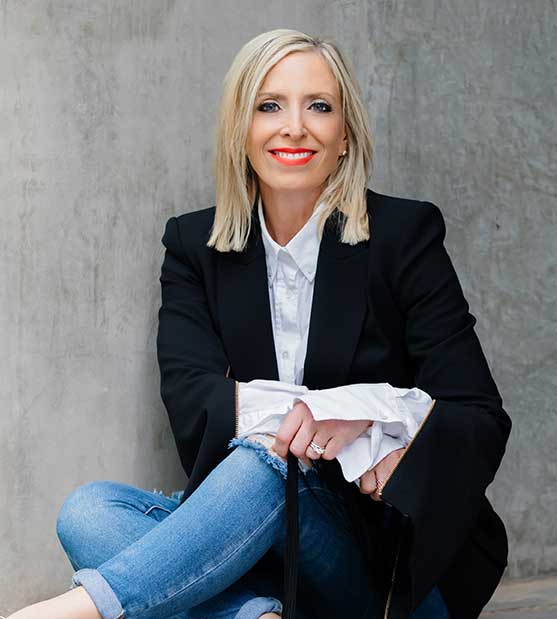
Business Mentor | Bestselling Author, It’s Who You Know | Former Group Marketing Director, Oroton Group
Janine Garner is a business mentor, keynote speaker, and bestselling author of three books who has spent 15 years helping professional women commercialise decades of accumulated expertise into independent consulting practices.
Based on the Northern Beaches of Sydney, Janine arrived in Australia from England at 29 with a backpack, a resume, and a permanent residency visa, rebuilding her career from scratch.
She rose through corporate marketing to become group marketing director for the Oroton Group, overseeing the Oroton and Ralph Lauren brands across Australia and Asia. Her career began in London’s fashion industry, where she launched a 250,000-member loyalty program and managed international marketing for brands including Jaeger and Viola.
In her independent practice, Janine combines marketing fundamentals with direct commercial mentoring. Her books From Me to We, It’s Who You Know (translated into multiple languages), and Be Brilliant codify her approach to collaboration, strategic networking, and professional brilliance. She is a member of the International Women’s Forum and has studied leadership at Harvard. She invests 20 per cent of her income in personal development and mentoring annually.
