


 Apple Podcasts
 Spotify
 PocketCasts
 Castro
 RSS Feed
 Bex Thomas Intentional Career Breaks: Sabbaticals That Lead to Real Change
Bex Thomas spent 20 years in recruitment, earned a director-level promotion at a global firm, and realised the achievement felt hollow. That moment of anti-climax led to an eight-month sabbatical that became the catalyst for designing a portfolio career as a career transition coach, sabbatical coach, and podcast host of Sabbatical Stories.
Bex explains her five-question framework for planning intentional career breaks: why you are taking the break, when to take it, where to go, who to spend time with, and who you want to become afterwards. She describes the financial planning behind extended breaks, including the currency hack of spending time in Asia on Australian dollars.
For experienced professionals sensing their current role no longer fits, Bex shares why the integration period after a sabbatical determines whether the break transforms your career or fades into a distant memory. She also covers how to negotiate leave when your company has no formal sabbatical policy, the push and pull factors that matter when re-entering the workforce, and why most mid-career transitions turn out to be values realignment rather than seismic change. Bex describes her own prototyping journey through travel blogging, travel coaching, and travel writing before finding her fit in coaching and podcasting.
Wisepreneurs explores how independent professionals turn accumulated expertise into sustainable practice.
Bex Thomas spent 20 years in recruitment, earned a director-level promotion at a global firm, and realised the achievement felt hollow. That moment of anti-climax led to an eight-month sabbatical that became the catalyst for designing a portfolio career as a career transition coach, sabbatical coach, and podcast host of Sabbatical Stories.
Bex explains her five-question framework for planning intentional career breaks: why you are taking the break, when to take it, where to go, who to spend time with, and who you want to become afterwards.
She describes the financial planning behind extended breaks, including the currency hack of spending time in Asia on Australian dollars.
For experienced professionals sensing their current role no longer fits, Bex shares why the integration period after a sabbatical determines whether the break transforms your career or fades into a distant memory.
She also covers how to negotiate leave when your company has no formal sabbatical policy, the push and pull factors that matter when re-entering the workforce, and why most mid-career transitions turn out to be values realignment rather than seismic change.
Bex describes her own prototyping journey through travel blogging, travel coaching, and travel writing before finding her fit in coaching and podcasting.
Connect with Bex: website: bexthomas.com | LinkedIn: Bex Thomas
Wisepreneurs explores how independent professionals turn accumulated expertise into sustainable practice.
Connect with Nigel Rawlins
website https://wisepreneurs.com.au/
Linkedin https://www.linkedin.com/in/nigelrawlins/
Twitter https://twitter.com/wisepreneurs
Downloads
- Embodied Intelligence Self-Assessment
- Professional Reputation Audit
https://wisepreneurs.com.au/free-assessments/
Please support the podcast
https://www.buzzsprout.com/2311675/supporters/new
Stay one step ahead with The Wisepreneurs Insider newsletter
As a subscriber, you'll get:
- Sneak peeks at upcoming must-listen podcast episodes and guests
- Bonus wisdom straight from recent guest experts
- Marketing tips to attract your ideal clients
- Productivity hacks to streamline your independent business
- And more exclusive insights are delivered right to your inbox!
- Don't miss out on these invaluable resources
- Subscribe now and gain the edge you need to survive and thrive as a wisepreneur
Nigel Rawlins
My guest today is Bex Thomas. Bex spent 20 years in recruitment, climbed to director level at a global firm, and felt almost nothing when she got there. That hollow promotion became the catalyst for an eight-month sabbatical that reshaped her entire life. She now coaches mid-career professionals through intentional career breaks and transitions. What makes Bex a Wisepreneur is that she prototyped her way to clarity. Travel blogging, travel coaching, travel writing, she tried them all before landing on coaching and podcasting. She still keeps her hand in recruitment two days a week, which means her clients get a coach who genuinely understands the hiring side of the table. This is the Wisepreneurs podcast. I'm Nigel Rawlins. Okay. Bex, welcome to the Wisepreneurs podcast. Can you tell us where you're from and something about yourself?
Bex Thomas
Yeah, of course, and thank you ever so much for having me, Nigel. It's a privilege to be here. I am originally from the southwest of the UK. I was born and bred in a small little beachside town called Lyme Regis on the Jurassic Coast, so the world of dinosaurs. And I moved to Sydney, emigrated to Sydney in 2011. So, um, yeah. Now I live almost a dual life between France, Sydney, and then traveling. So probably about two or three months of the year is very fluid and built around three themes really. So freedom, sunshine, and all of our favorite people, which, blessing and a curse, are on two sides of the world.
Nigel Rawlins
That sounds like a wonderful life. Okay. What do you actually do to be able to do all that, first?
Bex Thomas
So I have what we, I think, are now calling a portfolio career. So my trade and, and background is recruitment. So I fell into recruitment at a graduate level. So I'd, uh, you know, gone to university, lived a- an idyllic childhood and the traditional sort of, um, I suppose path of doing A-levels in the UK, going to university, getting the degree. I then did the rite of passage, so backpacked through Southeast Asia, Australia, New Zealand, back through the States, and when got home, I fell into recruitment. So really it was looking for graduate programs and, and opportunities, and one of these was with one of the top global recruitment firms, and was lucky enough to land a, a graduate job with them. And actually took me to Australia, so they sponsored me in 2011 to, to move to Australia. So I started with them in 2002, and then moved to Australia with them in 2011. And I now still do a couple of days retained for a recruitment company in Sydney, so a, a strategy-focused recruitment company. I also do coaching, so I am a career transition coach. So I work with individuals who are at a bit of a crossroads, whether that's in life or, or career, and know that they don't want to be doing what they're doing for the next chapter, but don't really know what they want to be doing, and certainly don't know how to transition. I also have- A sabbatical and career break coaching focus. So working with individuals to really get the best out of a, a break, and that's whether a break's happened to them. So if we think about redundancy or illness or, you know, something that's unforeseen. But really what my passion is, is to encourage individuals that we can choose those breaks as well, so we can be really intentional about that and choose those breaks and really use them as a vehicle to transition and, and to change. And also then one-to-one coaching, which really is, I suppose, tailored f- to the individual based on whether they are, you know, sort of looking at something more specifically recruitment-based or transition and, and need a couple of, of sessions. The one-to-one also quite nicely spins off from the programs that I run. So somebody might go through my crossroads program, which is the career transition coaching, and then they, uh, continue, you know, seeing me for, for sort of once a month as, as that sort of accountability point. And so yeah, that's what I now do, and it was really a very intentional change to be able to have that freedom and, and do it from anywhere globally.
Nigel Rawlins
So that comes from, what, something like 20 years in recruitment?
Bex Thomas
Yes. Scary. Uh, yes. So I started recruitment 2002, then exited Australia full time 2022. So yeah, I never realized, but exactly 20 years. I think the beauty of what I do now though is I'm still in recruitment, so I still have my hand in recruitment and it's been extremely useful to my clients because it just means that I've still got my finger on the pulse in that Australian market and really understand what employers are looking for and what, how to position yourself when you're transitioning. So yeah, 20 years full-time recruitment, but still very much in that world as well as coaching.
Nigel Rawlins
I think that'll be very powerful if you're coaching people about careers. Okay, let's just start with sabbaticals. Now, you've had, would you say that your 2011, and I think, I think what my research tells me, you had one in 2011, one in 2016, and one in 2019. Is that sort of right?
Bex Thomas
Yeah. Yeah. I mean, you could maybe include the rite of passage at, in 2001 when I went, uh, backpacking. Yes, intentionally. Um, I think the 2016 one was the, the biggest and, and the most impactful. So we had by then been in Australia for five years. We were living a wonderful life in Sydney. It was all very magical and almost the sort of life that you, you know, dream of. I also had had a- career-long desire and goal to be promoted to director. And so just before we decided to up and leave for our career break in 2016, I was promoted to di- director. And really that break was born out of me having this wonderful life, but feeling like something was missing. And the emotions that come with that are interesting, because there is a little bit of guilt. There's a little bit of, you know,"Oh my goodness, I'm so privileged. I have this amazing life. Why am I feeling like this?" You know,"Am I ungrateful?" But there was something missing. And I then also got promoted to director, so, uh, thought that this would be the best day of my career and, you know, I would be super ecstatic and on cloud nine, and actually for a number of different reasons, it was a little bit of a anticlimax, or maybe a lot of an anticlimax. So actually decided, do you know what? We need time out, my husband and I, to really decide what we want the next chapter to look like. Uh, we also weren't aligned. We weren't on the same page really, so, uh, both of us are from the UK. He would have stoled up the UK. He would have seen his days out in, in Sydney, and I knew that's potentially not what I wanted. So we needed also time out to align together on, you know, what the next chapter would look like. So yeah, we probably the planning was about six months. I was extremely lucky that my company were very open on, you know, facilitating that sabbatical and leaving what they called a global head count, so not necessarily having to come back to Sydney. Uh, depending on, you know, what head count was open globally, there would be a, a potential for me to, to join a different OE. And also my husband was lucky in, in the fact that he worked for a business who supported sabbaticals as well. So we took initially what was going to be a six-month break, and turned into eight months, and that really was the catalyst for us designing this new life, and it was an utterly life-changing experience.
Nigel Rawlins
So basically both of you were very lucky in terms that your employers supported you, so that, that'll be an issue for anyone who's considering this, and we'll come, come back to that. So what did you do that helped you figure out what you do next?
Bex Thomas
An interesting question, because I now look back and feel as though I was that sort of floundering fish that tried to do a lot and went down a lot of rabbit holes. And actually it's really what my mission is with my, the individuals that I work with and, and my coaching practice, is to streamline and synthesize and shorten that time span for anybody who- is wondering about what they're doing next because I don't feel as though we nailed it in that sabbatical. We certainly started the process, but it was a lot of reading, it was a lot of going down rabbit holes, it was a lot of talking to each other. Um, and what I've tried to do is build certainly my Purposeful Pause program on the steps that I took to get there and- or to get to where we are now. And actually, what that really looked like is probably, what, 2016 we went on sabbatical, 2022 we left Sydney, and I probably would say really when it crystallized was 2023, probably a year into us leaving Sydney. So that's a long period of time to be floundering. And so really what I've done is then crystallize the steps to get there. And if you want me to talk me through what they look like, happy to.
Nigel Rawlins
So did you travel in that eight months you took off, or did you just stick around?
Bex Thomas
In short, we traveled, but what it came down to was us thinking about what we wanted out of that time. And I had a lot of questions. My husband didn't really, but I had a lot of questions around what I wanted out of the next chapter. And I think any expat would feel the same. There is a, a real sort of duality when you move overseas, and especially to the other side of the world. And so I had this pull back to the UK, but I also knew I didn't want to live back in the UK, or I didn't think I did. So we really built our sabbatical around where we needed to be to answer some of these questions. So we spent some time back in the UK. We also randomly in 2008 had bought a derelict barn in rural France. And so we also... And because we then emigrated to Australia, obviously that just sat there and we didn't do anything with it. So it was also a question around, is that gonna be part of our future, or do we sell that and just sort of move on? So we also spent some time in, in rural France, and then we wanted a period of time to be able to sort of really chill out and travel and not worry about anything else and start to really formulate what we want life to look like. And so we traveled for- I think the last sort of three months of it. My mum was then actually 60 in the February, so that's why we prolonged it a little bit because we actually went back to the UK and spent some time again back with family. So we, we really designed it around answering those questions, and the where was a big part of that.
Nigel Rawlins
I think it sounds very brave,'cause anybody listening would go,"How can you do that? How can you actually afford it?" So let's talk a little bit about your podcast,'cause that's, um, that's about the whole processes of sabbaticals. You, um, you... Well, one of the problems I think a lot of us have, especially as we get older and, and try and figure out what we're doing, is try and articulate what we're on about, what we know, and I think you found somebody called DJ did that help influence what you talk about?
Bex Thomas
He's a, um, lecturer at Harvard. He's written a lot about sabbaticals, and actually he is a guest on the podcast in series four, which is coming up, because he is launching a book on sabbaticals. But he set up the Sabbatical Project, which is a sort of not-for-profit space for sabbaticals to really educate and, um, I suppose with, with the same mission as us to normalize career breaks and really promote the benefits of sabbaticals to anybody and, and not just either those in academia or those that are privileged and, and c- you know, think they can a- afford it. So DJ, yes, is a, I suppose, mutual pioneer on, on the sabbatical front. But when it comes to the, the podcast, we have all types of guests. So it really started actually as a wonderful collaboration of three or four school friends. So interestingly, um, as, you know, as we've shared, a recruiter by heart. But through- This whole kind of trying to find a, a life that really aligns with my values and, and these themes that I want it to, to work around, there was a lot of prototyping that went on. So when we took our career break in 2016, I thought,"Right, I want to learn something new." And I love travel. I, I... actually, my degree was in travel and tourism, and so I love travel, and so I thought,"Right, what do I want to do?" And I thought,"I'm gonna really challenge myself," and I am not techy at all. So I thought,"Right, I'm gonna build a website, and I'm going to blog, and I'm going to be a travel blogger." So I came up with a name. I'm very passionate about, uh, traveling local and keeping the, the dollar local, so all around minimizing the tourism leakage. And so I researched this, and I remember doing a, a sort of, um, paper on it in, in my degree. So I built a website all by myself, which I can't still believe I did. I hated every minute of it. And then I started to write about all of the places that we went to, and actually, interestingly, totally fell out of love with writing about where I was going. Like, I felt almost this sort of heaviness of having to write about it and having to post it and having to share it. So that was my sort of, I suppose, first prototyping. Then when we were leaving or, or once we'd decided on this life that we wanted to create and we came back from our sabbatical, it was then a, a sort of case of, okay, I need to transition and find something that I can do, you know, remotely. And so I was... I remember googling, I think it was in COVID, uh, time, and so we were all locked down, and I, I found this article from somebody about travel coaching, and I thought,"Oh, wow, you know, that sort of brings together quite a lot of my skillsets and my love." I'd also actually, um, read Ikigai, the book, whilst I was on sabbatical, and so I thought,"Oh, this really plays into what I love, you know, what I'm good at." And so I thought, yeah, travel coaching. So I'd invested in a, a course on travel coaching and... but then it really was a, a sort of case of I couldn't really articulate what travel coach did. I didn't really, you know, it, it just didn't catch. It didn't sort of materialize. So that was my kinda second prototyping that I was like,"Okay, maybe this is not right." And then I thought, okay, travel writing, and I found a coach who coached people through travel writing, and I thought, okay, maybe it's not the blogging I want to do and the actual website that's too techy. The travel coaching's not right. Maybe I want to travel write and, you know, try and write for magazines or write for other blogs. And I remember being on a journey down to Portugal, and I was chatting to a friend who is very techy and loves all of the sort of production piece and, um, she actually previously has worked for YouTube, and I said,"Oh, gosh, this travel writing, this whole writing thing just seems like an uphill-" a battle and I said,"I just, I find it really hard. I find the, the writing piece really hard." She said,"Of course you do. You're a recruiter. You talk for, you know, that, that's all you've done for 20-odd years." She said,"Why aren't you podcasting?" And I thought,"Wow, that is a good point. Why?" I said,"Well, I've never even thought about it." She said,"Oh my goodness," she said,"sabbaticals and career breaks in themselves are stories." She said,"We could do this." She said,"We could..." You know, her being the sort of tech side of things and behind the scenes doing all of the editing and everything, she said,"I, I need and want a passion project." And I said, and, and she said,"You know, you can interview and, and have all of these amazing people and, and, you know, share their stories." So that's really where Sabbatical Stories was born. Interestingly, her sister does all of our socials, and we've got an- another old school friend who does all of the vocals. So it's a real... It started as a, a bit of a passion project and, and sort of, I suppose, school reunion, and we are now just about launching season four, and it's going great guns. And it really is about anybody who wants to coming on and sharing their story. We have had amazing guests. It surprises me over and over again how vulnerable individuals are and how they come on and really do share the warts and all, you know? It's very honest, it's really authentic, and it's about normalizing taking those breaks, and that they're for anybody. And so we've had a really, I suppose, variety of individuals on. And now what we're trying to do is actually lace through experts. So out of the podcast has come a wonderful partnership. I don't know whether you have heard of them, but there are two ladies, Katrina McGee and Lyndall Farley, and they have set up BreakSpace. And so this is a wonderful online community for individuals thinking about or taking a break. And I now am in partnership with them, so I'm their expert on finding work that works for you. So I've done some workshops in BreakSpace. They've come onto the- the podcast and are sharing their expertise. Last series it was very much around finances. So as you alluded to, a lot of people, you know, the fear is the finances of, A, how am I gonna afford it, but also, B, how does it implicant- implicate the future and when I come back? And so we had some great finance gurus on last, last season. And then this season actually, that's just about to, to launch, um, is season four, and the sort of thread running through that is health. So a lot of questions we were getting was around how do I still eat healthily when I am maybe not in my routine or I'm traveling? How do I exercise? So we've got a PT coming on, and we've got a nutritionist. So that's, that's the sort of history and story of the podcast.
Nigel Rawlins
Well, I think if, if people are listening very carefully here, one, there's synchronicity that you actually were talking to somebody who could help you make it happen, and then there was a community around that that helped you go forward as well. So, you know, the collaboration I think is really, really important. And you obviously love doing that.
Bex Thomas
Yeah.
Nigel Rawlins
Or love, love the energy.
Bex Thomas
And to think that I spent, you know, six months trying to push, you know, a boulder uphill to write, and it just didn't come naturally.
Nigel Rawlins
Well, I think that's the wonderful thing about this story or, or this conversation is that things do happen, but you've gotta get out there. And, and you were on the road from Spain through to Portugal. Mind you, I did that trip, uh, in 1980, which is a bloody long time ago.
Bex Thomas
It's when I
Nigel Rawlins
was born. And I remember... Yeah. Well, I had my year off in 1980. I was a teacher at the time. Amazing. I'd just got married, and that was our honeymoon at the time, and, uh, spent a year traveling. But I remember traveling, uh, down through Spain, seeing the farmers using oxen to plow- Mm their fields. I don't know if they've got tractors now. I would hope so. But it, it... They were primitive times and, yeah, but wonderful travel. But again, your traveling companion had the answer, but had you not spoken- Mm about the frustrations, it would never have happened, and, and there you are. Are most of your clients or most of the people interested in mid career And why?
Bex Thomas
I think mid-career there is, and a lot of the time it's subconscious, but a realization that what we either fell into or were intentional about, you know, 10, 15, 20 years ago doesn't fit any longer. And there, there start to be these really niggling sort of feelings and things happen. Um, a lot of individuals that I speak to interestingly say that- Their moments of clarity where they're like,"It doesn't fit anymore," come from patience, that what they used to be patient about and what didn't used to worry them now is starting to really grate and, and start to, to sort of not sit well. And I think what happens is we change, and we're meant to. Let's call it out, because I think sometimes there's a, a sort of,"Oh my goodness," you know,"Is it me? Have I changed?" Well, yes, and so we should, and, and that's what happens. But then what we chose back then doesn't fit anymore, and our... Maybe not our values, but a lot of the time, actually, it's interesting the individuals I work with, they have done values work but years ago. And so it's actually going back to that and looking and, and sometimes the values are the same, but they've negotiated on them and they've compromised on them because of situations or circumstance, and actually now they're not willing to do that. And also then what they want out of life. And of course midlife and, and mid-career, should I say, l- there's lots of change. So I see a lot of individuals who, um, have had children and now are slightly freer, so there is a, a bit of freedom that then comes and sparks that,"I could do something different." I think there is, at the moment unfortunately, there's a lot of retrenchment going on and, and redundancies going on. And so, um, that is obviously not a break that's chosen but forced, and can then be turned into something magic and something where they can really use that intentionality to look at what the next chapter is. Um, a lot comes from unfulfillment, so where it's almost this empty success. So it's about, again, redesigning what success looks like or really thinking about what success looks like for you in your mid-career, because it will be very different to what it was in your beginning career. And if I think about my experience, everyone jokes with me that, you know, it was my promotion to director that was career suicide. And, and it's, the irony behind that is that actually I then got to that and was like,"This is meaningless. It doesn't..." You know, what I started- At what, 20, thinking, or 22, thinking,"Oh my goodness," you know,"This is really important. The job title's really important. The status is really important. The money's really important." Actually, as I got older, those things started to fall away, and other things became more important. And then I think it's about permission, and I do believe the older we get, actually the less we care about where the permission comes from, and, and we can give ourself and gift ourself that, that permission. So individuals are seeking a space, and a safe space, to be able to explore that. And even, as I say, even if it's subconsciously, actually gift themselves that permission to, A, look at making a change, and then how to make that change.
Nigel Rawlins
I think that sounds amazing. Look, something like that happened to me more than 30 years ago. I was, uh, teaching in an elementary school or primary school in Australia. I'd become a vice principal, locally selected, the first one in the area or the region. And after about a year I thought,"Nah, don't wanna do this." And very luckily was given a payout, but then spent the next 30 years, up till about now, trying to figure out what I was gonna do. I think I'm figuring it out. But that's what happens. You get the promotion and suddenly it's empty.
Bex Thomas
Mm-hmm.
Nigel Rawlins
So is there a stigma around, say, you know, taking a break and then coming back into work?
Bex Thomas
The positive, I think, is that we have seen a seismic shift in how people view and how employers view taking a break, and the shift is a positive one. I am really pragmatic and a realist, and would love to say to you,"Absolutely not," you know,"There's no, no stigma at all." I unfortunately think there are still employers, individuals out there, that have old stories in their head where they do see a break as a stigma, but I definitely think we're coming a long way in normalizing it. And, you know, the more we can share stories, and the more we can coach people through how to position it, the better. With... If, if I put my recruitment hat on, I think it also comes back to the agency we have over ourselves of how we position it and how we share it. And so if it comes down to, uh, somebody taking a break and then trying to get back into, you know, a, a, a role, whether it be the same industry or same role, or they've totally changed and, and taken a, a complete transition, it comes back to being able to articulate why you left what you left. So we call that in, in recruitment terms- The push and the pull factors. So the push factor away from where you have come from, and then what's pulling you towards what you want. And I think what's super important is about really working that out, of knowing what you want. Because if you're sitting in front of an employer, you have to be giving them confidence that you know what you want and what they are offering is what you want, and you are committed and totally bought into, to that role that they're offering. So it comes down to having the clarity, being able to articulate that, and having the confidence to be able to speak about the push and pull factors, but also then that break. So what did you do on the break? And how can that be of service to or a, a bonus to the employer that you're going back into, um, or, or your new employer? And then the belief. You know, the belief that actually you... that that role that you want to go into is right for you, and that you have all of the transferable skills to be able to, to be successful in that role.
Nigel Rawlins
Gee, that's a lot of work, isn't it, when you think about it? A lot of thinking goes into that, so you just can't cruise along. All right. Let's talk about the practical side of either taking a break from work or just quitting and doing something else or taking a sa- a sabbatical. What are, what are the things you need to consider if you're gonna do this?
Bex Thomas
I always start with really working with individuals to think about the why. Why are they taking it? And I think what that does is then frame all of the other practical things that, that come after it, and it's about really unpacking your why. And it's one of the big parts that I think we don't spend enough time on. It's very peripheral."Oh, I want to go on an adventure," or,"Oh, I want to go traveling," or... and actually, I had a guest on the podcast who really shared a wonderful story around the fact that it was only in hindsight that she realized she was running away. And so actually, if she had really unpacked her why, she would've worked out that it wasn't just fun adventure she wanted. She was running away from boredom in the job. She was running away from misaligned values in the company. And actually, what would've been very beneficial is using that break to, I suppose, answer those questions of, what am I running away from? And, and how do I make sure that, you know, when I come back, it's not just same, same, and, and that break's not actually, um, I suppose, progressed me to, to where I need to be. So I think the why is really important. The why also then leads into much more practical things, like the when, um, and of course, what leads into that is things like finances. You know, what is your runway? How much money are you going to need? And therefore, how long does it take to save? I think my husband and I probably first thought about it a year before, um, and then it was very much a, okay, reverse engineer. This is how long we want to take off. This is where we want to go. This is what we sort of think we want to budget for. Reverse engineer how long will it take us to save for that, and then, you know, put that saving plan in place. But that really d- takes the when. Other people that I work with, you know, a when might be, um, linked to a family event, or a when might be linked to, we have a lot around long service leave in New South Wales and, and Australia, you know. So the when might be that it's taking that. So I, I really very much talk to, to people about the, the why, the when, then the where. You know, is the where going to be facilitating what you need it to be? Is it gonna be answering those questions? Also, the where, again, if we think about finances, also plays into it. If I think about my husband and I now, we do three months a year, which is not technically a career break or a sabbatical'cause I'm still working through it, but for my husband it is. He totally has those, that time off. We really have to think about, where can we afford to go? So what we do is the whole currency hack where you spend time in Asia, and we're paid in Australian dollars. You can live very cheaply and very well in, in Asia. So the where also sort of plays into that. So the why, the when, the where. Then the with, and, and I think being, you touched on community earlier, being with people who are going to fill your cup, who are going to really give you energy, who you enjoy being with. Time is so precious, and a sabbatical, we talk about it being sacred time, and this sort of, you know, time that is a gift. So actually knowing who you want to spend it with. Um, and then who do you want to become after the, the sabbatical? And of course, the who you want to become will also then play into all of those practical things around what are you going to do on your sabbatical? Meet so many individuals that have this preconceived idea of what they're going to do on their sabbatical, and they're like,"Ah." Had this one lady who came to me and literally had this itinerary of big bucket list items drilled out. But actually, when we really unraveled the why, totally burnt out. Just needed to chill for a bit, actually get better, you know, and, and look after herself and heal before... You know, climbing Kilimanjaro was not the way to solve for the why. And again- That, you know, what you're doing on your sabbatical plays back into all of those practical things. So I have a framework around those views that really helps people think about those practical pieces of, of the puzzle.
Nigel Rawlins
Yep, that's where I can see the benefit of, of speaking to somebody like you if you're going to do it,'cause it's no good going off and suddenly three months later have got nowhere. You need some sort of framework to think through it. Well, what about, obviously they've gotta get the leave if they can get it, or do they have to quit? How do they come back? What do they find most confronting when they suddenly realize these things?
Bex Thomas
I think let's talk about, I suppose, the practicalities of, of the leave and, and actually sabbatical policies and things like that first, because I think it's a really good point. We are seeing a shift in more and more companies having sabbatical policies, but it's not where we would love it to be. I think it's about individuals really weighing things up and doing their research and asking the questions and having all of the information that they need to make a informed decision. So the first thing is to really look at does your company have a sabbatical policy? What is that sabbatical policy? How do you actually instruct that policy? Sometimes, and it's super interesting, but I have worked with somebody who did not believe that their company had a sabbatical policy, know- had never known anybody take a sabbatical. It was not promoted. Actually, when she went digging on the intranet, there was a policy. So it's also, you know, what you don't know, you don't know. So really do that research and, and find out whether there is, is something. And then if there isn't, weigh up your relationships that you've got and the leverage you've got within the company and work through a bit of a process around seeing how the land lies. Because again, your company might not have a sabbatical policy. So my husband, for example, his company did not have a policy. However, he had a amazing relationship with his line manager and leader. They were extremely pro-travel. They were very pro self-development. He had an amazing, I suppose, reputation within the company, and so was well, well thought after. And so just had the under- honest conversation and was granted a leave without pay. So yes, there was no policy around it, but actually it doesn't mean that it can't happen. So I think it's about really having those conversations and navigating that, um, and really tapping into asking different people who've done it how they've done it. Again- It's about being mature and knowing your business enough. If you think about individuals in sales roles, there's always a cycle. Sometimes it might be that actually there's a better time to take it for the business, so maybe having that conversation with the business is you'll know the right time to have it. There are ebbs and flows in business. Sometimes it's quiet, so actually maybe that's a better time to take the sabbatical. And of course, that's if you want to be going back to the company. And then of course, yes, it comes down to whether you're going to take that time off and return to the company, um, or you decide that actually it's not gonna work and, and you quit, you take the break, and then you start somewhere else. I think the coming back, um, is super interesting because this is where I always see the magic happen if it's done well, the integration period. So once an individual has come back, and whether it's to the same company or, or a different company, it's then around how do you take all of those lessons and all of what you've learned and all of the work you've done on that period of time off, if that's what it was there for, to then implement into your next chapter. And unfortunately, a lot, a lot of the time what we see is that that piece is skipped. People come back, fall into same habits, fall into old routines. Suddenly this six-month sabbatical that they've taken, two weeks down the line turns into this distant memory that is like a holiday. So I think that integration piece is so important, and that is about really being true to yourself. And my top tips are having boundaries and really being able to structure the plan or the lessons that have been learned into your new BAU. Um, and, and that's where I do a lot of work with, with individuals in that integration period'cause that's where it can be, be lost. Companies are becoming much, much better at integrating it and helping individuals to integrate it. So I'm hearing stories of where individuals have either been encouraged or invited or they've offered to share it with teams. So, you know, they go back and they do a PowerPoint presentation about their sabbatical, and it then becomes this story that, you know, sort of runs through the organization. I've heard of individuals going back in and becoming sabbatical buddies, so where somebody else in the business is looking to take a sabbatical, they sort of buddy them up so that there's, there's that. And again, I think if there's nothing that's structured in the organization, it comes down to the individual taking agency for that and actually, actually doing that. If it's a totally new role Or, or new company that, you know, you're, you're going into. I think it's probably similar. You know, you can use the same structure or same processes to integrate what you've learnt into that. And again, it comes back to the why of, of the, the sabbatical. It might have been to heal and just to take some time off and just be, and then actually you're going back in a lot more rejuvenated with new ideas, with, um, a new sort of zest for your work and, and what you're doing. It may have been to really work out what you want to do next, and so that's then about having those, I suppose, conversations with leaders around this is what I want next for my career. These are the types of project that I want to be involved in. These, this is where I see my career going. So I think there's a lot of courage. We talk a lot on the, the podcast about courage, and taking that courage through not only taking the break, but also when you return.
Nigel Rawlins
I think that's probably the most powerful thing that I've just heard, is, is don't waste that experience. You know, get a real sense of what occurred and, and where you fit back in, rather than just come back in and cruise. Uh, the whole point would be lost, wouldn't
Bex Thomas
it? Mm-hmm. Mm-hmm.
Nigel Rawlins
Well, Bex, do you have a coach?
Bex Thomas
I do. Of course. I... Do you know what? And it's a very, again, it's been a journey. I have loved the journey of kind of navigating this whole ambiguity and not really knowing what the path looked like, and it, as I say, it's taken, you know, we exited in 2022, and it's probably only last year's, 2025, that I really felt as though I'd, I'd sort of got life and, and work to where I wanted it to get to. And two, I have two coaches. One that is purely business, so very much around holding me accountable to what I'm doing in building my business. Um, well, I suppose y- I suppose you could say three, right,'cause one's personal trainer, so one is for the body and the fitness. But also I have what I would call a coach for my soul, my mindset. Um, and I don't know whether you are aware of Mo Gawdat's work, but he is, he's a amazing guy. He, I think he's the ex-CSO or CTO of Google, and he's got a tragic story in the fact that his son died. But what it taught him was to basically not waste heartbeats, and he's come up with this happiness equation, and he talks about going to the mind gym. And, you know, that we, we put all of this time aside for going to the physical gym, but we don't put time aside for the spiritual side or we're really losing that sort of aspect of community and- And so I have, I'm part of a community called The Wander Lab, and the coach in there, she's absolutely wonderful on... It's, it's group-led, but it's around, we do a lot of ri- wild writing, we do a lot of meditation. There's a lot of sort of breathwork, um, and then ev- and practices that we're invited to do, you know, for our, our mind, as well as them having a theme around each month. So yes, those, those are, for me, the most important things. So physical health, mental health, and then a business coach.
Nigel Rawlins
And for many of my guests, especially those who are coaches themselves, do have coaches, multiple coaches in some cases. Melissa Liberman, who was on earlier, has a chief financial officer who is working with her, uh, not full-time of course, somebody helping her with the marketing, and somebody helping her with operations. Um, and, you know, I think once you've collaborated with people, you start to realize that you can actually do more by having people collaborating with you and helping you focus on what you're doing. All right. One last question. What patterns do you see in the careers of people who age well professionally versus those who don't?
Bex Thomas
I think there is one very common theme that stands out in comparison to all others, and it's this. It's those who, on a regular basis, take stock and ask themselves the hard questions around whether it's what I still want to be doing, whether it still energizes me, whether it still gives me fulfillment, purpose, um, and if not, reinventing themselves. And that doesn't have to be totally reinventing and changing companies or changing industry or changing skill or role, but just reinventing themselves. So I see those who future-proof themselves, whether that be through an organization, and they're in the same organization for, you know, a long period of time, but they've asked themselves those questions at regular basis, and they've pivoted therefore into maybe a different part of the business or taken on different projects, um, or have moved out or, or totally changed. It's really interesting, but a lot of the individuals I work with come with me- come to me thinking that it's gonna be this seismic change, this massive, you know,"I'm done. This is it. I'm going to totally change." And actually, it's really interesting, but a lot of the time it's not. And a lot of the time, it's actually more around realignment with values, with what fills your cup, with what energizes you, uh, rather than this, this huge shift. So I think that is the common theme that really runs through people To future-proof their career
Nigel Rawlins
And, uh, nowadays with AI and everything like that, it's, I think, becoming critical that you don't neglect what, what's motivating you and what's keeping you, I guess, not just alive, but, you know, aware and energized. Bex, is there anything else you'd like to add before we finish?
Bex Thomas
So I think we've touched on everything. We've touched on sort of, you know, career transitions. We've touched on sabbaticals and, and career breaks. I think my, my one message that I'm trying to get out to the community is you don't have to live the blueprint. And in this very ambiguous, ever-changing world, which can seem pretty scary, and especially to, um, I suppose mid-career individuals, and I'm hearing more and more in those starting their career, you know, and, and coming out of, um, you know, education. You know, where do they go? What do they do? What's relevant anymore? In this world, I think my message is we can still have agency, and we can still be really intentional around where we go. Prototyping is an amazing vehicle for you to try something, and the message is nothing's permanent.
Nigel Rawlins
That is a good message'cause the world is not the same. Bex, how would you like people to connect with you? Now, obviously, when you're back in France, they can still connect, can't they? So what's the best... well, some of the ways that you'd like people to connect with you?
Bex Thomas
Yeah, absolutely. My clients are across Australia, the UK mostly, so two sides of the world, and LinkedIn is the best way. So I'm Bex Thomas on LinkedIn, and my website is bextomas.com. And of course, if you fancy a good sabbatical story, our podcast is Sabbatical Stories, and you can get it on any of the channels.
Nigel Rawlins
They all sound fantastic. So thank you, Bex. Thank you very much for being my guest.
Bex Thomas
Thank you so much, Nigel. It's been wonderful. Thank you for having me.
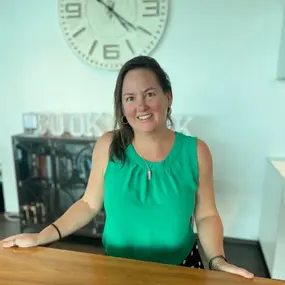
Bex Thomas Career Transition Coach | Sabbatical Stories Podcast Host | Former Recruitment Director
Bex Thomas is a career transition coach and sabbatical specialist who draws on 20 years of recruitment experience across the UK and Australia. Originally from Lyme Regis on the Jurassic Coast, she emigrated to Sydney in 2011 on a corporate sponsorship and was promoted to director at a global recruitment firm before taking an eight-month sabbatical in 2016 that reshaped her professional life.
Bex now runs a coaching practice with three strands: the Crossroads programme for career transitions, the Purposeful Pause programme for intentional career breaks, and one-to-one coaching tailored to individual needs. She continues to work two days a week in retained recruitment for a strategy-focused firm in Sydney, giving her clients direct insight into the current hiring landscape.
She hosts the Sabbatical Stories podcast, now entering its fourth season, and partners with BreakSpace, an online community co-founded by Katrina McGee and Lindell Farley. The podcast features individuals sharing honest accounts of career breaks and transitions, alongside expert guests covering finances, health, and career strategy.
