

 Apple Podcasts
 Spotify
 PocketCasts
 Castro
 RSS Feed
 Kay Sargent Space and Cognition: Workspaces for Independent Professionals
Kay Sargent leads neuroinclusive workplace design at HOK and wrote Designing Neuroinclusive Workplaces, the field's first comprehensive guide to sensory processing in the built environment. She explains the six modalities of work, why most open offices fail on execution, and what to change first when you work from home. Wisepreneurs explores how independent professionals turn accumulated expertise into sustainable practice.
Kay Sargent shows independent professionals how the space around them shapes their thinking, focus and recovery.
Kay leads neuroinclusive design at the global firm HOK and wrote Designing Neuroinclusive Workplaces (Wiley), but her deeper argument is embodied cognition, the extended mind made concrete: the room is part of how you think, not a backdrop to it.
Related reading to these concepts:
-
Your working environment is part of how you think → https://wisepreneurs.com.au/working-environment-part-of-how-you-think/
-
Why the extended mind matters for cognitive vitality after 50 → https://wisepreneurs.com.au/cognitive-vitality-independent-professionals/
She explains her six modalities of work, why each needs a higher-stimulation and a lower-stimulation version, and the pureeing problem that makes open-plan offices fail.
For anyone working alone from home she offers a starting point: know thyself, test different spots, and protect movement and natural light.
Kay and Nigel also get into neuroaesthetics, the hidden energy and water cost of AI, and the verification bottleneck where AI generates cheaply but humans still judge what works.
Wisepreneurs explores how experienced independent professionals position accumulated expertise and build sustainable practice.
Mentions and references
Designing Neuroinclusive Workplaces by Kay Sargent (Wiley)
Charles Handy, the Shamrock organisation
HOK; KPMG neuroinclusive headquarters; the Microsoft study of 60,000 workers
How to connect with Kay
LinkedIn: linkedin.com/in/kay-sargent-53b2431
HOK and research: hok.com
Related reading on Wisepreneurs:
-
Your working environment is part of how you think — the full article
-
Why cognitive vitality after 50 matters for independent professionals
Connect with Nigel Rawlins
Website: https://wisepreneurs.com.au/
LinkedIn: https://www.linkedin.com/in/nigelrawlins/
Free assessments for independent professionals: https://wisepreneurs.com.au/field-guides/
The Wisepreneur newsletter, practical thinking for experienced independent professionals, every Tuesday: https://wisepreneurs.com.au/newsletter
Support the show: https://www.buzzsprout.com/2311675/supporters/new
Nigel Rawlins
My guest today is Kay Sargent. Kay has spent more than 40 years as an interior designer. She leads neuroinclusive design at the global firm HOK and wrote a book called Designing Neuroinclusive Workplaces. What makes Kay a Wisepreneur is the depth she brings. She can look at a space and tell you how a person will feel and function in it. AI cannot do that. Wherever you work, the space around you shapes how well you think, and the right space depends on what the work needs right now. This is the Wisepreneurs podcast, I'm Nigel Rawlins. Kay, welcome to the Wisepreneurs podcast. Can you tell us where you are and something about yourself?
Kay Sargent
Sure. So right now I happen to be in, uh, Virginia. I live about a half a mile away from George Washington's house. I am the closest house to that, uh, right outside of Washington, DC. And I have been a practicing designer for over 40 years. A few of those I spent working for Lendlease, so I've been to Australia, uh, a few times, and I am the mother of five children
Nigel Rawlins
I have three. They all grown up now?
Kay Sargent
And They are... Do they ever really grow up 100%? Like, do they- Mm. Does that really happen? They're all in their 20s and 30s.
Nigel Rawlins
Oh, they're young.
Kay Sargent
But, you know, usually when the phone rings, I know that there's, uh, there's- there's some issue or, or some great news that they wanna share. Like, I always hope for it's the great news, right? But yeah. Yes, they are.
Nigel Rawlins
No, mine all headed off, and, um, I've gotta track them down. And I don't often see them so much anymore., So I've gotta chase them down.
Kay Sargent
Well, maybe that's a good thing, right? That they're independent enough that they're not calling you all the time, so there you go.
Nigel Rawlins
Oh, no, they don't. No. I mean... Well, my son up in Queensland said, "Look, don't call me during the week. I'm too busy and I'm tired. Find me a time on the weekend." I'm thinking, "Oh, right." So Kate, um, you've had a long career in interior design. Yeah. And the interesting thing that, that I read about and heard about is that a client once asked you a question that you couldn't possibly answer, about how you design a space for somebody with ADHD. That was a question that sorta stumped you. Can you walk me through what happened after that moment, and what it felt like after all those years as, a, a designer- Yeah that there was a, this huge gap that you hadn't seen?
Kay Sargent
Yeah. So I- I will say that, uh, at that point, I was probably 30 years into my career, and at that point I knew that one of my sons was ADHD and OCD. So I- I knew what the term was. Mm. I will say that 10 years ago, not a lot of people knew what neurodiversity was. And so, um... But, you know, we, we were leaving a meeting. We're, we were dealing with, you know, they have millions of square feet all over the world, and he kind of casually said, "Oh, yeah, by the way, how do you design for someone that's ADHD?" And I had an okay answer. I didn't have a horrible answer, but it was very much towards the hyper side, meaning people that can't handle too much stimulation, where his son was more hypo, and I didn't really address that. And so I wanted to have a better answer, and so I started to do some research, and what I found was there's a ton of information about why you should hire people that are neurodivergent, but almost nothing about what to do to create a work environment that would help them be successful. And as a designer, I truly believe that the spaces that we design can have a significant impact on people. But if you don't really understand is that a good impact or a bad impact, then you're guessing, and that's not good enough. So we started down kind of a little rabbit hole, and we wrote one report and then another and another. We did s- a bunch of studies, and we were, we were issuing reports. Um, we are still doing a bunch of research on this topic, and I don't, I don't think it ever ends. I think we're doing multiple actually right now. Um, and it's been absolutely fascinating to see how this subject has gone from, "What are you talking about?" to, uh, something that is far more commonly known and embraced and seen as far more significant and is creeping into every sector of design that our firm is doing.
Nigel Rawlins
Okay. I, I, I'd like to ask you about your firm because obviously- Yeah um, that question was asked in a context of where you work.
Kay Sargent
Right.
Nigel Rawlins
Um, you work for a company called HOK. Is it or HOK? H- HOK. So could you explain where you fit into that and, who they work with?
Kay Sargent
Yes. Okay. So HOK is one of the- Yeah world's largest architectural firms. Uh, it was founded in 1955 by Hellmuth, Obata, and Kasselbaum. And, um, we have 28 offices around the world, about 1,800 employees, and we are a multi-sector inter-disciplined, interdisciplinary firm. We do airports, hospitals, uh, sports arenas. You name it, we design it. Um, and I am on the interior side. So my title is the Director of Thought Leadership for the Interiors team. And bef- before this, I think I've been with the firm 10 years now, but before that, I, uh, my title was the Director of Workplace, meaning I worked with, uh, a few other individuals that oversaw our big corporate accounts. So we work with a lot of companies that have millions of square feet all around the world, and they don't like a s- lot of surprises. So we tend to do a lot of thought leadership about what do we see is coming, what's happening, what do our clients need to know, and it was in that context that I was really asked that question
Nigel Rawlins
what your company does is designs the buildings and then fits them out and, and your part, your role is in the fit out
Kay Sargent
yeah, so we are a purely a design firm. We're not a construction company, but we're purely a design firm, and we design a whole variety of spaces. So, um, we do design base buildings, we do tenant work, we do, you know, you name it, we, we probably do it. And my role really is to work with our teams really kind of now in almost every sector about what is coming, what should they be thinking about, what do our clients need to know, and how are we incorporating those things into all the spaces that we're designing and creating for them.
Nigel Rawlins
So what sort of companies are engaging HOK? I mean, are they- companies that think about the sort of work that they're doing or want to be doing in those buildings?
Kay Sargent
One of the best examples I can say is that we just finished a half a million square feet for KPMG, their US headquarters in New York City, and it was designed to be neuro inclusive. One of, one of many elements that it was designed to be. It was designed to be new ways of working, it was designed to be, uh, as, you know, equitable and address diversity and inclusion, and part of that is neuro inclusion. So, um, I got very, very involved in the beginning about helping to kind of educate our clients, setting the goals, helping them understand kind of what is even possible, what are we talking about, why is this so important, and then how do we integrate that into the design process so we can create spaces that are truly gonna help your people prosper.
Nigel Rawlins
So in, say for example in the KPMG one, we're talking about people who are working with their heads, you know, knowledge workers. Is that always the case or do you have different examples?
Kay Sargent
Yeah, we do all kinds of stuff. So I think one of the biggest reports that we just put out was about, uh, sports and athletes, and the percentage of athletes that tend to potentially be neurodivergent, and how are we creating spaces where they can thrive. You think about an athlete and how much money is put into making sure that they are at peak physical performance. But there's a reason they say, "Get your head in the game," because a lot of that is a mental game. And understanding, you know, how you, you function, not only with sensory stimulation and cognitive perceptions, but all of those things impact how we function as individuals. And so if you really truly want anyone to be at their best, whether it's a traveler, whether it's a pilot, whether it's an athlete, whether it's a worker, whether it's, you know, a tech worker, whether it's somebody in a factory, we need to make sure that we are creating spaces where people can truly function and thrive.
Nigel Rawlins
And I think that's really fascinating, is it, 'cause you can imagine 50 years ago, you might, in an office you might have had a, an old wooden desk and an old chair and you had to do your job. But now today it's almost like, I know it sounds awful to say this, but are we molly coddled today? I mean, are we being looked after too much or is this a very different world we're living in?
Kay Sargent
Yeah, it's a very different world we're living in. Um- Yeah 50 years ago you weren't barraged every 10 seconds with some kind of a tech alert or an email popping up or some signal or whatever, you know. I mean, we are living in a different world. And y- it used to be, even 40 years ago, and, and I'll just use myself as an example. 40 years ago, uh, you know, when I came out of school, we, we were just really starting with computers, but you didn't have fax machines, you didn't have cell phones. You couldn't really work that much on the weekends because unless you brought stuff home and you were drawing or thinking, you know, writing or whatever, but you, you could not be accessible 24/7. Now, you are, and you are being barraged. And I think every generation, we- th- there's a lot of conversation right now about how the younger generation has been... Literally, their brains have been rewired because of social media and technology. But it's not just the younger generation that is impacted by that. It's every generation. And so we are literally being assaulted today with information and sensory overload and all of these things that just, uh, are, are making it m- much more harder for us to really kind of get in that zone or that sweet spot where we can perform well.
Nigel Rawlins
Yes. And that is the big reason I wanted to speak to you about, you know, how do we keep our cognitive productivity going? And, and it's not always going, 'cause it's sometimes we've really got to take time out and rest. And, and I'm thinking in terms of the environment, I'm very lucky 'cause I, I live in a sort of... It's an older house, but it's fairly open, and I have a lovely garden, native garden out the front, outside my window- Yeah and out the back. So, you know, when my head's had enough, I can go for a walk up over the hill and see the bay, or I can go out into the green outside. But if you're working in a building all day, that gets difficult. So how do you cater for that?
Kay Sargent
Yeah. I, I think we really kind of have a whole process about how we need to address this, and part of it is environment- Yeah part of it is operations, and part of it is adjustments, right? There's kind of a three-legged stool approach. So there are a lot of companies right now that are rethinking their onboarding, and they're thinking about their policies and their procedures and when you have to work and where you have to work, you know, all of that stuff. Those are operational things. But if you are just addressing that and you're not addressing the built environment, you're taking a freshwater fish and you're throwing them into saltwater, right? So you have to address the built environment. You have to give people some options, a little bit of choice. We need to think about are there different zones. And, and I think the, the problem is, over the years, what we have created is kind of this one-size-misfits-all that we're trying to design for the average person doing the average thing, and I just don't know who that is anymore. Yeah. And that's the number one mistake, is we are not all the same. We do not all function the same way. Some people, uh, do not thrive being at home by themselves. They need to be stimulated. They need to be around people. They need that energy, right? And so I think we all assume everybody functions like us- But they don't. And so I think creating some options and choices is important. And even if you d- address the operational things and you address the environmental, if you are not accommodating individuals or meeting them where they want to be met, then you're doing a disservice. So you might wanna listen to music all day. Uh, somebody else can't handle music, it's too distracting, and they have to have headphones where they can block out all the sounds. Other people just can't handle that quiet, and so they, they need, you know, maybe it's ear pods so they block out a little bit of the background, but they still get that energy or buzz, and other people can't have anything touching their ears at all. So we have to kind of create environments and situations where people can adjust and be in an environment where they can thrive and have the operational things that really support how they need to function
Nigel Rawlins
Now that, that's really important 'cause w- well, we should probably explain what we mean by the built environment. But a built environment or a place where you're working is, you know, that's only part of it, isn't it? It's, it's where you, you're gonna park yourself in many ways. But it depends how that organization's set up and managed. Um, I don't know if I can use the word scaffolding or environmental scaffolding, but there's a whole lot of environmental scaffolding when you're working in an organization. There's all their policies, you know, how they market, um, their HR or, uh, personnel or talent management, and there's also the environment that they work in, which is what I wanted to talk to you about. So you can have a beautiful environment, but if the culture is, negative, um, it's going to destroy it. I think you have six modalities of how people work. Yeah. Could we talk about those?
Kay Sargent
Sure. So in all of the research... We, we've done a ton of research over the years, uh, going way back, uh, about workplace. That's actually really kind of my, my area of expertise. And, uh, over all of that research what we've found is that when you come to an office or when you're working, you, you know, home, there's one of six things that you're typically doing, okay? And we call them the six modalities of work. You are either, number one, deep, concentrative, focused work. Your head is really buried. You're really focusing. You're in that zone. The second is contemplation. Now a lot of people think that that's the same thing, but it's not. It's almost the opposite. It's where you're freeing your mind up, and you just need a reset. When you go for a walk over the hill and look at the... You know, it's just like you're allowing yourself just to free think and to let things process and to reset and to refresh, okay? And that is a very important element that, quite frankly, when we're Zooming from one call to another, we don't have a lot of. And, and that's part of why we're getting so burnt out. The third modality is kind of that communal processing thing. So I might be writing an email or doing something that doesn't take deep, deep concentrated thought. Uh, it's kind of an easy thing for me to do, and I might be doing that in a group setting with other people, and occasionally I'm interacting with somebody. So I'm kind of doing alone work, but together with other individuals, right? The fourth is creation, right? Like you're ideating, you're thinking like, "What about this and what about that?" You know, you can do that in a group, et cetera. The fifth is congregating. You're meeting, you're gathering, you're, you're, you're sharing information, but like a team of people is, is kind of coming together. And the sixth is convivial or socializing, and that's an important element. You may not do that as much as some of the others, but it is an important element. Mm-hmm. And so what we say is that you, in any viable workplace, you wanna have a little bit of each one of those, but depending on your industry. So for instance, if you're an ad agency, you might have a lot more create space than you have heads down concentrate. If you're a law firm or doing accounting, you might have a lot more of that concentrate, and you may not have a lot of the create space, right? So it has to be tailored to your industry and the work styles of your people, and then you wanna be able to have Spaces that are hyper and hypo. Okay, so just as an example, let's take that concentrate. For someone that is hypersensitive, they get overwhelmed by too much stimulation. They, they might need the spaces that are more quiet, more visual controls, more acoustic controls, more distance. To focus or concentrate, you might wanna go into a quiet area or a, uh, a pod or a room or a space that you can be by yourself and kind of block everything else out. But if you're hyposensitive, meaning you actually need additional stimulation, you need to move, fidget, stand, you need to interact with things, right? You need to be active. Um, being in a closed box could be really uncomfortable for you, and you just might wanna be off to the side where you can kind of fidget or move. I, I think the best example of hyper and hypo is when you think about in a social space, s- areas in the middle for those social butterflies where everybody can come together and it's like a big team table and everybody's there, but then you kind of always have those people off to the side, the wallflowers, that wanna be there, but maybe just need a little bit more distance or a little bit more control. And so they're gonna sit off to the side, maybe on the perimeter, a little bit more, you know, separated from the pack, uh, so that they can kind of process as they need to, right? And so we want to have all six modalities to, to the right degree that is needed for the work, and then hyper and hypo versions.
Nigel Rawlins
Hmm. I think that's really important. I was just thinking about the independent professionals who are working from home- Mm-hmm um, who, who've made that decision. They need to gather some sort of sensory intelligence about themselves, and then sort of make these choices about how they're gonna work themselves at home. This is, to me, this is really important.
Kay Sargent
Yeah. I, I will tell you that I think our sensory intelligence is zero.
Nigel Rawlins
Yeah.
Kay Sargent
I think that we as humans have put up with so many bad situations for so long that we have just tried to block it out. We are getting overwhelmed with 11 million bits of sensory information every second, and we can't process that. And so, uh, I, I'll just give you an example again of myself. In my house, I have several different areas. I can sit at the dining room table, I can sit at the kitchen table, I can sit in the sunroom, I can sit in a room that is set up as an office. I have a desk in there, I have a couch. There are multiple different places that I can work. And, and one of the things I think when people went home and started working from home, the common advice was find a spot, set it up perfectly, and, and that should be your spot. Nice. And that might work for some people, but I wouldn't tell somebody to sit in one spot all day in an office, let alone in their house. And so I'm a floater. Like, I kind of go to different spaces depending on if I need a break, if, what, what I'm doing. Like, if I'm writing, I'm at a desk, okay? But if I'm reading, I might be over in a lounge chair in the sunroom with beautiful light, you know, et cetera. Um, I actually find myself sitting in the worst spot that as a designer I would say, "Don't ever sit like a round table with a hard chair," you know, whatever. But I choose to sit here often because it's kind of central. It's near my tea. It's by a big window. I can see what's going on. It's got great light. It's got easy access to power. Like, all the things that you don't necessarily think about. And so, yes, we have to think about our, uh, cognitive and our sensory needs, but most people are really not in touch with what those are. And when you give people options and choices, usually over time, pretty quickly, they will start to navigate to the spot that meets their needs and, and helps them feel psychologically safe, emotionally safe, uh, you know, like meets their requirements, and it might surprise them where they actually end up sitting
Nigel Rawlins
I think that's a really interesting one. I've got this People are gonna think I'm mad when I say this, but I like to sit on the floor. I, I don't think I'd, I'd be I think that people- I- look at me weird.
Kay Sargent
I admire your nimbleness. I don't- I think I would be afraid I wouldn't be able to get back up.
Nigel Rawlins
That's why I do it. But that's the main thing about as you get older, you have to be able to get off the floor. And, and the way to do that, and it's all part of the movement stuff I'm very much thinking about nowadays, has got a lot to do with the next question, I think, in terms of, uh, intelligence-
Kay Sargent
Yeah
Nigel Rawlins
isn't just in the brain. It's in the body and, and in movement. And that, and, and that's why I wanted to talk to you a little bit about Y- you talk about neuroaesthetics and- embodied cognition. So the physical environment, you know, is not just a container for work. It's also part of how we think. Can, can you talk a little bit more about neuroaesthetics and what- All right that means in practice and design? Yeah.
Kay Sargent
Actually, we're actually about to come out with a big report on that, so I'm more than happy to talk about that.
Nigel Rawlins
Oh, good.
Kay Sargent
If, if Neuroaesthetics is really the study of how the brain responds to art, beauty, and the built environment. And I, I think that, you know, the, the brain and our, and we are the product of millions of years of evolution. And I think, you know, our, our response to space and to the environment is hardwired into our DNA. Mm. And we need to really understand that those spaces that we're designing are absolutely having an impact on people. When you walk into a space, you have a physical reaction and an emotional reaction immediately to that space. Before you can even process all of those things, we are sensing danger. We're sensing preferences. We're sensing what's going on. We're ac- we're assessing where is our escape route, what do we do? And so I, I think for many years it was thought that the environment and the body and the mind all were separate units, right? But the embodied cognition theory is that they aren't operating separately. They're really working as a single system, and they are all interlocked. And that, uh, you know, you, you again, you are having a physical and emotional and mental reaction to a space the second that you walk into it. And I think as designers, we take that really seriously because- What we're doing is not just what I like. Uh, and I'm gonna be really honest about this. We are at a time right now where artificial intelligence has led a lot of people to question, "Well, why do I need to hire a designer? I can just have ChatGPT put this in and do it for me." And if all you care about is how something looks, and it may not even look great, then you knock yourself out. If you care about how a human being would feel in that space, function in that space, and, like, you know, respond to that space, then hire an interior designer that truly, truly understands how we as humans are responding to certain things in the built environment. So a lot of our research is around what is impacting people in spaces, and how do they respond to that, and, and what are our preferences? And so I, I find it fascinating. I, I would, I would bet that there are more neuroscientists right now that are interested in the environment than there are designers interested in neuroscience. And quite frankly, I think we need to clue into that a little bit more because we are not just designing a space. We're designing, you know, how a person is going to function. And if, and if we wanna create spaces where people can thrive, you really need to understand how people are going to physically, emotionally, and mentally, cognitively respond to that space.
Nigel Rawlins
And that's exactly why I wanted to talk to you about it because, you know, for people like me who, who still working in a way, I, I work in my own way, i'm reading, I'm researching, I'm writing about things that interest me. Um, so I wanna be able to be cognitively alert. So if my space is, um, exhausting me, uh, and affecting me, that's really important. So you mentioned AI there in terms of design, that AI can create beautiful looking spaces. But there's a thing called the verification bottleneck 'cause AI can bang out heaps of designs, and as we know, it can bang out heaps of writing and material. It's, it's very empty in many ways. So the cost of generating is zero, basically. You can have a $20 a month account and generate heaps and heaps of things. So- Can I jump? The cost... Hmm?
Kay Sargent
Can I, can I, can I pause you for a minute?
Nigel Rawlins
Yeah.
Kay Sargent
You're not thinking about energy cost. You're not thinking about water cost.
Nigel Rawlins
Mm.
Kay Sargent
There is a hidden c- it's not even hidden. Yeah. There is a cost to AI that at the end of the day is exorbitant- Yeah and we are not thinking about that. We are not thinking about the e-waste that this is all generating. We are not thinking about the data centers- Yeah what it's doing to our planet. We're not thinking about water, energy, none of that. You know, people think that going on social media is free. It is not free. We as a society and as a, and humans are paying for this in a way that we are not thinking about, and we need to wake up to that.
Nigel Rawlins
And I think on that point, and you're absolutely right, um, but we also gotta remember that up till now, all the information out in the world has had that cost as well, printing of books and all that. Right. But this one is, is massive, isn't it, in terms of energy use? Um, I, I guess there's concern there at some point we may have to start paying for that, and, um, that's gonna be very, very interesting. Will they charge us more? But going back to that point about, well, there appears to be a zero- You
Kay Sargent
are paying, you are paying for it, by the way, Nigel. Your electrical bill is paying for it. When they're building these data centers and it's being sucked up, we are paying for it now, we just don't realize it.
Nigel Rawlins
All right, let's go back
Kay Sargent
to your point.
Nigel Rawlins
Oh, yes. Okay.
Kay Sargent
You're being far more fascinating than me talking.
Nigel Rawlins
No, no, no. I think that's a, a, that's a critical point that we've got to, to, to think about and be aware of. So the whole point I was gonna try and make there is the cost, even though there is a hidden cost of generating I- these ideas, the real value that I think HOK and yourself, is actually looking at those ideas and figuring out which ideas actually work with humans. AI can't do that.
Kay Sargent
No, and this, this is kind of what scares me actually, because, you know, one of the things that is, that is talked a lot about right now, and we're starting to see it's kind of come to fruition, is the junior crisis. Okay? If artificial intelligence can eliminate some entry-level positions, people that are doing analytics or running numbers or, or crunching data, okay? Um, if you are eliminating those and if we, our role then shifts to being agentic orchestration, I am overseeing what it is running and saying, "Yep, that's good. Nope, that's not." Like, "Yep, let's look at it this way. Mm, what do I do with that?" Et cetera. Okay? If you've never done it, then how do you know it's right? And I will, I will s- tell you that as we have been playing in our offices with generative AI images, um, my reaction after playing with it for a period of time was, "Eh, it, it's pretty good on this, but it gets mind locked and it can't pivot because it just, it kind of keeps thinking," right? And I have to almost like flush it and then start over, or it's really bad with the lighting, or it's not really good with flooring, or none of these spaces acoustically would make a person feel comfortable in it, right? But then some of the, some of the more junior designers who don't have that same, you know, 40 years of critically thinking about these things and maybe getting it wrong and learning, et cetera, are like, "Oh my God, this looks great." And it's like, yeah, but is it really great? Like, look at the lighting. And they're like, "Oh yeah, you're right. That lighting isn't really..." Or look at the... And there's no hard, everything's a hard surface, like the acoustics in this space would be bad, et cetera. So again, if all you care about is whether it looks pretty, knock yourself out. If you care about how it functions, then you better get somebody who understands that and can really make sure that you're creating a space where people can thrive.
Nigel Rawlins
And you said something that is very, very important there, that those young designers coming through, or anyone in a company that's coming through to get the sort of experience that you've got now, you, you learn from other people, you learn from mistakes, and we call it pattern matching. And as we get older, it's crystallized intelligence. It's, it's all of the interactions, including our families and the life we live, actually gives us that ability to decide or, or make a judgment on that. Whereas- That's right the younger ones coming through Th- they might not be coming through. That, you know, that your perspective is, becomes incredibly valuable because it's not there elsewhere.
Kay Sargent
Yeah, and, and you know, if you take, if you take the bottom rungs of a ladder away, how do you get to the middle?
Nigel Rawlins
Mm.
Kay Sargent
And is the middle now the new bottom? And, but it just doesn't come with the same intelligence, right? So, you know, you can look at financial analysts, you can look at, uh, real estate analysts who are going around and assessing buildings, and they're, they're teaching themselves to find things and to see things. Mm. That if they're not doing that, you don't understand it at the same level
Nigel Rawlins
And that is the point. If you're not doing it, you're starting to lose it. So, you know, if, even if you're highly experienced and you start using AI, you're starting to give away that depth, you know, where you can say, "Oh, that doesn't look right."
Kay Sargent
Right. I mean, you know, you go to school to learn information. How you apply it, that's knowledge, and wisdom is having a really good understanding of, okay, I understand that and I can question it, and I, and I can, like, challenge it back. If you're getting stuff out of artificial intelligence, I, I don't think I have ever gotten something that I haven't said, "Really? I don't, I don't know about that," right? And questioned it or, uh, kind of challenged it to do something. If you're just straight taking it as it is, then, uh, you're kinda getting slop.
Nigel Rawlins
Yep, and that's what's happening. Um, I use AI all day, but I have been reading for many years, and I feed those notes in, and I get it to help me, and then I have to beat it up because it says things. I'm thinking, "That doesn't make sense. That doesn't relate to this. How does this do?" And a, a silly, you know, small article that I write can take me all day because I'm bashing this thing, but it's, it's saying what I want. But that, um, that's what worries me- I mean- is that there's a l- a lot of people who can't do it.
Kay Sargent
Right. And I mean, I use it very strategically right now. Mm-hmm. I use it... Like, I will write-
Nigel Rawlins
Mm-hmm
Kay Sargent
and then I might put it in to say, "Okay, consolidate this into 500 words and correct any typos or grammatical errors, and, you know, maybe fact-check a few things or whatever. Make it sound a little bit more sophisticated or make it sound a little bit more like me, et cetera." Um, but I, I will say there's been some real-life experiences that I think have haunted me, um, and made me a little bit more skeptical. So just as an example, I, I heard somebody s- say once that, "ChatGPT will give you an answer 100% of the time. It will never be 100% correct." And I was like, "Oh, okay. Well, you know, it's getting better," right? But about a year ago, I was in Kansas City doing a book launch event. We, we literally just wrote a book on designing neuro-inclusive workplaces, right? And so I, I was at one of the events, uh, in the morning, and this young gentleman comes up to me and he says, "Oh, I read your book last night." And I said, "Really? You read the whole thing last night? Well, that, that's pretty impressive. My own kids haven't even read the book and they're in it." Like, okay. And he goes, "Well, I didn't really read it. I had ChatGPT give me, like, the CliffNotes of the book." And I'm like, "What?" Mm-hmm. "Like, it can do that? Really?" And I was kind of fascinated by that. And so he showed me the CliffsNotes, and it was like, "Oh." And he goes, "I can ask it anything about your book, and it will tell me." And I go, "Really?" He goes, "Yeah." And so he says into his ChatGPT, he says, "What does Kay say about her son Kyle in the book?" Instantly there's an answer. And I'm looking at this, and I'm reading it, and I'm like, "Wow, that, that's, that's kind of interesting." Well, and I think, "Wait a minute. That's not, that's not true. That's not... Not only would I... And if it's not true, I wouldn't have put it in the book because that never happened, and that's not true." And he goes, "Really?" And I said, "Yeah, that's not right." And so he then said, "Can you fact-check that and tell me is that actually in the book?" And it comes back, "Well, it's not a direct quote from the book, but it's like something she might say." Now, this has led to the last several interviews that I have done, people ask me about a quote that I have made that I have never said- Mm ever. And it's taken two quotes and kind of meshed them together, but it is now out there in the AI universe multiple times. And if I Google myself and ask what would I say about something, that misquote comes up.
Nigel Rawlins
Wow. That is scary, isn't it?
Kay Sargent
It is scary because it's, it's not true.
Nigel Rawlins
Plus, plus putting your book in and then querying it, how does he know what questions to ask it?
Kay Sargent
Right. Who... Yeah, you know, who knows? Yeah. No- I don't know. I just find the whole thing very fascinating. And it's getting better, you know. You, you have to have a, a little bit of skepticism to it, right? Yeah. You have to be able to challenge things, and you have to double-check things. And, you know, I, I think now I don't think I ever have a prompt without saying factual somewhere in there Yeah just to make sure that it's not just making something up.
Nigel Rawlins
Yeah. And, and that's where I find myself at the moment about neuroscience and cognitive science. It's buzzing around my head, and I have to grab onto something to, to make it make sense. So I'm very careful what I write about it. But I do, you know, I, I do read a lot, and so that's why I'm sitting on the floor in the morning to read because I'm, I'm making sure that I'm not gonna go to sleep in a seat or get stiff in my body so that I can actually read and take those notes, and then I'll feed them. I will feed them into Claude that I use- Mm-hmm and get it to interrogate those notes and, and look against my other notes that I've had to see how they relate, which is- Yeah how I, how I look at the built environment. Um, so there's another one thing I wanted to, um, ask you about-
Kay Sargent
Sure
Nigel Rawlins
is, is when a professional does leave an organization and the environment that the, was created, um, your research on sensory processing, spatial sequencing, and neuroaesthetics, uh, provides a foundation for maybe how they can look at, at how they work in their home. And, and I was going to talk about the pureering. You, you, you've got a, a... I think you, you've got a lot of words that you use that are interesting. And I struggle with those sorts of things. Yeah. How can I come up with a really good word to explain something? But you have something called the pureering problem, so neuro-inclusive design. Uh-huh. And, and, and really I was wondering, you know, for a specialist, say for somebody like you who decides, "Okay, I'm not gonna work in the corporate anymore. I'm gonna work from home," how do they set that home up? You, you mentioned you had a whole lot of areas that you used. Right.
Kay Sargent
Yeah.
Nigel Rawlins
But there are some consultants out there who, believe it or not, turn over an awful lot of money because of their expertise. They've given up the, the scaffolding that they have in a big organization-
Kay Sargent
Yeah
Nigel Rawlins
to, to work at home. And, I talk about the Neo-shamrock organization. It's something Charles Handy talked about 30 or 40 years ago. Yeah. And you've got this sovereign ability in yourself, your specialist area. Then there are some things that you could do, but it would take you a lot of time to learn, so it's best to get somebody to help you do those. Then you've got AI that can help you and automations, and then you've got your network that can keep you, uh, in reality and also provide that social part. But coming back to that working for yourself at home- Mm-hmm and you talk about the pureeing. Can you talk a little bit what that means to you?
Kay Sargent
Yeah. So, uh, kind of, kind of two different concepts. So I'm gonna ta- I'm gonna tackle those separately, okay? So I'm gonna talk about the puree of the workplace and what we are seeing So often people will say that open environments are horrible, and quite frankly, many of them have been designed very badly. But our research actually shows that more people are bothered by being in small confined spaces than in open spaces. And when people say open environments are horrible, it's like, okay, what's the alternative? Putting everybody in, in their own little box again, like going back to, you know, little individual... We don't even design zoos like that for, for animals anymore. Um, and so we talk about having kind of this ecosystem. I talked about the six modalities, okay? And we also say people function better in smaller clusters. And so the more collaborative you are, the more innovative you are, the smaller that cluster should be. The more kind of alone together work you're doing, maybe it can get a, get a little bit bigger. But group dynamics shift around 50 people. So we talk about neighborhoods that have options and choice with those modalities. We have a lot of our clients that have the right kit of parts. They might have those modalities, but when they go to put them in a design into a space, they're just mixing them all together. It is the equivalent of if I made you dinner with a steak and some broccoli and some potatoes and a glass of red wine and chocolate lava cake, but before I gave it to you to eat, I dumped it into a blender, hit puree, mixed it all up, and poured it into the glass. It is the exact same thing that I was just about to give you, but it's all mixed together. And you-- most people would not drink that because it's like, bleh. Like you've just totally negated the, the attributes of each one of those spaces that made them unique and special. Now it's just mush, right? And so if you have the right modalities of work, but then you just throw them all together and have a quiet space five feet away from where somebody else is talking and chatting right next to a collaborative space, 'cause you're just mixing it all in there together, you have pureed the office and made it so it's just a bunch of brown blech, and it's not gonna work. And that is the problem in most open environments. It's not the, the, the concept, it's how it's been executed, okay? When we talk about working from home- Um, I'll give you a, a story because again, I am a workplace designer. Um, but we had several people that kind of f- went with us on certain, several of the stops that we were making, and one of the gentlemen that happened to do this, um, he told me... told a story one day at one of the signings, and he said, "You know, I've, I've been listening to this, and then I go home and my house is just, like, chaotic, and I have these two little boys and they're just running all over the place, and my wife is losing her mind," and this and that. And so he decided to take some of the principles that we had talked about in how, what you can do in the office, and he decided to use that in his home. Get rid of some of the clutter. Have, have spaces that are zoned for different activities, like don't make your whole house like this, like this blah place, right? Have quiet areas and have spaces that are for intense activity and, you know, think about the colors that you're using and the mandala, like all of this stuff. And he applied a lot of that logic to his house. At the same time, his two boys went and got diagnosed with ADHD, and lo and behold, they found that his wife also had ADHD. Very common. But when they changed their house and implemented a lot of those strategies, he found that everybody could kind of find their own zone, and they weren't overstimulated all the time, or they got the right level of stimulation, and that that meant his boys were calmer. That meant his wife was calmer. That meant he and his life were calmer. So these strategies aren't just about the workplace. They really apply almost anywhere and everywhere we go. And, and I think one of the things I am most proud of is our sports team, our aviation team, our healthcare and hospitality and justice teams, and science and technology teams are all adopting these principles and modifying them to their environments and the spaces in their sectors to address the fact that people that are neurodivergent don't just go to an office. In fact, many of them will never go to an office. But they're going to a variety of spaces, and anywhere and everywhere we go, you should be able to find something where you as a human feel comfortable.
Nigel Rawlins
Isn't that wonderful, though, when you think about it? 'Cause I, I think about my young son, He was out of control in year two. So what's, what's that? A seven-year-old or an eight-year-old? Yeah. But the rest of the boys were This is in a little coastal country town, so it was really, in those days, very quiet little town. They were off the planet. I took him out and put him into a private school in year two, which was dead quiet. Now, I was a teacher at the time. I'd quit teaching, and I had a day in this school and could not believe the peace, the quiet, the ability these grade two kids were able to work. They didn't need me. I was just there. Whereas in this other school, it was like herding cats. And, um, so I asked them- Yeah "Have you got a spot?" And they said, "Yeah." I put him in there, and he lasted a few years before he got kicked out in years, year seven, I think it was. He didn't last beyond year nine. But he's done three trades since then- Yeah and owns properties, and I, I think he's highly intelligent but was not suited for a school environment. And this is what we're trying to do, you know? Well, and, and people-
Kay Sargent
I don't know your son's specific situation, but people that are ADHD tend to be outside-of-the-box thinkers. They tend to be very good with their hands. They tend to be bigger risk-takers. They tend to think more quickly on their feet. They tend, you know, to, to function differently-
Nigel Rawlins
Mm-hmm
Kay Sargent
and have a different skill set. People that are autistic tend to be able to find, you know, c- complex data or sets in complex data sets, and they find those patterns and, you know, they might have more empathy. They might have a, a stronger sense of justice. I mean, there's a whole variety. People that are dyslexic- Mm um, who may not be great with the written word, but they might be amazing with spatial recognition. And so there's this whole notion that there's probably a lot of people that are designers and architects, like myself, who are dyslexic because we think in space- Yeah and we think in shapes and forms and have this high capacity for ima- you know, imagination and creativity. And so people tend to go where their strengths are. And, and the question is, is our school system set up for the different way that people learn- Hmm the different way that people process things, and to be able to set them up to leverage their strengths so that they can really kind of channel them in the right directions? And I think no, they're not.
Nigel Rawlins
That's what I saw. No. And I, it didn't suit me either. I mean, I ended up as a vice principal or an assistant principal, and I couldn't stand it anymore. But I was a bit different, I think, when I was teaching 'cause I'd look at the kids I was trying to, you know, keep busy, and they'd look at me, and I'd look at them, and I'm thinking, "These kids are bored out of their brain." So we'd go outside, and I'd get another male teacher, and we would Play a game called poison ball, and we would throw a ball very heavily at them. If it hit them, they were out. If they caught it, they came and joined us. And it would be full-on wild. I don't know if you could do that anymore to throw balls at kids really hard, but they loved it okay. So going back to this, you know, your six modalities and the experience- Yeah that you've had. Somebody's hoping, you know, somebody's working from home. What would your advice be, say, a couple of things to un-purée their work from home workspace so they can really focus?
Kay Sargent
Yeah. I, I think it depends on your own individual situation, right? Some people, to concentrate, need to listen to music, and they need to be, you know, in a busier space. Okay? My son, who is ADHD, I wouldn't let that boy work from home for five minutes. He would be distracted by everything in the house and wouldn't be able to kind of channel that. And just because you are ADHD doesn't mean you're antisocial or neurodivergent, right? And so there's a reason that a lot of people work in a coffee shop, because they need that energy, they need that buzz, and they need that vibrancy to kind of motivate them. So number one thing is know thyself.
Nigel Rawlins
Mm.
Kay Sargent
Okay? Test yourself in different situations, see where you feel comfortable, and, and follow that lead. Okay? Um, another thing I think that is important is visual stimulation. So there's a lot of people, specifically women, that get overwhelmed with visual stimulation. So if, if as a mother of five children, if my house is chaotic, I have a very difficult time sitting in the house and focusing on my work because all these things over here are like, just like, "This needs to be done. This needs to be done. This needs to be done. This needs to be..." Like it's... And so the only way I can do it is to leave, right? And to go someplace else. So you have to understand, like, what your triggers are. Um, other people, I think almost universally, you know, we always say access to natural daylight and a view can be really key and important. Um, and sometimes it's, uh, the ability to get up and to walk away. Like to get up and to walk outside, right? Can be really important. Movement is important. Nobody's body was designed to sit stagnantly in one place for an extended period of time, yet that's what we do. And so anything that we can do to either, it's, it's perching or rocking or standing, um, you know, or being able to have movement every, every hour, you know, walk up and down some steps, can literally wake up your mind and your body, and be very, very refreshing. I think you have to think about acoustics as one of the biggest issues that a lot of people deal with. And so being in an environment, um, where you can kind of have some level of control over the acoustics. Sometimes I like to listen to music. I need it. Other times I do not, and I can't. There are times that I'm sitting here terrified that I'm on a really important call, and a delivery man is gonna walk up and ring my doorbell and start banging on my door and not leave until I... You know, like, in an office You usually don't have that challenge. Somebody else can go and get the door, you know, whatever. So, um, I, I think it's about really understanding yourself and knowing yourself and setting yourself up in an environment where m- that meets your specific needs.
Nigel Rawlins
I think that's a fantastic answer. My wife questioned why I wanted to talk to you about space and design and working and things like that, and I'm, I'm explaining. It is so important nowadays that you've gotta look after your mental capacity and your ability to do work, not all day.
Kay Sargent
Yeah. I mean- It, it's not a coincidence that we had the highest rate of burnout-
Nigel Rawlins
Mm
Kay Sargent
during COVID when people were working from home. And I, and I think a lot of that also was people were multitasking. They were sitting on Zoom calls all day, and very rarely were people just sitting there, like, just 100% focused on that Zoom call, right? They're doing three or four other things at once, and they're burning themselves out. And I, I think, you know, we sometimes need to take breaks. And when I'm at the office, there are chance encounters, there are discussions that not only help me kind of reset or refresh, it helps time go faster, it helps me connect with those people on a different level. It, it jars things that I wouldn't have even thought of otherwise. I mean, I think it's interesting that during COVID what people said is, it was Microsoft that did a study of 60,000 people, because some people were saying, "I feel more connected to my colleagues than I've ever felt," and others were like, "Yeah, I feel totally disconnected." And what they found is that if you had social capital, if you, if you knew people, if you'd been in the organization and you all of a sudden now find yourself working remotely, um, You had that social connection, that social capital, and you probably were talking more frequently to your direct, immediate circle than you might have done before, but the secondary and tertiary links dropped to almost nothing. And so what happened is we started to get silos where it's like, "Yeah, I might talk to you 20 times a day, but that other person who might give me a fresh idea or a fresh perspective, I don't even know they exist." And if you're a new person in an organization or you don't have that much built-up social capital, uh, you struggled, because you may not have had that same connections with people. So I, I think it's important to really kind of understand how you function, what your job requires, what you need to do, and where you need to be to do it.
Nigel Rawlins
That's my biggest worry now is, is where in, in our state of Victoria, they're legislating to work from home two days a week. And people don't really wanna go into the workplace, and they're gonna miss all that learning, you know, the apprenticeship of seeing how somebody else does something and just purely a visual Zoom type call is, is they're not gonna learn a lot.
Kay Sargent
Yeah.
Nigel Rawlins
It, it's the way the world's changing, I suppose. Kay, we've actually been talking for about 50 minutes now. Is there something else you, you would like to say or, or mention?
Kay Sargent
Oh, we, we could talk for hours about- Yeah all of the last question. I could talk... I literally am like thinking, "Okay, I could answer that question." Like, you know, like go down this whole nother rabbit hole a- about that. But look, I, I think we're at a point now where things are changing so quickly I think we're at a point where work is not working anymore and we're living longer, we're working longer, we're doing a different type of work, we're burning out faster. I think we need to really think about how do we create environments and spaces and organizations where people can thrive. And I think a lot of the younger generation is, is pushing back, not because they're lazy or they're not as motivated or they're even disengaged. I think they're recalibrating what they need to survive, and I think that's actually incredibly intelligent and smart. And, and I really truly believe that the built environment has an impact on every single one of us. If I made you work in a small, dark room all day long with poor lit and a bad smell, like it would absolute no question have an impact on your, your health, right? And so we definitely impact people's mental, physical, and cognitive health, and I think we have a, a responsibility to understand how to set people up for success, uh, because we are really coming under fire from a lot more angles today, just navigating life as it is. And I think there's a lot more stress. I think there's a lot more uncertainty and instability in our world, and those never bode well. If you don't feel psychologically safe, you can't ever thrive at a higher level because your primary instinct is just, "How do I survive?"
Nigel Rawlins
Mm.
Kay Sargent
Right? And I think right now there's a whole lot of people that are just trying to figure out, "How do I survive?" And anything we can do to create spaces and environments where they feel more at ease, more comfortable, more relaxed, more in sync, we have a moral obligation to do.
Nigel Rawlins
And I think that is a fantastic point you've made. The world is very different, and yet we still got that brain from, you know, a million years ago. So we're, we're in an environment that we no longer really control, I suppose you could say. Yeah. But it's happening to us, but we do have some agency. But gee, using it takes a lot of capacity, doesn't it, in many ways? It does. K- Kay, how would you like people to connect with you? Um, I don't want people emailing you because you're probably very busy. Um, LinkedIn or?
Kay Sargent
Yeah, LinkedIn is great. Kay Sargent, at LinkedIn and I'm not on Facebook, I'm not on Instagram, I'm not on any of those things because number one, I don't think anybody cares what I'm doing. Number two, I just don't even have the time or the capacity to, to, to do that. And the people that I wanna connect with, I do So, but you can always, uh, find me on LinkedIn and, uh, we post pretty regularly about a lot of the work that we're doing. And if you're interested in any of the research that we've done, you can always go to hok.com and, uh, you can look up thought leadership, myself, neurodiversity, neuroaesthetics, whatever. It'll come up and you'll see a lot of this stuff. I think one of the things I'm also proud about, uh, is that the firm made a decision early on that there are some subjects that transcend being a competitive advantage and are a moral imperative, and designing for neuroinclusion and neuroaesthetics are absolutely some of those topics. So we put it all out there for free for everyone.
Nigel Rawlins
Isn't that wonderful? Now, we, we should also mention your book.
Kay Sargent
Yes. Yes. So, uh, Wiley published it about a year ago, uh, Designing Neuroinclusive Workplaces. You can also find that on hok.com, but you can find it on, at most retailers. And what's really interesting is we're gonna be coming out with the audio version soon as well. So, uh, for people that maybe are dyslexic or, you know, just don't wanna read a book, that's coming out soon too.
Nigel Rawlins
That's wonderful. Thank you very much, Kay, for joining me. It's been wonderful talking to you.
Kay Sargent
Happy to, and thank you for inviting me, Nigel.
Director of Thought Leadership, Interiors
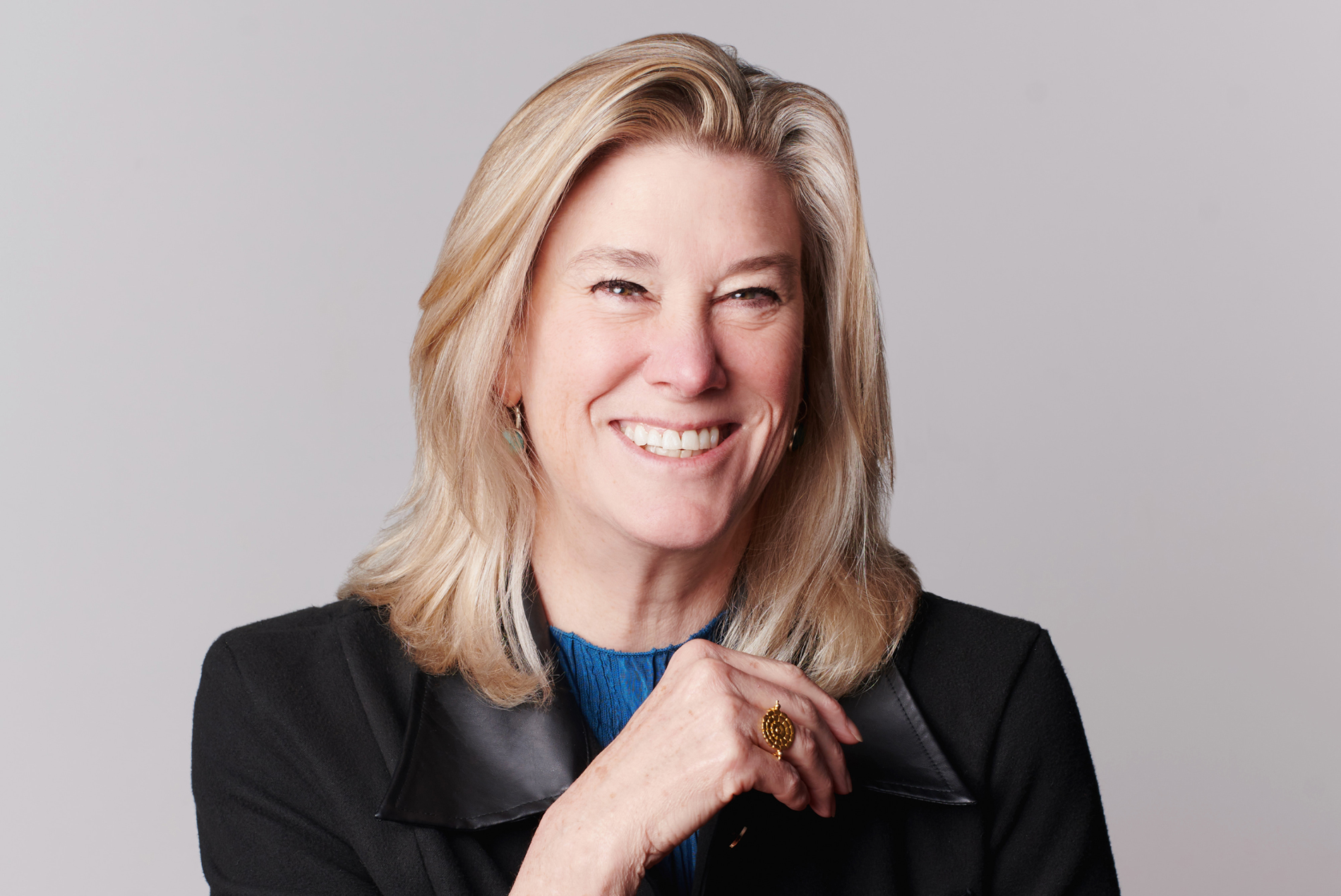
Kay Sargent has practised interior design for forty years, working across corporate headquarters, sports arenas, airports, hospitals and government buildings. She is Director of Thought Leadership for Interiors at HOK, having previously led the firm's global workplace practice, and earlier directed workplace strategies at Lendlease.
Around nine years ago a client asked how to design a space for someone with ADHD, a question she felt she should have answered better, particularly as the mother of neurodivergent children. That gap sent her into years of research on sensory processing and the built environment, resulting in multiple published reports and her book, Designing Neuroinclusive Workplaces (Wiley, 2025).
Her work now extends into neuroaesthetics and embodied cognition, the study of how the brain responds to space as part of thinking itself.
For the Wisepreneurs audience of experienced professionals building independent practices, Kay's research offers a scientific foundation for a decision most make by instinct: how to design a workspace that supports their best thinking.
