

 Apple Podcasts
 Spotify
 PocketCasts
 Castro
 RSS Feed
 Jon Younger Freelance Advice for Experienced Independent Professionals
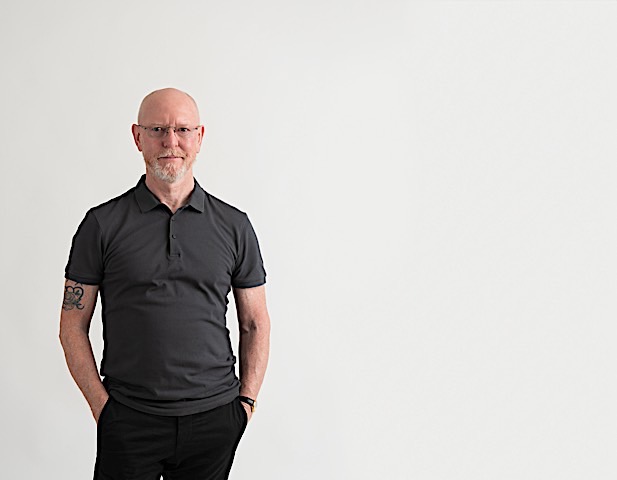
Jon Younger helps experienced professionals understand the freelance economy through his Forbes column and his book Agile Talent: How to Source and Manage Outside Experts. A management consultant for decades, he explains why freelancing is lumpy, how experienced professionals can future-proof their skills, why companies need to adapt to agile talent, and what freelancing looks like as you age.
Wisepreneurs explores how independent professionals turn accumulated expertise into sustainable practice.
Jon Younger helps experienced professionals understand the freelance economy through his Forbes column on the Freelance Revolution and his book Agile Talent: How to Source and Manage Outside Experts, published by Harvard Business Review Press.
A management consultant for decades, Jon discovered at age 62 that a third of the workforce at pharmaceutical distributor McKesson were contractors, freelancers, and part-timers being managed as if they were full-time employees.
That discovery reshaped his career. He now advises freelance platforms globally and writes about how independent professionals build sustainable practices in a blended, flexible workforce.
The conversation covers why freelancing is lumpy, how experienced professionals can future-proof their skills, why companies need to adapt to agile talent rather than resist it, and what freelancing looks like as you age.
Jon also discusses the history of freelancing, regional freelance communities, and why the oldest person in the room still has something the youngest people in the room want to hear.
Wisepreneurs explores how women over 50 monetize expertise and build sustainable solopreneur practice.
Jon's book: Agile Talent (Harvard Business Review Press)
Forbes column: forbes.com/sites/jonyounger
LinkedIn: linkedin.com/in/jon-younger-phd-57a41455
Connect with Nigel Rawlins
website https://wisepreneurs.com.au/
Linkedin https://www.linkedin.com/in/nigelrawlins/
Twitter https://twitter.com/wisepreneurs
Downloads
- Embodied Intelligence Self-Assessment
- Professional Reputation Audit
https://wisepreneurs.com.au/free-assessments/
Please support the podcast
https://www.buzzsprout.com/2311675/supporters/new
Stay one step ahead with The Wisepreneurs Insider newsletter
As a subscriber, you'll get:
- Sneak peeks at upcoming must-listen podcast episodes and guests
- Bonus wisdom straight from recent guest experts
- Marketing tips to attract your ideal clients
- Productivity hacks to streamline your independent business
- And more exclusive insights are delivered right to your inbox!
- Don't miss out on these invaluable resources
- Subscribe now and gain the edge you need to survive and thrive as a wisepreneur
Lemme start with my backstory, just a little bit of a backstory. I was a fairly traditional human resources oriented management consultant. I had started with the colleagues two firms. One of them had grown through, forgot what they call it, a rollup of other firms and it become a public company. And the other one was doing very nicely. And I was 62 and I was tired, but I did a little bit of additional consulting. And the additional consulting I did was for a very large pharmaceutical distributor called McKesson. McKesson's a very good company. I think it's an ethical company. It got swept up in some of the crap around Fentanyl and opioids, and it did some bad things, but I don't think it was a badly managed or badly intended company. But they had asked me to take a look at their human resources organization and give them some advice and counsel, and I've done that for many large companies. A and my. Conversation with them after about a month of talking to a bunch of people and doing some surveys was a third of your workforce doesn't actually work for you. They're contractors' they're freelancers, they're part-timers just a whole bunch of different categories, and you guys seem to be managing it as if everybody's a traditional full-time employee and they're not. And that is something that you might want to consider as you continue to grow. Maybe the issue isn't only the skills of an employer, the difficulty or ease with which you hire them. Maybe there's a whole other category called the blended flexible workforce that kind of changes everything. They got excited about that. I got excited about that. We started to do more research, led to a book called Agile Talent. In fact, my initial title was the Talent Cloud, but the editor at Harvard said, no Agile Talent's the thing. And it's a nice one. It's a nice one. And that led to Forbes articles and just a whole lot of writing. And Nigel, I'm an old guy and I used to be the youngest guy in the room. You know that, that old expression, I'm now the oldest guy in the room and probably double the next guy, sometimes triple. And what a delight it is to work with young people. Who are creating the businesses of tomorrow. Some small, some large and some in between, and are eager to benefit by what old timers like you and I have to offer, but not feeling bound to follow what our advice might be. They're making their own way, but they're interested in what we have to say a and I will write about that population from here to forever. What a pleasure and an honor to do that. So that's my story. I'll tell you the Mash part, which is an awful lot of fun. I think I got an email out of nowhere from Tash Menon, who's the founder of Mash. I just fell in love immediately with all three of those amazing women who were leading that firm, Amy and Sarah and Tash. It has grown extraordinarily and beautifully. And I will tell you that one of the things that they've done that I think has led them in good stead. And I'd be interested in your view. We didn't know about VCs and private equity in the seventies and eighties when I was building the businesses that, that, that helped me and my family, and hired a whole bunch of other people. We just didn't know about that stuff and so we never asked to raise money. We just bootstrapped it. Bootstrapping is a very helpful thing because you get to know the business in detail. There're an awful lot of startups that are not in the business of making money. They're in the business of spending funding. And that seems to me a little nutty. It seems a little crazy. Tash, and Amy and Sarah and we, and they have a wonderful financial advisor, Shane. Sat down and virtually and helped those wonderful leaders to understand it by bootstrapping their way to the first level of profitability, they would build a very strong base to grow quite quickly. And they have and their ringing the bell, not only in Australia, but also in Southeast Asia, in Europe, and even In the US with some of the big companies. Forgive me for that advertisement. But I'm a big fan of Mash.
Nigel Rawlins: The other thing is it women? Jon Younger:They certainly bring a secret sauce, there's a, there's an extraordinary, dimension among those women. I don't know if it's women in general and I always grew up in a household with boys, and so it's hard for me to know. But they have a wonderful and rare ability to both defer to one another and at the same time they know how to resolve thick and difficult issues without leaving scars. Men don't know how to do that in general is my experience. There's always somebody there's always blood on the floor somewhere. Yeah. But these three women, at least, Nigel. Now, is that general or is that specific to women in Melbourne?
Nigel Rawlins: No, I think that's women. I have worked with men, but I have a preference for working with women because they seem to get the work done. And they're really good with relationships and they tend to work well with me. And I'm very respectful of women. And most of them are smarter than me. I can tell you. And that's why I love working with them. Things get done and some of the women I've worked with more than six, seven years now and they appreciate what I can do and I appreciate their intelligence and I don't tell 'em what to do. I think what you are seeing there is how women can work well as a team and get stuff done. Jon Younger:I think you're absolutely right. In tennis I'm told I'm not a great tennis player, but I'm told that in tennis, the deal is to always play with somebody a little better than you. Not a lot better than you, because then you're creamed and not the same or worse. Because it's not as challenging. I think that they have, at least these three women have the rare ability to keep challenging one another. To be a little more creative, be a little more innovative, to take more responsible risk around their business to reach a little bit more than others might. I think it's possibly the partnership as well as the unique partnership as well as the unique women.
Nigel Rawlins: Yes, that sounds like it. Let's talk a little bit about the freelance revolution. Alright, so you saw it in the the pharmaceutical company. And so in America, I think you do have more contractors and more freelancers where I think in Australia we've generally had full-time positions or very rarely part-time or shared. I don't know how big freelancing has become in Australia. I've been using Upwork now for 14 years in Australia. I only checked the other day when they sent me a thing. 14 years! That's because I outsource and keep, myself, as a one person business. Jon Younger:So remember, you're the home of the largest freelance marketplace in the world, which is freelancer.com. Matt Barrie, who's a Sidney boy and who's got a wonderful story to tell, and I hope you'll invite him onto your show. Yeah. Has built an organization that is just under Saudi Arabia in population. There are 58 million folks on the freelancer.com platform, and they are fairly well represented all over the world. It is quite extraordinary. In addition to that you have three levels in Australia, as in many developed and important economies, right? You've got the worldwide, the global players are all there. Then you've got really strong regional leaders. So an example of a regional leader would be I think there's a very large organization called Youdo in Australia that's doing quite well. I think you would find Expert 360 as a business platform. And then you have all of these wonderful startups like MASH that are just coming along and going pretty quickly. . Matt tells a very interesting story if you ever choose to invite him on your show. He tells the story of being a graduate student at Stanford and taking the class in new business innovation or something like that, along with the guys that created PayPal, the guys that created some other stuff and he said, it turns out that class of 30 kids created 500 billion dollars worth of corporate value. Wow. However, what can you say other than Wow, what a class that must have been. He's a delightful fellow, and and he's doing some good in the world. He's creating what all of these platforms do because of the tech that's available. Is they allow me to work from anywhere and deliver anywhere. Now not all professions can do that as an example of this, I'm working with a group, part of my payback for having been fortunate in business. I'd say I ended up being part of two IPOs and it's put bread on the table and a roof over our head. And one of my areas payback is by helping regional freelance communities get together. So we did that in Spain. We did that in the UK. We're gonna be doing that in Germany, something in the mid East this year. And we're, I'm also working with a group of platforms from Latin America and freelancer.com, which is also operating in Latin America. Has been fabulous in helping us do the planning around this, the summit and I think they'll end up helping us a little bit around the funding of this summit. So think about it you've got not only a group of people from Brazil Chile and Argentina and Uruguay and Columbia working together, but they're working together with somebody that's supporting them from freelancer.com in Australia. That's the nature of how this stuff is all coming together. It's just a, it's such a wonderful thing. You guys are a leader in an awful lot of aspects of freelancing. Because you've got a strong, educated, globally oriented population.
Nigel Rawlins: And way away from everywhere. It's 30 hours to get to Europe. It's an island, that's for sure. Yeah. We're a long way away. So freelancing has obviously become a revolution. So obviously Covid forced that a lot more. So the other thing too is not everyone can work from home or work like that, so you have to have some sort of expertise and know-how and obviously the technology. So let's talk a little bit about that. Who can benefit from being a freelancer? Jon Younger:It's amazing the range. So one way to, one way to think about this is when people like Upwork, and I know you've worked with Upwork for some time when they say 68 or 69 or whatever percentage of freelancers are happy, making as much money as they used to, et cetera, et cetera. Freelancing is lumpy. So that's the first thing to remember. What's in demand goes up and down. And moves around in times of fullness, economic fullness, marketing and advertising and that kind of stuff becomes very popular. And marketing people can do extremely well. In times of recession, people are cutting advertising and marketing budgets, as as a marketing individual. And so it gets a little tougher. You've really gotta, if you're thinking about being a freelancer, one of the things to do is to ask yourself, how do I make sure I'm in demand? I believe that that one of the things that happened as a result of the pandemic here in the US is that people started to enjoy baking and cooking. It doesn't mean everybody's gonna end up being a professional chef or a professional baker and I make a pretty good cornbread, but I don't think I can make a living. Making my corn bread. Some people might. So that's the first thing Nigel, is figuring out do you have what's in demand? And is it gonna be in demand long enough for you to make a career of it? And in an industry that's robust enough, et cetera, et cetera, et cetera. So that's the first thing. And the second thing is just about everybody says, start being a side gigger. Start building it up. Don't give up your full-time job. Or don't drop your other jobs to, to specialize in one thing until you think you had to do it. And think there's really a shot. And the third thing is, connect up with others. One of the things that I laugh about is that I'm an introvert, so I like zoom. And I get to meet people all over the world it, I get to be a little bit of a recluse. Not much, but a little bit. It's a very different for other people in other kinds of ways. So you've gotta really ask yourself is this the right way for me to deliver my life as well as my work. For me working from home. And I know from you working from home, and I know from the description the little I see, it's a beautiful place to work. Gee whiz. That makes sense. It turns out that there are three things that, that lead people to hesitate when they're interested in freelancing. And I wonder if this agrees with you. First is they're afraid of income volatility, too much up and down. Second is they are reluctant to lose some of their attractive benefits. Nigel, neither you nor I gets a paid vacation. Vacation gets right out of our pocket, right? That's just the way that it is. It's not the same thing in an awful lot of organizations. So the third I is, a fear of loneliness, a fear that you'll you're not only working remotely, but you're experiencing a level of remoteness that is unattractive to you. And one of the things that we say to people is, you don't have to be doing this alone. There are other folks, there are other meetups, there are other organizations that you can create and be around folks, not only be around folks all the time, but even more importantly, it's tough to keep filling the bucket, if I may say so, around work . And so working with other people to fill up a common bucket is a whole lot easier. And normally what that's turned into is a marketplace, but it doesn't have to be a market. You don't have to work for Expert 360 or for MASH or any of the others. You can create your own and most freelancers, by the way, do create their own, but always better to to hunt in packs, if I make call it that. We have some data that is really interesting and may I share with you?
Nigel Rawlins: Yeah, sure. That's great. Jon Younger:So one of the things that we did on this global survey of freelancing is we asked people a bunch of questions about how they feel about freelancing. We got about 2000 people from all over the world, including Australia a and one of the things that we did was to take a look at it by their experience level. So I'm gonna give you an over an overall statement and then I'm gonna give you some of the data for very new freelancers. Freelancers see their strengths as being flexible and adaptable. They've got grit, they're resilient. They are absolutely committed to meeting commitments. They accept responsibility and accountability, and they work well with people all over the place and they have strong ethics. This is how people describe their strengths with freelancers. Here's what they say are their weak sides, and I wonder if this is true for you. It's true for me. Good networker. I'm not so good. Effective planner ? Not so good. Speaks other languages. Definitely not so good. Makes business contacts. No, I'm not so good at that. I and persuasive and sensitive to how others perceive me. I think I'm sensitive to others perceive me, but I don't think that I'm very good at marketing. So the message here from the data that I just read you is we're the people that you wanna work with, but we're not good at convincing you to hire us. And that's why people end up banding together into into marketplaces. It's a way to make that happen. Now I'm gonna read you one other thing, and that is newbies say about their freelance experience. They are most critical with respect to work deliverables, milestones and timelines being fair and reasonable. They feel as though they're pushed that this client requires top quality work from freelancers. They feel like they're more demanded of by their clients. My client manager knows how to work well with freelancers, new ones once said, no, not as well as the folks that are more experienced. I have access to the information I need. Nope, not as good. I the client team members are normally friendly and helpful when I have a question I need. Not as good. I'm treated fairly and with respect to my dealings with this client, company. Not as good. I'm paid fairly for my work for this company. Not as good. So we've got a, we've got a pretty interesting case, newbie challenge. I don't know what else you wanna call it. And one of the things that we're gonna have to do, as an awful lot of people join the ranks of the freelancing world, is we're gonna have to help to do a better job through education. We're gonna have to help him through mentoring and coaching. We're talking more and more about two concepts of a philosophy that I hope will stick. One is from marketplace perspective. How do you make sure that you're a freelancer- first kind of organization, that you really are prioritizing the success of your freelancers. And we've actually got a group of 15 CEOs from around the world who are working together, sharing each other best practices to identify how to be freelancer- first. Some of them quite large, some of them smaller and newer. The second thing is we gotta help 'em to start out strong. The first year is tough. I don't know if you remember your first year as an independent.
Nigel Rawlins: Oh, it was shocking. I don't think people realize how long it actually does take. It's not one year either. Unless if you've got a, what they call a rare and valuable skill, it can take 10 years. Jon Younger:Yes.
Nigel Rawlins: And that's the scary thing. You might, you will not make as much money unless of course you've got those high value skills. Jon Younger:And what you just said is very important because one of the things that people have gotta figure out in their first year is what is my offer? What makes me in demand, what makes me attractive to companies, not only to be hired at all, but to be hired for the kind of work that I wanna do in the kinds of places that I wanna work there. You can I'm 71. As you're a younger man, 66. Yeah. And one of the things a, about my professional career is that I had the good fortune to be born at a time when there was just so much more demand than supply. My marketing strategy, excuse me, cuz I'm talking to a marketer. My marketing strategy was to answer the phone and I went about filling the pipeline by writing books and writing articles and giving speeches. It's a different world now. In our last year as a consulting firm, before that one was rolled up we were one of the top 100 consulting firms in the US. Nigel, I don't think we'd be in the top thousand in terms of volume at this point. It was just, that's the scale difference. In the 45 years, I've had the privilege of working around .
Nigel Rawlins: Let's just talk a little bit about freelancing. I think most of us when we think about freelancing, are thinking about people who do coding and stuff like that. But I think it's wider than that because I work with one of the people I work with is a product safety specialist who spent 30 years in the government, but understands all the regulations and laws around product safety, but that's a teeny tiny niche. But she gets court cases and advisories and stuff like that. But what are some of the cuz I, I think when people are listening to this, they're thinking, oh, freelancing. It's more than just coding and experts like that. Jon Younger:Yeah. It's funny. The first freelancers in history were the engineers and the architects. Working in Rome, building the Pantheon. And we are misled by the thought that somehow they're a different race. Think of freelancers as independent professionals offering their skills to businesses for a reasonable price. There are lots of variations, so let's first go through the variations. The first is you can be a side gigger, which means you have a full-time job, but you're moonlighting on the side or on the weekends, and you might do many different things. A second would be you have three or four organizations. You said you have 14 clients, and that's your job. You are the independent business owner of a services organization servicing 14 clients, you could also be doing that part-time and doing something else, or doing that majoring time majorly, and then doing a part-time thing on the other side. And then there are some folks that go full-time. In the world the percentage of people who are full-time freelancers is somewhere around a third. That's a big jump from just a few years ago. What's important about that is that you and I as independent business operators would have access to small businesses and perhaps medium businesses as side giggers, but a big company doesn't wanna hire a side giger to do stuff. The big company wants the security of knowing that person is available to them and they're not conflicted in terms of knowledge or expertise or whatever that is. Now, once you get into that, Nigel anybody's a freelancer Singapore Air Pilots were freelancers. They were not full-time employees. The they were independent pilots who worked for a number of Air Alliance and then signed a long-term contract for,Singapore Air. There are surgeons that are freelancers, there are musicians. There's an organization in New York called the Emergency Musicians organization, which supplies musicians to bands in an emergency. There is a very large and very successful platform in the UK and in France of yoga teachers and masseurs and masseuses, and in 2021, that organization gave a quarter of a million massages to people in France. Now explain to me Nigel, who in heaven's name would want to get a massage in the middle of the pandemic, but God bless. There were apparently a quarter of a million of em. So in every area there is now. Now you gotta take a look at, if you're thinking about this stuff, there's some trade-offs. I'll give you one. We have many management consultants in the world. And many of them have gone to fine schools and many of them are really smart and many of them do very interesting work and have always felt like successful people and they leave their firms, whether it's a McKinsey or a Bain or a BCG, or any number of other firms, and they become freelancers and they expect all of the benefits, psychological and financial benefits that they enjoyed at McKinsey. And doesn't happen, and they're no longer flying first class and they're no longer staying at five star hotels, and they're no longer being greeted and feted when they walk into the organization and they no longer need to be wearing custom suits because they're mostly working in sweatshirts around their house. So part of what's happened is that there's been this transformation of work as the technology has allowed almost anybody , to be contracted with through this mechanism called the marketplace. That doesn't mean they may do all of their work that way. An awful lot of freelancers in the EU, for example, are still expected to go into the office one or two days a week. But the capacity now, is so changed in terms of the ability of people to be untethered in the location in which they're working. And what that means, Nigel, is that we have opened the doors to economic opportunity for people that were stuck as an accident of being born in the wrong place.
Nigel Rawlins: Yeah, no. Gotcha. Jon Younger:And you and I both know that half of the benefit that I've enjoyed is that I just happen to be born in the right place by the right parents.
Nigel Rawlins: I think our generation is very different to the new one. I th I think it's a bit more precarious for the younger ones today, but they don't seem to be overly worried about it. Jon Younger:No. And I'll tell you it's absolutely true. I used to be I used to compete with an awful lot of people, but my kids have been competing with everybody all over the world. There's just no end.
Nigel Rawlins: That's the issue. So a couple of things then the platforms for freelancers help with the marketing and the selling, because that's one of the big issues that I had to learn is what is marketing and how do you sell and how do you actually get that work? And then how do you get paid? And so what I'm hearing about is that a lot of these platforms are providing a service to the freelancer to be able to do all that and get the gig. Jon Younger: Yes and no. And let me give you both sides of it. Let me lemme digress for just one second. You know the old stuff in economics 101, you've got two hotdog stands and a stretch of beach. Do you put the two hotdog stands together in the middle of the beach, or do you leave them at different ends and first year, economic students always walk into the classroom thinking you leave 'em at different ends because you're avoiding competition. And then they understand by the end that it's not about avoiding competition, it's about building the market, which is what happens when you bring them together, one and one equals three. That's the premise of a marketplace. The premise of a marketplace is it'll connect buyers and sellers, and because it's a marketplace, it'll attract more opportunity than you could get on your own. That's the starting point. Now how good is it as a work producing mechanism? And the answer is not so hot. And here's why. The average is somewhere about 10 to 20% of people on a platform get any kind of a work. Not 10 Australian dollars, not 10 million. What we also know is that just like anything else, it's 80:20. That it's a smaller group of folks, and here's what that smaller group has learned. They've learned that being in a marketplace is good for some things but it's not assurance that you'll get work. Yes. That at the end of the day, Nigel, you and I run bodegas at the corner of Lafayette and Carlton in Brooklyn. And just like the bodega, just like the deli. You gotta market it, you gotta sell it, you've gotta build relations, you've gotta build your network. You've gotta have something powerful to sell. You've gotta sell it everywhere you possibly can, et cetera, et cetera. And that stuff, I'm I'm just speaking that obviously converted, but I think that an awful lot of first years don't feel confident or comfortable doing that. They hope that joining a marketplace will solve it and it doesn't, right? Correct. And what needs to be put in place is a, is an educational process that teaches these guys that just because you're in the Yellow Pages doesn't guarantee you business. All it does. Guarantee that in this one spot you're part of something.
Nigel Rawlins: They do have to learn how to market themselves then. Oh and I think you've ever mentioned, they've gotta be clear about what is it that their talent is that they're selling. So you're right. I think that's the other issue too is having a talent and maybe getting some work, but then keeping that talent yes. Keeping those, that expertise relevant. So they can't just so this is not just, Hey, I've gotta open my shop, and off I go. You've gotta keep relevant, keep learning. I'll, I love that. And I'll, let me riff off it for just one second. I used to teach classes both at universities and for client companies in HR transformation, HR competencies, and we had written a bunch of books. I know that in the HR world of Australia, the AHRI, my former firm, rbl.net did an awful lot of work with that, and Dave Ulrich, one of our partners, did an awful lot of work. It was very interesting. I, in the last couple of years that I was actively teaching HR, way back in the 2012, 2013 one of the questions I'd have for these folks who were well paid, managerial or executive level HR folks, I'd say how much time do you spend reading? Jon Younger:And they go reading what? And I'd say anything, what? It doesn't matter. Anything. Anything. And the average was one hour a week. Other than reading the material that they had to read for work, but even including newspapers, even including the Economist, even including checking websites. By their estimation it was an hour, maybe an hour and a half, and that was the moment. That's terrifying. And so part of this stuff in terms of making sure you're future proofing, your skill set is, you've gotta look at it from the outside in. You've gotta look at it not from a guy or a lady or an individual that's that has good intention and skills, and why won't you hire me? But instead, what is it about you that I would wanna hire you instead of the other people? I could. Remember, this is not a judgment of you as an individual. This is a choice. It's a preference. You've gotta, you've gotta figure out how to put yourself on top, which means you've gotta know what it is that they're like, what it is that they need, what it is that they're looking for, what it is that, that they're trying to do in their own organization that would lead you to, to be value added. It's a lot of homework to, to, to being a successful freelancer. And the flip side of that, Nigel, is I've got choice. I've got three things I've got autonomy. I've got agency, I've got choice. I can make my own decisions about where I work and where I don't and I get to affiliate with whom I wanna affiliate. Yeah. And I think, and that's a trade that's worth it for me.
Nigel Rawlins: Yeah. And I think that's one of the benefits of older entrepreneurs, business owners, as I said, most of the ones, most of the people I work with are 60. So they all, most of them already own their own homes. Some of them are retired, but they've still got a skill and they still want to give back. So they have some real choices. They want to go on holiday. They don't wanna work every day. They don't wanna start early. Sometimes 10 o'clock's a good time to start. And yes, they do have time to read and like you, I think you're a granddad. They might have their own children, elderly parents, so they've got a life already. Jon Younger:We found that 20% of the freelancers in our survey, were I think 55 and above in age, and that they tended to have five to 10 years of experience freelancing. So these were not young, inexperienced professionals. These were people that, for the most part, had a successful career, but for any number of reasons, we're reluctant to leave that profession entirely. Yeah. Not sure what your approach is. I tend to reinvent myself every six or seven years. I see myself a as a series of projects, and I hope I'm getting better, not worse, but the last project before this, for a bunch of time I was building a company, and then before that I had the experience of being a senior vice president and the head of HR for a big bank. And then before that, something else I have a personal need to stay fresh. Yes but I have no idea. I'm coming on six years again, and I have no idea what the next one is. All I know is that I don't have the time to to do, the Japanese bonsai trees. I just won't be able to finish that one.
Nigel Rawlins: And I think that's the benefit of age too, is that we have a different perspective and it's and like me, I'm. I don't wanna work all the time anymore, but I do want to do interesting things and be helpful. And I can see that you are being incredibly helpful to the world at the moment. Jon Younger:For me, writing is a good thing cuz it just keeps my brain in.
Nigel Rawlins: But I love your writing. I think it's fantastic. So I will be spreading that around for people to read. Okay. Some of the things I was gonna go through is, the problems are being a freelancer. We talked about inexperience. The issue of clients being pushy and things like that. I guess the other issue is pricing. Being able to ask for what they think they're worth. Often that's really hard to find a price. So most of them I would assume, are underpricing or working for nothing. Jon Younger:It's an interesting thing. I can give you some data around some of that stuff, which is fun. One is about half of the freelancers in a UK study by freelancer club.net, which is a really great platform for photographers, videographers, and other independent professionals and Matt Dowling would be another great guest for you. Matt's focus has been on companies taking advantage of freelancers by asking for free work and about 59% I think from the data that I went through in an article, having one way or another offered free work and just everybody hasn't felt very good about it. There's, it's the challenge for all of us in freelancing is to understand that our time has value and it's our choice to give it away. It should not be asked for, it should be offered. I would say to you that over time the hardest thing that, maybe not the hardest thing, but let me give you two or three things that I think are toughest for seasoned and more experienced freelancers. One is understanding when the half life of your knowledge is gone and you're really not up to snuff. I know that my time is limited in freelancing because I can't keep up with the tech. I just, I can't, I was born at the wrong time. With the wrong wiring. And so my limitation is really understanding some of the stuff because I haven't understood it terribly well. And because I'm not that interested in the financial part, I focused on the kind of the ethnography, the anthropology of it all. But my half-life, my, my knowledge is finite. I'm a product of one I learned. And and I still listen to the Beatles. So I need to know as a seasoned guy when I need to shift . I need to either learn new skills or change my area or slow down. And I've got lots of options around that. But I've gotta, I've gotta be proactive in that. I've gotta be the guy that leaves on the high to get to the next hill. And that's the message. You don't have to leave at a high to just go back to the Dat valley. You may have another hill. Second thing I would say for more seasoned folks, I is surround yourself with young people. Just do it. I get such joy out of working with these amazing I'll give you, there's a fellow named Albert Aziz Clauson. Albert is the founder of underpin.com. I don't I'm trying to remember whether Albert is 26 or 27. He is a charismatic fella. He is brilliant and he's extraordinarily courageous. He's got 170,000 university students, all of those kids available basic education around freelancing in order to make some extra money and eventually build the freelance community in the continue to build the freelance community in the UK. In addition, he's created something called the Association for the Future of Work. This is a 26, 27 year old person. At 27, I think I was just finishing my degree and terrified of going out in the world. The third thing, so first is know when you've gotta pivot. Second is work with young people because that's your best way of staying relevant. And the third is, this is business. Get your ego out of it. I'll give you an example, Nigel I I charged at the best time as much as $12,000 a day as a consultant. That's insane. I don't even know how to make sense of that. And I would get it 200 days a year. That's pretty good. I think I now make. I don't know, quarter of that, maybe a fifth. I'm having the time of my life.
Nigel Rawlins: Yes. So the stress is not there. Jon Younger:Yeah. The stress is not there. And I have a new set of relative values. So if I were upset that I wasn't making the money that I made when I was on top. I'd be driving myself crazy instead of understanding things change. And so what creates value for me and the value that I create has changed as a result. I'm not worth $12,000 a day. I was no more. And that's okay cuz I'm doing stuff that, that I enjoy. So as a seasoned person, if you can state. If you keep in those three places, I think you're okay.
Nigel Rawlins: Yeah. And I think you're on the ball. There is what keeps you going and it's not necessary money. Yes. But not giving it away either, as they say. It's been fabulous talking to you, John. I love your energy. It's I can see. That you're not an old 71 year old. And I think that's what it feels to the young people. I look, I see people who are younger than me that are the walking dead. And that's not going to appeal to young people. They're not gonna listen to them. But if you've got the energy and you've got the insight and the enthusiasm that you have, you can see why they're responding to you. I'm going to continue to enjoy reading your work. I'll put all the things about you in the show notes, we don't have to say them now. And I'll put them in the introduction as well. So thank you again for talking with me and I hope you have a nice evening. It's a pleasure to talk with you and I'd be happy to make whatever introductions you would find out. Oh, that'd be lovely. I really appreciate that because I would like to talk to more people and spread the word. All right. Thank you very much and enjoy your evening. Jon Younger:Enjoy your day. I will. Yes. Bye then. Thanks again, Nigel.