


 Apple Podcasts
 Spotify
 PocketCasts
 Castro
 RSS Feed
 Alex Hayes Pricing Confidence: Why Independent Professionals Undercharge
Alex Hayes, president of Boost Pricing, says independent professionals undercharge from fear of losing the relationship.
She trains sales teams to win deals at higher prices and hold that price. In this episode she names why solo practitioners cave — discounting as the easiest lever, scope creep as a need for approval, and charging by the hour punishing you for getting better — and gives a practice of one a written scope, a pay-myself number, and the top three objections to prepare for.
Wisepreneurs explores how experienced independent professionals position accumulated expertise and build sustainable practice.
Alex Hayes, president of Boost Pricing, says independent professionals undercharge from fear of losing the relationship.
Alex trains sales teams at Boost Pricing to win deals at higher prices and hold that price when the buyer pushes back.
She explains why solo practitioners cave: discounting is the easiest lever to pull, and a 5 per cent cut comes off profit, not revenue, so one handshake can erase a quarter of the year's margin.
She describes lifting her own team's net margin from 6 to 8 per cent within a year, and names scope creep as a different problem, a need for approval.
For a practice of one she offers two simple tools:
- a written scope to point back to and
- a pay-myself number kept front and centre.
She works through the top three objections to prepare for and why a price objection is really a question about value
Wisepreneurs explores how experienced independent professionals position accumulated expertise and build sustainable practice.
Mentions: Boost Pricing, EOS (Entrepreneurial Operating System), Casey Brown's TED Talk, Sandler Selling, Rain Group.
Connect with Alex
Website Boost Pricing
LinkedIn https://www.linkedin.com/in/akhayesmba/
Connect with Nigel Rawlins
Website: https://wisepreneurs.com.au/
LinkedIn: https://www.linkedin.com/in/nigelrawlins/
Free assessments for independent professionals: https://wisepreneurs.com.au/field-guides/
The Wisepreneur newsletter, practical thinking for experienced independent professionals, every Tuesday: https://wisepreneurs.com.au/newsletter
Support the show: https://www.buzzsprout.com/2311675/supporters/new
Nigel Rawlins (00:00)
Alex, welcome to the Wisepreneurs podcast. Can you tell me where you're from and something about yourself?
Alex Hayes (00:07)
Sure, I'd love to and thank you for having me. I'm Alex Hayes, I'm the president of Boost Pricing. we're a training company that
That trains sales teams to win deals at higher prices. And I have had the good fortune of being part of this organization most recently for just over a year, but my background and what I love doing has always really been in sales and sales leadership. And so
the idea of helping teams, sales teams negotiate pricing, talk about value, avoid discounting is personal to me and exciting. And so this role was a was a great fit for that reason.
Nigel Rawlins (00:55)
That's very important for my audience. Even even though I know that you train sales teams, the whole process of selling is so important and independent consultants need to hear what we're going to talk about today. So I understand you started selling fireworks door to door as an eight year old. Is that true?
Alex Hayes (01:16)
Yes.
fireworks. So my parents
I was in a relatively low income home and so we were we were working any way we could, including getting the whole family involved. So my my brother and I, he's a couple years older than I am, we started in the family business, which in the US usually you can sell fireworks for a period of time. For us it was the summer leading up to Fourth of July, Independence Day. So we had about six to eight weeks every year to to
Hustle and sell as many fireworks as possible. We would work in the stand, take turns doing that, and then we would grab all the haul and go around and try to sell them to other kids, to adults, anyone that would stop for a for a kid hawking fireworks.
Nigel Rawlins (02:12)
You
know, it's illegal now in Australia, but people still get hold of them. But I do remember when I was a kid, we used to be able to go I think it was the newspaper shop and we were able to buy what we call penny bungers and these were fairly big explosive things and I used to blow up letter boxes and and milk bottles in the morning and annoy people. But
Alex Hayes (02:34)
Yeah, you know,
I don't I certainly don't think I don't think children have been able to buy fireworks for some time now in the United States, but they are illegal in a lot of places now. So it's funny to think about that as a as a kid with a backpack full of fireworks taking cash. But I knew I it's it's an interesting sales journey because even then it was less about the what I was selling and more about getting people's attention.
pulling on heartstrings a little bit, and and understanding that the value was sometimes was just that it was easier for them to buy from me 'cause I was at their door than for them to go buy s from someone else. So I made a pretty good premium on those door to door s sales.
Nigel Rawlins (03:22)
Whilst you're carrying a backpack full of explosives? That's terrible, isn't it, when you think about it.
Alex Hayes (03:26)
Right. It is, yeah.
Nigel Rawlins (03:30)
Can you imagine parents today letting their kids walk around with a backpack full of explosives?
Alex Hayes (03:35)
Not
at all. I have two young kids and I did, I just th my daughter's nine, and I just thought about that. I would never.
Nigel Rawlins (03:44)
Okay, so you got into sales. So can you tell us something about that and how then you ended up in Boost? So there's obviously quite a few years there. So you grew up and you
Alex Hayes (03:57)
Yeah.
Nigel Rawlins (03:57)
got into sales. So tell us something about that.
Alex Hayes (04:00)
Yeah, so you know, I originally went to went to university to go into political science. And so learning more about politics, I had a I had this idea of being a campaign manager, because I've always really enjoyed managing people. I was the I was the little girl that got called bossy all the time. but
getting into that there I mean it's a long story. We won't talk about politics on this this particular discussion. But realizing that that wasn't what I wanted to do, I was more opportunistic than anything early on. I actually ended up dropping out of college for a time. I went back, but I dropped out of college because I had a good opportunity
being in a in a sales role and and was good at it. And candidly, most people who end up in sales and are good at it, it's by luck, right? and there's not a lot of early training to get you good at sales. the benefit is it you know if you're in relationship driven sales you can lean on that pretty heavily.
if there's a structure built around you, if you're part of a larger organization, to succeed, to learn the ropes, and that I was I was able to do that. it was pretty quickly apparent to me though that I it wasn't as fun as coaching the people around me. So being able to talk to people about what worked and what didn't work, I was eager to learn. but then that
transitioned into me saying, let me tell you what worked for me. let me let me coach you if you'll allow me that time and space to tell you what I'm seeing in you that could be better. And sales is fun because you get the adrenaline of winning. and I have the memory of a goldfish. So you know I I forget the losses pretty quickly. but it's so much more satisfying
in my mind to coach. And the reason I say that is not because it necessarily comes naturally to me. I've worked really hard to learn skills to be good at being in sales management. But the thing about coaching and developing salespeople or people that sell is it's an extremely personal outcome. If you think about sales professionals that are operating on commission or certainly solo entrepreneurs, this audience
The
selling aspect of it is usually not the fun part, but it's the part that is a hundred percent necessary for you to do what you love to do, right? And in a larger organization, that was a sales team that was getting beat up all the time for not hitting numbers and getting beat up all by the customer all the time, just constantly about things not being on time, things needing to be priced differently, et cetera, et cetera. They're really the point of the spear. And
And in any of those cases, it's not a glorious role. so being able to lift up that team and support them has always been so fun and interesting to me. and then as a as just a woman in business who's operated in in a lot of male dominated fields and teams, being able to coach and develop people is just
exciting. I'm passionate about it. I care about it. which is why I'm here. I mean when I got the opportunity to talk to you and talk to your audience, right? Entrepreneurs who are doing hard good work and they're excellent at it and they're not getting paid as much as they could or should, that gets me really fired up, whether it's a sales team or a single entrepreneur.
Nigel Rawlins (07:58)
That's exactly what I wanted to talk to you about because we really need to think about these terms. And there you said it. In in the companies you work for, there was the sales team that were connecting with the customers. But without the sale there is no revenue. There's there's no way to pay yourself if you're an independent. So you also brought in the company you now work for and you're a director of and a part owner. So can you explain why you did that?
And what happened then?
Alex Hayes (08:30)
Yeah, that's a perfect segue into I think great leaders understand where they're great and where they can get support and help. And I had the unique opportunity to hear my now business partner Casey Brown speak and was so excited and empowered. She's an excellent speaker. she has a TED talk with over five million views
and this is very much in alignment with with what we're talking about today, the idea of being paid what you should get paid for what you're doing. But I heard her speak and realized that so much of the gap on my team, and this was what I didn't realize was not a unique experience to me, but the the gap on my team was not the excellent product or service we were providing to be able to increase our pricing, which was
Something I had been trying really hard to do. Increase price, increase margin, really. And my team was tenured, they were product experts, they had great relationships. all of those things were getting in the way of them succeeding on margin. their mindset around what good relationships looked like, around what quote unquote good pricing was, what is fair.
What is honest, those things were getting in the way of them getting paid what was appropriate as individuals on commission, and then ultimately the organization being able to reinvest in its people and grow and scale. And so it was really topical when I heard Casey speak. I brought her in to train the team. And we saw immediate, profound results from at that time.
She was delivering a half day workshop. So it was such a short period of time for her to come in and and see the see what was happening on my team, address the gaps in confidence and value selling, and give us some tools to make those shifts, it was enough for me to launch pretty profound change in the organization. And
And since then I had stayed very close to Casey. I she's brilliant and a lot of fun. And I've enjoyed her company. And so around COVID time, I had reached out to her in hopes of potentially working together, maybe being a coach on her team. And we connected again. And at the time she was moving to EOS with which Nigel, you and I talked about really briefly, but
It's an operating system that's very popular in the US and is growing beyond that. But one that she had already said, this is something I want to do. And it I was completely unfamiliar with this concept. but it's essentially a framework to run your business that addresses really measuring results against your goals and a meeting cadence and having some clarity around how you're gonna operate.
And at the time she was actively looking for someone to be what EOS calls the integrator, but it's that second in command right hand person. and she had seen me implement a lot of the ideas around her training program and how successful I was able to take these ideas and and actualize them that she gave me the opportunity to interview for the role of her second in command at Boost. and I did obviously get that position.
and since then we've grown our relationship and are continuing to work on growing the company.
Nigel Rawlins (12:20)
I read somewhere there were a lot of applicants for that position.
Alex Hayes (12:23)
Yeah.
I don't know where you read that, but yes, there were. There were quite a few. I she was doing her due diligence and wanting to not hire on emotion which is what so many of us do in small businesses. and so she had gone through a an agency, a hiring agency. So I actually had very little contact with Casey throughout the hiring process until we got to the final interview, funny enough.
So I I like to think that that I was qualified for the role beyond our what had grown into a friendship.
Nigel Rawlins (12:58)
the fantastic thing there is that you are on the ball, obviously coaching your staff, and then suddenly you see somebody who just gets it and you get it and then you bring it into your company and you get the results. So what sort of results did you get before we go on to to start talking about some of the things that people muck up?
Alex Hayes (13:18)
Yeah,
I love that question. So I will say s there's qualitative and quantitative results that comes from addressing pricing margin sales in the way that we do at Boost. And so f I I'll address both of those. From a qualitative perspective, my team was proud of what they were doing. And we all have those moments, I think.
whether it's we're a solo entrepreneur or whether we're selling for someone else, where you feel like a salesperson and you don't reconnect to your greater good, what you're doing, why you're doing it, why you got into it in the first place. And so my team getting back to the why and the value that we were creating as an organization and how excellent we were at it and why we could charge a premium
it allowed them to hold their head up higher. And we all need that sometimes, just as as people, right? We need to have that jolt of, you know, there's a reason I'm I do this and I'm good at it. And so that was huge. Honestly, just that for my team probably would have been plenty for me to say that was worth the investment. I'm excited that we're doing this and also there's plenty of training ongoing that we need we need to do to keep that momentum, right?
Now and from a quantitative perspective, the business that I was in was not operating at high margin, traditionally does not, and so thinking about that side of things, at the at the bottom line, net margin in the organization was only around six percent, and we were able to grow that to eight within a year, which is huge. again, w people don't consider
the the impact of one a half percent on the top line of their business, what that does and putting money back in their pockets. It's tremendous if you think about it from a from a profit perspective. So very much paid for itself in in implementing that. And then
Once a team or a person starts to charge more and see that they can and that there are people that will gladly pay that amount, it's sticky. It's you know, you have set a new bar for yourself.
Nigel Rawlins (15:42)
See the point there for an independent professional, say for example they turn over a hundred thousand dollars a year, but they're desperate for work and they discount, they've still got all the other expenses in an organization, just like any large organisation has. You've got to pay all these other people or pay these expenses. You start cutting by five percent, that's five percent less at the profit end, the the bits where you can reinvest in equipment.
or go to the training thing you want to go to or the networking events. It means, you know, the cash is not there. So that's a serious issue, isn't it? When, they're discounting to get the sales. what makes a salesperson do that?
Alex Hayes (16:23)
so many things. and and very little of it, I wish I could say it's a skill set problem because that would make my job a lot easier. there are certainly things you can learn in a negotiation training that is about skill set, right? but I will say skill set is really helpful at the beginning of a sales process.
How do you cultivate leads? How do you bring in discovery calls? How do you explain your product or service? A lot of that is around skill set. When it comes to price and holding on price, not just setting it, but holding on it, so much of that is mindset. And it's fear. A lot of it is the fear of losing.
especially if you're operating a small team, or if you run a team and you're accountable to pay bills, or you have a family you're accountable you're accountable for, right? There are implications of not winning at all, and it's scary. So we have a tendency to pull the easiest lever in the business, the one that's non-confrontational and is is not ego-based.
Because we're also afraid to put ego in the room if we're the ones delivering the work and that's discounting. and so that's what I say is, you know, even if you're willing to pause a moment to not pull the easy button, because most entrepreneurs are not pushing the easy button anywhere else in their business except for this part where we're talking about negotiating price.
Nigel Rawlins (18:03)
Yeah, I think it's the scariest bit. And the thing you're saying there is the fear and going back to what you're saying before about having a sales manager or a team where you can coach and work together, that you can talk about that. But if you're a solo operator working out of your home on your own, you're on your own.
Alex Hayes (18:23)
Right. And the only feedback you're getting on your price is that it's too high. People don't call you and say, Wow, I will pay you so much more for this. Unfortunately.
Nigel Rawlins (18:34)
Well, th I think that's
that's one of the issues I saw the other day was they're not gonna tell you if you're too cheap, they'll just keep using you. unless you're gonna try and creep it up. But it's often difficult to creep it up with, say, a client you've had for many years.
Alex Hayes (18:49)
It
is. It is because you've set a precedence, right? the other thing about that is, and there's so many points there. One of them is with price increasing, increasing your price, even if you're doing it over time, very rarely is at the same rate of as your costs. And most entrepreneurs that are listening to this, they're exchanging time for money. So I I really, really wanna make this point that as you get better at your job.
As you become more efficient at your job, you are probably charging less money, but you are becoming more excellent at what you do. So the value you're creating for your client is greater. What you can do for them, how you provide it, all of that is more, and you end up charging them less money.
Nigel Rawlins (19:41)
I can tell you that.
Alex Hayes (19:42)
Ha ha ha.
Nigel Rawlins (19:43)
And and I can tell you now, with AI, and how some professionals are using AI, it will do a lot of the work. Now, when I say do a lot of the work, it does a lot of the background work, not
Alex Hayes (19:56)
Sure.
Nigel Rawlins (19:56)
not the client work that the client actually gets to see. So all of those efficiencies have occurred and if they haven't put the price you've just hit it on the nail.
Alex Hayes (20:06)
Yeah. And here's the thing too is that I try to remind people is that again I have I have so many things to say against charging an hourly rate. one of them being that efficiency is is lost and it's it's lost on your pocketbook. but the other thing too is that understanding that
you you know we can use additional tools we can use additional resources it takes time to become an expert at those as well and and we're not charging anyone for that especially as as an entrepreneur who's who's doing your own work all of that time and thought and money is that you're using in your business it's not getting charged to anyone right and so i if anything
If your prices have a gone down because you're more efficient at your work, stop that. and also understanding that the value should be equivalent, you know, that's what you should be charging. You should be charging based on what you're giving the client, not the process to get there.
Nigel Rawlins (21:17)
That's something they've got to get their head around. So we might come back to that. But what I want want to do now is what do you reckon and and you'll see it with undertrained salespeople and you've probably come across new salespeople, what's the first mistake you see in undertrained sellers? And what's the skill or set of practice that they really need to to learn that nobody's ever taught them?
Alex Hayes (21:41)
That's a good one. I would say a really common true problem in the sales process, and I and this is for this is relatively agnostic from an industry perspective. we have a tendency to rely very heavily on on what we are going to deliver. So it's that it's the widget selling. I'm going to give you a website, I'm going to give you
a widget, I'm gonna give you a chair, whatever it is, we we and then we f then we go into the nitty gritty of the features of that thing, right? That website's going to have four pages at the top and we're gonna be able to redirect X, Y, and Z. And what we're not doing is first of all, asking questions about what is important to the client. why do they need a website?
What is important? What is the outcome?
it's the why. It's the what is truly deeply important to them and what is the value that we're creating for them that they cannot create for themselves or else they would have, right? And the thing is, is this goes back to your comment about AI. So much of especially in professional services, so much of what we can do can be done in AI.
Unfortunately, many sales training, what I do, in theory, could be done completely top to bottom in AI. Now it's building a website. We know AI can do that. Now we also know that we can do it better, right? We can accomplish those things so much better than than you know, a computer who's not asking great questions and and building a relationship and all the other aspects that go into excellent
service, but if we don't know what's important to the client, then we can't, right? If we're not asking what's important and we're not selling based on what's important, then you can't charge more for one. But also you're just not gonna win the business at the rate that you could if you ask questions and said, I'm gonna build you a website that does all the things that are important to you. These are the things that you said are important, right?
So that's a lot of it. I think we rely so heavily on being experts at the thing that we're selling as opposed to being experts at asking great questions and and listening to the people buying from us. Because if you are really great at echoing what's important and truly remembering it, you can build strong relationships and become an advisor and an a and a partner to that person. And that is not replaceable.
Nigel Rawlins (24:29)
That's what I was getting really excited about because what you've just said, there's two sides of it in terms of the question. it's the strategic side, it's the consulting side, it's hearing what they need. The delivery can be a commodity today. You know, AI can can be that. So the value then is not necessarily in the product, though it can be.
But it's also in that consulting side of it, isn't it? There's two two sort of boxes there in a way.
Alex Hayes (24:58)
Absolutely. And I will tell you in any B2B sales, this is an ongoing conversation issue. You know, one of our clients sells nuts and bolts and screws, and we convince ourselves that what we're doing or what we're selling is a commodity. And I am hearing this from extremely talented people in marketing and
In accounting and and in so many places that I don't think I ever have been considered commodity before, people are fearful that their work is becoming commoditized. The reality of that situation is, candidly, professional services, among other things, are built on the service and they're built on the trust and the relationship. And those are the things that great salespeople focus on.
is what wraps around the product or the service, what relationship are you creating, and can I trust you? Well are you going to give me great advice? Are you going to show up when I need you? And is the output going to be what accomplishes my goals?
Nigel Rawlins (26:08)
Many years ago I was very, very lucky to get a mentor, a former Hewlett Packard marketing manager for Australia. he used to sell high end computers to big organizations and he ended up in marketing. Then he went independent and he worked with me. He did the consulting. I was very good at meeting people and then I would bring him in and he would talk to them. And the way he would talk to them
He he had lots of frameworks in his head. One of them was money, authority and need. And the need was the most important thing. He would have lots of conversations to learn what the particular need was. But the first thing he wanted well, did they have any money to spend? And
Alex Hayes (26:48)
Mm-hmm.
Nigel Rawlins (26:49)
did that particular person he was speaking to have any authority? Because y you know, you can go out selling to somebody.
And they're having a nice time because they haven't got any authority or they haven't got any money. And and that's the biggest danger, isn't it, in many ways. But he was brilliant at at hearing the need and then bringing them back to this and saying, Well, here's what you need, here's what we can do for you, here's what it'll cost and and here's how we'll do it. But he spent a lot of time doing that. But I mean, obviously that's a different type of a a selling to selling a widget, if it's selling a professional service or something like that. But
You you hit it on the n the nail. Unless you know what that need is and there's a real need, you can't sell it.
Alex Hayes (27:29)
Sure, and and I will tell you, listen, people that I have spoken with on the widget side of things too, we oftentimes focus too much on let's say the nut, the screw. but if the person making the buying decision has been burned by someone else not getting something to them on time or on spec or
you know, they they had a a a disagreement or a an order got lost or they weren't flexible on terms. if you don't know if you don't ask, price may be the fifth most important thing on their list. The screw doesn't matter at all. So are you revealing that the problem you're actually solving for is not the the screw, is not the website.
Are you revealing all of those other pain points? And I'm not in the camp of push on pain points to sell, but you do have to know a history for your client so that you can express the confidence that you will not do that to them again and that you will be a great partner.
Nigel Rawlins (28:42)
You know, I've forgotten all these things. Having having worked with Denis Hitchens, who is my former mentor, he's now unfortunately passed away, I haven't had a conversation like this in a long time. And he was good at this because he he would say, You've got to learn to sell and it doesn't matter what you're doing. Okay, let's go back to discounting. And it does matter to me, and I think it matters well, it matters to everybody, doesn't it? Every company that's got a sales team.
But every independent practice. Now, I I talk about the five lines which Dennis used to talk to me about. You know, you've got to have revenue. There's a cost to deliver that particular product, you know, whether you manufacture it, buy it, or add some service to it. There's that cost of finding the clients, then there's the cost of running the business, and then get some profit. And and you know, ideally for an independent who's selling their services, fifteen to twenty-five percent. Coming back to that five percent discount.
it doesn't come off the revenue, does it? It comes off
Alex Hayes (29:43)
No.
Nigel Rawlins (29:44)
that bottom line. And it's a it could be a quarter of your profit in one handshake. So how do you teach somebody to tell the difference between a discount that's a strategy and a a discount that's just fear?
Alex Hayes (29:57)
Yeah, well, I will tell you almost all of them are fear. Truly. And and here's the thing is that something that I often will tell those working independently, because I hope that this resonates in a way that makes you at least pause. If someone is coming to you and asking for a discount, there is some part of them that would like to work with you.
They prefer you. If they had someone else that they both preferred and was cheaper, they would not be wasting their time calling you and asking you for a discount or saying you need to match someone else's proposal. Right? And so if someone is coming to you and asking for something cheaper or asking you to match someone else's proposal, it's very rarely, I will say it just about the price.
And so if you're not taking a moment to figure out what else is involved in that request, then you're losing money for yourself. Right? And again, the easy button is if someone says, I will work with you if if it matches this other quote, and you are going from a 25% margin down to a 5% margin, one, is it worth it? You know, it do you have wiggle room there?
Is it is the work going to be worth it? Are you saying no no to something that is going to be more profitable because you're saying yes to this? All of those things are important in thinking about the strategy of it. But understand that if you are just saying okay, you are a hundred percent operating from fear of losing. Right?
You don't want to ask more questions. You don't want to say, you know, clarify for me, just so we're on the same page. If I were matching this other person's price, you would definitely work with me. And and if they just said that, you're just confirming, right? Yes, we're on the same page. And then you can say, okay, tell me what is the most important thing in this quote. Tell me why that is. Why you'd rather work with me so that when I go back and I look over my proposal.
I make sure that I don't leave anything out that's really important to you.
Nigel Rawlins (32:15)
Very powerful. That's the need, isn't it? being brave enough to explore that need. And if you haven't had any training in sales, you don't know to ask that. So go on.
Alex Hayes (32:24)
No. I was
just gonna say so here's the thing too is that and it it's so dependent on what you're doing, but there are some, you know, there are just some core questions. instead of just throwing yourself into these are the these are the answers, these are this is what I provide, these are the things I solve for, I will say just like as a step one.
To anyone listening to this who says, I'm not comfortable selling, or I hate selling, or I'm not in sales, but you're you're an independent person who's selling. the best way you can prepare for that is is writing down the questions that you can solve for. You know the answer. You'll know exactly how to s how to say, I do that, right?
There's gonna be a core, say five questions you could start a conversation with where you can confidently give an answer to. You know you're excellent at it. That will set a tone of a conversation that creates a relationship there where they see you as an expert. so you can elevate yourself a little bit more as an expert, and then hopefully.
build value quickly because value and price, right? that's how you should be pricing. So it it helps with kind of all the all the check boxes. And what I have found so frequently is that lack of training in sales is is we don't prepare. It's like, well I've done hundreds of these sales calls. I've pitched so many times that I don't prepare. And you should be preparing every single time. You should look at your list of questions that
position you as an expert and you should understand who you're speaking to in as best as you can before and then you should listen on those calls. because tying back to what someone said is really that's excellent sales, right?
Nigel Rawlins (34:19)
Makes me recall when Dennis used to work with some of the other organizations we worked with and they had a major sales thing. They'd often spend two or three days practicing, thinking about it. So let's go through some of those little skills. You you've just gone through, a very powerful point, list the things that you're expert in and why. But what about other things that happen in that sales process?
Let's talk about price objections. So you know you know what you're good at, but what happens when they start to object or push back?
Alex Hayes (34:52)
I love that question because what is more common than not, and truly the worst thing that you can do, and all of us have done it, whether we admit we're in sales or not, is respond to a price objection, one with a discount. That's the worst, is immediately say, I can go cheaper. is respond with a discount or respond again with reiterating what you're trying to sell to them or reiterating features.
because what what a price objection feels like it's a sentence, but really it's an opportunity, it's a question. oftentimes a price objection at at its core is them not understanding yet why the price matches the value that you're providing, or
if they believed you that you could accomplish all the things you said you would accomplish, then it would be worth it, but they don't trust you yet. And that's okay. Price objections are just an opportunity, and that goes back to more questions. So, you know, there's there's some core preparation with price objections that I would suggest as well.
the most common price objections or or objections in general that you receive, not just around price, but I would say, you know, the timeline doesn't work, or I wanna wait and start this in Q one, or whatever the most common, say top three objections that you receive are, look at those and analyze them and consider the fact that they may not be telling you the whole truth.
How many times have you been in a scenario where you were buying something and you omitted part of the truth or you told a bold f face lie candidly? We all do it in the buying process. just the the idea, I think about this all the time. I went mattress shopping with my husband and he hates negotiating. He hates asking for cheaper prices, he buys a very in a very different way than I do.
And he will take months to make a decision about something. He'll price shop it, he'll do all the things. And the way I buy, very different. I make a decision, I like something and I want to buy it right there. I don't want to wait anymore. I've made my choice. So we went mattress shopping and we laid on a mattress, thought it was a pretty good price, was for sure in our budget. They could deliver it quickly. They were gonna take our old mattress away. It checked all the boxes.
And my husband was ready ready to put his credit card down. He's like, Okay, we're good. We made like this was everything we needed. It's in our budget. And I asked for a discount. He was horrified.
I said, well can you do it can can we get this any cheaper? And the and the bless him, the the salesperson said, no, you know, I'd have to call I'd have to call my manager. And I said, Okay, well then we'll go we'll go shopping then we don't really need a mattress right now. which was a bold faced lie. I had no intention of leaving that store without that mattress. and and so I'll tell you this idea that our prospects are honest.
Because they're friends, because we built a relationship with them, because they told you their dog's name, they're not honest. And so tying all of this back to price objections, this idea that we take the objection at face value, we believe them, and then we try to combat it with more information, you're never gonna get anywhere with that because you're not addressing the real problem.
Nigel Rawlins (38:46)
So that's brilliant. So you've given them you know the independent consultant a couple of things there. You know, go through what you're really good at and why and why they should hire you. But then the next thing is what are the pushbacks likely and how you're going to deal with those? Now there's another issue about discounting that independents struggle with, and it's called scope creep. Adding free work to keep that relationship. It you know, the delivery.
keeps getting spread out and out and out and it really is a discount. It it affects the profit line because it's costing you to do that. Is that the same fear as discounting or is it something different going on there? And if you if you had to give a practice of one minimum version that you teach to a 25 sales team, what would it be about scope creep?
Alex Hayes (39:37)
scope creep is a different mindset issue, I think, oftentimes, and it's the need for approval. We as humans, it is in our nature to to want and need approval from anyone.
From anyone. and so I think especially once we've built a relationship, and we've won the business, we're a little less fearful of losing it because we're doing great work. But we don't want to hurt the relationship that we've built by saying that it'll cost more money. this goes back more just to the concept that
We have to get more comfortable with it. something that I suggest for solo entrepreneurs is what is the hourly rate in your mind? Now again, I don't want you charging hourly. This is very important. I don't want you charging hourly. But what is your goal when you're building your business and you say, Okay, I'm I'm leaving the nine to five and I wanna make X?
and have a post-it note on your computer, have it front and center so that when you are doing free work, you understand that you are bleeding, you are eroding that number. We've we just forget because we have to pay ourselves first. and the other thing is it's not once you have a relationship, we also oftentimes I think forget about the switching cost for the client.
so it's very, very easy for them to ask for more. Very easy. Just like it's very easy to ask for a discount. It doesn't hurt for them to ask you for more. It also shouldn't hurt for you to say, absolutely I'd love to do that. Let me send you a revised quote.
Nigel Rawlins (41:24)
I think that's the secret, isn't it? There, just that.
Alex Hayes (41:27)
Mm.
Nigel Rawlins (41:27)
If if that happens. And I think once the sale process goes through, and and that's one thing my mentor did, very quickly, sent them a very simple document explaining what they had agreed on and he actually put in there if there was to be any further scope and what it would actually cost. and I think that's the other thing, 'cause a lot of us do it on a handshake. So there's no written agreement.
Alex Hayes (41:50)
Yeah, I I cannot advise enough in small businesses, whether it's an independent business or, you know, a team of five, twenty, to have
some frameworks around this type of thing. you know, you you should operate like you're protecting not just yourself. Operate like you're protecting someone else, even if it's just you and on your own. s so often we're kinder to others than we are to ourselves as entrepreneurs. Right? So if you had someone on your team doing this work, would you ask them to do it for free? Rarely, no, right? Of course hopefully not.
And we're so willing to do it. So yes, I cannot agree with you more. This idea of of having clarity and having it written
of what your scope is or what at least what the tangible you know output is on the other side of it. sometimes the process is is even unclear to you and that's okay. That's part of the that is part of the journey that that you take depending on what you're providing. But in as much as you can have clarity in what the client is paying for and surely if you're clear on what scope creep is, you can you can tell them up front
And be open and honest about if we do X, Y, or Z, these this is what it will cost. Being able to point back to something that has already been created, that has not happened yet, that's so much simpler and and less painful for people who are uncomfortable still discussing money to say, sure, if you recall, that'll be this price. Let me send that over to you in writing.
Nigel Rawlins (43:35)
That is the biggest protection they can ever have. So this sounds to me like common sense, but it's not really. And I don't think it's something that AI can actually teach you. And it it made me think back 30 years where my then mentor said, Go get some sales training, read the sales books. I don't know if we're doing that anymore. maybe it's just gone so far, I don't know, into a different sort of world where we think we don't need to do this.
So where do people get to learn this stuff? And and I mean from a human, because a human like yourself, you know, you've been in those situations. You've been on the other side of the desk or the table or the boardroom or fronting up to somebody. You feel it in your body, you've done it multiple times. Where does somebody learn to do this?
Alex Hayes (44:26)
It's
such a reasonable question and I think that
Sales training should be considered as personal as therapy, as personal coaching. Because if it's excellent, then that's really what it is. You're revealing a lot of some deep seated beliefs that need to change. From my perspective, things like this idea that prospects are honest or the need for approval, these are all things that affect a seller, right?
There are also a tremendous amount of skills for selling
that are accessible, but I don't think if you don't have a an accountability partner in it, that it's really hard to learn the skill of great follow-up, of a a great first call, of good questions to ask in those things. So it's a it's a good question. I would say there are there are a good handful of frameworks that I think are quite good, especially if you're talking about setting up the
base layer of good sales, right? and and I will tell you none of them are actually boost. Boost is a is what we do is is hyper focused on pricing and margin erosion and our our target audience is B2B sales teams.
And we're great at what we do. But if you're thinking about like how do I learn some core skills around the basics around training, there are things that have been proven to be excellent and and I think that people overlook them because they've been working for a long time. And it's like, well, no, I want something new. but listen, sales is sales, and and I have to tell you, at least in the last thirty years that I've been doing it,
it hasn't changed as much as maybe we'd want it to have to have. So, a couple things that are accessible and and very doable and the way they deliver it I'm sure has changed over time to being workbooks and and novels to being a little bit more accessible and digital. But, you know, Rain Group is one that people can look up that has a great framework. Sandler selling is a good one that that has a good framework.
gosh I'm blanking a little bit, but there if you look up a solid sales methodology and you stick to it, you're going to be more successful than trying to do it on your own.
Nigel Rawlins (46:58)
And I think that's part of the curriculum if you're going to be an independent. See, there's so much they have to learn, but they have to spend that time.
I I say to them, you know, you can't spend forty hours a week, you know, delivering. You you can only spend maybe twenty if you're lucky. The rest of the time has got to be on the business. And and part of that is what we call what I call the cost of selling, which is the marketing and the selling. But there is a selling component in there which you're talking about. And you're right. What my mentor talked to me about thirty years ago is still the same today. It's just I'm a bit of a slow learner and I'm I'm frightened that a lot of people out there
They think there's something modern, but there isn't.
Alex Hayes (47:38)
No, and
and this goes back to so I was joking with someone that recently that was looking at our sales training for his team, because he said, Well, you know, in in two years we're gonna be able to do all this training with AI, and in five years I won't have a sales team. I'll replace them with AI. and it if you are actually in sales and you do the work, the the true
I would say consultative selling, you know that's a joke because it it is hard. It is hard work to truly listen. It is hard work to have consistency. You can automate plenty of our process just like you can with a lot of other businesses. There's parts of our work that have become easier, but the human connection aspect of selling,
and the consistency that takes and the time that takes, that's not replaceable. and I would say the same thing about good coaching. You know, that takes human connection and listening and understanding. And so I don't think sales training is is going anywhere from that perspective. and I don't think selling is going anywhere. Unfortunately for those of the your listeners who maybe you're not as excited about the selling part of their role.
Nigel Rawlins (48:57)
totally agree. I saw something the other day, I think it was on X. somebody set up a sales process with AI, reaches out, does everything. So there's no human involved there. And I can imagine if I was receiving some email and I get them all the time and I'm I get them on LinkedIn. Somebody friends me on LinkedIn and then they try and sell me something or give me something for nothing. And it's just so annoying. You know, whereas dealing with a human is well, especially somebody
who's trying to help, you know, a and being sensible as a salesperson, will be a breath of fresh air.
Alex Hayes (49:33)
Absolutely. And I think again that goes so much into independence, really undercharging, is we come in to help. We're here because we want to do the good work that we're excellent at and we want to be helpful and charging people more feels not helpful. It feels yeah, in opposition of our goal. I cannot get across how much value
is left on the table there, but also how much money is left on the table there if you're not willing to embrace that. If you're not willing to say, I do so much, not just in the 20 hours of delivery, but in taking care of this business and having this business. I'm serving my community of clients. and so I need to make sure that I'm covering all of that and I truly understand the cost of doing business.
Financials are not the fun part, selling is not the fun part. Both of those those are very important if you want to do this for a long time.
Nigel Rawlins (50:36)
Yep, it's it' gives you the money to to have that time off or that time to go and do a course on something. Whereas if you're constantly working every one of those hours to try and bring in some cash, it it makes it difficult. So Alex, who would you like to contact you? 'Cause obviously your company deals with sales teams.
But how would you like people to find you and connect with you?
Alex Hayes (50:59)
Sure, thank you for asking. yes, I would say professionally our our clients are B2B sales teams. So organizations with five plus people on their team that need training in this or talking about value. and of course reach out to me directly at alex at boostpricing.com.
Anyone though who especially independent consultants or or those of you who are running businesses, find me on LinkedIn. myself and my my partner Casey and our organization, we're posting regularly. We have phenomenal resources that transcend the sales team. And I think even just keeping this front of mind, acknowledging that it is a pain point in most businesses and seeing that content can can
really uplift and change your business. You know, one to two percent margin on the bottom line can can mean so much to an independent consultant. So find me on LinkedIn, Alex Hayes, at Boost Pricing, and connect with me, ask me questions. I delight in in serving this community.
Nigel Rawlins (52:11)
That is so fantastic. Thank you very much for spending the time with me. Thank you.
Alex Hayes (52:16)
Thank you.
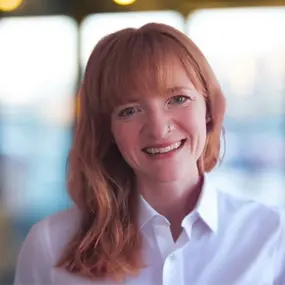
President @ Boost Pricing | Training Sales Teams to Win Deals at Higher Prices
Alex Hayes is the president and part-owner of Boost Pricing, a training company based in Columbus, Ohio, that works with B2B sales teams to win deals at higher prices and stop the margin erosion that comes from reflexive discounting. Her route there is unusual: she started selling fireworks at eight years old in the family's small business, spent roughly two decades in sales and sales leadership, and then hired Boost Pricing as a client after hearing founder Casey Brown speak. The half-day workshop lifted her team's net margin from 6 to 8 per cent within a year and, just as importantly to her, made the team proud of the work again.
She crossed over to the company during COVID, applying for the Integrator (second-in-command) role through a formal hiring process before becoming president and part-owner. Her diagnosis is simple and hard to hear: most discounting is fear, not strategy, and scope creep is a need for approval wearing a different mask. For a practice of one, the fix is a handful of questions you can answer confidently, a written scope, and a pay-myself number kept front and centre. She speaks directly to independent professionals who hate selling because it is the part of the job nobody trained them for — and the part that pays for everything else.
