

 Apple Podcasts
 Spotify
 PocketCasts
 Castro
 RSS Feed
 Krystal Hille Expert Positioning: The Book That Makes Your Expertise Visible
Krystal Hille founded Hille House Publishing to help experienced professionals turn expert positioning into a book. For a professional who has spent decades accumulating expertise, writing the book only they could write is one of the strongest ways to make that expertise visible and findable.
A former theatre director, Krystal reads authors the way she once read actors, through the body, the breath and the story. In this episode she walks through how she draws out an author's onlyness, the one thing only they can write, using the void to value exercise and stream-of-consciousness prompts, and how she maps authors to the four elements of earth, water, fire and air.
She also takes a clear position on AI: she uses it to structure and summarise, but never to write, because what a reader wants is the human signal, the lived experience and unpredictable rhythm a machine cannot have. She covers the difference between done-for-you self-publishing and a traditional deal, and what changes in the person, not the business, as their book takes shape.
In this episode you will hear about:
Why a book grounded in a real career still beats machine-generated prose
The "void to value" exercise and how it surfaces an author's core theme
Onlyness, and how it becomes visible through conversation rather than sitting in the author fully formed
How the four elements become a way of reading what a writer needs
The difference between done-for-you self-publishing and a traditional deal
What changes in the person, not the business, as their book takes shape
Her own Neo-Shamrock: the VA, AI as thinking partner, and two writing communities
Krystal Hille, founder of Hille House Publishing, helps experienced professionals turn expert positioning into a book.
A former theatre director, she reads authors the way she once read actors, through the body, the breath and the story.
She explains how she draws out an author's onlyness, the one thing only they can write, through the void to value exercise and stream-of-consciousness prompts, and how she maps authors to the four elements of earth, water, fire and air.
She also takes a clear position on AI: she uses it to structure and summarise, but never to write, because what a reader wants is what she calls the human signal, the lived experience and unpredictable rhythm a machine cannot have.
She covers the difference between done-for-you self-publishing and a traditional deal, and what changes in the person, not the business, as their book takes shape.
Wisepreneurs explores how experienced independent professionals position accumulated expertise and build sustainable practice.
Mentions and references:
- The Aligned Author by Krystal Hille
- Fearless Presence by Krystal Hille
- The Artist's Way by Julia Cameron
- Nilofer Merchant — coined "onlyness"
- Dr John Demartini — "our voids create our values"
- Michael Chekhov — acting technique
Connect with Krystal:
- Website: hillehouse.org
- LinkedIn: linkedin.com/in/krystal-hille/
Connect with Nigel Rawlins
Website: https://wisepreneurs.com.au/
LinkedIn: https://www.linkedin.com/in/nigelrawlins/
Free assessments for independent professionals: https://wisepreneurs.com.au/field-guides/
The Wisepreneur newsletter, practical thinking for experienced independent professionals, every Tuesday: https://wisepreneurs.com.au/newsletter
Support the show: https://www.buzzsprout.com/2311675/supporters/new
Nigel Rawlins (00:38)
Krystal, welcome to the Wisepreneurs podcast. Can you tell us something about yourself and where you're from?
Krystal Hille (00:46)
Thank you for having me, Nigel. Well, I am Crystal. I was born in Germany, lived in the UK, in the US, and I have since moved to Brisbane, after having been where you are in Melbourne, but it got way too cold for me in the winters, so I decided that Brisbane would be a much better place to be.
Nigel Rawlins (01:05)
Which I think's pretty smart because it's winter where I am and I've just come back from Canada where it was summer, it was just beautiful. And I did spend a week in Brisbane, which was again beautiful in winter. But down here I can't believe how cold it's got. And people will probably laugh overseas when I say, Well, cold here is eight degrees, and it will get up to about thirteen during the day in our winter. So yeah, people probably laugh at that. So when did you come to Australia?
Krystal Hille (01:33)
I came to Australia in 2006 and I landed in Melbourne because of my theatre background. I was at the time saying, Well, should I go to Sydney or should I go to Melbourne? Those were really coming from the UK, those seem to be the only two places that I even looked at. And then people were telling me, Well, Melbourne is a little bit more like Europe, whereas Sydney is a bit a little bit more like the US. And so that made up my mind. I said, No, I'll be want be somewhere more like Europe.
Nigel Rawlins (02:00)
So how would you describe Brisbane? Because I mean, when I was in Brisbane, it was only about three or four weeks ago, in winter, out in the morning, there's lots of people out and about and moving and exercising. And that's a winter.
Krystal Hille (02:15)
Yes, so winter, I mean it does in July it seems to be the coldest month and it does go down to 10 degrees, but usually the mornings are about 14 and then by nine o'clock it's up to 18 degrees, which is beautiful. Yeah I love I love the sunny winters. Sunny and cool. You know, it gets very humid in the summer, but I feel overall this is my my my preference is the heat and not not the wet cold.
Nigel Rawlins (02:44)
Yeah, I think that's that's where my thoughts are coming now. But see, summer in in Brisbane, I remember being there at five in the morning, going out early for a walk and just dripping with sweat because it's so humid. It can get pretty hot up in Queensland. Now you mentioned that you were in the theatre. So let's go back to what you started out as. You went to university and then what happened? What did you study and what did you do as a career to start with?
Krystal Hille (03:10)
Yeah, so after I left school, which was in Germany, so I was brought up in Germany and then moved to the UK and I did a gap year and realized that my English was okay, but it wasn't perfect, or you know, I didn't feel like it was good enough and you can't really learn a language in a year even being there. So I decided to stay in the UK and study, and I studied English literature and theatre studies, which re looking back now seems very brave because English was my second language and I noticed it especially when we had to do the old English and I just completely just that was something I could not could not go to. Shakespeare was okay. But yeah through that through that degree I really feel like I mastered the the language. I have a natural talent for literature, writing. I always loved writing and was the chief editor of my school magazine so it kind of has come full circle with the work that I do now.
Krystal Hille (04:05)
Theatre came about, yeah, you know, what do you do with an English degree? I did study theatre studies as well, and there was an interest in I always had this interest in psychology as well, and why do people do what they do? And why are some successful and others not? What makes us tick? And then teasing out the the human conflict that was in these plays that I found. And bringing them alive on stage. And what I really loved was being able to paint a picture on the stage that involved humans so that the audience could have a transformation. That's what I looked for when I was directing, helping the actors to embody the characters in such a way that it was really real and embodied so that it could move the audience. And that's what I loved.
Nigel Rawlins (05:01)
And isn't that interesting when you think about it that you're directing a group of people to act out something that an audience can sort of relate to. So this is probably a very ancient practice in a way. So how long did you do that for?
Krystal Hille (05:16)
I did that for about seven years. Yes.
Nigel Rawlins (05:20)
And then what happened next?
Krystal Hille (05:22)
What happened next is that my move to Australia was actually prompted by my theatre career kind of falling flat. I had reached a certain level. I'd been directing in drama schools and opera schools. I've been touring with opera companies as a as an assistant director, working with the Royal Shakespeare Company, doing education outreach, and I wanted to get to that next level where I was the one who was directing at that level, not assisting. So I'd always been doing fringe productions and and other things, but I didn't want to end up as a drama school teacher and I didn't want to end up as an assistant director, but whatever I did, nothing moved the needle forward. And so I'm very intuitive and I was listening into that and wondering, well, what is what is going on here? I had a big mortgage that I was paying. There were no real close friends that I had, and I'm started to ask that question, well, what am I even doing here? Is this still where I'm meant to be, or am I being called in a different direction into a different country? And I was very clear. I didn't want to go back to Germany and I didn't want to learn a new new language. And I kind of just threw it up to the universe and said, Okay, show me where to go. And what came back was a lot of synchronicities. So the universe answered in people said that I knew saying, Hey, I'm going to Australia for three months, or suddenly meeting lots of Australians. And then having a literal dream, because I was very much in my head at the time. In the dream, I was flying on a plane and it said, Welcome to Australia. So I said, Okay, I'll I'll get it. I'm get I get it. I'm going. So I came here, I had one friend that I knew in Melbourne, and I just yeah, I had to make it work somehow. It was on a tourist visa initially, later on on a student visa. And then somehow one way led to another and I was able to stay for real, for good.
Nigel Rawlins (07:22)
So did you work in theatre in Australia or what work did you decide you had to do?
Krystal Hille (07:28)
I started working in theatre and then realized I didn't want to build the network again from scratch and all the connections. I had done a little bit b of that but yeah, I came to another crossroad where I was wondering, well, what do I do now? Being used to the London theatre scene, Melbourne just wasn't quite the same. And that's not to say it's it's bad or anything. It's a very vibrant theatre scene, but it didn't resonate with me as much as what I had come from. So I felt it was time to change direction. And I found my life coaching. And it came to me through the artist's way, actually. I was doing the book The Artist's Way by Julia Cameron, and in it, the morning pages are a very powerful tool to just write, you know, like verbal diarrhea, just writing everything out of our system. And then essentially I wrote myself into clarity over three months after emptying out a lot of negative self-talk and just becoming cleaner and clearer within my thinking. And at the end of that three months I found a life coaching course in two thousand and eight. So I studied that, became a life coach and I felt like that was the missing piece.
Krystal Hille (08:38)
In understanding human behavior and how we can actually shift beliefs and be more embodied. So it almost was as if I had to train myself, understand humans and how they work in, you know, with my training wheels on in my twenties, and then in my 30s, I was able to actually help them to change their lives. All along, holding up a mirror, that seemed to have been the consistent work that I've been doing, helping people see themselves, because often we don't see our own significance. It takes us to look into a mirror or somebody else to reflect that back to us. And so that's what I've been doing throughout all my three careers, the theater, helping the actors, reflecting back to them their performance and helping them to embody the characters even deeper. And then in life coaching, helping rewriting stories of life, stories of belief, reflecting back strengths, pointing out blind spots and now with the work I do as a book mentor, it's the same thing, asking great questions and reflecting back the significance that we often don't see ourselves.
Nigel Rawlins (09:47)
I think that's a perfect explanation. Quite a few of my guests have come from the arts. They've been performers. A couple have been dancers who've one went into coaching with women, another went into diet and metabolism and fitness and health and wellness. I've had one musician who worked in musicals for many years to become a learning and development consulting. It it's quite fascinating. And also from musical backgrounds as well. So there's something about the body and working in the arts and obviously with your theatre that gives you an insight into people. So let's have a little talk about your work now. You you run...
Krystal Hille (10:32)
It's Hill House Publishing,
Nigel Rawlins (10:34)
Hill House Publishing. So let's talk a little bit about that. When you sit with an author, are you drawing out what's already in them or does the book only come into being in the space between the two of you, like with your life coaching or production of theatre? What appears that neither of you brought to the to the to the conversation?
Krystal Hille (10:56)
That's a really good question. Do I draw out what's already there or is it appearing in the space between us? And I would say it's a bit of both. It's a bit of both because the first exercise I do is I guide the authors to identify the core theme of their life that sits underneath everything they've ever done and it's called the void to value exercise where we're looking at what was absent in our childhood. And this is actually something that I got from Dr. John Demartini, who was in The Secret, and he says our voids create our values. That which we perceive as absent in our childhood, be that through an event that happened or just generally scarcity, or maybe love was absent, that is what we then strive for. And it's really interesting for me that was actually insignificance, was what was present. So absent was the significance. So I tease that out. I tease this core theme out of my authors. And often they hadn't realized that. I had one lady, she was saying, Wow, mine is terror to trust. I had no idea. She had no idea the depth to which this this word just suddenly popped up. And it made a lot of sense. So what it helped her to do is shape her writing and her storyline, her through line through that lens, which teased out greater clarity and greater themes that the readers could then relate to in a deeper way.
Krystal Hille (12:32)
The thing that is co-created in this space is I do a lot of stream of consciousness writing exercises. So I give them prompts and ask them to write without stopping. And that often, that exercise is incredibly powerful. And it often unlocks things that they didn't realize they knew. So they often surprise themselves and are in awe of what has appeared on the page.
Nigel Rawlins (12:59)
That's quite fascinating, isn't it? See, for me I'm thinking, wow, how did you design all these ideas to work with other people? You spent years directing actors and you've worked with the body and you trained in Tantra. What did that teach you about pulling something true out of a person? And do you still work through that voice breath and presence when you work with an author?
Krystal Hille (13:25)
This is a great question. Yeah, I love that question. When I was a theater director, I worked a lot with Michael Chekhov's work and he uses the elements and asks the authors to embody the elements in order to then find qualities in the body that can create a character and give them characteristics. And I really loved that work because I now have taken that and created author archetypes based on these four elements. So there are authors that I've realized that are very grounded. They work with the element of earth. And I do actually have found ways in which that translates into writing, not so much helping them with a body embodiment, but definitely working with breath at the moment, I often do visualizations before I go into a stream of consciousness writing exercise, and I use the elements to help give style guides, like okay, so the statements are the element of earth.
Krystal Hille (14:31)
The water element is our emotions. When we need to bring more emotions into something to engage a reader, emotionally we can ask questions and and dive into the depth. The fire is the motivation and the that motivates people into action. So how do we do that? We can create commands. And that often comes out when people write in their stream of consciousness writing, they give commands to themselves, you must do this, you should stop doing that, for example. And it's like a very strong presence. And then the air is the element of ideas and there are people who have a lot of ideas and they can they can talk about anything but they lack the discernment so we're bringing all of that together and the ideas can inspire. So I do and I have plans to go even deeper into the embodiment again and to bring all of it together in a in a more cohesive way.
Nigel Rawlins (15:29)
Wow. You can see where your study of literature and how you've actually taken it into yourself and you've got a very deep understanding of of how the the playwrights or authors have written and how that relates to people. And we do do this through our bodies. I I think we've all been thinking, it's just a brain in in our heads and that does everything. But the whole thing is about bodies, and we're going to talk a little bit more about that because one of the issues today is AI doing the writing. AI doesn't have a body, and we'll we will come back to this. Okay, we had a little chat the other day, because I mucked up our our programming. And I mentioned Onlyness which is something from Nilofer Merchant. She's written a book called Onlyness. And it's the one spot in the world only one person stands in. Now when you work with your clients, onlyness is already there, waiting to be written down. Or does it become visible through your conversations?
Krystal Hille (16:34)
A lot of the time it becomes visible through the conversations, and what I always say is that authority isn't created through the book, it is recognized, it is uncovered. So the onlyness of somebody, the unique essence of who they are. I find it's the hardest thing for people to identify what that is. What is my unique essence? What is something that I do, and only I can do the way I do it. We all do it. It but bringing language to it is again where we need the mirror and that is definitely something I I bring out in conversations by identifying patterns and beliefs and perspectives that come out of the experiences that we've had and that is definitely not something that I could ever do.
Nigel Rawlins (17:23)
And the interesting thing is for for the people who are listening to us, the the wisepreneurs, the older entrepreneur who's got a great deal of expertise, often they have trouble articulating what it is that they can actually do. And one of the things I'm I'm making clearer more clearer nowadays is that it's not just something that's in your head, it's in the relationship between two people, or it's relational. Which is what I think you're you're bringing out. You're able to bring out or help them articulate what it is special about them. And we do need this nowadays, especially as we get older. Any thoughts on that?
Krystal Hille (18:03)
The relational aspect, yeah, is very I think you're right. It's very interesting. We choose the people we want to be in a relationship with or in a in a space with, be that intimate or in a working relationship. And I think it's based on or large some somewhat based on the nervous system resonance. When we have a calm and regulated nervous system we can be a lot more present because we are embodying our human vessel, we're embodying our we're in our body, we're not in our head, we're present, we're regulated. And from that space we can access our wisdom and we can articulate clearly yeah, these these ideas of what makes me unique, they're more available to us to access, I find.
Nigel Rawlins (18:53)
And they come out in these conversations or relations between people. What was I thinking? All right. I've had other book people on the podcast. Tomas Baranek is a publisher in the Czech Republic and he he says his publishing job is to be a reliable curator. And what he does is he finds books that are written in English and he has them translated into the Czech language. Because what he's finding that since the Czech Republic has become non-communist, the people there are voracious readers. So what he does is he finds books that are written in English, gets them translated into the Czech language, because he says, Look, if you've been working all day, even though you can speak English, it's much easier to read in your own language than to be translating to English. And that's what he does. He curates. And he also points out a number of books to me to read, which I found fantastic. Debbie Jenkins was another British person living in Spain. She was an engineer and she's a book coach now. She refuses to let AI write a book because she says a person wants a real person who's lived it. So where do you stand on that? And what is it that a human author has that a machine will never have.
Krystal Hille (20:13)
I'm not against AI as a supporting tool, but I am against AI writing a book for the authors because what AI is brilliant at is I can talk into Chat GPT for 15 minutes and brainstorm and be uninterrupted by where I'm going and where I'm trailing off to and any side lanes I'm going into, and I can give the AI the instruction, please give me a cohesive summary of what I've done and put this into a structure that can shape the overview or the outline of my book. An AI will spit that out for me. It is brilliant at pattern recognition, organizing ideas. Identifying themes, brainstorming frameworks, and simplifying complexity. So when I was writing my book and I would get overwhelmed because I could have gone into so many different directions, I would have a conversation with AI about that and say, Well, this and this, and I'm thinking this and this and this and this, and this is all a bit overwhelming. How can I how can I make sense of this and organize that so that a reader can follow me and I would help me and spit out the structure. So for that I love AI. I also love it for summarizing waffle. Like if I'm waffling and I need to get a succinct section, I'll throw it into AI and it spits it out. Now what only humans can do is bring life to the to the writing. And this is where what I call the human signal, which is becoming really a competitive advantage. There's so many people these days who are just throwing out articles on on LinkedIn, but they're i they're standardized, they sound like AI, they don't sound like a human because the rhythm is too predictable. And so what we need to keep as humans is we need to keep our unique perspective. Readers reading books these days, I find, don't need a reader book to get information. They can put a prompt in AI and they get all the information they ever wanted and not just everything that's in a book. But I feel books are really valuable for is helping a reader to interpret their experience and find a transformation. So if I'm sharing a perspective, it is my unique perspective that has been created based on my experiences. It has shown me what I stand for, what matters to me, why it matters to me, and what I may have overcome.
Krystal Hille (22:50)
So these examples of lived experience are very powerful because they create that human connection that we've been talking about. And stories are so powerful also too and memorable. Then we we remember stories way more than facts. So yeah, it feels like we can use AI for what it does well and we need to stay human in what we do well. And this is why also I wouldn't ever give AI just to say, Okay, write this for me. Because AI doesn't unless you've trained your AI to know your writing style and even then it will bring AI back into the writing, so stream of consciousness writing will help authors to identify their unique patterns, maybe even their humour, and all of these idiosyncrasies that only we as humans can have.
Nigel Rawlins (23:44)
And that's the whole point that I wanted to talk to you about. Having been a theatre director, got into literature, dealing with the body and the human breath and and people relating to each other, it is a human thing. Again, AI is just an algorithm. It picks up information it's learnt and it does its own thing, but it's never lived it. You know, the experience you you talked about lived experience. By doing something in the real world, it does go into our memory and create patterns and associations which come out later. And that to me is very important. AI is fantastic. I love it, but it can drive me mad. And it you know, as much as I've trained my AI, I still have to keep belting it because it still comes out with AI sounding stuff which I hate. And hopefully too much of it doesn't get through. Okay, well let's talk about a traditional publisher, 'cause you're publishing books as well, aren't you? You're you're coaching with the writing, but you're helping them publish as well. Is that true? Yeah. Hmm.
Krystal Hille (24:44)
That's right, yeah. I help with the publishing as well. So I don't call myself a hybrid publisher 'cause hybrid publishers have gotten a very bad name, I find. As money grabbing and not caring. I provide a done for you self-publishing service. So that's very different. So it goes into the author's Amazon account. They own their intellectual property, it doesn't stay with me. And I simply do it at a professional level, so that they don't have to think about it. They just have to write the book and then we take care of the rest.
Nigel Rawlins (25:15)
Okay, so let's talk about where does a traditional publisher generally serve an author and where does it flatten the very thing a book should reveal. So there's a big difference between somebody having a publisher and going through the process that you go through with them.
Krystal Hille (25:34)
So I feel like with a traditional publisher they are looking for a marketable message and they're looking for an author that has a large following so that it makes it worthwhile for the traditional publisher to publish this author. Authors are still responsible for bringing the readership to the traditional publisher, which is very interesting. When you're working with a book mentor like myself, we don't look at what does the market want, we look at what we spoke earlier about the onlyness. What is it that only you can bring out, what is the wisdom that only you can share based on your personal experience and what happened, what you made it mean, what you realize was wrong, you're wrestling with something and then identifying the deeper lessons. So the books that you can write outside of a traditional publishing contract can potentially be a lot more authentic in in their messaging. And I'm not against traditional publishers per se, but there are just a lot bigger hurdles to overcome to getting one. And then I know of people who have often been disappointed in that the traditional publisher isn't doing for them what they think their book deserves in terms of marketing after the initial launch. And then they're locked into a contract and they can't get out of it. So there's there's there's pros and cons. And I think the biggest pro is that the perception of you're published with a traditional publisher. I mean I wouldn't say no to her being published by Hay House Publishing, for example. But it comes with pros and cons.
Nigel Rawlins (27:14)
Definitely. Thank you for that. All right. I I have a a thing that I call the Neo Shamrock organization. And imagine a four leaf clover with four leaves. And this is how I explain to people how, say, a one person business, which is what you are, is that true? You're a one person.
Krystal Hille (27:32)
I do have a full time VA that supports me, so it's almost two person business.
Nigel Rawlins (27:37)
All right. So we'll I'll I'll explain how the Neo Shamrock works and then I'd like to talk about how you actually operate your business. So the first one is the thing that you never hand over, which is your sovereign ability. You'll never give that to your VA. The second part is what human expertise do you bring in that you don't have yourself? So in that regard, your VA. Do you use subcontractors, for example, editors, people to do the artwork, people to do the setting out the type setting for the book? That's the second part. And the third third leaf, so we took the first leaf is the only things that only you can do that you're not going to give to somebody else. The second one is who do you bring in to help? The third one is AI or automation and and where do you bring that in? And the last one is community. And I think you do have a community that you work with. So we'll talk about that. So can you talk about your structures? So we've talked about the things that only you can do. What about the other things you bring in to help you?
Krystal Hille (28:43)
So I bring in my AI, she does some LinkedIn outreach for me, she does my postings for me on LinkedIn and Facebook. She checks the general emails. She does a lot of the graphics that we have and she does the cover designs, you know, so so we're talking about I don't do in the book covers, I don't do the formatting, I don't do the uploading books to Amazon. So things that that are practical things that anybody can do. So that I outsource. In terms of AI automation, I use AI as a thinking partner a lot. I use it once I have an idea to create a first draft of some writing and then I just so I have something to start with or I speak into it and then I ask it to give me a post based on what I shared, not changing my language. I do that for newsletters and posts, but then I have to go in again and humanize it and 'cause I don't agree with everything they say it says. So other other automation, I'm playing with the idea to do LinkedIn automations with certain AI, but I don't think it's sophisticated enough. I definitely go in after the initial outreach, I always have the conversations that come after that. I do have them because I feel like even a VA, I don't like them to pretend they're me. So I like having those conversations. And in terms of community, I have two different communities they're based around my my offerings. So I have the Transformation Writing Cauldron and that is a a membership where we come together twice a month, I give writing prompts and we have a telegram group where we where people can communicate and share insights and realizations afterwards where I make announcements. The other one is my aligned author sanctuary and that is the six month flagship program where I'm working with people one on one but in a group setting to create their books, to get give them feedback, to talk through ideas, to talk through stumbling blocks, mindset, emotional, whatever, whatever might come up in the writing process, especially when we get to the messy middle of a project. So that's that's where my where my community for that.
Nigel Rawlins (31:02)
And what about outside your community? Do you have a coach that you work with yourself?
Krystal Hille (31:08)
I do have a coach, yes. So I am in a in a community like that, I'm in a mastermind. And yeah, I find it really helpful to be in an environment where everybody's working towards the same goal, which is why I think it works so well writing a book in an environment where everybody's writing a book. So yes, I do have that as well. I have that support.
Nigel Rawlins (31:29)
Isn't fascinating that basically everyone I speak to on the podcast does have their own coach just to help them go to that next level and I guess even keep sane and to to hear and learn new things. So how do you protect your time?
Krystal Hille (31:46)
That's a good question. I don't open my calendar for one on one meetings you know, for the entire work day. My Monday is my my day for myself where I do my creative work, where I catch up on admin. My afternoons are no appointments either. It's where I have my children and where I yeah, it just whatever whatever's needed. But my mornings are the ones where I go work or go into meetings or do podcast interviews, I have my group sessions and then my afternoons are for myself.
Nigel Rawlins (32:21)
It's critical. I'm I'm finding now that I'm going to have to spend some of my time on administration. I try and spend my mornings reading and not much more than that 'cause I'm I I have the luxury of being a bit older, I suppose. I don't want to start before ten o'clock, but I will try and do an hour or so of reading. And then I do I tend to do client work in the afternoon. For me I have to do podcast interviews when I can and often because I've got international guests that might mean early in the mornings. So that gets interesting. Okay. Hazel Edwards, is one of the guests who's been on the podcasts, and she's written about two hundred and twenty books. She was a children's author who started out. And she says once a book is out, it belongs to the reader. What do you think actually passes between an author and a stranger who reads them? And does knowing that it's gone and it's up to the reader now, shape how you help somebody write?
Krystal Hille (33:21)
Yeah, it definitely belongs to the world and to the reader. A book can have wings and fly wherever it needs to go. I feel a reader will get to know the author in such an intimate way that they feel like I know this person. If I would have a coffee conversation with them, I'd already know them. They're a familiar person. It's not the same for the author. The author puts themselves out there in the light, that they're how they want to be perceived, and that is not to say that they perform, and I think that's really important. I help my authors to be very authentic. I sometimes have to ask them to dig deeper and be more vulnerable because it's often the stories that they don't think they want to share that will make the biggest transformation in the reader.
Krystal Hille (34:11)
So we I ask them to go there, but I asked them to go there and I also guard them so that there's no vulnerability hangover. So we're not just sharing the depth of our most intimate failures or moments in life. We're sharing them or inviting my authors to share them from the perspective of here's what happened and this is what I learned from it. We're teasing out the universal theme in the story as we're sharing the story so the reader can relate to that and see themselves in the story of the author. So we're not being vulnerable or authentic for the sake of it. There's always an intention. And the reflection then shows that even if we're sharing a story where the author has messed up deeply, by sharing the reflection, we're putting them back in the position of the authority, of the expert, of somebody who has deeply thought and processed their lives. And in doing so is sharing helping the reader to dive more deeply into their own unconscious or their own patterns. And that really if I find very, very exciting. So the deeper I can help my authors reflect and reflect on what's happened and make connections and patterns and shift creates perspectives, the more valuable the book will be for the reader.
Nigel Rawlins (35:32)
Isn't it fascinating how we read and interpret these things in our own heads? And that's the the benefit of being human as against a machine. A machine can't live what they read or experience it th in their own minds. I find it fascinating reading a novel. It's just you almost live it, don't you, inside? And physically.
Krystal Hille (35:52)
That's right. Yes, yes. And you're right there with the with an author when when they talk about a divorce, for example, and you had one, you're like, yeah, this is exactly how it was for me or this is where we're different. Our human mind is wired to compare and to contrast, to make meaning and make sense of something. It's all based around do I belong, is it safe? Right.
Nigel Rawlins (36:15)
It's fascinating. All right. What happens to the person, not the business, as their book takes shape? Who do they become by the end that they were not at the start?
Krystal Hille (36:29)
Yes, this is my favorite conversation to have because for me it's really about the identity shift of the author. Who do they become because they're taking the time to reflect on their life, their wisdom and their their story that they weren't before. And it's very often that they become more clear on who they are. Because they're taking the time to reflect. They make sense of how the puzzle pieces of their lives fit together in this beautiful picture that makes sense, which often they hadn't seen before. They may they connect puzzle pieces. They were previously disconnected. Like it took me a while to figure out how all of my three careers were connected and how I could explain that and make sense of it. But I can now. And so that is the work I help them identifying so that they come out of it feeling more coherent, more aligned to who they are, more embodied in their essence and their knowing, which helps them to show up with greater presence and greater clarity. And I feel like it makes them more magnetic as well, because when we're clear in our message, people will be drawn to that because they understand.
Nigel Rawlins (37:45)
It's amazing, isn't it, when you think about it? So how would you describe yourself now that we've discussed this? That you're not just a a writing coach or a a publishing coach? How would you describe yourself?
Krystal Hille (37:59)
I often use the word I'm a wisdom and story activator. And I also see myself as an alchemist because I help people transform the scattered ideas into a cohesive message. And I also help them alchemize and transform any self-doubts or any overwhelm. All these questions, is my story good enough? Does anybody even want to hear it? All of that gets transformed as we're crystallizing our core essence. So yeah, alchemy and activation is are definitely things that I say I do. And a lot of people in the book space call themselves a midwife, a book midwife or a doula. I don't use that word. I use I I like to use activator or alchemist.
Nigel Rawlins (38:42)
I think that's a perfect explanation. Well done. Okay, we're coming towards the end now. So is there something else you'd like to mention or talk about?
Krystal Hille (38:52)
I'd just like to encourage everybody who's listening to take a moment to reflect on their lives, your lives, your story, and perhaps the stories that still carry shame. Because those are the stories that rob you of your life force. And those are the stories that when you bring them out and you really look at them, you will find some gems in the realizations that come from it that you may have not had before. And maybe that's just the missing puzzle piece to really create the congruence in all areas of life. Because I know I've had shame around stories for a lot for for for many years and then when I said, Well, hang on a minute, that's robbing me of my life force. It's I need to look at that. It's like putting a water balloon under the water, trying to make it stick there, but it keeps popping up. And so it takes a lot of energy to suppress what we've what we're shameful of. So bring it all to the open. We all do the best that we can do with the knowledge and information we have. And taking the time to look at something might just reveal some incredible wisdom.
Nigel Rawlins (39:59)
Thank you for sharing that. So Krystal, how do people find you?
Krystal Hille (40:04)
My website is hillhouse.org which is h-i-l-le-or-g and on LinkedIn and Facebook I'm active and it's simply Crystal Hill my name. You'll find me that way. And I also have a quiz, a thought leader archetype quiz. What kind of thought leader are you? And where on the ladder of thought leadership are you currently at? So that's on the landing page of my website and it is based on the four elements. And yeah.
Nigel Rawlins (40:37)
I'll put all these in the show notes so people can follow this. So Krystal, thank you very much for being my guest.
Krystal Hille (40:44)
It has been an absolute pleasure. Thank you for having such great questions.
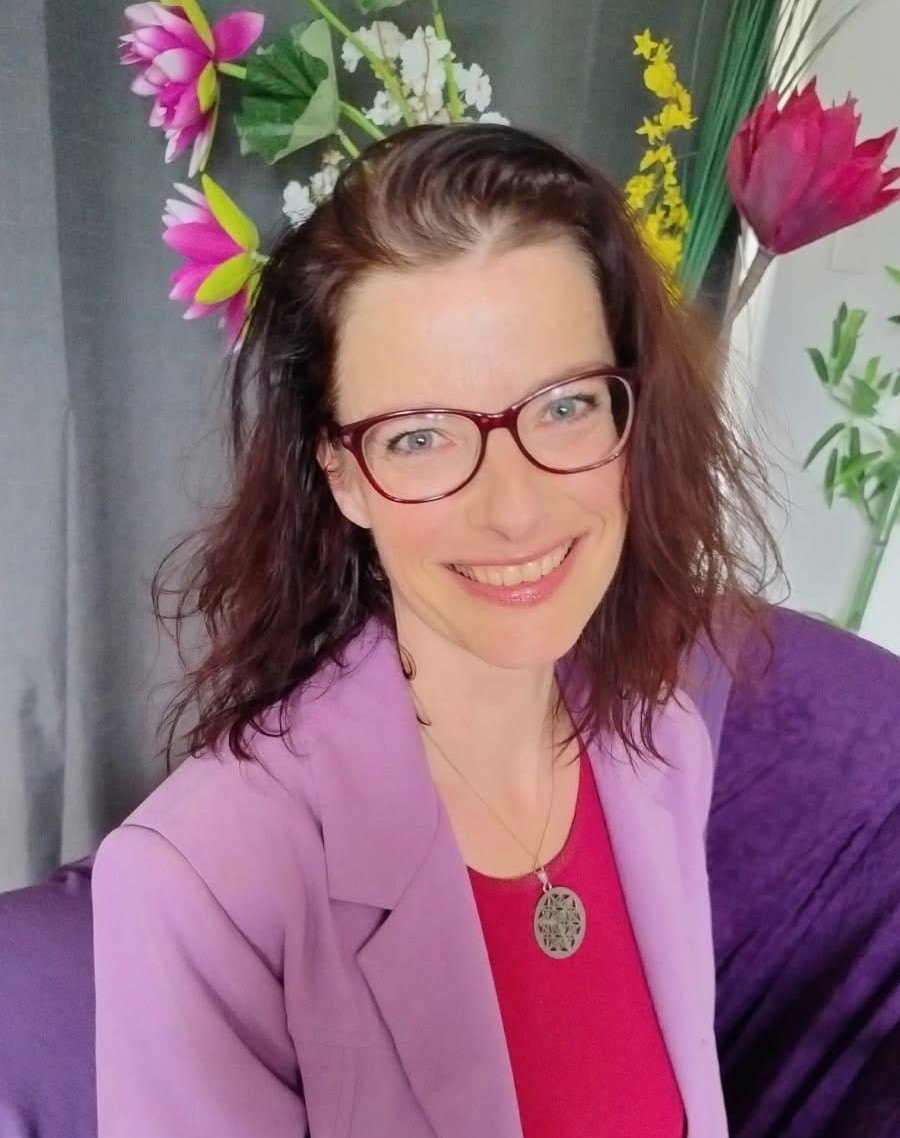
Thought Leadership Specialist | Story & Wisdom Activator | Transformational Book Writing Mentor
Krystal Hille grew up in Germany and studied English literature and theatre studies in the UK, beginning her working life directing actors, teaching drama, and working with the Royal Shakespeare Company's education outreach. After moving to Australia in 2006, she trained in life coaching, NLP, Timeline Therapy, Reiki and Tantra, and worked with women on presence and embodiment before founding Hille House Publishing in 2021.
Today she is a book mentor and done-for-you self-publisher who helps experienced professionals turn decades of lived expertise into a book. Her signature frameworks, Alchemy of Authority and Triple-A Authority, guide authors from aligning their message through articulating their expertise to amplifying their contribution. She reads authors the way she once read actors, through the body, the breath and the story, and she is clear-eyed about AI: it can draft a book in an afternoon, but it cannot bring life to the writing.
Krystal is based in Brisbane.
