

 Apple Podcasts
 Spotify
 PocketCasts
 Castro
 RSS Feed
 Liz Micik AI Website Visibility: What Independent Professionals Must Fix Now
Liz Micik shows independent professionals what AI agents see when they read a website. I ran my own site through her free Signal Check and two of the four tools could not state a single checkable fact about what I do. Liz has spent 28 years on the structural side of websites, and she is clear that this is an evolution of that work rather than a new career. If you have a small site and assume it is fine, this is the conversation that will make you check.
Liz Micik shows independent professionals what AI agents see when they read a website, after 28 years fixing broken ones.
Her framework puts four questions to a site: can an agent find you, understand you, trust you, and use you.
The free Signal Check at lizmicik.com/signal-check asks ChatGPT, Claude, Perplexity and Gemini about your business three times each; Nigel scored +24, with 14 checkable facts from Perplexity and none from Claude.
Liz explains why schema now matters for a different reason, why Contact Form 7, CAPTCHAs and specs buried in PDFs stop an agent acting on your site, and why consistency across your website, LinkedIn and reviews is how a machine decides you are trustworthy.
She also runs her own practice through a named Claude assistant, and still checks its work by hand.
Wisepreneurs explores how experienced independent professionals position accumulated expertise and build sustainable practice.
Mentions and references
- Ann Handley on writing; Marie Haynes and The Search Bar; Nate B. Jones on the open brain method
- Imperva 2025 Bad Bot Report: automated traffic passed human traffic at 51 per cent
- Tools: Contact Form 7, Schema Pro, Cloudflare, Claude Code, Perplexity, Gemini
How to connect with Liz
Website and free Signal Check: lizmicik.com
LinkedIn: linkedin.com/in/lizmicik
Connect with Nigel Rawlins
Website: https://wisepreneurs.com.au/
LinkedIn: https://www.linkedin.com/in/nigelrawlins/
Free assessments for independent professionals: https://wisepreneurs.com.au/field-guides/
The Wisepreneur newsletter, practical thinking for experienced independent professionals, every Tuesday: https://wisepreneurs.com.au/newsletter
Support the show: https://www.buzzsprout.com/2311675/supporters/new
Liz, welcome to the Wisepreneurs podcast. Liz, can you tell me where you're from and something about yourself?
Liz Micik (00:28)
I'm here in the US. I live right outside of Nashville right now. Pardon me, don't know what the frog came from. Hold on a second, Nigel. Try and clear that up.
Hmm. Okay. Well I live in central United States, right outside of Nashville, Tennessee now.
But I deal with people from all over the world, so I consider myself a digital native, if you will. And I have been doing what I do for nearly 30 years now online, which is basically taking care of people's websites when the website itself is the problem.
That's sort of in my niche and my specialty throughout all of those years. That means I've done an awful lot of platform migrations, domain moves from one place to another, helping companies break up websites, helping companies assemble websites from different companies. I've had a chance to touch just about every kind of website transformation you can have in that time.
Nigel Rawlins (01:45)
Now, this is interesting because basically I've been well, since things went digital and started moving away from print, I've been building websites. But you're dealing with the structures. So we we should explain to people what happens when you change structures. For example, when you shift a website to a new host, what can go wrong?
Liz Micik (02:07)
Haha what can't
Sometimes you're making a very small and it can be a very controlled move. And one that everybody is is familiar with happened maybe 15 years ago when we all started to go to secure websites. Instead of having an HTTP address, you had an HTTPS. We were moving to secure servers. Sometimes that's just a one or two-line piece of code that your host puts in on the server.
That serves up your website and you're done. And people never even know that it happens because of something that goes on in the background called a redirect. Other times, if you were changed the name of your company, for example, or changed, you know, just the website that you want to name it, that can be a little bit more involved, but can still be very sort of limited in scope. And sometimes you are moving from
one
platform for to another, say for example from a WordPress website to an Adobe Experience website or a Squarespace website or something like that. There you're likely to be touching nearly every single page you have on your website and needing to change it.
And if anything goes wrong in any one of those steps, you can lose all of the visibility and all of the value you had built up to that website in the past. Your backlinks might disappear, your your Google rankings would definitely take a hit, your traffic might disappear. So it's kind of important that we get all the details right.
Nigel Rawlins (03:54)
Yeah.
And we should point out to listeners, you know, we're not going to be talking so much technical about things. I'm
Liz Micik (04:01)
No.
Nigel Rawlins (04:01)
the the reason we're talking like this is I want people to understand your background. But what we're really going to talk about is why you should have a website and what's important about it now, because in the age of AI things have really changed. Now going back to what we were just talking about, I shifted
Liz Micik (04:19)
Mm-hmm.
Nigel Rawlins (04:20)
my major Wisepreneurs website to a new host.
'Cause I thought it would be faster and more secure and I lost all my traffic. And then I moved it back to another one. And it's only now, after about five years, I'm starting to get traffic back.
Liz Micik (04:34)
Mm.
Nigel Rawlins (04:34)
So people have got to be very careful about what they do with the structures and stuff like that, you know, shifting to a new new platform there. And there are a whole lot of new platforms nowadays. So what
Liz Micik (04:46)
Yes, yes.
Nigel Rawlins (04:47)
other things? Now, changing domain names, I I I know you can redirect them.
But you you said some people change their business names. and and and that's an issue too. So what other now when w what we should say is that the the companies you're working with were not so much single operators like my independent professionals, but larger companies as well.
Liz Micik (05:14)
And they fought I've worked with
websites that have ranged everywhere from that single entrepreneur's five-page website all the way up to the large enterprise sites with literally millions and millions of pages. So you know there there are some things that they all share in common and there are other things that are only of interest if you're a very, very large site. Now though I find where I'm working the most is in the that small to medium range.
The
clients and the people I'm helping now tend to be business to business, like your, like the consultants, you know, we're right here, we're all working in the same space. Business to business sites who have complex products or complex services that they need to explain to not just humans today, but now humans and AI.
That's that's really the the dividing line and and the place we need to focus now.
Nigel Rawlins (06:22)
definitely. And this is gonna be the topic of the conversation. I was just going through a
Liz Micik (06:25)
Yes.
Nigel Rawlins (06:25)
a bit about your background and stuff like that. So you work for yourself.
Liz Micik (06:28)
Yeah. Mm-hmm.
Nigel Rawlins (06:30)
do do you have a company structure or how how how do they work it in America?
Liz Micik (06:35)
now I'm just a solopreneur. I'm just doing business under my own name.
So I don't I don't have a a big legal structure behind me. I have done an S-corp in the past or you could get, you know, as large a legal structure as you really feel you're going to need in the future. But so many of us just start with ourselves and a lot of us, including me, I plan to stay a solopreneur,
Nigel Rawlins (07:01)
And we were talking earlier too. you were saying, well, like me, you're you're turning my age this year. So we're allowed to talk about that? No.
Liz Micik (07:15)
I'm
four days older than dirt. That's what I tell people. So
Nigel Rawlins (07:19)
Well, which is fantastic.
So and and the reason you're continuing to work is you're enjoying your work.
Liz Micik (07:24)
I love it. I absolutely am still so passionate about what I do. I mean it was called SEO for for decades and now everybody's having a small fit trying to figure out what to call it in the new age. You know, is it SEO, AIO, E A E O, G E O, Whatever? It doesn't matter. It's it's an evolution to a a whole new type of website. And I think it's going to be a larger revolution.
level event, and I want to be part of it. Yeah.
Nigel Rawlins (07:58)
And that's the interesting thing. So you've spent thirty years as the person larger companies and and now some smaller ones have got a problem with their structures. And then you've realized the next structural problem has come along.
Liz Micik (08:13)
Mm-hmm.
Nigel Rawlins (08:14)
it's not another migration, but the web being read by machines instead of people. How does that affect what we're doing with our websites, especially if you're an independent professional?
You know, this is a new level. We talked about SEO, which we still have to do. And now what's this about a machine reading our websites?
Liz Micik (08:40)
Well
it it I'm gonna say something that's going on the face of it sound very, very contradictory. but I'll explain it if you give me a little bit of room. as an independent consultant or contractor
What's coming with AI and AI machines reading your website has really very little to do with you and will require very little work on your part. let's be honest, if you've got a five-page website that explains my philosophy, who I am, here are my products, here are my services, here are my fees, that's pretty easy to keep control of.
But it's also going to become extremely important, and perhaps one of the most important things you can do for your business to get a complete handle on what it is an AI agent is reading on a website, not necessarily your own. I'll get to that in just a minute, but what it's reading on a website,
And I look at it through my framework. it's a four-step framework. Can they find you? Can they understand you? Can they trust you? And now can they use you?
You know, that's the way you have to look at at your AI partners these days. So you get a little five-page website. Can they find it? That's easy enough. Can they understand who you are and what you do? What is your value prop? What is it that you are offering the market? And are you being consistent with how you explain what you do, not just on that little site, but everywhere else you touch on the
internet, your Facebook pages, your LinkedIn pages, your videos if you're creating videos, your TikToks, etc. Is everything across the board consistent? That's how they'll know to trust you. So it's very small and a manageable job.
But can be very, very large and will be and will become one of the most important things you do because one of the things you and I were talking about earlier, Nigel, is the fact, you know, do you even need a website today? Well, that website, unlike your Facebook page, unlike your LinkedIn page or your YouTube page, that website is the one asset you own and you control completely, top to bottom.
It's the one place where you can make any change you want and it'll happen without having to ask or or see if it fits somebody else's terms of service. So what we're gonna find in the future is that the machines will turn to our websites as a single source of truth about you. And so that makes it the most important asset you've got.
Nigel Rawlins (11:43)
And you've got an AI signal score, which I I'll I'll talk about in a moment, which
Liz Micik (11:49)
Yes.
Nigel Rawlins (11:49)
know, I I ran through my website and it identified some very interesting things. So, you know, you might say, Okay, you've got a a fairly accurate five page website, but until you ask what AI is seeing, it does open your eyes.
Now, your test for a business is whether it's clear, complete, and consistent to an agent. So for us solo consultant, what does clear, complete, and consistent actually look like on their site? and where should they start and what should they ignore? And then we can talk about that AI signal tool that I ran on my website.
Liz Micik (12:33)
Well, you know, it maybe maybe we should talk about that first because it's it's the first and most important thing you can do is take a look at your website from the perspective of an AI agent. What is it that they see when they come to your website? And that's what the signal check does. It's it's a free tool that will just show you not gotta get in the weeds here for just a second.
when you put your URL into the signal check, it will not just go and ask once
Hey ChatGPT, hey Gemini, hey, hey Perplexity, what do you think of Wisepreneurs? It will ask them three separate times. And then what comes back to you, Nigel, when you when you looked at the results was the aggregate of those three visits. Because we know that every time AI runs a query, it's can be slightly different than the other queries. And there's a whole lot of technical stuff we don't need to get into.
that's behind that. But we wanna get we wanna get the aggregate view, we wanna get the overall view of how they look at your website. now what did what did you get as a score for that, Nigel?
Nigel Rawlins (13:48)
Okay, my
my my score, my AI signal score was plus twenty four, set at a solid foundation. Chat GPT one fact zero vibes plus two perplexity fourteen facts zero vibes plus twenty eight. Claude zero
Liz Micik (14:06)
Mm-hmm.
Nigel Rawlins (14:07)
two vibes minus four. Google Gemini zero vibes was one and minus two scores. So my total score was plus twenty four.
Which was really interesting. And when I read about it, it was very obviously ChatGPT, Claude and Gemini. I don't know if they found any stuff. They found old stuff. stuff
that wasn't relevant.
Liz Micik (14:30)
Yep, yeah.
Nigel Rawlins (14:31)
Perplexity obviously went straight to my site and checked it and found stuff. Now the problem is there though, is, you know, who uses perplexity to find stuff?
Liz Micik (14:43)
Well, it it really doesn't matter if you're using perplexity or not, but the reason it was there is it's one of the big four. And i this is why I said it it might help us if we start by looking at what you saw. because you wanna get an idea of how AI overall
how the AI agents are going to view your website. And what you saw there was the more important difference that ChatGPT, Gemini, and Claude were all going to what's what's called training data.
They were looking at what they had been trained in when they were when they were born as an LLM, you know, when that model came out, it had been trained in a set of data, and that's the data set it's looking at. Perplexity was built in a very different way as an LLM. It was built to search the web, period. It was not grounded in a training data set. So what the biggest
takeaway from what you saw and what everyone is going to see. I think I think it's been pretty much universal. That perplexity will have a much higher score because it's reading current fresh data. The rest of them are how much is grounded in their training data and how much are they now beginning to go out and do web searches on. We can't do anything to change that old thinking. I mean you can't go back and rewrite their training data set.
So what we can do now is do everything we can to make our website clear what was it they were stumbling over, what was it that they got wrong, what was it that was so old in what they said. Look at those specifically and then say, okay, now how can I make this clear that that was the my primary product three years ago, but now I've updated and upgraded that to this version. How do I make that very clear on my website?
And there are three things you look at: the visible page that on your website, and you look at, I'm gonna say a dirty word here, then we'll discuss it again in a minute, schema. And then you also look at just how your page is written, the HTML behind the page, the code behind the page. All three of those things need to be in agreement, they need to be consistent.
The same rules that have applied for Google for the last five years, seven years, you can't put anything in schema that's not on your visible page. So if my legal name for my website and and I have is LM Consulting, but I only put Liz Micik on my visible page on my website, well then I can't use LM Consulting in my schema.
But
schema or structured data is one of the first places that an agent's going to go for information. So, you know, it's very important you get things consistent and get them in all those right places on your page. That's a first step.
Nigel Rawlins (17:52)
Okay, so what we're really s and that's a really
important step because using your AI signal score, it told me what Chat GPT, Claude, and Gemini were seeing. And it wasn't seeing what I've got on there. Perplixity did.
Liz Micik (18:08)
Mm-hmm.
Nigel Rawlins (18:09)
So what that means, and you're you're talking about consistency there, we're also talking about consistency across platforms too, because
Liz Micik (18:17)
Yes.
Nigel Rawlins (18:17)
you know, what do we got on LinkedIn?
Does it match with what we've got on our website? And and I I I'm hoping people who are listening to this are suddenly getting what's going on here, is that there's
Liz Micik (18:28)
Mm-hmm.
Nigel Rawlins (18:29)
a lot more work to be done on your website for that consistency. Now, we should explain, schema is some code that's hidden behind that's readable for, I guess, machines. And it's not always
Liz Micik (18:40)
Mm-hmm. Yes.
Nigel Rawlins (18:42)
added to websites. is it a big thing with SEOs to add schema nowadays, or is it just
An afterthought.
Liz Micik (18:48)
It is very much an afterthought and and I said, you know, I I'm gonna say a dir dirty word when I say schema because it's also very much debated among SEOs as to whether or not it even has any value anymore. Schema was an agreed upon set of structured data that tells
Google and the other search engines, and now the AI agents about the entities on your website, who you are, what you are, what you do, what the concepts are behind you. And it does it in a very structured language format. Now that was used by SEOs to get what was called rich snippets, or to get, you know, little stars in their search result pages. Well, those have gone by the wayside, and the value of doing schema.
For those purposes is gone. But what we've found recently is that the LLMs, the AI agents, use schema for a very different reason. So your reason to use it today is not to rank in Google. It will not help you rank in Google, but it will help an AI understand who you are and what you're doing. It will help to bridge that gap between the old data set and
and what you're doing today. You know, and right now that's the best we can do.
Nigel Rawlins (20:16)
I saw a post which I'm going to reply to on LinkedIn the other day where somebody is, you know, I've I've mentioned this probably before. There are some independent professionals who are turning over hundreds of thousands of dollars a year by themselves, running a one person company. Some some are turning
over more.
Liz Micik (20:34)
Mm-hmm.
Nigel Rawlins (20:35)
Now they might have a few subcontractors and other people like that.
But if they're not looking at their own website and not getting some help, because this is this involves work, making sure your SEO is correct. you know, so in other words, you're identifying your site to search engines if somebody's searching for you or they want to check an article or and look with and and I do look after about eighteen websites for clients.
Liz Micik (21:03)
Mm-hmm.
Nigel Rawlins (21:04)
you know, they don't always get work from those websites.
But they do add credibility. And the point you've just made about with the site audits is that, you know, that consistency across the platforms and within the website and the SEO has become critically important because it's a trust factor, isn't it?
Liz Micik (21:25)
Yes. It is.
that is how an AI learns to trust you is by being able to verify
That what you said on page seven over here matches what you said on the GTU review or the Yelp review or you know your LinkedIn page. As long as things are matching and are consistent, then it'll say, okay, I can trust that piece of information. I can I can now say it's a fact. It's not just something I'm making up or inferring from what you are saying. But Nigel, I want to make I want to make one more point here.
I I started by saying if you've got a little five-page website, doing this may not be all that crucial for you, but it may be very crucial for you. It's not only important just to prove who you are and as your single source of truth, but I think this is probably as a consultant one of the best opportunities you have for getting new business in the coming year. And that is
Nigel, you've got 16 websites. Don't put wisepreneurs through signal check. Pick out one of your ideal clients there that you want to get a new engagement for, expand your engagement, or you just haven't done any business in a in a while and you want to see if you can rekindle that relationship. Put them through the signal check. And then no matter what kind of a consultant you are, you know that.
match up and see how are they being reported on by the AI and how can you and your area of expertise how can you help them achieve that.
You know, whether you're an HR person, a bookkeeper or you know, somebody in finance, your niche, your intelligence, your offer plus that is gonna be a great way to show them, hey, we need to work on this.
Nigel Rawlins (23:29)
I I reckon that's a brilliant idea. But you know, I even do speed tests on on some of the the websites I look at and you know, beautifully
Liz Micik (23:35)
Mm-hmm. Yep.
Nigel Rawlins (23:37)
designed websites and they are slow as. Some of mine load less than a second. Because that's I thought that was normal, but it's not. So you can imagine
Liz Micik (23:48)
Yep.
Nigel Rawlins (23:49)
if if they're not looking at a fast loading websites, that they're probably not looking at SEO. But one of the things
You know, you've said there is that consistency across the platforms. I mean, the one that I picked up is I have been going twenty seven years. And some people must, you know, who've just started
Liz Micik (24:05)
Lord, yes.
Nigel Rawlins (24:05)
they must think, Twenty seven years. But is it twenty seven years on every platform? No, it wasn't. That's
Liz Micik (24:14)
Mm-hmm.
Nigel Rawlins (24:15)
what we're talking about. You've got this written here. Is it consistent there? And and I know with one of my clients, you know, the the the
The scope of my work isn't to that extent, but I've now looked at it and I'm saying, I'm gonna have to talk to this client and say, Look, you are not consistent here, here, in four places, mind you, probably five. And and I've
Liz Micik (24:37)
Great. Yes. Yes.
Nigel Rawlins (24:39)
built two websites for this person, one for a a Melbourne site and one for a Geelong site, which is close to where I am. But it's all those other platforms are not consistent. Even qualifications are listed differently. And and that's what we're talking about,
And and I mentioned before about some of these million dollar consultants who don't have time to do this. They're not aware of these lack of consistencies, And, they might be writing an article. for example, at the moment I'm looking at my LinkedIn articles I'm posting to some of my more popular ones and I'm going through, is my little tagline there consistent or have I changed it? Little things like that.
Liz Micik (25:18)
Well
there are there are little things and then there are big things. There are in my audit, the audit that I offer to people, I have 40 different checkpoints like that that I go through. 40. Page load speed is one, you know, content shift is another. Do you have JavaScript? have you put your product specs into a PDF?
An AI agent can't read a PDF, therefore they don't know what your product is. They don't understand it. So I mean it's it's it's an accumulation of a lot of these different things. And I I don't want to sound too self-serving here, but that's one of the things my big my audit does is it provides a larger company or an older company a great place to start because you're not gonna check one thing today and I thought
about something else next week and I thought about something else a month from now. Let's find them all, let's surface them all, and then we can deal with it and fix it. Yeah.
Yep.
Nigel Rawlins (26:23)
That's the point about your experience,
you know what's important. And and you can
Liz Micik (26:29)
Yes.
Nigel Rawlins (26:29)
make that list, and that's what they're paying for. It it might be an automatic process
Liz Micik (26:32)
Exactly.
Nigel Rawlins (26:35)
or something, but as they say, it's that 27 or I think 28 years of your knowledge, you know what's important. And it goes way back. I I know when we first started coding websites, we put hit counters on the websites. That was a big
thing.
Liz Micik (26:53)
Well, you know what that you remember what we called them a few years later, how idiots track success. Because
Nigel Rawlins (27:00)
Yes. Yeah. The old websites had a little
hit counter down the bottom and we were so proud if we got all these hits. And and SEO in those days was really terrible. Yeah, you hid words
Liz Micik (27:12)
Yeah.
Nigel Rawlins (27:12)
on the page so that it would be picked up by things. It doesn't work but that's the point. When you say you've got it
Liz Micik (27:18)
Nigel,
do you know they're coming back and doing that again? They are. It's it's what's old is new again with this new AI revolution. You'll f you've got sites today that are doing the same thing. They're putting white keywords on a white background.
They're building listical articles and saying who's the best at this and putting their own site at the top and rating their own site. I mean it's yeah. So we are dealing with that wild, wild list again.
Nigel Rawlins (27:49)
Well,
we talk about white hat, SEO, and black hat. That's the black hat stuff and and you know, but
Liz Micik (27:53)
Yes. Mm-hmm.
Nigel Rawlins (27:56)
that's that's where the trust comes back too, that you you are going to do legitimate things because if you're doing the black hat stuff, Google can just wipe you out. So the next point is and this is where it's gonna get interesting, your next buyer might not be human.
Liz Micik (28:16)
Your
next buyer is already changing.
Nigel, I don't think you saw it on my website because it's brand new. I just had a whole lot of fun creating a brand new little one-minute video for my about page. And I illustrated this by turning myself into a robot in the middle of that video and then turning myself back to myself. Right now, today, it's not tomorrow, it is right now today. Think about it. If you type a query into a chat box and you're asking for, you know, what
What flights are available from Nashville to Tampa, Florida next week or something? And you're saying, AI, I want to plan a vacation, go build me an itinerary or something. AI is going to that website, not me.
They are the ones going and saying, okay, here are the three best flights that I found, here are the three best hotels that I found, here is, you know, three things to do on Tuesday. Well, you don't even know what sites it went to. So
It's already there. It's already happening to that extent. They're reading. Now in the end of February, Cloudflare started it by allowing people to
toggle a switch on their website as to whether or not they wanted to have a second website built in Markdown that an agent could read. I think I mentioned earlier if you put your specs into a PDF, an agent cannot read that. So you're going to have to deal with this
Unless your site is totally informational and you don't ask anybody to do anything, you are going to have to become findable, understandable, trustable so that you can be used. You are going to have to go one step further, and you're going to have to make sure that
Your contact forms, and we talked about this a little earlier, is not built in JavaScript and does not have a CAPTCHA that an AI agent cannot fill out. Because that agent who's coming back to me today and saying, Okay, here are these three best hotels, do you want me to go and book one for you? That's the follow-up question you get in AI today. Do you want me to go and book it? Well, if on your website he can't book.
Book
it because that form is not written in the right language, you've lost the business. So it's it's kind of a yes, we must take care of these. It's not sexy, it's not fun, but we gotta do it.
Nigel Rawlins (31:11)
And that's the interesting thing. For for example, a consultant, who might only have two or three engagements a year, and fairly long ones,
Liz Micik (31:21)
Mm-hmm.
Nigel Rawlins (31:21)
because you know, if they're an independent consultant, they can only do so much and hopefully they charge enough to make a good living from it. The basis of their work is a relationship. Whereas what we're talking about now is an AI agent coming in and actually trying to do something.
So there's a bit of a difference, isn't there, between this relationship selling, as we say, and the agentic stuff that's coming.
Liz Micik (31:46)
Well, there again, there is and there isn't. You may have a five page site and you may have be relationship driven and referral driven, but I bet you you've got a calendar page. I bet you you schedule meetings with clients somehow. You've got a form on your website to say, hey, you know, fill out the form and I'll get back in touch with you and we can meet. Those are blockers, those are important things for you to look at. But it's also goes back to what I suggested about take a look at your ideal clients.
client and what's on his site and what are his blockers. I'm doing a lot of of work right now for manufacturers and you know a small manufacturer who may have three key products but they come in a variety of sizes or shapes or specs. So it you know you've got a fairly complex
Purchase there. But how do they do business? They rely on a request for quote on their website. And it's that agent has got to be able to fill out that request for quote. Not a human anymore, not just a human, but an agent. You've got to make it easy for him to find all his specs, to add them all together, tell them how to do it, where to do it, and then give him a form he can do. So that's the next step. That's the fourth.
Layer of my framework, it's the use layer. Now, that is brand new right now. That's being formed and formulated, so we don't have a lot of answers, and there isn't a solid this is how you do it for e-comm, this is how you do it for this. We are making some of that up as we go along.
Nigel Rawlins (33:32)
You know, I just realized I wasted a whole lot of time the other day. I needed some more paper 'cause I print everything. I'm not I I can't stand reading on a screen. I've got piles piles
Liz Micik (33:40)
my.
Nigel Rawlins (33:41)
of notes. So I had to get more copy paper. So I went on to Amazon, checked the price, and then I went to Officeworks, which is one of our big stationery stores and found the price and then I bought it and then I gonna get delivered because
ten bucks to to get it delivered. Amazon delivers for free,
Liz Micik (33:59)
Yeah.
Nigel Rawlins (34:00)
but it was still ten bucks more, so I've still saved ten dollars. But I did it all manually and I'm thinking, why didn't I even think about, you know, sending my agent off and find the best price delivered and and I
Liz Micik (34:12)
Mm-hmm. Mm-hmm.
Nigel Rawlins (34:14)
wasted probably twenty minutes and I had to find my credit card and I had to put my credit card in and I'm thinking, yeah, no wonder I waste time.
Liz Micik (34:22)
It that's why it's coming and that's why it's coming so soon. You know, I had honestly I think a lot of us who have been watching this even closely, we didn't think we'd be this far along until the end of September or October, maybe even, you know, pushing the Black Friday shopping time.
But I think that's that's really what's accelerated this side of it because the LLMs, the big AI agents, from their side, looking at the web from their perspective, they wanted to make sure that that AI agent could do what you were asking him to do as a shopper. And at Christmas we're all going to be doing this. And so they worked first with like Shopify stores.
If you go out on the web, you'll find stories about how your card experience is going to change. And you know, now there's a Shopify store of all Shopify stores that an AI agent can get into. So they've been working on it from that side. But now that behooves us as website owners and consultants to individual website owners to meet that at our end. And that agent is now able to do it. Now we have to be able
Yeah. deliver our side
Nigel Rawlins (35:45)
Definitely got to think about. So I've been putting ebooks on my website. They're the they're free at the moment. But there is one that I've been writing that I do want to charge for. And I'm just thinking, well, would would somebody be searching for that and then send their agent off to purchase it and download it on their part? So that's a that's a point. All right. Let's go on to this. Y you offering your your free check.
Liz Micik (36:08)
Mm-hmm.
Nigel Rawlins (36:08)
Your
AI signal score, which I think if you are running a website, it's it's worth checking. We'll have these in the show notes. And then you offer a fifteen hundred dollar audit, and then you've got to build services from $5,500. So when a client says yes to the build, who does the work? Do you have a team? and where does AI fit in with what you do? So and where do you draw the line?
Liz Micik (36:37)
That's a great question and the I have been working on this for several months and I
I am a Claude user. I like to use Claude co-work and desktop. So I learned several months ago, you know, how to build what I call a second brain for my Claude so that you know every time you open up a new chat, it's like you're starting fresh and they don't know who you are and what's going on or anything like that. I started building a co-work assistant and I've actually given her a name.
So that she has a memory of everything about my business and what we're doing. And so she does not start from scratch with each conversation. It's we build on what we've already built before. And together I used her and I used Claude Code and I built skills that go behind, you know, that 40 points in that audit. You know, some of them are schema skills and some of them are SEO skills and some of them are content writing skills.
know once we've delivered all of this write it back here here and here this way so I've built out a team of AI agents under my co-work orchestrator you know she is my my major orchestrator now that's how I'm doing it and I imagine that's how most of the single solopreneurs who are building those big AI businesses are doing it. You just simply can't do it manually yourself anymore.
i but what I'm able to to accomplish with AI this way is fantastic. It's amazing.
Nigel Rawlins (38:24)
But it
does come from your twenty eight years, doesn't it? Because you know it.
Liz Micik (38:27)
Years of experience
because yeah, because you have to if if AI comes back and said, here's what I found about SEO, about this site and this page, I still have to put eyes on it and say, no, you got that one wrong, or this is right. But because I've been able to train it so well, I can do in 20 minutes what used to take me two and a half weeks to do.
You know, so you treat AI as a junior employee and you're gonna be golden. You're gonna get so much more out of it. Yeah.
Nigel Rawlins (39:02)
it's the same thing I I did. I used to take a whole day to do the analytics reports to send out to the clients.
I hate Google Analytics, so I use a commercial program and Claude code, went up to that program, grabbed it for each of the clients, set up a a thing. I had to download 'cause I'd I download another report that I'd have to do physically at the moment, adds it in.
Liz Micik (39:26)
Mm-hmm.
Nigel Rawlins (39:26)
It does an analysis, then it sends it off to my Google drafts to send out, and then I read it to make sure that it's relevant. But it used to take me a whole
Liz Micik (39:36)
Exactly.
Nigel Rawlins (39:36)
day. Now it'll take me probably an hour and a half maximum for all the reports. But and
Liz Micik (39:42)
Yep. Mm. Yep.
Nigel Rawlins (39:45)
the reports are better than I used to write. But it also gives me information
Liz Micik (39:48)
Okay.
Nigel Rawlins (39:49)
that I I need to to to draw on. But you're right. I mean, it's amazing, isn't it, when you think about it.
But you've got to know what you're doing.
Liz Micik (39:58)
Exactly,
exactly. So everything comes back to who you are and what is your individual expertise and and how do you plug that in and how do you explain that to a client.
You know, you're still going to be doing that. A lot of people for a while were saying, especially when the the Shopify cart changes started coming out a couple months ago, they said, woe is me, we aren't gonna need websites anymore, we aren't gonna need humans anymore, we aren't gonna need stores anymore, because AI will go directly to the source and we'll all be cut out of business. No, you won't, because of this individual.
and unique experience that you have. You know, it's Google's EEAT all over again. Expertise, experience, authority, and trust. And AI just isn't going to take that away from me anytime soon. Not you either.
Nigel Rawlins (40:59)
But we're gonna have some flyby nighters in there who are gonna say, gee, I'll just listen
Liz Micik (41:03)
Ooh.
Nigel Rawlins (41:03)
to this. And, you know, people are gonna waste the money on this. As you know,
Liz Micik (41:07)
Exactly.
Nigel Rawlins (41:08)
ev every year some new things come out, I see somebody gets on the bandwagon and they run courses and they run things, and then everybody else then does it, so they move on to the next thing. And it's like the relational databases. Like I use obsidian for my second brain and that and my
Liz Micik (41:29)
yeah. Mm-hmm.
Nigel Rawlins (41:28)
Claude talks that's where all my skills are kept. And
it's kept in the cloud. So I use that, and that's got all my Readwise from the readings and the notes I've taken, plus all the downloadable transcripts that I've listened to, for example, your one that you were in with Marie. I downloaded I I did watch it, I downloaded the transcript and I read that and used that to summarize things. Now
I guess one of the things I'm concerned about is if more than half the traffic to our websites is a bot, you know, a robot,
Liz Micik (42:04)
Mm-hmm.
Nigel Rawlins (42:06)
and everyone starts writing for machines, what happens to the human side of writing?
Liz Micik (42:13)
You know, that's that's a really difficult question to answer because in some ways it doesn't change at all.
In some ways, what we need to augment and make better on our websites, what we need to augment for an AI, will also augment and make it better for a human. That's that's the thing that a lot of people don't understand or they trip over. you, for example, saying, I used to do this and now I do this, and here is why. Well, that's another expression of your expertise and your experience, and that's again something.
That makes you unique. So that's going to be a value to a human. And I don't I need to apologize up front. I don't remember who it was. It might have been Chris Long, it might have been Will Critchlow There are a few people on LinkedIn who are really, really good and they they post a lot about this type of stuff. But somebody in just the last couple of weeks has has posted about the fact that.
Humans do prefer to hear like a follow-up conversation from you about what happened at a conference that you attended.
A hundred different people can post. Here's what happened at XYZ, the Google I.O. conference last month, and here's what's important to you. But each one of those posts, if it comes from somebody's unique perspective and their unique experience, is going to be of value to that person's clientele, their audience. So that will not stop happening. And in fact, you know that's that's you being valuable to both an an agent.
And a human. There are some things though that we don't do on the visible page. Like I said, we do it in the structure of the HTML or in the schema so that it's of more value to an AI agent. Again, you're right, it comes back to experience and knowing which place and which way to use which tool. Yeah.
Nigel Rawlins (44:34)
em
Liz Micik (44:35)
Ha ha ha.
Nigel Rawlins (44:46)
dash is a dead giveaway that it was written by AI. What do you think?
Liz Micik (44:54)
I've been okay, I started my my professional life as a writer when I was fifteen years old.
I I worked for a a news service as a stringer. So I'm I'm content first and this is very close to my heart. I have a little thing, a little saying that that I tell people when when they ask about this, and it I am strictly team Ann Hadley. I tolerate an Oxford comma. I really appreciate the suspense of a good ellipse, but I love. I really love
And em-dash. Because if you heard that, I really love this. Is this the way people have normally spoken for a long time.
And to just say, that's AI, or that's AI slop, or that's bad no, no, we have to get over that. We have to get away from that right away. and we humans have to push back and say, uh-uh, I'm not gonna stop using em dashes because of it. Nigel, what are you what did you say? You put it in brackets when you use it? I just
Nigel Rawlins (45:59)
I often have to say Well,
I don't often use it anymore for that reason, but when I do,
Liz Micik (46:04)
Yeah.
Nigel Rawlins (46:05)
I put in brackets. I chose to use this em dash.
Liz Micik (46:10)
I think I think we will get to that point soon. It's just right now everybody is is at a loss.
Frankly, we're all kind of searching for ways to say, how do I know if what I'm doing is valuable? How do I know that what I'm doing is going to move the needle or is going to result in business next month? How do I know this? How do I measure it? I used to be able to say I was number one ranked for this keyword in Google. I can't say that anymore. I used to be able to say this, I can't say it anymore. A lot of people are now chasing AI overviews and citations in AI.
overviews and saying if I got the citation I'm I'm valuable. No, it goes back to your website. You've got to go back. Right now
we don't have a definitive answer as to how to measure it, what to measure, what's good, what's bad. There are no benchmarks yet. So what we have to rely on is the only thing we can rely on, which is our own sales, our own conversion, again, our own website statistics. You know, look at that.
Have you lost traffic to bots, but your conversions are still up or even climbing and getting higher? Well that's an indication that you're being well understood. You're on your way to being, you know, okay in this new world.
People are grasping at straws and saying, you know, anything that doesn't fit what they're currently thinking is slop or it's this or it's that, you know, and we can't do it. We've just gotta be patient, fix what we can fix, pay attention to what counts in our business, and move in that direction.
Nigel Rawlins (48:01)
I hope what people are hearing is experience. Okay? Because this is really important. This is not something you can do in a day or a year. We're often talking here, maybe a couple of years work, you know. Maybe going back through some of those older articles if you've been writing a blog and rewriting them or deleting them. And Claude helps with that. I I've sent Claude through mine and said, pick up.
which ones should be combined and it tells me, you know, this is really old
Liz Micik (48:33)
Mm-hmm.
Nigel Rawlins (48:34)
and, you know and what I used to write five years ago is not relevant anymore. And it's certainly not relevant to Google or AI. So Liz, is there anything else you you think we need to to mention here? Because I think we covered it pretty well.
Liz Micik (48:50)
I think I think if we went too much further people would get a little overwhelmed and start thinking again, my gosh, where do I start? What do I do? You know. No. I think we've covered it pretty well, Nigel.
Nigel Rawlins (49:01)
So Liz, where should they start with your website and and contact you?
Liz Micik (49:07)
LinkedIn is fine, but also my website,
start with a signal check on lizmicik.com I think we can put that in the notes. yeah, do a signal check on your site and then run one for your ideal client or the person you want to do business with next month. See where you stand and start to work on it from there. Just, you know, start chipping away at things.
Nigel Rawlins (49:31)
Thank you, Liz, for joining me. It's been fantastic.
Liz Micik (49:35)
thank you, Nigel. I always have fun talking about this stuff. I could go for hours.
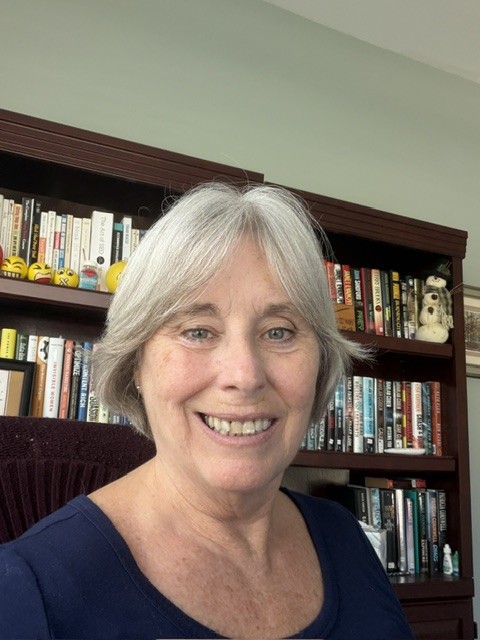
Organic Growth Strategist | Content Strategy, SEO, AI Partner
Liz Micik has spent 28 years working online, most of it on the structural side of websites. She built her first hand-coded page in 1997 and chose marketing over development once JavaScript arrived, a decision that shaped a career translating technical problems into language a business owner can act on.
Her niche became the call companies make when the website itself is the problem: platform migrations, domain moves, sites broken apart or stitched together, the kind of work where a wrong step can cost a business its rankings, its backlinks and its traffic overnight.
She now works on what she calls the agentic web transition, helping businesses make their sites readable and usable by AI agents rather than only by people.
Her framework asks four questions of a site: can an agent find you, understand you, trust you, and use you.
She offers a free Signal Check that shows what the major AI tools currently say about a business, and a 40-checkpoint audit behind it.
Liz runs her practice solo, extended by a named Claude assistant and a set of purpose-built agents.
