

 Apple Podcasts

 Spotify

 PocketCasts

 Castro

 RSS Feed
Elaine Pofeldt on the million-dollar one-person business
Elaine Pofeldt spent a decade documenting the businesses the press ignores: ordinary people who reach a million dollars in revenue with no employees besides themselves. She explains how they expand past what one person can do — contractors, outsourcing, automation — why a one-person business is now a sellable asset, and where it goes next with AI agents. For independent professionals, it's proof a big, capable organisation without staff is a real possibility.
Journalist Elaine Pofeldt has spent a decade finding the businesses the press ignores — the ordinary people who build a million-dollar business with no employees besides themselves.
After years covering venture-funded startups at Fortune's Small Business Magazine, she noticed nobody was writing about the small, one-person businesses she and her peers actually wanted to run. So she went looking, and found lots of them.
In this conversation she lays out how they do it: expand what one person can produce through contractors, outsourcing and automation instead of payroll.
Her book's rule is simple: "What will help you break into the seven figures is to expand your capacity beyond what one person can do." She profiles people like John Johnson, who was laid off from selling mortgages in the Great Recession, started selling police bicycles and PPE kits to municipalities from home in his fifties, built it past four million dollars a year, and sold it.
Three things make this more possible now than ever. A one-person business is a sellable asset — "there was a time when nobody would ever buy a one-person business, but that's not true anymore." AI agents let one person orchestrate far more. And on the horizon sits the possibility of a billion-dollar one-person business, with real questions about who is responsible when the agents go wrong.
For experienced professionals building a practice on their own terms, this episode is proof that a big, capable organisation without staff is a real possibility — and it is built on a shape (a small core of your own judgment, ringed by contractors, tools and relationships) that you can start mapping to your own week today.
Connect with Elaine Pofeldt
elainepofeldt.com
tinybusinessbigmoney.com
LinkedIn
Forbes
Instagram
Books
The Million-Dollar, One-Person Business (Random House, 2018)
Tiny Business, Big Money (W.W. Norton, 2022)
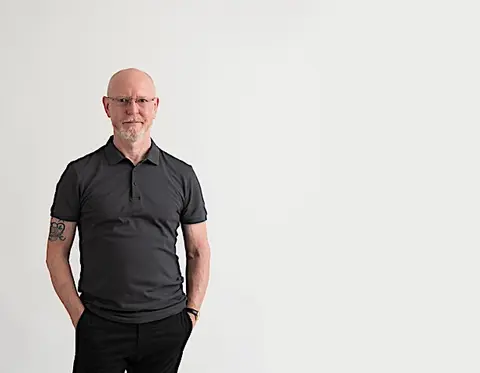
Connect with Nigel Rawlins
Website: https://wisepreneurs.com.au/
LinkedIn: https://www.linkedin.com/in/nigelrawlins/
Free assessments for independent professionals: https://wisepreneurs.com.au/field-guides/
The Wisepreneur newsletter, practical thinking for experienced independent professionals, every Tuesday: https://wisepreneurs.com.au/newsletter
Support the show: https://www.buzzsprout.com/2311675/supporters/new
Frequently Asked Questions
Who is Elaine Pofeldt?
Elaine Pofeldt is an independent journalist and speaker who has spent a decade documenting solo and tiny businesses. She is the author of *The Million-Dollar, One-Person Business* and *Tiny Business, Big Money*, and a Forbes senior contributor.
What is a million-dollar one-person business?
A business that reaches a million dollars or more in annual revenue with no employees besides the owner. Pofeldt's research found ordinary people doing this in e-commerce, professional services, personal services and more — by expanding capacity through contractors, outsourcing and automation rather than payroll.
Can you really build a million-dollar business without hiring anyone?
Yes — her books document people who have. The owner keeps a small core of high-value work and buys the rest: contractors for specialist skills, software and now AI agents for repeatable tasks. It is evidence of what is possible, not a guarantee, but it is real and it is learnable.
Does AI make the one-person business more viable?
It can. AI agents act like trained helpers on repeatable work, freeing the owner's attention for the judgment calls clients pay for. Pofeldt's caution: treat an agent like a new employee — you don't hand over the business in the first week, and you keep the human relationships yourself.
What is the billion-dollar one-person business?
The frontier Pofeldt is now exploring: whether the same lean shape, supercharged by AI agents, could one day reach a billion dollars. It raises real questions about who is responsible when the agents go wrong — which is why deciding who does what matters at any scale.
Nigel Rawlins (00:00)
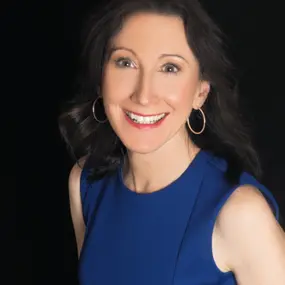
My guest today is Elaine Pofeldt, a working journalist who runs her own one-person business from home. At Fortune Small Business, she wrote about venture-funded start-ups. But when she went freelance, people asked her about her own working life. What's it like working from home, raising her children, and choosing her clients? That led her to wonder, was anyone actually making a million dollars this way? It turned out lots of people were, with no employees, beside themselves.
One entrepreneur she profiled runs on the motto, never have a boss, never be a boss. As Elaine points out, the corporate system treats people like disposable commodities, and a one-person business gives you a plan B in your back pocket. Her first Forbes blog carried only statistics. Readers called it a cliffhanger, so she put out a challenge. If you're one of them, tell me who you are. Over about a year, five of them wrote in.
In her books, The Million Dollar, One Person Business, and Tiny Business, Big Money, she breaks down the mechanics, using contractors, outsourcing, and automation instead of payroll, and treating new AI agents like entry-level staff. And the business you build is one that you can eventually sell. Her next question, could a one-person business reach a billion dollars? This is the Wisepreneurs Podcast. I'm Nigel Rawlins. Elaine, welcome to the Wisepreneurs Podcast.
Could you tell us something about yourself and where you're from?
Elaine Pofeldt (01:34)
Sure, Nigel, and thank you so much for having me. I'm Elaine Pofeldt. I am based in New Jersey, just outside of New York City in the U.S. And I am the author of The Million Dollar One-Person Business and Tiny Business, Big Money, as well as a business journalist.
Nigel Rawlins (01:51)
Yeah, well, that's where I came across you when I saw the book. I do not know where I heard about it, The One Million Dollar Business. And I think you got into writing these business books because you are a journalist. And the most business coverage that we see is about startups, but not so much about the little solo, tiny micro businesses. Now, you've had a decade of doing this that obviously helped see this gap. But what made you decide to write these two books?
Elaine Pofeldt (02:23)
And I was a journalist on staff at Fortune Small Business Magazine. What I found was in the business press, most of the coverage, as you point out, was about traditional startups that raise VC money and that sort of thing. And I would write those stories. But I always found that once I went freelance, that a lot of the people I spoke with about my work were curious about what I did and how I worked from home and had the freedom to raise my children and could decide which clients I had.
And so I thought, well, that's interesting, but it's also challenging to be a solopreneur. And there's got to be people who are doing this better than I am. And what are they doing? And then I thought, I wonder if there's anybody making a million dollars doing this. And I started poking around. And then one day I came across the U.S. Census Bureau statistics. In the U.S. they're called non-employer statistics. They may have slightly different names around the world.
But basically, they don't run payroll. They don't have any employees. They might have contractors, AI agents these days. At the time, they didn't have those things. But now they do. And I noticed that there were people in many industries that were getting to one million and beyond. And I started writing about it. In the first blog I wrote for Forbes, all I had were the statistics. And I got a big response to that first blog. And people said it was a cliffhanger, Elaine.
and tell us who they were. And I said, I don't know. So I wrote to the readers of Forbes and I said, if you're one of them, tell me who you are. And they started writing to me. And over about a year, I found five of them and wrote this post. It went very viral. And I could see people were really hungry for this information because it is a bit of a struggle to be self-employed and you really need a cushion. But the question is, how do you build that?
And a lot of it is really using digital tools well to give yourself some leverage so that you could do more than one person can normally do, track things that would be hard for somebody to track on their own, and then amplifying what you're doing right, using social media marketing and all these new tools that at one time didn't exist. People just didn't have them. They'd have to pay a fortune for that kind of exposure. Now they don't have to.
So that was basically the story of how I got started.
Nigel Rawlins (04:53)
Many years ago, I had my agency and I had a full-timer. And if things were quiet, you'd have to pay them and not yourself. And that created some real stress. And I think a lot of businesses still have that today. But what you found is that these people have figured out a way to run fairly lean using subcontractors. So can you tell us something more about the sort of businesses that you found in your first book?
Elaine Pofeldt (05:21)
Sure. Well, the first batch of entrepreneurs that I wrote about in that Forbes piece were doing a variety of things. One was he was a financial planner who had his own newsletter. Another was Rachel Charlupski, who started something called the Babysitting Company. And at the time she was using a BlackBerry. They're not used anymore, but she was managing the whole business that way. And she basically provided on-site daycare for the children of professional sports players.
So if they were playing in an arena, the family, the wife or husband could watch the game and they knew that their children were being safely taken care of. So she started that in one city and then now it's in 18 cities. And the contractors were the babysitters. She did the babysitting herself in the beginning. She was a University of Arizona student, and then she grew it from there. She was doing it at hotels at first for hotel guests and then expanded to the arenas.
Another was Dan Mezheritsky. He's a fitness trainer. And unlike some other fitness trainers, he came up with his own methodology and he protected his IP. And then he started licensing it out. And he created hiring technology professionals, a CRM that they could all use, a customer relationship management software so that they could help manage their business. So he provided some value to them, helped them get leads and that sort of thing. And that was his business.
Another was Alan Walton, who founded SpyGuy. It was a spy camera company. So, you know, maybe if you go to work and you have a pet at home, you might have a camera that looks at the pet or you have a child who's being watched by a new babysitter. So he would sell those types of cameras. And so they were in, you know, e-commerce is a big area. That was what Alan does. Personal services, Rachel Charlupski. Professional services is one.
I didn't have one in that initial batch, but it would be, you know, being like an engineer or an accountant or someone like that. Another one that wasn't in that batch was real estate rental and leasing. So the Airbnb trend, a lot of people do that on the side when they have a whole other job. Now increasingly manufacturing is possible because we have tools like Alibaba. Alibaba is this giant marketplace where if you have an invention, you could find somebody on there to make a prototype.
You can find a factory wherever it might be. And they can maybe do a small batch for you where you find if you make a food product, they're called co-packers, where they might take a certain percentage and help you, you know, bottle the honey or whatever you're selling. And that allows people who need a smaller run because it costs a lot of money to fire up these plants and stuff. The average person isn't going to have that kind of money. So that's a way of going about it.
So it's a variety of industries, which I think is good news because not everybody is an e-commerce entrepreneur. Increasingly now we're seeing these sort of AI-powered businesses, which is, to me, a tremendously empowering trend because you don't need access to capital. You don't have to hire the five developers. You could vibe code it using your voice. And now the average person has access to this technological power that we never had before.
So I think we're going to have a lot more million-dollar one-person businesses. We're not quite there yet, but people are really experimenting in this area.
Nigel Rawlins (09:02)
Yeah, I think there's just huge opportunities if people get into it. So my audience is 50 plus. What are the opportunities do you think for the 50 plus? Say, for example, a person who's had a corporate career, they've had enough or maybe they've even been laid off. What opportunities do you see for them to even consider maybe turning over a million dollars a year in a business?
Elaine Pofeldt (09:28)
The good news is there's really no age discrimination when it comes to getting to $1 million. really no discrimination because you're your own boss. So as long as you can go out and sell something that people want, it's fair game. And I'll give you some examples. I actually just was a guest at Rutgers University in New Jersey last night with John Johnson, who was one of the original entrepreneurs. And I think he said he was 67 now, but he started his business in his 50s, I think.
And he, cause he, he was one of the first, I wrote about him in 2015. He started two businesses, basically they sold to municipalities, things like police bicycles or before COVID they were, it was called PPE kits. You know, with, if people were dealing with like bloodborne contaminants, maybe it was a police officer or a nurse, these kits. And he started that from home, he was getting laid off from his job selling mortgages during the Great Recession. People probably remember that.
And the writing was on the wall. He knew he needed to create a job for himself because he was an older worker. And he ran it all the way through. And he finally exited recently because he wanted to do some other things. So he not only created a job substitute for himself, he was bringing in some years more than $4 million a year as a solopreneur. And he also created the value of a sellable business that someone else can now run. So that's something to think about, too.
These are valuable properties that really for the first time can be sold. There was a time when nobody would ever buy a one-person business. But that's not true anymore. So he's one example. Another is Steve Ferreira, who founded Ocean Audit. And it sounds so boring, but he's such a colorful and fun guy. What is shipping bills of lading? So if, say, Nordstrom, that's a big store here. I don't know if people know that one or Macy's. They order a lot of shirts, like 10,000 shirts.
It's public record what the invoice was sent to the shipping company. So he goes through the invoices and he finds mistakes. And then he'll go to Nordstrom and say, hey, I quit a $500,000 mistake. I will collect it for you, but I get to keep a 50% commission. gives the money back. So he built a business that's in the Inc. 5000, just him. He has contractors, but he uses auditing skills. And what he did was eventually he created technology to do some of the work that he was doing manually.
He's in his early 60s as well. And he started that definitely in his 50s. So there's a lot of hope that if you feel like you're being kind of forced out in your career, this is just the beginning. You're just getting started, but you can't let yourself get psyched out. You know, that's the thing. I think the whole corporate system treats people like disposable commodities and we're all getting tired of it.
And I think there are a lot of young people starting these businesses who are like, I don't even want to play that game. But I also recognize that people have families, they may need the benefits, et cetera. And you do what you have to do to survive, but you could be starting your side hustle. So if that ever happens to you and they're going to force you out, that you have your plan B in your back pocket, maybe you're just running it on the side.
Nigel Rawlins (13:08)
And I think that's what we've got to start thinking in terms of nowadays, because this world is very, very different. And we will talk more about AI a little bit later, but I think it is going to change things. Well, let's go back. In your first book, you profiled people breaking the one million with no employees. Your second book, you found what separated the ones who grew from the ones that stalled. And I think you named it a leadership transition.
So communication became the new job if you had contractors and other things. So is there a cost to make that shift from, say, just working by yourself and bringing in contractors and expanding what you can do. You know, does that change the sort of motivation that maybe they originally set up?
Elaine Pofeldt (13:59)
I think some people don't really like being a boss. There's one entrepreneur, Jason Allan Scott, who I've written about, he runs something called a podcast company. And his motto is never have a boss, never be a boss. And one reason people do start the one person businesses is they just don't want to be a boss. But sometimes you can't do everything yourself. And usually for legal reasons in your country, some people have to be classified as employees.
And if that's the case, you do have to take time to explain what good looks like. You know, what does a customer service call look like? What I found is the successful ones are doing things like standard operating procedures. That's one thing people will do. They use video or audio or put it in writing, but just make sure that people understand how to do the job. I would say with these one-person businesses, they're not really having a lot of staff meetings and things like that.
Brian Dean, who founded a company called Backlinko, he ran his whole business on a tool similar to Slack. And some of them do that because they don't really like to run business the same way that others do. But as soon as you have to start transmitting what you want to another person, there's an inherent communication challenge and there's a lot of social intelligence required. But there also is if you're working with contractors, you still have to communicate what you want.
The difference is, as you pointed out, if you hire the wrong employee, it's a little harder to terminate them if it's not fitting well. Whereas if you have a contractor, You can kind of both go your merry way if you kind of feel like it's just not clicking and there's very little consequence. At least in the U.S. it might be different in other countries, but that's what I hear from many of the European countries, for instance.
Nigel Rawlins (15:51)
Yeah, I think it's a little bit more legal there, I think. Even freelancers, they're having some issues. So, yeah, I think they're probably overgoverned in many ways compared to America. So is one person still the right word? You mentioned, I think you've been geeking out a bit, I think if that's the right word to use, between a one-person business and a one-person company. And I think you mentioned somebody who used to work for eBay running a one-person marketing agency with 35 AI agents.
So I think your second book was about using the contractors, but do we describe a business as a one-person business now in the age of AI if they're using agents?
Elaine Pofeldt (16:34)
Well, it's very interesting. Now there's a big buzz about the one-person company and some of the VCs are backing them. And in Asia, there's a big push to build more one-person companies. And when you add the agents, some of them are getting names. They're put in an org chart. They're treated almost like an employee. So I think there is a distinction between the one person business and the one person company. And it's really impact.
You know, that if you have 100 agents that are kind of quasi employees, that's a little different than one person running an e-commerce shop with two contractors doing their social media and marketing or whatever they're hiring them for. I don't think we really know how that trend is going to evolve, but it's very interesting. And, you know, one really interesting thing, someone sent this to me on social media.
There was a finding that in the S&P 500, it now takes only two employees to generate one million in revenue in U.S. dollars. So the big companies are almost like one-person businesses, like the departments within them. So I think what's happening is they're all converging and basically things are going leaner. And the big companies will have a lot to learn from these AI agent-empowered companies. and vice versa, and even from the one-person businesses.
The real challenge is I have a little working group with a number of people interested in the billion-dollar one-person business, and we're doing a conference at Rutgers University on January 7th about this. There are some issues of governance that come up. In Tiny Business Big Money, what I did was I looked at the businesses with a few employees, like less than five, five to nine, up to 20 that we're getting to a million and above.
And it's a little bit different cast of characters, but some of them were part of what I would call the boring business trend. I don't know if they call it that in Australia, but they call it that here. And they're very utilitarian things like somebody owns a fuel pipeline or they store gasoline or something. I mean, there's always a business behind these things and they make a lot of money.
But when you think about it, if someone owns a fuel pipeline and they're an honest, good business person, okay, that's good for all of us, but what if they don't have good intent and there's no governance and there's only one person or two people there? These things can pose some problems. So we're going to start seeing some of those problems and we'll have to figure out what can be done about them.
People might not really realize what they're getting into either with the agents, you know, we're already seeing this on a very big scale where the agents are starting to outsmart the people that are using them. And so we're going to have a lot of learning to do as a society. I mean, it's tremendously creative and interesting and empowering for entrepreneurs, but they're also responsible for what the company does.
And if, you know, if the agents go bananas and do something wrong, Well, it's your company, so you have to know what they're doing, and maybe it's not completely possible to know. Is that what you're finding?
Nigel Rawlins (20:03)
Well, I spoke to Filip Dramarka just recently. He's in the Czech Republic, and he does a lot of AI work there with companies, and he's finding that a lot of employees are not using decent models anyway, so they can't learn. So he says there's not that many people who are at that high end, but they're also learning and he's encouraging people to get into it.
But my concern, obviously, and I don't know how to describe mine, it's called Hermes, and it uses a range of models for different sort of jobs that I've got, and I've got 100 skills or 120 skills in there that I pull to do certain jobs. And there's certain automations in there, and it can go out and do things, because I look after a number of websites as well, I'm a marketing services agency, but I do have to check it. And sometimes it goes out and that is the issue.
So if you're running a one-person business with, say, 130 agents, how do you know, unless, of course, you've got agents, checking agents, that one doesn't go rogue and contacts all your customers and tells them something awful or something, or some information slips out that you don't want to slip out? That would be a concern. So Philip, when he spoke on the podcast, I think he was episode 100. He did have, I think, a whole lot of agents. I think he had over 100 agents.
And he's narrowed them down to about a dozen so that I think he can manage them more. But I guess that's part of going out and doing this. And you've got to find out. But yeah, it'll be a bit scary if they got away from you as they get more intelligent.
Elaine Pofeldt (21:41)
It is true. Well, I think we all want to dip a toe in the water with this because it really can help us. but also exercise some caution in terms of what you trust them with. Because let's say you have a new entry-level employee. You don't give them all the responsibility of the business the first week they started, and the agents can be trained, but you have to observe their capabilities.
I mean, it's a kind of social intelligence, even though I don't know if it would be considered social because it's involving robots. I mean, there's a lot of, you know, are they sentient beings? There's so many interesting topics around this. But you can watch how they behave if you think, okay, it's just a machine, but like, what does it do as it becomes smarter? You don't want to trust it with the most important things in your business or your life because we still don't know certain things.
But you don't want to be so cautious that you never benefit from AI either, unless you're dead set against AI. But I think it has a role in empowering people. I know when I use it, I'm also cognizant of the environmental impacts. And I try not to use it if I can use something else. But if it's really the best way to get something, then I will use it. And I try not to keep it open all the time, you know, with just constant frivolous searches and things.
But we have to think about that, too, because the whole power center issue is a big one in a lot of regions. And people don't want the power centers in their areas. So if we don't want the power center living in our area, but we're using AI, then we're kind of, they call it the not in my backyard syndrome.
Nigel Rawlins (23:26)
It's definitely an issue here in Australia because we've been trying to do solar and wind power and all that. But since the AI centers are coming or the data centers are coming in, they need a massive amount of power. And I think people are starting to question whether we're going to be able to supply that power. Yet we're going down the rabbit hole of AI. But we should actually say, what do we mean by AI agents? What would you describe them as?
Elaine Pofeldt (23:57)
Well, to oversimplify it a bit, they're basically like a quasi-employee with a specific role in the company where, you know, you might have somebody doing marketing for you or that person does your bookkeeping. Usually what I'm seeing people do is they name them and then they're sort of trained to do what you want them to do. And, you know, that's through feedback where you, you know, you respond to them and then they learn what you want.
And a good way to picture it is if you use one of the LLMs like ChatGPT or Claude, what I'll use them for, sometimes I'll do an interview, but I'm using Microsoft Dictate because I didn't have my recording in the Zoom room. Maybe it was someone else's recording. And it's a big sloppy mess. It gets everything down. So I'll put it in there and say, please clean this up without changing any of the wording.
Please remove errant spacing or phrases like you know and like, and turn it into a Q&A format. Well, now those programs know that I want it that way. So they just do it. And so an agent is kind of like an employee you train and then I might ask it to do more sophisticated things. I don't know what it would be. You know, please suggest better phrasing for certain parts of this. You could keep getting more advanced in what you ask it and then it will know what you want.
I don't know if I defined it well, but is that kind of what your take on it is?
Nigel Rawlins (25:30)
Yeah, it picks up an email and will deal with it. I know that mine now will read my emails about, say, some reporting issues and pull them in. So it looks for them and then it does a job. Or, for example, when I'm recording this, I also record it separately just in case my program that we're recording on doesn't give me the whole thing. It actually picks up the other two recordings, myself and yourself, and it finds where it's saved and it gives me a transcript. That's helpful.
And it also saves the WAV file. So I have a redundancy because I've had that problem as well, which is really, really quite stressful if your program doesn't save properly and you've interviewed somebody who's busy like yourself and you lose the recording. So I have a double to do that. And that handles all that. And now I asked it the other day, could you help me edit these podcasts? And I said, yes. And I said, do this, do this, do this.
And it's actually going to help me edit it because I had trouble editing the one that went out today. So that's a real problem. Now, you're a working journalist and a speaker, but are you running an AI program with co-teachers? Is that correct?
Elaine Pofeldt (26:46)
The New York Public Library, I run a series called the Tiny Business Big Money Series, which is available to anybody for free around the world. It's kind of a volunteer effort where I draft the million-dollar one-person businesses to come and be interviewed. by me about what their best practices are. So very recently we saw that people really wanted to learn how to use AI to extend what one person can do and get more done and have more time in their life.
So we've been focusing on that and it's been really fascinating to see what they're doing. We had someone who was showing us how he could create professional quality animated videos, you know, suitable for like a big corporation using AI and people are still using their creativity I almost liken it to when they first started having templates where you could make your own website. I remember the times when I was an early adopter of the web and I worked at Time Inc. in 1999.
And I ran Fortune Small Business Online when it was two people. And it literally took all day. I had a producer for her to post one story. That's how hard it was back then. And then they had these, you know, things got better and easier. And then they started introducing these templates where anybody could go to Squarespace or WordPress or whatever and put up a nice looking website. And I think, you know, that's how AI can be used in a way.
It's like a tool to help you implement your thinking, but you still have to be creative and think about what you want and what the aesthetic would be. It's just that you're not doing so much manual labor where it would take you all day to post a story or whatever. you're focusing more on, okay, what's the big picture of this site? What colors convey what we really want this to make people feel? What font should we be using?
You're focusing more on the decisions and not just being in the trench doing the execution of everything. So we've been looking at that in the series and it's been really interesting. I've been setting a goal for people to try to get back 10 hours a week using AI without putting their business at risk. And about on the last one, if the speakers could help people get back $10,000 in savings or make an extra $10,000, what would they recommend?
And one thing they said was put all your credit card statements and bank statements into one of the LLMs and see if you're paying for the same service twice and that sort of thing. And then we got into a whole conversation about, well, is that safe? And I just noticed ChatGPT added Plaid, which is used by some of the bookkeeping programs. So they protect your data to actually do that.
So if anyone's listening to this and they're saying, you know, the prices are out of control right now, it's so hard to say in business, you could do something like that. And I guess Chat has Plaid now, so it's safer. Nothing's perfectly safe, but that's an option. And you can use it for your marketing. There's so many, I mean, like you just talked about video, right?
Like we all say, oh, I should be on TikTok, but who has time to edit all these things like we would like to, but we have a million other things to do. So you could try using the AI for that, see how well it comes out. And it's very empowering.
Nigel Rawlins (30:08)
I think that was a good question. For example, well, professionals like myself might have multiple subscriptions to things. And I fed it into a spreadsheet that it keeps an eye on it now, those subscriptions. but it also advises me whether I need to have an extra subscription. So I've actually saved, I think, several thousand dollars this year by having AI, well, the models, look at it and say, do I need this and can you help me automate it, which it has done. So that can save a lot of money.
In Australia, a lot of the subscriptions are in US dollars. So a US dollar for an Australian is costing us $1.50 Australians. So, for example, I spend $200 US a month on my internet, which is $300 Australian. And sometimes it crunches way into that within a couple of weeks. So I've got to be very careful, which I think people begin to realize. So you also enjoy going on podcasts. Do you do a lot of podcast interviews?
Elaine Pofeldt (31:07)
I don't have my own podcast, but I'm on a lot of podcasts. And I always love talking with different podcasters because they always come at things from their own audience, you know, from the angle of what their audience is interested in. So it keeps me in touch with what people care about and want to learn, you know, because I want to be of service. And I feel like I have this lucky position of being able to talk to all these entrepreneurs.
And I have talked to so many that I have like a little database in my head of their best practices and things. And I can sort of compare and contrast what they're doing. And it's so much fun. And a lot of times the podcasters ask me questions that cause me to discover new things about these entrepreneurs.
Nigel Rawlins (31:50)
Wow, I can tell you something's happening in the Czech Republic. I'll point you in that direction. Very interesting country. Some of my top podcast guests are from the Czech Republic. And I think it's because they had a communist education and then they became a free country. And I think the education system was very, very different. And they're very intense readers. And now they're taking some of the best-selling nonfiction and translating them to Czech so that they can read them.
And I think it's a very small country, but I think it's doing some very interesting things post-communism. And I think there's some very smart people there that I've interviewed. And I'm going, wow, they seem to have a clarity and an ability to articulate what they think about. So you might want to look in that direction. But the question I was going to ask you too was, how do you manage your time as a one-person business and not burn out?
Elaine Pofeldt (32:48)
Part of it is that I do what I love. And we can all make different choices about how we spend our time. If we only made decisions based on money, then maybe we would make the most possible money, but we would hate our lives. So I wake up really early. I get up at like 4.50 every morning. I go to hot yoga usually. And I love being really active. I have four kids. Three of them are out of the house now. Two of them graduated from college. One is in college and then my son's in the house.
And I love doing stuff with my family. That really motivates me. That always motivated me to have the one person business because I wanted to have as much time as I could with my kids while being a full-time working mother. I live in the New York area, so it's really hard for people not to work. It's usually a two-income couple. And that motivates me, really. You know, I really don't do that many things I don't like.
And when you start pairing those things away, I try not to have unnecessary meetings. If I do meet with people, I meet with people that energize me. I try to look for efficient ways to do things. One big game changer for me was I'm a ghostwriter. And that's how I primarily make my income now because there's a lot of demand for that. Even with AI, the AI just doesn't match people's real voices. And I use Fathom for recording the interviews with the author.
So if I spoke with you, Nigel, 50 times as we worked on a book, then I get to writing. I need to find all the times you talked about AI so I can search through that using the AI. And I have really beautiful, clean transcripts with video, similar to what you would have from a podcast. So it really allows me to capture people's voice better. So that's allowed me to improve my productivity and just accuracy. There's a lot less fact-checking because I have those recordings.
I mean, a lot of things that I'm looking at to keep being efficient. And that's really how I get fueled by just talking to these one-person businesses because they're so optimistic and exciting. And so I never get tired of it.
Nigel Rawlins (34:59)
So how do you stop getting burnt out? Because, I mean, if it's fairly intense like that, and we obviously need the income if we're working for ourselves, how do you protect your own self from burning out?
Elaine Pofeldt (35:11)
I don't know. I don't really get burned out. But one of the clients I work with is Vern Harnish. I help support him on some of his writing work. And he has something called the Stop Doing List. And I think it's a good idea to really look at your schedule every month and think about, you know, what are the things that are just a headache for you that you hate doing? And for me, it was bookkeeping. I always hated it. I finally found out about Bench. And this is not a commercial.
There's a lot of other places you can go to. But they use AI for the bookkeeping, but they have real bookkeepers. A podcaster told me about them. And I was battling it out with QuickBooks. But math was never my best subject. So finally I gave in and I started outsourcing that. That was such a game changer. And I think we all need to do that. At a certain point, you have to cry uncle with the parts of your business you're fascinating on, you're doing poorly.
Just hand it over to an expert, spend the money on that one or two thing. And that will eliminate a lot of burnout. But really, a lot of the burnout is caused by people. When you think about corporate, right, your boss, right, like there was some toxic boss in your past who was ruining your life, your personal life, everything. In your company, you don't have to work with those toxic people. But sometimes we say yes because we need the work or so we think.
But the cost of that client, it might be like a really big company that you really don't have the resources to do the handholding for. That will burn you out because you'll be so stressed out. Maybe you just decide I'm only going to work with clients up to the enterprise size. or sometimes working with very small clients can burn you out because every dollar to them is worth like a million dollars to a big company. So they want to meet with you like 10 times before they sign the contract.
And you might not have the time for that. So you have to really look at what parts of your business are really energizing you and helping the business grow and be disciplined about cutting out the ones that just are like an energy suck. And don't go by what other people say. I love looking at data. Other people might hate looking at data. If you hate looking at data, don't look at it. Get someone else to look at it. And just be really honest with yourself, and I think you'll avoid burnout.
Nigel Rawlins (37:29)
Yeah, I think that's the way. Because AI is very good with data now, so that's the way to go. So do you think AI makes a one-person business more viable or less?
Elaine Pofeldt (37:38)
It can, but you can also spend a lot of time in it where it's not really good for your brain to use it all the time. So I say use it judiciously where it will really have an impact, but then do the other things yourself. You know, meet the people. Don't use it as, even if you use it for marketing, business is really between people, whether you have B2B clients or consumers.
Go out and meet them, talk to them, pick up on the nonverbal things that someone's not going to put in a survey and, you know, really learn from them because your business is a conversation with your customers. It's similar to a book. It's not a lecture, right? You have to receive and take the feedback. And that was one thing that came out in the course last night with John Johnson.
And he talked about how when he started his business, he made 75 cold calls a day to police departments to find out what products they needed. And he would change his business in response to what they said. And he would talk to suppliers and he was just dogged about it. And so he said, sometimes, you know, I was losing my job. I had a wife and kids. I would be dropping the kids off at school and I didn't want to go back to my office.
I was dreading it because I had to make those 75 cold calls, but he was disciplined and he did it because he wanted to get to the other side. But what I saw was he was humble. He didn't come in from on high and say, you need these things at the police department. He listened. And listening is your most powerful tool, but you have to also respond to what you learned and make the changes, which sometimes it's hard to do because you're committed to a different course of action.
But because he is a great listener and a great responder.
Nigel Rawlins (39:30)
And you just answered the question. I was going to ask, as the tools get better, what shouldn't we let the AI tools touch? It's the human side, isn't it?
Elaine Pofeldt (39:39)
Yeah, I agree. I mean, sometimes the AI can help with the human side. You could use it, maybe you like to touch base with certain contacts periodically. You could use AI to create a calendar of, I should reach out to Nigel once a quarter and ping you in your email or use it to do things like that to support the relationships. Because as you build your business, you're going to have many relationships and time catches up with all of us, right?
We get so busy to fall by the wayside and not be in touch with people. But when I meet with someone, because I live outside of New York City, one of the benefits is people are always passing through and they're like, hey, Elaine, it's the first time in 10 years I've been in New York City. Can you meet me for a cup of coffee? Of course, I'm going to go and meet them in person. Because once you know someone in person, I mean, it's nice on the screen.
Sometimes I see people on the screen so much I feel I have met them. But like breaking bread with them, having a cup of coffee, you feel like you know them in a different way. I've even gone canoeing with one of the entrepreneurs in my book with our families. And you're just having an experience with someone. There's a bond that forms. But, you know, don't outsource that and don't skip it because sometimes people are shy and introverted, but we all love connection.
And the one person business will be lonely if you don't connect with other entrepreneurs, with customers. And that's what John pointed out. None of us are truly a one person business. We would then be selling to ourselves. Right. So there's always customers. There's always people supporting us, our accountant, a tax time, whoever it is. And then this unsung heroes, it might be like our family members that we draft into our projects and enjoy that, right?
Because why are we on earth to connect with other people? It's not just about work.
Nigel Rawlins (41:34)
Makes a big difference, doesn't it? Now, tell me, are you looking to research anything else that you'd like maybe listeners to connect with you?
Elaine Pofeldt (41:43)
Absolutely. I'm really doing a lot of research into people running AI agent empowered businesses and how they're managing it because I have been doing case studies and I thought, okay, there's going to be a zillion million dollar one person businesses doing this. But what I'm finding is that currently a lot of them are getting roadblocked. They'll set up maybe five agents and then they're having trouble keeping track of what they're doing or they're not doing the work right.
And they're figuring this out. And I love the spirit of experimentation because how else are we going to learn how to use these tools? But if you're getting there and you feel like you got past that point where you have a really good system for managing them and it's really increasing your impact or you hit a new revenue level without chaos breaking out in your business where you feel like you're confident that your output is just as good as it was before the AI, even better.
I want to hear from you and I'm on LinkedIn. I'm sure Nigel put the spelling of my name in the program somewhere because it's hard to spell. Find me, reach out to me. I do write back. I hear from people all over the world and really interested in what you're doing and learning from you because that's how we learn this stuff. The one person business isn't really taught in colleges. It's really taught by osmosis from other entrepreneurs who are generous enough to share what they're doing.
And I can be a conduit for that information. I'm really honored as a journalist to be able to share it. So definitely reach out to me and I would love to hear from you. I'm on Instagram under million dollar one person business. I'm on X under Elaine Pofeldt, Facebook under Elaine Pofeldt, LinkedIn under Elaine Pofeldt. So, you know, you find me somewhere and write to me. I will write back and be delighted to hear from you.
Nigel Rawlins (43:37)
Well, I'll put all those in the show notes. So Elaine, thank you very much for being my guest.
Elaine Pofeldt (43:43)
Thank you so much, Nigel. This was great. You asked wonderful questions and thank you for what you're doing for your audience because without people like you doing these podcasts, no one would have the information they need to grow their businesses.