

 Apple Podcasts
 Spotify
 PocketCasts
 Castro
 RSS Feed
 Gill Andrews Website Trust: Why Independent Professionals Still Need a Website
Does your website still matter when AI reads it first?
Conversion optimisation specialist Gill Andrews on why trust, not automation, still governs a hire – and what that means for your site.
Independent professionals keep asking one question about their websites, and it is more on point now than it was two years ago: if AI is reading my site before any person does, does the site still matter?
Gill Andrews, a conversion optimisation specialist and copywriter who has spent over a decade turning underperforming websites into lead generators, answers it directly: the website is still the last point of decision-making, because a human still makes the final hire.
Gill is a return guest where she first joined me on episode 46, when she told you the website was the one asset totally in your hand. This conversation tests that claim against what she has watched happen since.
She explains why conversion optimisation starts with session replays, heat maps and performance data before any copy is written, and why the words are the sixth step of her process, not the first.
The AI thread is the heart of the episode. Gill's own traffic dropped because the assistants only found her on her own site, so she now argues the website alone is no longer enough – external citations, podcasts and social presence matter more than ever.
And she is very expliscit about the use of AI and copy: tools skip the junior work, but the judgment to feed them and judge the output is the senior's job, which is why she still will not write landing-page copy with AI.
For an independent professional, the takeaways are concrete: keep the site as the trustworthy last stop, stop treating it as the only thing AI will see, and build the external presence that makes the assistants cross-reference you. Listen for how she separates what AI does well from what only your judgment can do.
Gill Andrews, a conversion optimisation specialist and copywriter, helps independent professionals turn website visitors into inquiries.
Gill returns two years after episode 46 to test her own claim that a website is the one asset totally in your hand.
She explains why conversion optimisation starts with data – session replays, heat maps and website performance – before any copy is written, and why the copy arrives at step six of her process.
She describes how AI has changed discoverability: her own traffic dropped because the assistants only found her on her own site, so she now argues the website alone is no longer enough and external citations matter more than ever.
But the website is still the last point of decision-making, because trust, not automation, governs a hire. She also shares the four AI context files she uses to stop re-explaining her business to every tool, and why she still will not write landing-page copy with AI.
Wisepreneurs explores how experienced independent professionals position accumulated expertise and build sustainable practice.
Mentions: Her books: Making Your Website Work and Making Your Website Work 2, Udemy courses, Semrush, Michelle Garrett.
Connect with Gill: gillandrews.com and
LinkedIn https://www.linkedin.com/in/gill-andrews/
Connect with Nigel Rawlins
Website: https://wisepreneurs.com.au/
LinkedIn: https://www.linkedin.com/in/nigelrawlins/
Free assessments for independent professionals: https://wisepreneurs.com.au/field-guides/
The Wisepreneur newsletter, practical thinking for experienced independent professionals, every Tuesday: https://wisepreneurs.com.au/newsletter
Support the show: https://www.buzzsprout.com/2311675/supporters/new
Nigel Rawlins: Gill Andrews starts with your visitor. A prospect lands on your website and in seconds wants to know one thing: Can this person help me? My guest today answers that question for a living. Gill is a conversion copywriter and website consultant based in Germany. She writes the copy that turns a service website into a source of inquiries.
Her puzzle is why smart practitioners squeeze decades of real client work into a flat online resume. She shows how the trust that wins a first call comes from specific copy, not a pretty page. A website that brings in work is a foundation piece for a practice, and it's built from the visitor's situation, not yours.
This is the Wisepreneurs podcast. I'm Nigel Rawlins
Gill, welcome to the Wisepreneurs podcast. Last time you were on, it was episode 46 a couple of years ago, and this is going to be episode 101, 101.[00:01:00]
So time's really, really flown since we last spoke. So Gill, can you tell us where you are and something about yourself?
Gill Andrews: With great pleasure, Nigel. First of all, thank you so much for inviting me once again, and 101 sounds really nice. We will be talking websites 101, uh, among other things. So hi, I'm Gill Andrews, a conversion optimization specialist and a copywriter, and I help service providers and SaaS turn, uh, their website visitors into inquiries. I'm based in Germany, but I work primarily with English-speaking clients from the US, Canada, England, and sometimes even Australia. Happy to be here.
Nigel Rawlins: Fantastic. Thank you. Well, on your LinkedIn profile, it leads with CRO consultant. What does conversion optimization say that copywriting didn't? And what did you have to unlearn to [00:02:00] earn it?
Gill Andrews: That's an interesting spin. Um, well, copywriting, as it says in the word itself, is about copy. But conversion means how do I get a person who is looking at my website do what I want them to do? It can be to buy something, to reach out with an inquiry, to sign up for my tool, or maybe to download something.
And this is influenced not only by words, but also by the design of your website as well as user experience. And this is what a conversion optimization consultant does. Um, actually, the very first couple of steps in conversion optimization analysis is analysis, because then I look at the, uh, website performance data to see how the prospects are navigating through the websites, where they bounce off, uh, where they get stuck.
I watch session replays, uh, meaning, uh, the videos of somebody navigating your page, your website, and the heat maps, like [00:03:00] the combined data of a lot of visitors at once, uh, w- how far they scrolled, what they clicked, and so on. This is not a job of a copywriter usually. And I also, uh, evaluate design. This cannot be done, data-based.
A lot of experience is needed. And I have over 10 years of experience evaluating websites, looking at the heat map, session replays, website performance data, so that I can say, "Okay, for this particular niche, for this particular kind of business, uh, these would be the best practices." So that's the combination of my experience with what I've seen working with other websites in a similar niche, plus of course the real website performance data.
The copywriting part is actually, I once counted, the step number six in my process. So yeah, and together with my copy, I always deliver a wireframe, black and white blueprint, shows where, uh, the elements are positioned on the page, the visual hierarchy, [00:04:00] where the image is needed.
And sometimes I even create mockups, fully fledged mockups based on the current website theme, because I understand where we have to reduce friction to, uh, make the understanding better, to reduce cognitive load, whe- where we need to increase friction with, uh, larger font subhead to make people pay attention, and so on and so forth.
So some clients do go for that and say, "Okay, just give me the fully fledged mockup based on our website theme so that the, uh, design team doesn't need to go, you know, back and forth with you," uh, smoothing out the issues that they sometimes create when implementing the wireframe, converting into the layout.
So I hope it is, it answers your question.
Nigel Rawlins: Well, it's quite interesting because most of us, if we think we're going to create a website, we get somebody to design it and, um, take forever to put the wording on it. But you're saying you're having a look at a website, but you're looking at what happens [00:05:00] when people actually visit it before you even start talking about where things go and when you say friction, uh, you mean trying to make something stand out.
And, and then the last thing you're saying is, is the actual copy, the words. So that's quite technical. It's not like, you know, just
Gill Andrews: That's
Nigel Rawlins: put a website.
Gill Andrews: technical, yes.
Nigel Rawlins: So how did you become so technical?
Gill Andrews: Wow. How ma- how much time do we have? Do we have three hours for me to tell you my life story? Um, I once spoke to someone, again, on a podcast, and after I told them the story, they said, "You felt your way through it." And I think this really describes that because, um, I was... I just tried... I was trying to do things to, um, be more fulfilled, to live a life that makes me happier and gives me the feeling that the eight hours a day I spend working means something to me, you know?
I have, like, two bachelor degrees. I studied [00:06:00] English and economics, and then I studied mathematics and computer science, and I worked five years as a software developer. But then my son was born, I went on maternity leave, and I started blogging. Um, completely something completely different, um, telling people's stories.
I would actually interview people who seemed, um, unremarkable at first glance, nobody important, but everybody has a story, and I loved it so much. And I wanted to find out how I can get more visitors to my blog, which actually still exists. I do not, um, write on it anymore, but you can go and check it out.
It's called True Stories With Gill, as one word. I love those stories, but they took so much time to produce, and there was no way to monetize them, so at some point I gave it up. Nevertheless, so I tried to understand how, I can get more visitors to my website, and this is when I start learning exactly that, trying to answer this question.
And what I discovered is that the answer to this question, or answers, were something that [00:07:00] I kind of already knew based on my experience throughout different fields. You know, English, of course, I mean, the language itself. Then, um, computer science and mathematics gave me a lot of analytical tools, and being able to work with clients as a software developer, I was a consultant, and I also tied it into one for me that I understood psychology, I understood how language works, I understood the technical and analytical side of it.
So at some point, there was a question whether I return to being a software developer, but my son was so little and I was like, "I wanna spend more time with him. I don't wanna go, you know, nine to six and not see him that much as I used to while I was on maternity leave." So I decided to make a plunge and
I was just reviewing websites actually. You can't even say I was conversion optimization consultant. I didn't have enough experience to wake up one day and decide I'm a conversion optimization consultant. But it [00:08:00] started with website reviews, telling people what issues they have on their websites. And at some point, as a client started asking me, "Can you also, um, not only point out the issues, but also fix them?"
Uh, and this is when I said, "Yeah, I mean, I can also write copy." But I kept studying, I kept, uh, uh, watching tutorials, um, you know, reading up on stuff, learning more about neuroscience, that's es- it's my hobby, neuroscience and psychology, uh, generally speaking. And it kind of developed, you know. I became more and more experienced, and then I worked very closely with Semrush for four years.
They are now, uh, I think Adobe, Adobe bought them. Um, this is also was very interesting, uh, time where I had an opportunity to look behind the scenes of such an enormous company, extremely conversion related, extremely focused. And this is why it became evident to me, because you said something, previously, [00:09:00] that not every line, not every, uh, feature or every approach would work, uh, the same way everywhere.
That we have to step back as a conversion optimization specialist, I have to step back and take my opinions out of the equation And first look at the data, at the, what the niche says, what the customer research says, because words that may sound boring to you and I, they may work best with the customers for whom we are writing the website. And at some point, that was a revelation because I was like, man, this sentence is extremely boring. But this is what sold best because it reflected the exact phrasing of the customers or potential customers they used in their head to describe their problem or the result they wanted. So you said because it's so technical.
It is extremely technical. Whatever you see on the page or poster or whatever, and you think, "Man, this is so creative," trust me, they put so much research in [00:10:00] that, you have no idea. And they could have landed on a really boring line, and the fact that they ended on something you consider creative, it's only because this is what their potential customers, according to the research, will respond best
Nigel Rawlins: Yes. That's the main thing, isn't it? That, uh, it is for the customer, and that's the number one thing about marketing. And, um, I, I used to work with a very, very gifted marketing, uh, consultant, and he would ask them about their, um, customers, and if they talked about themselves and not their customers, he knew what the problem was straight away.
And, and that's the whole point, isn't it? This is not for us, it's for our customers or our clients that we want to attract. So in 2024, which is a couple of years ago, you told me that the website is the one asset totally in your hand, the only place online that's only about you. Well, we'd say it's immune to algorithm [00:11:00] changes, but I don't know about that anymore.
But two years on, AI agents are now reading sites before people do. Do you still think that the, the website is, uh, something you maintain for humans, or are we gonna have to start maintaining them for machines like AI bots and things like that?
Gill Andrews: Well, I can't predict the future obviously, but, um, currently what I'm seeing and, uh, what I hear in the conversations with people who hire freelancers, trust is an issue. Trust is such a big issue. So many people are saying, "We are looking for a freelancer for a designer, copywriter, uh, YouTube..."
The person I was talking to last week, she was saying that she can't find somebody who would help her with YouTube channel because trust is an issue. She goes on a website and she says, "I go and check, uh, their website even if they come recommended. And this is the last thing I check before deciding whether I would like to reach out."
And even if your LinkedIn profile is [00:12:00] perfect, even if your other social media is perfect, even if you come recommended, but your website creates a feeling of this is untrustworthy, this is outdated, the owner does not care about this, this damages trust. In my niche, and I work with service providers where, uh, your own personality, you as a human being is a part of your offer, it's still extremely human, uh, to send inquiries by yourself, not, uh, you know, sending a bot to send an inquiry on your behalf. Because, um, it's very easy to buy a product, um, even if it costs a lot of money, you can still return it. There is a guarantee, and you can estimate what kind of damage it can produce. For example, you're buying a toaster, you can have a 360-degree view on the toaster. All the features are listed. You can compare 16 toasters at once with ChatGPT, and you will get a obj- an objective table, you know, that compares the [00:13:00] features, the size, the color, whatever, and you can make a relatively well-informed decision.
And even if it flops, you can send it back and get your money back. What are you gonna do with a conversion optimization specialist or a web design agency that wants you to pay them 15 grand for a website? You pay them 50 grand, the website does not work. It is bad. There is no guarantee. You can't give it back.
The money is gone. Please, how can it even be possible that somebody will send a bot to make this decision? What I hear though is the people comparing proposals with AI, but this is a very different thing. They may select, pre-select people based on AI research, especially if somebody's super busy, if it's a CEO and he's doing or she's doing the research herself, themselves, then they may pre-select with AI.
But the very final decision a person will be making, they will be making themselves. Because when things go south, they, they [00:14:00] will need to have somebody to blame and you cannot say, "Well, ChatGPT cost us 15 grand." Somebody will be responsible for that, you know? And whoever is responsible, they need to make sure they are in the picture, they're making the decision.
This is how I see it. This is what I hear from the conversations with my peers or with clients. Of course, I, I haven't spoken to all 8 billion people on Earth, but this is what I get also from LinkedIn sentiment, this big LinkedIn post that report about, you know, hiring people through AI. The website is still in the picture.
Sure, maybe what changed indeed is that the information you get in search in AI will not primarily come through your website. Because indeed, on your website, you can write whatever. The AI bots will cross-reference all the references they will find about you on the web, and then they will create some kind of answer.
So if you would like to make [00:15:00] yourself discoverable and visible, your website is not enough. You have to go on podcasts. Uh, you need to post on social media. LinkedIn is getting cited a lot. You need to be present in many different places on the internet for yourself to become visible. So website indeed became not enough.
Even if you blog, you know, so much, you would still need to have these external links They're even more important than they were before for search discoverability. My website took a big hit with traffic because indeed I do not have many external links. I was just writing for my audience, writing for myself sometimes to understand what I think about the issue, and i- indeed, I'm not cited, you know, largely on other websites.
And that's why my traffic, uh, got a hit, because AIs are not picking up my name from anywhere else. And that's why I had to start doing social media more actively. Previously, two years ago, you know, I, I was sporadically on LinkedIn and [00:16:00] otherwise nowhere else because it was not necessary. Now it is. Now you have to be in different places, but website is still important because it's the last point of decision-making
Nigel Rawlins: Now, that's also interesting because what it means is we have to work on our websites. So for example, if we can't afford to, to hire somebody like you, we have to figure it out ourselves. So figure out the copy, get that right. Now, if we've bought your two books, it helps. They're actually very clear and very funny.
I love the way you write. Uh, so your books, and you did have a course on your website, I think, and you've moved that to Udemy now. Is that correct?
Gill Andrews: It has always been on Udemy, but the thing is I just removed the page. I just, because the thing is the content was almost identical to Udemy, and if somebody is doing the search, so it's like obvious where the main content resides, but it has always been on Udemy. [00:17:00] I think I started with Teachable, but for some reasons of how the promotion is done and what platform is more popular, I just moved it to Udemy.
And I have two courses actually now. I keep forgetting to put another one on my website as well. I, I haven't promoted much. Look, even you didn't know me. If you don't know, like who I can imagine nobody else knows.
Nigel Rawlins: Well, I often go to Udemy to, to see if there's something I want to learn something particular, and Udemy is reasonably priced to, to run something. So in, in that regard, somebody who can't afford to hire you, they can go and do your course, they can read your books, and they're gonna have a better idea of what they
Gill Andrews: absolutely. Absolutely, yes
Nigel Rawlins: but the work is becoming very, very obvious. For example, the audience that I'm appealing to, the, the 50-plus independent professional, it means you've got to spend some time doing this. You know, checking your website, making sure things are up to date, making sure if you're using LinkedIn or somewhere [00:18:00] else, that it's consistent,
Gill Andrews: indeed
Nigel Rawlins: Well, I've been going 27 years, uh, so I had 25 years somewhere, 27 years somewhere else, 20 years somewhere else."
All of that's got to be consistent. And for example, uh, I did have 145 articles on my website, but, um, some of those were really old, so I deleted them, but I still had 145 written there. Now there's 125. Google can see that 'cause they can get it in the sitemap. I hope we're not being too technical for people here.
All right. So, have you actually been setting your website up for, AI to search? 'Cause, you know, AI is searching nowadays. So human stuff or what?
Gill Andrews: I looked into it. When my traffic dropped and it was, uh, clear that it's not coming back on its own, I had to look into what I can do, as I said, to become more visible for AI. But the thing is that the Google specialist, Google representatives, they said that [00:19:00] to become discoverable for AI, you don't have to do anything except what you have been doing for search already.
This, small page at the bottom of my site, there is a link in the footer that says facts or something. Um, they said it's not necessary because, you know, actually you can write whatever into it and AI won't believe it. It won't just take it for granted. Other thing is that it became so advanced in reading the website, it-- unless you put completely gibberish on it, it will understand what you're saying, you know?
So I do not think that this small page that is, says all this information is for bots, it, it's doing anything, to be honest. At the beginning, people did think that they, it was doing something, so I did it. It was like a year ago. But now Google is coming out and saying, "Uh, just do whatever you were doing for search discoverability and this would be enough."
Sure, you need to, uh, be, to keep it clean technically in the background. Sure, you need to be consistent with your topic. You can't have, let's say, [00:20:00] conversion copywriting and dog training on one website. It needs to be clear what you're doing. It needs to be the same topic that you post about on LinkedIn, Instagram, YouTube, and then it will be fine.
And of course, then you need to do, uh, s- uh, stuff on external website, external, uh, sources. But otherwise, from what I understand, and actually just from my understanding of how technology works, how this technology works, you would need to do something else really because AI is just super advanced search, not only doing like a primitive semantics, but just has a, better semantic understanding.
So whatever you did for search, whatever was enough for search, if you did it cleanly, this would be enough for AI. Vice versa, it may not hold. If you would go from AI, this extremely like complicated, uh, thingy that understands you, that seems like as if it's, it has human understanding. It's not, but it seems like that.
If you would go back and said, "Okay, let's make it [00:21:00] understandable for crawlers," they, like they were, like, let's say four years ago, this, you would have have to do something different. But we are going from simple to complex, you know? And, and if you already have stuff that's enough for simple, it will be enough for complex.
This is my understanding of what I hear from people who know what they're, they are talking about.
Nigel Rawlins: Yeah, I still manage 15 websites for clients, which is something I've been doing for many, many years now, and I, I look at the stats every month and I do a report. And some of the websites, I do a lot of the writing and a lot of the content and obviously manage the sites and update them and all that.
Some of the sites I'm actually seeing, they're getting, uh, visits from ChatGPT. I'm not, not seeing it from Perplexity or anything else or Claude, but ChatGPT, I'm starting to see it on some of the sites. But one of the things I've realized is, especially because I've written a lot of articles, [00:22:00] and some of my articles, even though, Google has registered them, they're not actually showing them up.
And what I've found is y- your articles have to be relevant. Because we've got ChatGPT there now, and you might go to Google and search for something, there's an answer that comes up. If you're just putting things on your website that Google can just put up there, uh, Google doesn't bother sending them to your website anymore.
So it's asking you to be a little bit more unique, insightful, and more relevant. So if you're just putting any old article in there hoping that Google's gonna visit you, it doesn't work anymore.
Gill Andrews: I would also distinguish, um, informational search queries from, uh, intentionally purchase oriented. Because even if you are super relevant, unique or whatever, if a person is looking for an answer, um, that can be summarized [00:23:00] in a couple of lines in a paragraph, the Google will cite it and will not send a person to you because it may be enough for the person, you know, to understand what's going on.
But if an action is required, if somebody is looking to buy something, to hire somebody, to download something, this is when they will go on your website because for now, Google cannot, um, you know, provide this functionality. And from what I know, ChatGPT, I think OpenAI, they tried implementing the functionality within ChatGPT so that people can buy from the ChatGPT interface, the e-commerce products.
And for whatever reason, it didn't work. Well, for whatever reason, for psychological reasons, because people would like to be reassured. They wanna see a website with an interface they're used to, that is with reviews, you know, with different pictures to scroll. Still, when ChatGPT is showing you that, I can imagine that it, it's like seems untrustworthy.
It's like, where is this coming from? And a lot of people heard that, uh, AI may be 95% reliable, but you do not know where these 5% lie. [00:24:00] Maybe you will pay more money than a website is asking you. You need to go and double-check. That's normal. And I can imagine that was one of the reasons why it didn't work.
Lack of trust, you know, into these tools, uh, providing you with correct information. So, um, yeah, for the informational queries, unfortunately, I'm afraid this ship has sailed. And if people do not know you, they will just, you know, get the information from Google, the summary paragraph. Uh, I'm writing to demonstrate my expertise Uh, not within Google, but maybe within, uh, LinkedIn for people who already know me, heard about me, maybe people who would listen to this podcast and go on my website to understand how I think, um, to see proof of my expertise because my thoughts, my ideas and insights, it's also proof of my expertise.
And I think this became even more important than before. It was already super important. We blogged, everybody blogs in the service [00:25:00] provider space to demonstrate their expertise. The thing is that the place where the demonstration is taking, taking place, uh, has shifted. It's, for me specifically, it's not in search anymore.
It's indeed on these many other dispersed, uh, locations that then tie to my website because sometimes I may think I wrote an article about this or for my, uh, subscribers. When somebody subscribes while downloading a freebie, I still would like them, uh, to see, uh, different topics, my insights on different topics, and I then send them to the articles.
But I must say I haven't written a long article for really long time exactly for that reason because I'm thinking what for? I also have 100 plus articles sitting on my website and for new people who come into my, um, realm I can say, "Okay, go read this, this, this, this," and they are busy for half a year, you know.
So I do not need to write more articles to demonstrate my expertise. And also thing as a service provider because so much personality is [00:26:00] involved in my service, what I discovered with years I became more and more comfortable with showing my personality and, uh, stuff that really ignites me, that, uh, makes me happy and more fulfilled.
I like videos and showing my personality on video as well because I have a feeling I already showed all my personality in writing. As you said, I have two books, right? Where indeed there is a lot of me, a lot of Gill in there as a person. There are articles as well. There are small maybe short posts on, uh, LinkedIn.
But this part of personality that you cannot see in writing, this needs to, you know, be expressed. I have a feeling that it needs to be expressed. So I started making more videos and I discovered a way to do it more or less, uh, efficiently so they don't take so much time and that's where I am at at the moment.
Nigel Rawlins: Oh, you definitely have a sense of humor. It comes through in your books. I, I think it's quite funny. You have all these funny little hashtags in there, and I think, "Oh, that's so funny."
Gill Andrews: Yeah, i'm trying to restrict [00:27:00] my sarcasm because what I understand is like, you know, uh, sometimes people do stuff that is like you really wanna roast them for that. But I also understand that there's a person behind it, maybe it's insecurity, anxiety, overthinking, and I then become sympathetic, so I, like, drop my sarcasm.
But I decided to keep at least the hashtags. Just give me the
hashtags at least. I used to be way more sarcastic five years ago, I think. Way more. I was really... I could roast people in an email or something.
But yeah, you get wiser, wiser and more empathetic with age, I guess
Nigel Rawlins: Okay. Now, I understand you've never written a cold email to anyone.
Gill Andrews: Now I did. Now I did. I'm sorry, I did. Oh, God, yes, I did.
Nigel Rawlins: In the past or lately?
Gill Andrews: yeah, with AI, the situation with AI, you know, at some point I was like, "I need to do something." You know, traffic dropped. I'm not getting into conversations with people. But I must say I stopped doing it very quickly. I did an experiment because, at some point you're like, "Okay, you need to try new ways."
You can't keep doing the same stuff [00:28:00] and see it's working less and less. I mean, you need to try new ways. And I'm, um, I'm happy to report that I have to, I had to go through writing 50 cold emails. But the thing is, I really approached it very thoroughly. I didn't just, you know, blast somebody. I took a trial for LinkedIn, Sales Navigator just to see how it works.
And it took so much time to just select 10 people. It took me, like, two hours till I selected people that I think could, need my services, and I wanted to pitch people who are running ads, ad agencies like Google Ads, um, uh, Facebook Ads, Instagram Ads.
They're running ads for the page, but sometimes they do not have the expertise to make sure that the page, uh, is good enough, well optimized. They know how to set up the ad, how to write the ad, but if the page is bad, you know, this is only so much they can do. So I was like, "Man, these people could need my services."
And I went and discovered them on LinkedIn. Uh, 10 people per evening, two hours per 10 people. It was just soul-crushing, you know? [00:29:00] And for 50 emails, I got, let's say, four responses. And the funny story was that I got two really good conversations, and they were impressed, But the moment they asked me for my price and whatever, they just ghosted me.
And I was like, "You seem like a legitimate person." I mean, I didn't take it personally, but I was like, "Man, we had a conversation on LinkedIn. I know your name," you know? Basically, it's almost like face to face. And they're like, "Yeah, this is so impressive what you do." Just tell me it's out of your budget.
It's not a problem, you know? A lot of things are out of my budget, and I'm not afraid to say that, you know? But, uh, it was very discouraging also. And also, I mean, it didn't work. It took just way too much time. And I didn't want to blast, you know, like, massive cold email, uh, batches to people that may not even find this relevant.
It was like going against my values and principles. So I was like, "Okay, that's not the way to go."
Nigel Rawlins: Well, you tried it. Episode 99, is about selling and, and that's one of the [00:30:00] issues is the, the biggest mistake salespeople make is when somebody questions the price, they, they freak out and they offer a discount. And that affects the business. Plus, you know, if, they're not so nice about pricing, you might find that you don't really wanna work with them anyway.
So
Gill Andrews: true, yeah
Nigel Rawlins: let's go back to this then. Okay, so you did try cold calling. Now, you speak five languages. You've written two books. You've got your courses on Udemy and YouTube channel. You also go to soccer and all that, which we'll talk about a bit later. So how do you divide up your week? What do you do?
Do, do you hand off work to people, or are you using some AI to help you? Um, where does the data end and your judgment start to work in here? How do you balance it all?
Gill Andrews: Um, that's a very interesting question. I do it based on what, what needs to be done during the week, right? I do not have, like, long-term plans. Sure, if like a-- I know that a client project is starting in [00:31:00] two weeks, but even then I try to keep things flexible. My secret to this is not have, uh, super rigid plans and leave room for, uh, moving things around because I'm also a person.
I can get sick. I can get a headache. I, you know, my child could need something. So for me, it's important that I do not overbook myself. I don't have every minute of a day planned. And also it just doesn't do me good because sometimes I do have days that start at 7:00 and finish at 11:00, uh, PM. And after this day, I feel like I need a three-day vacation because this is not what, you know, makes me, uh, full of energy, the next day.
So like the one thing is, to leave gaps in your calendar. This is important. I also have fixed things that I have to do so three times a week soccer practice, but it's in the evening. It's at six o'clock And the pitch is literally next to my house.
But yeah, then, then the day is done. And the thing is that, uh, with AI indeed, uh, I do not write copy with AI. I really, really would like you [00:32:00] to understand that. If somebody tells you they have a workflow where you just input some data and it spits out ready-to-use conversion optimized landing page copy, well, either they are lying to you or they just do not know what good copy is.
Because trust me, I tried, right? Because I would be the very first person in line who would like to automate this process and go like, "Oh, clients, your landing page copy," you know, on the, uh, like press of a button. But this is so much more complicated. And, uh, I don't know if, uh, whoever is listening have heard this kind of argument.
The thing is that AI lets you, uh, skip the junior specialist work And the people who are needed when they work with AI are people with really good judgment about copy and also who know what needs to be fed into AI, what kind of information AI needs, and in what format for it to produce more or less, uh, [00:33:00] usable results.
And you would still need to edit it. You'll still need to be super critical, go through it, and understand exactly why it's not working, what needs to be changed. But you cannot acquire this knowledge if you just woke up, decided you would like to be a copywriter, and bought some kind of a course that says to here use this prompt.
Because you will have no idea how to evaluate whatever this thing spit out, you know? And any-everybody or anybody who thinks that, you know, they can produce AI copy for landing pages en masse, they just have very low copy standards if they truly do that. This is my opinion, and this is the hill I'm, you know, I'm ready to die on.
But I do have automations in my workflow indeed. AI is amazing in, uh, doing data analysis if you do not need too much data. Of course, at some point it will start making mistakes. But if you have client testimonials, a lot of them, you can just press a, a button or just feed my skill into it and say, "Okay, answer [00:34:00] me these, these questions," or, "Group it by blah, blah, blah, blah," or, "Find me, uh, three testimonials that cover this, this, this."
It used to take so much of my, uh, time. That was unbelievable. Or like interview transcripts. If I know what I as a, you know, senior copywriter would like to have as a result, as an output, I can create very specific instruction for it to produce the exact this output I need based on the data I gave it.
And especially with my software engineer background, I know exactly how technology works. It's, it has been really cool because I do not feel overwhelmed with, with this technology. I'm like, "Wow, technology. Cool. Give it, give it to me. I will put it to use." Because I understand, uh, my, my process as a senior copywriter, I used to do manual.
There was so much research involved, so much data sorting. Or for example, just recently, just last week, I had a project that would otherwise have overwhelmed me. It is extremely niche. It's for a company in the EU. They are, among [00:35:00] other things, selling, custom projects like business intelligence software for factories For their factories to move away from paper tracing all their tasks and to know what's happening live on the shop floor at any time, give digital instructions, collect data reliably, see even the smallest stoppages to optimize things and so on and so forth, I would have been so overwhelmed.
But the very first thing I did to understand what the company does, and their pages were not good. They wanted me to optimize them. The pages were extremely wordy. I fed it into the AI and I was like, "Please explain me like I'm five. What is this?" For me to just get the very first entry point, to just understand the basics first.
Of course, I went and read the pages. But first I fed it couple of things and I was like, "Please explain this to me. Factory business intelligence software, what's happening?" Now I understand it completely. Now I don't need any AI to explain this to me. But, uh, the very first, you know, this is when you like are encountering so [00:36:00] much information and you need to get like basic understanding of it very quickly, this has been an amazing help.
And we were talking about my course. You can go and see, really see for your own my own AI setup How I do it, there are like four context files that I, let AI generate for my business context. That, contains many things from, how I write to what clients I work with, to, what my audience segments are.
Then I have a voice of customer file, then I have a audience profile file, and then I indeed have my writing style file, which I only use for repurposing my own content. I have these huge articles that I would like to feed people like, you know, snackable bites of them, and I have a workflow that just, uh, repurposes these articles in a way that it makes sense.
Of course, I go through the drafts myself, but it checks the, um, cross-reference with my audience, will it resonate? Because sometimes I write about things that, you know, interest only me. [00:37:00] And if you would like to see how this works, there is indeed a course on Udemy just Google Gill Andrews, there are two courses in Udemy, and one of them is AI custom business context. Uh, something like this. And you will see me demoing my own setup, you know, and walking you through step-by-step in Claude. You can also do ChatGPT.
You don't need a paid subscription. You will end up with three or four context files, depends on what you need. And this will help you stop explaining yourself to AI every time from scratch. It will know your context immediately. It will know everything it can possibly need for your own marketing project, not for the client marketing project.
But you can also replicate it for a client marketing project. You can say, "Okay, let's pretend, you know, I am this company," and do the same steps. And then working with the AIs becomes a little bit easier. It won't be smooth lines. You would still to-- have to argue with it in all caps from time to time, but it will take so much, uh, you know, bad energy out of this process, things [00:38:00] that do not make any sense and make you angry.
This used to happen with me as well, just because I did not quite understand what kind of information it needs, and very important in what shape, what kind of type of file, what I wanted to explain to the AI, but the, um, form was not right.
It was too wordy, it was not structured enough, and so on and so forth, so the form is also important.
Nigel Rawlins: I think that's pretty incredible what you've said. There's quite a lot in there. Um, so you are actually using AI to help explain and do some research and to process data, whi- which it's very efficient at doing and very, very fast. You're still doing the writing because that's where your judgment comes in.
One of the things you actually mentioned in there I thought was really important, you, you talked about evaluation, being able to evaluate what's good, and you've spent 10 years learning to do that, so it's become easier. But the other thing you, you mentioned in there [00:39:00] is, somebody might come along and think, "Oh, I wanna do that," do your online course, and suddenly call themselves a copywriter, but they haven't got the 10 years of experience that you've got of looking at websites, of, of negotiating with the web developers, and making sure the web developer's actually doing what you're asking them to do.
You've got an eye, you've got that experience. That does take a while,
Gill Andrews: E
Nigel Rawlins: You know what's good.
So tell me, uh, we're coming to the end now, so we'll, we'll finish up in a moment. Tell me about the soccer. You did something really quite special with the soccer, and you had quite an interesting result. Tell me about what that was about.
Gill Andrews: So I'm actually a licensed soccer coach. Um, I got into soccer when my kid got into soccer and, you can become a coach even if you're just like a parent who is athletic or who's just would like to learn this. You don't need a license at the very beginning with kids. And I was watching his soccer practice and his soccer coaches who were not licensed soccer coaches.
They were also dads that used to play soccer. And because I know how the brain learns, I've been teaching some kind [00:40:00] of thing to people since I'm 19. I'm like, "This is not how coaching should be done," for, of anything, soccer or anything. It's like they're not doing it right.
I need to do it myself. So I became the coach for his team as well, and I started, of course, learning about coaching, learning about soccer, because I'm not a soccer player. I used to play softball of all things for six years. Um, for European listeners, it's like baseball, but for women. It's not a softball.
The ball is very hard. It can break your thumbs. But it's just bigger, with a stick. Um, but I was athletic. I knew what a training means in a team. I also knew how kids learn, how people learn. So I got into this, and I got extremely passionate about this. There were so many points that also, uh, made me feel fulfilled and useful.
And actually, it sounds like I'm coaching soccer, but what I'm also doing is developing kids psychologically, helping them be more resilient, uh, teaching them values like, um, being disciplined, being responsible, [00:41:00] um, regulating your own emotions, do not, not placing the blame for your own actions on somebody else, and stuff like that.
And this is what's important to me as much as making them better soccer players, making them more grounded, more, uh, confident, and more resilient people.
So this is what's in it for me. Um, and yeah, marketing. Uh, somehow these two realities of my life intersected because, their youth leader, wrote to me is like, um, "Yeah, there is this, um, competition and 1,300 plus clubs are taking, taking part in it.
And what we need to do is to collect votes for a project, uh, on our premises." And they wanted to build a common playground so that, you know, parents with small, uh, kids who are watching the games of bigger kids, their siblings maybe can, you know, just put their small kids there so they're entertained and maybe sit with them as well.
And they wanted to collect votes, and this [00:42:00] company who was running the competition
but it's like really global company that produces, uh, homes appliances, I think, and some kind of, that you can use to build things yourself, basically And they are like, "We will give a first 200, clubs 1,000 euros each for their project, and, you need to collect votes, and we need to make people vote every day."
We had 10 days, because I kind of got this information a bit late, and I had needed time to prepare. So, uh, I started creating reels which were very human, I would say. For me, this humanness was super important. I didn't want anything AI generated. I contacted people from the club. We went on the premises.
There was even a dog in a jersey at some point. And we made a ball fly in the air, magic trick, uh, which is, involved zero AI. And, we didn't see, like, huge response or anything. We didn't even know if people were voting because we had no access to numbers. But to me, [00:43:00] it was so much fun. .
I invested 50 hours into 10 days. It was both professional, um, curiosity, a professional challenge, and also something where my heart is, the soccer club. And I just got sucked into it, and we didn't win anything at first, I must say. And they just said, "Okay, you didn't come under first 200."
For me, it was kind of understandable because our project was not that compelling to the soccer community because it was about playground. Other clubs had projects like new artificial pitch, new changing rooms, new something that clubhouse connected to soccer, so players were also engaged. But it was difficult to engage the players for some community playground.
But I was like, "Man, I put so much effort into this. Nothing came out of it." We forgot about it for a month. And then I'm getting an email, and they say that they selected three clubs to whom they would like to, uh, send a former national player, former national soccer player to conduct practice with them.
And usually they select only [00:44:00] two, but this time they selected three, and we were the third one. And indeed, a, a former national soccer player, two times world champion, two times, uh, European champion, several times Champions League, came to our premises and conducted practice with my team specifically.
And it was, like, really amazing experience. We got interviewed. I haven't seen the video yet. I'm really interested in how I managed to speak on camera where it mattered, basically, because I remember being nervous at the beginning and the words would fail me. Because you, you have this camera in your face, and they ask you questions you were not prepared for.
Because they sent us questions, but it was some different questions. I was like, "What are you asking me? I didn't study this." So it was really good experience. The kids were really , hy-hyped up. They got a lot of autographs after that. And, I was really, surprised to be honest, because I didn't do it, like, with any real hope to [00:45:00] win because 1,300 clubs.
But for what it was, I think this human part of the reels stood out a lot because I, of course, compared ours to other reels which were AI generated partially, which were more polished sometimes. Ours were not very polished. But they were also funny at times. There were something that, like, gets to you.
We featured community members. We featured kids. We featured pets. You know, there was even a poem. I love this video. There's a poem about this, this, um, whole situation and my child was narrating it. It was like a m- mother-child project as well. So it means a lot to me. And
Now I'm, like, getting all, like, emotional because it was just amazing
Nigel Rawlins: It does sound fantastic. But you had the expertise and you got it going, and you got a, really good result. You didn't get the playground, but you got a fabulous player to turn up, and did the kids love it?
Gill Andrews: Oh, they loved it. They said 10 out of 10. [00:46:00] I said, "How did you like the experience?" He's like, "10 out of 10." I asked them, the kids, yeah
Nigel Rawlins: That's pretty good
and I should say your books are fantastic. I'm reading your second one at the moment. I've read your first one. I actually got the physical one first time. This, this time I'm, I'm reading it on the Kindle, and I just enjoy reading them, and it just, it's just makes so much sense.
So I'd highly encourage people to, either buy your book on a Kindle or buy the physical book. I got mine through Amazon, uh, and they're delivered. So Gill, thank you for coming back onto the podcast how would you like people to find you?
Gill Andrews: If you would like to, ~um,~ see if we can work together, the best way would be to go to my website, gillandrews.com, where you will find plenty of information as to how I can help you generate more inquiries through your website.
My website is also a destination where you would find a lot of learning material about what makes a good website. There are, ~like,~ hundreds of articles there. ~Um,~ you will also find links to my books and [00:47:00] courses. If you would like to connect just because, ~you know, uh,~ with no particular purpose because maybe that you like me as a person , ~uh,~ I think LinkedIn would be the easiest way to do that. otherwise, you can also follow me on Instagram and YouTube that, uh, these channels have more videos, uh, like these small clips, reels, or shorts that I post.
Nigel Rawlins: Gill, thank you for coming back onto the podcast. You're
Gill Andrews: welcome ...
Nigel Rawlins: we'll talk again some time in the future.
Gill Andrews: Oh, I'd, I'd love that.
Let's just stay in touch on LinkedIn. If there's anything I can help you with or you have a question about some client website, whatever, just feel free to reach out anytime. I really appreciate it. Will do that.
Nigel Rawlins: Thank you.

Conversion Copywriter and Website Consultant
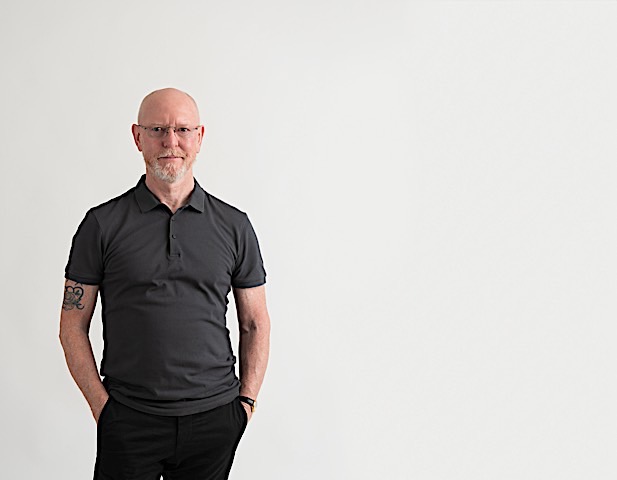
Gill Andrews is a conversion copywriter and website consultant who helps service provider businesses turn their underperforming websites into slick lead-generating machines. When she’s not writing copy or auditing websites, she’s teaching other business owners—especially those who take care of their websites themselves—how to make their websites work better.
