Apple Podcasts

 Spotify

 PocketCasts

 Castro

 RSS Feed
Jean Boulton Complexity for Independent Professionals: Diagnosis Before the Method
Jean Boulton on noticing change before it shows in your practice
Physicist turned management consultant Dr Jean Boulton talks with Nigel Rawlins about complexity, diagnosis and why the path is made through walking.
Complexity consultant Jean Boulton can name a bird from a tiny speck because she's learned how birds fly. She brings that eye to client work. Years of practice build the same kind of eye, and this conversation is about using it. She won't start work without a diagnosis. She interviews people, reads past documents and talks to customers and suppliers. If the client says no, she walks away. In a team meeting she watches for a shift in mood, what the Daoists call the beginning of the beginning. And she knows when to break her own rule, the way she'd speed to get someone to hospital.
Jean has an undergraduate degree in physics and a PhD in quantum physics. She moved into engineering, then management, then management consultancy, and found complexity theory in the 1990s. At Cranfield University she worked with Professor Peter Allen, who had been a postdoc with Prigogine. Their book Embracing Complexity came out in 2015. The Dao of Complexity, published in 2024, sets complexity theory beside Daoist thinking from the fifth century BC. It then applies those ideas to management, individual change, and big issues like climate change. She also teaches.
The second half of the conversation turns to the later working years: how to keep from getting rigid, what "the path is made through walking" asks of you when you don't know how many years you have left, and what becoming an elder actually means. Jean's answer is to stay open, choose in the context of where you are, and treat the way you walk as the thing you are putting into the world.
Listen to the full conversation for how a consultant with decades of practice reads a situation before touching a method.
Dr Jean Boulton, physicist turned consultant and author of The Dao of Complexity, on complexity for independent professionals.
She trained as a physicist, with a PhD in quantum physics, then moved through engineering and management into management consultancy.
She found complexity theory in the 1990s and worked at Cranfield University with Professor Peter Allen. She co-wrote Embracing Complexity (2015) and wrote The Dao of Complexity (2024).
She has consulted to organisations for decades, and her rule is no work without a diagnosis: interviews, past documents, conversations with customers and suppliers first. If the client says no, she walks away.
With Nigel Rawlins she talks about what a long-practising consultant notices that a model does not: the shift in mood in a team meeting, the bird she names from a tiny speck by the way it flies, and the rule she'd break to get someone to hospital.
Wisepreneurs explores how experienced independent professionals position accumulated expertise and build sustainable practice.
Mentions and references
Embracing Complexity by Jean Boulton, Peter M. Allen and Cliff Bowman
The Dao of Complexity by Jean Boulton
Professor Peter Allen: complexity scientist, co-author
Ilya Prigogine: physicist whose work shaped the book
Carlo Rovelli: relational quantum mechanics
Connect with Jean Boulton:
embracingcomplexity.com
linkedin.com/in/jean-boulton-6856471
Connect with Nigel Rawlins
Website: https://wisepreneurs.com.au/
LinkedIn: https://www.linkedin.com/in/nigelrawlins/
Free assessments for independent professionals: https://wisepreneurs.com.au/field-guides/
The Wisepreneur newsletter, practical thinking for experienced independent professionals, every Tuesday: https://wisepreneurs.com.au/newsletter
Support the show: https://www.buzzsprout.com/2311675/supporters/new
Nigel Rawlns (00:00)
Dr. Jean Bolton trained as a physicist, moved through engineering and management into consulting and found complexity theory in the 1990s. Her second book, The Dao of Complexity, is part of my practice. She won't start work without a diagnosis. If the client says no, she walks away. She names a bird from a speck by the way it flies. She senses the mood shift before the data does. That read, that sensing.
And sense making, built over years, is our subject. Holding methods lightly, choosing work in later life, becoming an elder. The path is made through walking. She says, you act, see what happens, adjust. Jean's warning: not everyone who lives longer gets wiser. Some get more rigid. If you stay open, 30 years gives you more to read a situation with.
This is the Wisepreneurs Podcast. I'm Nigel Rawlins.
Nigel Rawlins (00:57)
Jean, thank you very much for agreeing to be my guest. You are a very important person with your book
Jean (01:05)
Thank
Nigel Rawlins (01:06)
The The Dao of Complexity. It has formed a part of my practice. it's difficult for me to explain how, but what I would love you to do is to tell us something about yourself and where you're from.
Jean (01:18)
So I'm, I live in England in Somerset in a small town about 10 miles south of Bath and I've lived here for quite a long time. I come from the north of England originally and I suppose the book in a way is a kind of meeting of physics. I studied
My undergraduate degree was physics and then I did a PhD in quantum physics. quantum physics kind of changes your view of reality in quite a fundamental way. And in some ways it lets in the idea that there's more to life than meets the eye, that our kind of, our senses the ephemeral, the mystical.
are not excluded from, I'm not saying quantum physics explains it, but they're not excluded. It isn't just a machine world in other words. So those two influences kind of wove together from quite early on for me. And I came across complexity theory in the 1990s and having left science, moved into engineering, then moved into management and
management.
consultancy. So I was working a lot with organisations and when I found complexity theory, it made a lot of sense. It was kind of like this is, this is making sense of, the nature of the world in which we're operating. And from then on, I got interested and involved in developing the thinking around complexity theory. And I worked originally
at Cranfield University with Professor Peter Allen, who had worked with Prigogine, he'd been a postdoc with Prigogine and so I kind of was very privileged to get some of these ideas from the horse's mouth and that's kind of moved on. We wrote a book that was published in 2015 called Embracing Complexity and then you know my practice, my teaching, my consultancy was kind of carried on.
And this second book that you were talking about, The Dao of Complexity, which was published in 2024, two years ago now, really was trying to both capture the way that the Daoists, the ancient Chinese thinking of the fifth century BC came up with an almost identical worldview, almost identical understanding of the way things emerge and stabilize and change.
as you get from complexity theory, particularly the sort of processual view that comes from Prigogine's work. And what I tried to land in this book is to try and interrogate these ideas with some nuance, with not being kind of black and white about it, but as a book that you could kind of dialogue with, that would make you think, that would make you question and come back to it. So it's been written a bit like...
the Dao De Jing which is the Chinese text, as a series of kind of overlapping short chapters that kind of provide different perspectives on the same issue, sometimes keep coming round to them again. And the first part of the book is about these sort of theoretical ideas, this understanding the nature of reality, of the nature of change. And then the latter half of the book applies those ideas to management, individual change.
and then moves on to looking at these big issues like globalisation and climate change and collapse and politics. So it was quite a tour de force and you do sometimes wonder, I sometimes wonder how on earth I managed to kind of stick with it and write it, where all these different threads came from and how I wove them together. So that's quite a long answer to your question of who I am and where I've come from.
Nigel Rawlins (05:02)
No, that's absolutely brilliant. And people might be wondering, what's complexity got to do with being an independent professional? So we're going to explain that because that worldview, what's this world that we're living in and the way we look at things is very important as the world has changed, as you mentioned. A lot of things have changed in our world over the last twenty or thirty years. The people I
Well, hoping I'm helping, probably in their fifties and possibly older. So let's go into that a little bit more. You write about change that's normal more than stability. And that stability itself comes from a sort of interweaving things. So when we talk about my listeners, they they're running practices that for the last twenty or thirty years felt really rock solid.
So when a practice feels that secure, what are they actually looking at? And what should they be looking for instead in terms of complexity?
Jean (06:05)
So what I'm trying to capture in this work is the idea of complexity, which is quite a difficult word, you know, in some ways, because it means it has a, you know, a common sense meaning. if I asked my mum, what does it mean? You know, she would have a particular view of it. The science of complexity is trying to understand how
elements that are reflexively interwoven create patterns of relationships that often sustain and are held together through that kind of reciprocal relationship. So if I give an example of a family, if I go and have a tea with a family, I can kind of observe
ways of behaving and norms, you know, who cooks the tea, do the children talk, who gets on with whom, are there kind of stable norms of behaviour, are there particular relationships? And I can kind of take that in. And supposing I was a social worker, I might be able to start to understand those patterns and make some judgments about what was needed here and how I could help. So
The complexity is trying to understand the way things stabilize and the way things change. So it gives a kind of understanding from the micro, from understanding those kind of micro things. Now, if you're in relatively stable conditions, and this is true of an ecology as much as it is of an organization or a family, you can start to feel safe with the idea, well,
These are the norms, these are the key relationships, this is how decisions get made. So you start to get a kind of a very good understanding of that picture. And then you start to develop methods that are tried and true about how to engage with that relatively understandable and normative view. In a world that has many more factors, so the pandemic.
has changed our lives. Climate change is changing our lives. Increasing inequality and populism is changing our lives. And AI and the internet and everything is changing our lives. So the norms are unraveling in many ways or re-raveling into something else. So as say a management consultant or someone trying to help organizations, we've got to be...
more able to attune to both what is stable and what is unraveling. So we need to get a different sense of, are there new shoots, are there cracks, are there signs of collapse, are there instabilities? And that requires a more subjective and visceral kind of approach to saying, this is what it is and this is how I operate.
It's complexity theory isn't necessarily telling you what is changing, but it's saying, you know, to be effective in this world, we've got to do a both hand of what is relatively stable, but we've always got to remember that the stability in organisations and in people is largely helped together through relationships. You know, we might plonk processes and structures on an organisation and they will have an impact.
but what actually, how actually decisions that get made or what's the tacit understanding of this, is a more subtle thing. So we're trying to attune to that as a good practitioner would anyway, but perhaps paying more attention to the more qualitative, subtle, what the Daoists call the beginning of the beginning, you know, and I think that requires a different kind of mindset and a different set of...
of abilities in a way. You have to attune yourself to seeing your role in a slightly different way.
Nigel Rawlins (09:58)
And I think that's a again goes back to the quantum because that was all about how they relate together. And when we have two people, like for example, you and I having a discussion, we actually create the meaning between us. But it sounds sort of weird when we describe it like that, doesn't it? That, you know.
These things are happening, but it took the Dao and yourself to make those things more obvious.
Jean (10:23)
Well, I hope I've, I've elucidated things that, that other people have, I I don't want to over claim for my contribution. I hope I've written something clearly and maybe made a connection between this ancient wisdom and how we think about it through a more science lens. I think, I think quantum physics is, a tricky one because, you know, we're looking at the
behaviour of the very tiny of things that 10 to the minus 9 metres, you know, it's a very subtle kind of thing. But what, if you look at what quantum physics is kind of saying to us, that reality isn't just understandable through a kind of idea of things interacting, there's something more subtle going on and we know that when we
when we go into a room and we're picking up the vibe, we're sensing that people are angry, even though nothing's been said, we're working on a more subtle level. I think it just reminds us that things aren't as, we can't understand everything through a kind of set
of rules and an interaction. So that's what I take from it.
Nigel Rawlins (11:32)
Mm-hmm.
Jean (11:37)
And the other thing that you're picking up from the...
view of relational quantum mechanics, which is what appeals to me and Carlo Rovelli talks about is that, that things only really become real in in relationships. So to use that as a metaphor, you know, you and I are seeing each other in a particular way, we're creating something between us. If somebody else came into the room now, they
that they would be a way in which I would have a relationship with them and with you and they'd be different. And it's almost like, well, which is the real me? I went to a funeral last week and I was thinking about those people I've known an awfully long time, people who don't know me, you know, the kids that have grown up. And it's a bit like you end up being, you can feel yourself being perceived in different ways by different people. And so there's something about that valuing of relation.
it's a the the complexity theories is emphasizing that that relationship so I'm not as solid as I think I am because you know quite apart from the fact my cells are dying and regenerating you know who I become and who I am in this moment is always is always changing now sometimes I might talk to you doesn't make doesn't subtly change me particularly I go on to another meeting you know that something else happens
But some of those experiences over life obviously, fundamentally change who you are. You you become different through your experiences and relationships. So it's a path.
Nigel Rawlins (13:09)
And we will be talking about the path towards the end, actually, because I think that's very, very important. Especially people who've left an organization to go and work for themselves, they've created a new person in themselves and new experience. So you've described complexity as patterning, where things emerge, they stabilize, they dissolve. And norms
form through repetition, but it's never an exact repetition. And that sounds like a long running practice. So somebody who's been say a management consultant, they've had a long run running practice. But there's a fear that, as you know, the language models and a year of use can now produce an answer. They we're talking about AI.
And they're getting very smart. And we we don't have to go into what AI is or anything like that. But, you know, if a person's had twenty or thirty years of experience, it's in the adapting, not the accumulating. But what does a thirty year professional have that say a model doesn't have? 'Cause 'cause we know the model works on predictions of text and stuff like that, and it doesn't have a body. It's not human. It's some sort of alien thing we could name.
But what does the thirty year professional, or for example, somebody like yourself who, you know, has spent how many, thirty, forty years studying and and working and things like that?
Jean (14:37)
Well, these are very big questions, aren't they? you know, there's the large language models in AI that are both able to analyze a lot of data of different sorts. so, for example, I was reading something the other day about an AI system can find
subtle signs in an ECG that the human wouldn't find, so that's a pattern. It's seeing patterns that would be much harder for us to see. And equally, I think, you know, an AI system like that, if given the right data, could see historical patterns, or, systemic patterns in, how one, how the
how the socio-economic political situation in one country different from another. So there is something about that data recognition at the level of maybe strategy sometimes or analyzing the context that I can see is very useful. So the other side of AI and there's agentic AI and
and something called artificial general intelligence that's coming on. So, but just sticking with the large language models, there's also the issue of how we train it to, you know, regard some information as good and some bad, or what kind of decisions we're wanting it to make. And of course, that's a very, you know, complex issue.
And in some ways, it's hard to replicate. So there's two things I think it's hard to replicate. going back to the first point I want to make is, if I'm working in an organization and I'm gaining a sense, maybe with others, a kind of critically subjective view of what's going on here and what's the mood and what works and what doesn't work, I find that hard to imagine.
an AI system doing that, I'm using my visceral unconscious. Now, of course, the limit to that is I have biases. We see that all through human history, that if I preference certain people, know, the issues about how men are listened to versus women or, you know, issues of race and gender and disability. So we will bring biases to that sense.
If we are good practitioners and we work with others and we challenge ourselves, then there's something about sensing into the situation that I think is, in my view, is pretty irreplaceable. But if you're thinking about developing strategy or something, so I do sometimes quite big maps of geopolitical situations in bits of the world and answer quite subtle, difficult questions or try to.
That is something that an AI system could help me analyze the data. The other place that I think is very difficult for AI is about dealing with value rules. So I'll say a bit more in minute because I was having an interesting conversation about that. I can build a rule and then break it. So I can say, well, we shouldn't speed.
But actually I'm taking you to hospital and you might die so I'm going to speed. I can break rules even if I set rules. I can weigh up in commensurable ideas. Well, I don't want to break the law. I don't want to kill, but you're about to kill my mother so I'm going to kill you. There's ways in which we take apples and pears and all sorts of things and kind of weave it together in a way that even we don't understand sometimes how we're using our.
our values, our past experience, our kind of subtle right brain, kind of unconscious almost analysis of what's going on. So in one way, if you have to turn that into rules for a machine, then you can't do that. But my understanding of the next generations of AI is that it is able to both, it's dealing with historical
data.
but it's also interacting, it's learning and it's getting feedback. So that's a bit like bringing up a child, you're have a rule about, don't hit your brother and then they do something and then you correct that and then they learn and something else happens. And then, you know, when they're in the playground and somebody thumps them, you know, might say, well, actually, if you push them back a bit, that would be okay, you know, so they start to learn the sort of subtlety the rules.
you know, the agentic AI and the artificial general intelligence seems to be going in that direction. Now, it won't have the same characteristics as a human because they don't have a body in the same way. But, you know, maybe it's a different sort of intelligence that has its value just in the way that, you know, a squid or an octopus doesn't has distributed intelligence and
a slime mold seems to be able to find its way through a maze. there are other sorts of intelligence. But I think the thing that we can feel, depending on our job, I think that the thing that I feel I can do as a kind of experienced practitioner now is I have wisdom that's come over trial and error and a kind of calmness and a way of interacting with people that makes me effective in
seizing that moment, how would you teach a system to go, this is the moment to interact or, this is the current pattern. So I don't think we're going to be replaced by AI. I think the danger of AI is not so much the pattern analysis, it's to do with values and how there's been examples of agentic AI systems, you know, hacking, for example, because it
it understands that what it's being asked to do might need it to compromise certain values. Now we do that too, when I speed going to the hospital, but it may not be compromising in the way that we want it to. And that's the danger with AI, that it can go rogue really, or be taken over by bad actors and talk to, you know, win at all costs, you know, what would you do if there were no values in the world? And we're already dealing with a world that seems to be less.
community minded and value driven than maybe remember. So that's the best I can answer, I think, with that.
Nigel Rawlins (20:56)
Mm. No, that's good. I think the concern is that that some professionals are beginning to wonder whether they've still got value and still can add. So let's just go into that a little bit. You've written that methods which slide over complexity won't always surface what really matters, like going into a situation. And if you've got a mechanical view, you might be looking
For this and this and this and this. For example, you know, we're we're told if you run a business, well, if you work for yourself, you've got to have a funnel and you've got to have checklists and you've got to have templates and you've got to do marketing like this. So the fifty-five year old consultant who actually starts listening to us and starts thinking about how to think like this, what would you suggest they start doing
Jean (21:49)
there are different sorts of consultants, aren't there? And not all consultants use checklists or methods. some do. I think I'd be questioning myself all the time, probably try and work with other people. I've tended to like having a peer support or somebody I talk things through with, or usually I prefer to go with somebody into a situation. And I think what you're asking is, how do I evaluate my own
checklist, what is it missing? what I try to say to people is, put aside the solution, really embed yourself more in the situation. So it's a bit like, you know, if a social worker came along to your family and spent some time and then said, well, you're a type A family, and this is my checklist of what you need to do.
you would be saying, well, no, I'm not really an A. I'm sometimes like an A, but sometimes we're a bit like a B. And you don't understand the impact of when grandma comes to stay. And you've missed the subtlety of my relationship with my eldest daughter. you'd be annoyed if somebody came along and kind of assessed you and then gave you a checklist. So I think it's kind of holding your methods more lightly.
and saying what's really going on here? Is this relatively stable? Is this what I've seen before? Is there new stuff going on? Is there unraveling going on? And how do I assess that? So I find that my diagnostic phase is really important. And I ask questions like, well, do you think it's changing? What do you think is changing? How does this compare to before? What are the new actors coming in? So in a way, I...
I evaluate the situation not only in terms of what is, but in terms of what is becoming. And it changes my diagnostic. And then that might be that I think, well, that checklist doesn't really work here, or these bits work, but I need to add in more questions about noticing change. That's often what I think is the change. You're noticing the subtlety of change, and sometimes it's qualitative.
initially, it's not, it's not, you know, obviously measurable, you have to sort of sense in. So I think it, yes, it is a bit of a challenge in a world of social change that we're in, you know, changing work situations, changing stability, changing politics, changing values, you, your, your assessment, your diagnosis, your tuning into that becomes probably more important as a tool. How do I tune in versus
what do I do becomes a sort of next step.
Nigel Rawlins (24:22)
Yeah, you're talking about diagnostic I remember a situation my late mentor and I were in many years ago and we went into a local government group and basically the manager said, I want you to go and fix this and we we had
done some diagnosis and we realized that there was more to it than than that. And that was the issue. And we had to walk away because he just wanted us to fix it, which would have been a mechanical fix, because that's obviously what his view was. But we realized it was a more relational thing, where the people needed to to change a bit. and it's, you know, because of that, there was no way we could help. And this is the point we're trying to make is that the change might be
That you have to be brave enough to say, Hey, I I think we do need to do a diagnosis here and to check things before we move on. And unfortunately for some people they might be too frightened to do that because they need the work. I don't know if you've come across that sort of stuff.
Jean (25:19)
Well, I've been in a happy position generally that I won't do work without a diagnosis. so I sell it, I say, you know, well, we need to spend some time. need to interview people. need to read past documents. I need to talk to customers and suppliers. You know, this is the work. But out of that will become a more refined view of what we should do.
And if they say no, then I walk away. So that would be my answer. But I think it requires all consultants to be more relational. Now, a lot of my work has been more, although I've worked with strategy and my key contribution has probably been strategy consulting, but I've always done it in a relational way.
So I've always done it with the teams. I won't tell the team what to do. I'll work with the team. I'll bring in information. We'll bring in different stakeholders and actors. We'll find ways of getting staff and customers and suppliers involved. I might do some mapping and bring the information in. But the strategic development process becomes a relational team-based thing. So
I don't think the kind of consulting where you can come in and do a thing is really what we can do anymore. And if you feel like, well, that's not me, I can't do that. It's about working in pairs. know, I sometimes I worked a lot with a guy who was very relational in the way that I was probably more interested in like the information and the mapping and the, you know, the getting to grips with the issues.
And it was quite irritating to work together because he would end up with a long conversation and I'm going, know, for goodness sake, we've got to get this bit done. So there was a, was a tension between us, but it worked because he would have a sense sometimes that this needs to be slowed down because somebody here is unhappy. And if we don't get to the bottom of that, we're not going to be able to make a good decision. So I think if it's not your bag, then you perhaps have to.
work with others, but I don't really know what kind of consultancy you're talking about with these examples.
Nigel Rawlins (27:23)
they're all all different. It depends what they do. But I think that's the point, is today it might be better working with others together, depending on what what what you can do. All right, let's go with this bit about the flow.
About creating the future or co-creating the future, which is basically working with somebody else, maybe, or working with an organization. And co-creating is more active. It's not passive. I guess one of the things is when we do get older, we don't have the energy as much. And you know, we've got to keep our practices going. So you you mentioned working with other people. So how do you co create rather than just drift along or just react?
Jean (28:04)
Well, the idea of co-creating the future is a statement of reality. to start off with what I'm saying with the Daoist phrase, the path is made through walking. It's really saying that everything in the future is made through the actions and intentions of everything that's going on. It's a very complex picture. So when you look back on, you know, how did we end up here, you know, socially and politically?
it's through a range of sometimes intentions and decisions and actions, sometimes by accident, know, nobody, well, I think we could have probably, you many epidemiologists and virologists were saying that there's likely to be a pandemic, but nobody listened to them. So we could have known it. But the ontological point, the point about the nature of reality is
the future is always a co-creation of all the things that go on to make it. So what does that mean then when you're a consultant, for example? Well, you both need to attune to what is, and then, you know, have a sense of what's needed. Now, sometimes that might be a nudge, you might be sort of, you know, bringing attention to something and kind of nudging it gently along. Sometimes it might be
quite a bold statement like that won't work or have you noticed this is really about to crash? So it can be a strong intervention. But it's seeing yourself constantly in a way as a consultant of you do something and you see what happens. You think you know where you're going. I'm trying to improve the impact of this company. I'm trying to improve its customer service. I'm trying to change its strategy, whatever it is.
I can have a best guess about the next step with an intention in mind, but then I've got to review where it got to. And sometimes I've got to think, well, I need to bring those people in now because they've got some power in this. I'm leaving them out or, dear, you know, that didn't land very well. I need to find a, you know, a new way of saying that. So I think I think it's just in whatever, whatever agency we have, it's understanding that the world.
of the organization, of the market, of society is kind of shifting through all the actions and intentions. So one of the things I take from that and I write about in the book is, you know, the end can't justify the means because we never quite know whether we'll get to the end. So if I lie on the way, it's like the famous example is, know, where there are weapons of mass destruction.
and was it a lie or a kind of a, know, duh, duh, duh. But what's actually happened, what's remained in the system is a kind of normalisation of lying in politics, which of course was always there, but it's become kind of more normalised. Well, when people get found out these days, they go, oh, sorry, I shouldn't have done that, but they don't fall on their sword.
in the same way. We've changed a culture through that lying, to use that as an example, in order to get there. Well, we never got to the outcomes we wanted in the Iraq war, but we did change things through the actions. So it's remembering that if I'm unkind to somebody and I win the next battle,
the unkindness remains in the system, you you don't forget that. So I might have won the battle, but I might not win the war, so to speak. So that's an example of how as a practitioner, I've got to reflect on my values, my shortcuts, my intentions, my relationships, because in a way that is what I'm putting into the system, which may not necessarily, I can't be absolutely sure where it'll go because I'm not the only actor.
Nigel Rawlins (31:58)
Yeah, well it comes back to that noticing that you you mentioned the beginning of the beginning, where starting to notice those tiny shifts before anything's properly begun. And I guess that's part of that diagnostic in a way. and and also I I think if you had life experience and work experience like that, you know, using a model is
I don't think is going to be so relevant anymore. And obviously that's another thing that what an AI can start doing is processing stuff that you're getting. Like it processes my emails, for example, it processes newsletters I get in, and it gives me a snippet over that, but I'm not necessarily reading that stuff so much anymore. So the danger I'm seeing is that maybe we are not.
noticing those subtle changes that you talk about in in complexity where things are changing in front of us. Maybe it's just in hindsight we sort of start to see those things. So could you explain more about that beginning of the beginning and the noticing that we need to see?
Jean (33:04)
Well, it's always a question of how do you do that? so part of that is, for example, you might be in a team meeting as a facilitator and you sometimes can sense a shift in mood and you think, here's an opportunity. I can say this here.
you know, good parents can sometimes think this is the time to raise this or, you know, I can say this here, but, you you bide your time, don't you, sometimes, and have a sense of when it is. So that's an example of a kind of visceral sense of the beginning of the beginning. And the one
Nigel Rawlins (33:40)
Hmm.
Jean (33:42)
of the Daoist books called The Art of War talks about how the good leader, general,
is he surveys the scene, takes in the whole, is understanding, you know, the whole picture of the battle scene. And then sometimes has a, will come a point where he has this instinct, now is the moment, there is the time at which point, you you act decisively. Now, what is he doing? You know, he's kind of sensed in the whole. It's a bit like a lion on the kill.
The lion is very still, the lion takes in the whole scene. And then there's a kind of sense of like, now is the moment. Or if you're killing a lion or bird watching, you take in the whole scene and then you see the subtle signs of movement that can't even imagine you've seen that bird. I go bird watching and I'm sometimes amazed how I know that's this bird when I'm seeing a tiny little speck, because I've got used to how birds fly and what I'm looking for.
So that is part of it. Another part of it in a more cognitive way is, know, what an AI can do well, I think, is if you've got a picture of a geopolitical situation that you've traced its journey there, you can perhaps find ways in which there are sort of signs of something changing that you wouldn't have seen.
But it's only as good as the information it's being given or it's sensing. And often these subtle changes are, and this is true for humans, are outside our bandwidth. So we think, you know, it's like, you know, why didn't the economists notice the pandemic? Well, because economists don't think about pandemics, you they will now. So
Nigel Rawlins (35:26)
No more.
Jean (35:27)
it's like, we've got to be able to in situations as humans.
find what the outliers are, what are the new, not just the new movements, but the new dimensions of the problem, something that's never been there before, that's suddenly showing itself and becoming salient. So that is maybe with AIs that can really sense into things through other sensing mechanisms in the future. But, you know, an AI is only as good as the data you give it.
And if there's something important happening that we haven't noticed before, we might be in a better position to notice. And so the consultant has, in a sense, has to keep an open mind. You mentioned when we were emailing about simplicity on the other side of complexity. And in a way, the diagnostic is saying, agnostic about what's important here.
let it all be there, it will have systemic interconnected weavings. When you see that really as much of the whole picture as you can, you may notice here's an opportunity, here's a change that is in a sense the simplicity on the other side. But if you overly limit what you think is important too early, you'll miss the very opportunity or threat that's maybe outside what you're anticipating.
Nigel Rawlins (36:48)
That that's what I was worried about if if we allow AI or our use of AI to filter what we're seeing. 'Cause, you know, it's just like well, if you read particular news newspapers or well, I don't know if they have newspapers, they do have newspapers, don't they? or you watch a television news program, it's all filtered. So you might be limited on on seeing the wider pictures. And and this is the issue especially
if if we spent a lifetime of learning and working, that we picked up patterns. and, you know, our expertise really is a collection of patterns. And my concern is that, you know, we can get stuck in that and not see the changes that are occurring.
Jean (37:32)
Yes, but to say it the other way around, isn't just that the AI filters, it's like we filter what the AI sees, so it's both ways round.
Nigel Rawlins (37:43)
Yeah.
Jean (37:44)
if I'm doing a kind of strategic study, I will be looking for many different sources of information as much as I can, sort of old reports or history and geography and archaeology and sort of really
not necessarily archaeology for that, but I'm trying to get different perspectives from different actors in the field. Often if you're trying to understand an organisation, talk to people who've left and talk to customers and suppliers or other actors, or talk to more junior people. So I'm constantly trying to build up a richer picture of what's going on.
Nigel Rawlins (38:24)
I think that's absolutely brilliant. Now, I'm coming towards the end here a bit, and my favourite part of your book that means an awful lot to me, 'cause I I love to move. I love to walk. I love to get out in nature. The Dao is about the path is made through walking. And that is one thing that I just think about all the time from your book. Meaning that the future is co created by what we do and
through moving into the world, interacting with the world, relating with other people. For the older independent professional, I think what matters is choosing to make your path yourself rather than following other paths. And I think often if you've left an organization, you're you're taking a completely different path anyway. And I I think we use the word way making.
Is that a word you'd use as well, that you're making your own path rather than a path that somebody else chooses? And I'm just wondering what do you feel the implications are of this the path is made through walking.
Jean (39:29)
Well, I think it's not as simple as you make your own path because we are constrained by our abilities, our biases, the world we're working in. So I have to understand that the path that I'm starting to shape in the future, I'm joining a path that's already, it's a bit like I might be...
a ripple on a river, but the river's already flowing. So there's something about being skillfully attuning to what is, and then working out how best to act in that. I think perhaps one of the difficulties with some older professionals is they've become rigid. so the fear of becoming more flexible or opening up to new information or
you know, often when you leave an organisation, you're questioning, well, who am I and what are my skills? And, and you can't take things for granted. So I think, I think one of the difficulties, some people, I can think of some people who were even, even like my mum was amazing, she, she, she went into a home and she was a bit miserable to start off with. And I was saying to her, why don't you
talk to the staff about where they come from because there were people from all over the world. And all of a sudden, she became this everybody's granny where she was telling me about what it's like in the Philippines. And she was exchanging sweets with one guy's grandmother in Hungary. he went home, she used to send him off with sweets for his grandma. And she kind of reinvented herself. She learned in her new context.
that to be happy meant to build a different sort of relationship and be interested in different sorts of things. And then I'd go and see her and she'd say, have you heard of Buddhism? What's Buddhism? you know, somebody, one of the staff would have been talking to her about Buddhism. So there is something about cultivating in yourself a kind of open minded, flexible, I'm always learning, the world is changing. And if I become too rigid and set in my ways and narrow in my views.
it's not going to work. And I think that's a big transition for some people that's very scary and, you know, creates a lot of anxiety. And maybe we need some help with that. And, you know, in terms of working with others and talking about it. But I do think that to be skillful in the path isn't just about I'm making my own way. It's like, how do I, like my mother, you know, how do I tune to the flow and context I'm in and make my way in that?
not any other way. So that's what I'd say. is about how do we remain open and flexible and joyful and embodied in our older life and not get too set in our ways because the world is changing and what used to work doesn't work anymore. oh
Nigel Rawlins (42:22)
I was
thinking, along the lines that okay, I'm seventy years old. So
I'm enjoying everything I'm reading, I loved your book, as I said. And it inspires me to think, and there may be others my age, maybe younger, who, you know, don't know what our use by dates are. So I may have 15 years on this planet, or I might have five, I might have twenty. So choosing a path is important because I can try and read every book because I've got hundreds of books here, but I'm not going to be able to read every one of those books. So
We are making choices, but as we get older, maybe we've just got to be not not be frightened of making choices, but making good choices.
Jean (43:02)
Yes, I think I was having a conversation yesterday about eldership and, you know, the changes to me is like, I can think of people older than me that have inspired me and impacted me. And there's something about who they are, the nature of their being that's as inspiring as anything else. And I think
I think it's important to think about what does becoming an elder mean, because it may be holding yourself in the world in a different way. I don't rush around the world doing big projects all over the place because I don't want to anymore. There's also something that I've noticed in myself that as I have more time and smell the roses more, that changes me. It changes my sense of myself and what seems important.
I think I nourish myself more. I'm not you know, busy doing as much. I'm trying to kind of be something different. So I think it's worth, for myself, I sit with the idea of being older, you know, and, you know, I go to funerals more often than weddings these days and it...
it brings it home to you. We don't know how long we've got. And how do I both use that well, but build on what I know, but in a way that's a gift to the future. And I think it maybe comes back to values. Do I want it to say on my gravestone, here was Jean, she was successful? Or do I want it to say, here was Jean, she really was a nice person, she became a mature human being and was inspiring?
that's that you've got to decide what matters to you, I think. But but just to reiterate, we do make choices. But if we make choices more in the context of where we are, including our age, it's not just about, I think I'll go and do this. It's it's like really, really thinking about you and your situation and and who do you want to become? And I I take that quite seriously. How do I become my best self?
You know,
How do I mature?
Nigel Rawlins (45:07)
Mm-hmm.
Jean (45:08)
How do I become an elder? How do I show up for younger people? You know, I'm really pleased when younger people sometimes want to hang out with me and ask my opinion, but just sometimes just they say, you know, it's just fun to be with you. So how do I cultivate that? Which means I can add in sometimes a kind of bit perspective and wisdom or a bit of caring that comes from my having lived longer.
as we know, not everybody who lives longer gets wiser, some people just get more rigid. And I think if you're feeling about yourself like that, you know, you probably have to unrigify yourself and find practices of loosening up or, you know, you'll kind of break, you know, you won't fit the mould anymore. uh
Nigel Rawlins (45:55)
Yeah, everything's changing,
I think. I I'm absolutely enjoying life at this age and I think inside my head I don't feel old, but
I think my body does sometimes, but I'm still running up hills and strength training and doing quite a few physical things. Plus also I'm hoping I'm doing intellectual things and reading and thinking. And I have this fantastic podcast where I get to f talk to fabulous people like you that inspire me.
So is there anything else you would like to mention? 'Cause we've probably come to the end now and I don't think I can take any more of your time.
Jean (46:28)
Well, think reflecting like this is good. I I think the ideas of complexity for me is a way of life rather than a set of disembodied ideas. It isn't like it appeals to me because it's clever and interesting. It feels like giving me advice on how to live and be in the world.
in contrast to what's going on with it, with an increasing kind of value free winning, you know, we're still talking about, oil fields and economic growth at a time when, you know, if you don't believe me, this climate change, you know, it's just, how can not believe that we've we're creating this, it's scary, the sort of non linearity of climate change, we've had the hottest summer I've ever had,
It's been unbearable this, you know, in the south of England this year. So, you know, I'm hoping in my work to say science says we're using the wrong model to rule the world. know, science is not saying the world is mechanical. You know, we can't just keep trying to win, you know, that...
grossly unequal societies historically fail, know, that becomes a moment in inequality that societies cannot sustain it and we are getting close to that. So the complexity view for me, what I'm trying to say to people is, we've used the wrong science to understand how to be and succeed in the world. And if we want to succeed with the future in mind, we want a good future for our children and grandchildren, if we want harmony.
We're going to have to take more account of the planet, of each other and of the future in our decision making. So that's kind of what I'm trying to land in this. And this is a language, a scientific language to try and land that point, I think. So it matters to me. it's who I am as opposed to a bit of an idea that's intellectually interesting.
Nigel Rawlins (48:24)
Well, I definitely think people should read your book. it it it really opened my mind up to a whole lot of things. And it has changed my work and my approach to things. So that's wonderful. well would you like people to find you and contact you?
Jean (48:39)
Yes, no, of course. So I've got a website, which is embracing complexity.com. And that has various videos and blogs and stuff on it. And there's also a way to contact me through there. You can sign up for blogs or you can just send me a message. And I love interacting with people because it's how I learn and keep fresh, know, through people's experiences and the questions they ask me. It's how I
keep thinking and developing. So people are very welcome to contact me. I am on LinkedIn, yes.
Nigel Rawlins (49:11)
And you're on LinkedIn as well, aren't you? Yes,
so you can find you there. So Jean this has been a fabulous conversation. You are a hero to me. I I think people can hear that. So thank you.
Jean (49:21)
thank you.
it's a pleasure. Thank you for having me.
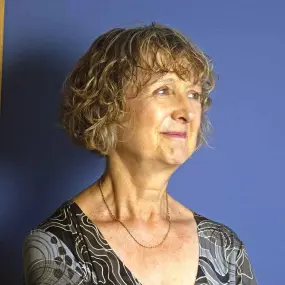
Dr Jean Boulton Author, The Dao of Complexity | Fellow, Institute of Physics
Dr Jean Boulton is a theoretical physicist, management consultant, teacher and author based in Frome, Somerset. She studied physics at Oxford and completed a PhD in quantum physics at Cambridge, then moved through engineering and management into management consultancy, holding executive positions in large corporates and leading the strategy and organisation division of an international consultancy before setting up her own practice. She has consulted to organisations for decades.
She came across complexity theory in the 1990s and worked at Cranfield University with Professor Peter Allen, who had been a postdoc with Ilya Prigogine. She is lead author of Embracing Complexity (Oxford University Press, 2015, with Peter M. Allen and Cliff Bowman) and author of The Dao of Complexity (De Gruyter, 2024), which sets complexity science beside Daoist thinking and applies both to management, individual change and global issues.
A Fellow of the Institute of Physics and a visiting academic with the University of Bath and Cranfield School of Management, she teaches worldwide on postgraduate programmes. Her practice rule, that she will not work without a diagnosis first, speaks directly to experienced independent professionals deciding which work to take.