

 Apple Podcasts
 Spotify
 PocketCasts
 Castro
 RSS Feed
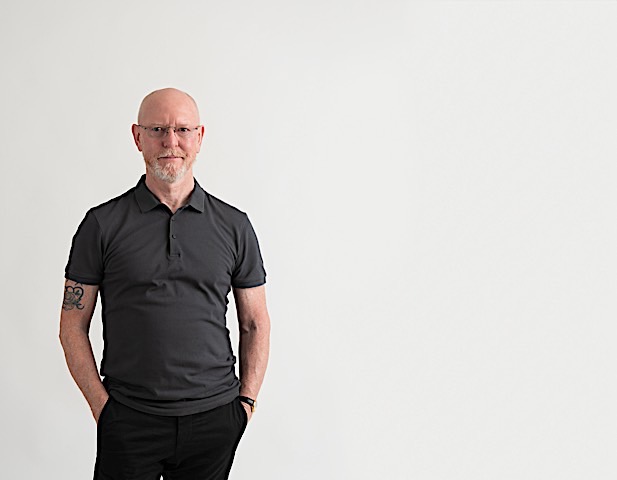
 Suzanne Noble Professional Reinvention: Serial Entrepreneur and Solopreneur
Suzanne Noble has reinvented her career more times than most people manage in a lifetime: from singer with The Dirty Blondes, to Channel 4 TV producer, to co-founding a PR agency that grew to 1.4 million pounds in revenue with 12 staff, to global PR and marketing director for Lazy Town, to launching a baby sling company, to building a TikTok channel with 50,000 followers, to co-founding Startup School for Seniors helping people over 50 start businesses.
Each reinvention taught her something different about finding a niche, understanding a customer, and building a sustainable income stream. She covers what transfers across industries and what you have to learn from scratch each time, and why starting a business at 60 is not a retreat from work but a different kind of ambition.
Wisepreneurs explores how experienced independent professionals position accumulated expertise and build sustainable practice.
Suzanne Noble has reinvented her career more times than most experienced professionals manage in a lifetime: from singer with The Dirty Blondes, to Channel 4 TV producer, to co-founding a PR agency that grew to 1.4 million pounds in revenue with 12 staff, to global PR and marketing director for Lazy Town, to launching a baby sling company, to building a TikTok channel with 50,000 followers, to founding Startup School for Seniors helping people over 50 start businesses.
Suzanne covers what each reinvention taught her about finding a niche market, understanding your customer, and building a sustainable business without needing external funding.
She discusses why confidence is the biggest barrier for older entrepreneurs, how ageism in the workplace is pushing experienced professionals toward independence, and why portfolio careers suit people who refuse to do just one thing.
The conversation also addresses practical questions: how much money you actually need to start, building a social media following after 50, and why positive representation of aging matters for the businesses older entrepreneurs build.
Wisepreneurs explores how women over 50 monetize expertise and build sustainable solopreneur practice.
Connect with Suzanne
https://www.linkedin.com/in/suzannenoble/
https://suzannenoblesings.com/
https://www.startupschoolforseniors.com/
Connect with Nigel Rawlins
website https://wisepreneurs.com.au/
Linkedin https://www.linkedin.com/in/nigelrawlins/
Twitter https://twitter.com/wisepreneurs
Downloads
- Embodied Intelligence Self-Assessment
- Professional Reputation Audit
https://wisepreneurs.com.au/free-assessments/
Please support the podcast
https://www.buzzsprout.com/2311675/supporters/new
Stay one step ahead with The Wisepreneurs Insider newsletter
As a subscriber, you'll get:
- Sneak peeks at upcoming must-listen podcast episodes and guests
- Bonus wisdom straight from recent guest experts
- Marketing tips to attract your ideal clients
- Productivity hacks to streamline your independent business
- And more exclusive insights are delivered right to your inbox!
- Don't miss out on these invaluable resources
- Subscribe now and gain the edge you need to survive and thrive as a wisepreneur
When I was in school, I was part of a elite group of people that were in a magical group. So we sang music of the nuns and things. And we toured around and then my girlfriend, who was in that singing group with me after I finished university, we got together. By that point, she'd actually gone professional and gone to the Royal College of Music and was very serious about it. And we. I joined up with her and her sister and we formed this band called The Dirty Blondes, and we did three part harmonies, very complex, I have to say. I don't think I could sing them now because my friend was trying to show off her arrangement skills and so she was doing incredibly complex arrangements and we gigged in pubs and places like that. And then I did a bit of session singing. Sang Jazz in wine bars and continued to do that throughout my twenties. Really enjoyed it until I met my a man who became my husband, and we had kids and I parked it. Because bringing up kids is hard and I moved into television production and did some stuff there. And yeah, so I, I parked it and then I restarted it again in my fifties. And now amongst the many things that I do, I gig, with a pianist doing shows about the blues and about a female lyricist called Dorothy Fields.
Nigel Rawlins: That's fantastic. That's an interesting story about starting off in the arts and then having a family, and obviously, it's much, much harder to work in the arts when you have a family. Cause it's often nights and days or it's outta the way. So what are some of the things, you mentioned that you went to university, so could you tell us what your degree was there and then some of your career moves. Suzanne Noble:So my degree started out actually in musical theater, but I decided that I couldn't deal with the rejection that was inevitable. So I moved into communications and I did a degree in media theory, and I moved from there into working in video production in the early days of pop videos, did some commercials and then eventually was commissioned by Channel four television to make a series about astrology. So I left my job at the video production company and I became a TV producer, and I made a series about astrology. And then from there, Carried on working as a freelancer, as mainly a researcher sending off proposals. And then my husband at the time was working in public relations and set up a little company in our attic and he asked me to join him and I didn't know anything about pr, but I thought, what the hell? In for a penny and per pound. And so I joined him as a publicist and we grew that business to turning over just about £1.4 million with about 12 staff, and moved out of our attic, bought a beautiful building, which we renovated, and we did that for over a decade. And then eventually I went freelance and I took my biggest client with me, which was an Icelandic TV company called Lazy Town, a children's TV show, and I became their global PR and marketing director. I set up a baby sling company. When I couldn't find a sling that would work with my youngest son, he liked to be carried everywhere. I found a sling in the states and I amended it, and so that, Then I made some sex education videos for adults, which is a bit of a flop, and I've set up a home sharing business for older adults called Nestful, and mainly I now run a startup school for people over 50 to help them start business.
Nigel Rawlins: That's a huge thing. So let's go. Suzanne Noble:And I have a tiktok channel I forgot about that. I have a tiktok channel called Sex Advice for Seniors that's got 50,000 followers.
Nigel Rawlins: Sex advice for seniors, it's interesting, isn't it, that social media allows us to send out information or share information about a whole range of topics, whereas in the past you couldn't have done that, could you? Suzanne Noble:The problem with being a serial entrepreneur, which I don't really like to call myself but let's call myself that anyway, the problem with liking to start businesses and social media of course, is that you can start businesses with no money and you can build little websites and you can test the waters with no money. And then before you know it you're like me and you're trying to run five gazillion businesses at the same time. And it's exhausting.
Nigel Rawlins: But that's the interesting thing. Nowadays, you can get a lot of free stuff to start a business. I shifted from being a primary school teacher to starting a business and you had to have two phone lines. You had to have a fax, you had to wear a suit, you had to go out physically. And there's a whole range of things you had to learn. And I was pretty hopeless. And that's why I wanna go into your, talk to you more about your startup school, but the fact that you call yourself a serial entrepreneur, I think when you went freelance, and I think it starts off with singing in gigs because that's a business in itself. You have to get the gig then you have to practice because that's the skill that you are using. Then you have to do the performance, then you have to get paid and pay yourself, and then you gotta do it again and again. And that's a business. And that's why I'm interested in the gig stuff with some of the people I've interviewed. And Lisa Marie Cabrelli, who was an actress, Jane Hudson, who was a bass player in musicals, like CATS and things like that. You learn about business. That and that you can survive, but it doesn't always work when you have families. In your videography that really is marketing too, isn't it? Being able to select stuff and then you ran in, worked in the PR business and you ran a business with 12 staff. Can you tell us some of the things you learned about business through all that? Suzanne Noble:Yeah the main thing is that with our PR agency and with the astrology show these were things in my PR agency, we specialized in home entertainment. So we were not a generalist company. And as a result of that, we developed a reputation as being very good at doing that very specific thing. And I think that's the thing about business is that. People try and appeal to everyone, but honestly, the more you can niche it down, the more easy it is for A. People to recognize what it is you do, and for you to find your clients and B. To be able to represent yourself. To the wider world, and I didn't really think about it then, but of course, being a home entertainment PR company meant that the home entertainment companies, when they were considering who to hire, we were on the list because we were known for being good at that. And we weren't on the list for selling kettles or washing machines or anything, or white goods or other sorts of things because that's not what we did. If people came to us and said, would you sell, would you PR a washing machine? We would say, no, we don't do that. We work on films, we work on music, we work on movies videos, et cetera. We don't work on washing machines. So we knew what we were good at and we knew what we didn't do, so we didn't try and grab work that we didn't think we could do. I think that was the same with our astrology show. It was quite cool. It was quite fun. We were interested in just ourselves, me and my two friends that worked in the TV production company together, we were interested in kind of alternative stuff. We were interested in sort of spirituality, so a lot of the stuff that we pitched was around those topics. So even without realizing, I knew innately to not go beyond what I liked doing and what I thought that I was pretty good at and not try and appeal to everybody. Because I think that's where people go wrong. When they say, who is this for? Oh, it's for everyone. Oh, it's for everyone. No, it's never for everyone. There's always got to be a specific type of customer, and the more you can understand who that ideal customer is, the more likely you will be successful.
Nigel Rawlins: And what I'm also hearing is that you, one, you're curious about something and you enjoy doing it, and that seems to follow, and you've actually got some sort of gig to do that and earn some money, but each one of those was a business in itself, wasn't it? Like with the sling one you talked about that was an issue that you had. It was a problem. You solved it. Did you turn that into a business? Suzanne Noble:Yeah. Yeah and I, so that was a little business that I ran and I used to turn up at baby fairs and I had a nice little mail order business, and I sold that actually to one of my customers who loved the sling, and she went off after I'd been doing it for about five years and was sick to death of talking about babies. And she took it over and paid me royalties on that. And again, that was about spotting a problem, right? I couldn't find a sling that I liked and it was easy to use. And I've discovered one that was, and thought if I think this is a problem. I suspect other people will think it's a problem, and of course, yes, there were lots of people who really appreciated this particular type of sling. It was the early days of these sort of African over the shoulder slings. Really easy to put on. And yeah, it was really great and I made it in funky fabrics, which people liked and, yeah and I ran a little business from home answering the phone, taking people's credit card numbers on the little machine that zipped back and forth. You may remember that we used have little piece of paper and we used to zip it and write somebody's details on it.
Nigel Rawlins: Yeah. And again, today it's just you fill out a form online and there it goes. They don't realize how hard it was or how time consuming, but again, with that business the fact that people rang you, how did they know to ring you? Suzanne Noble:My phone number was on all the ads, just took orders.
Nigel Rawlins: So you advertised in what? In the papers or magazines? Suzanne Noble:I had a background in PR, so I did quite a lot of product placement on product pages in baby magazines and things. And any time somebody would do a roundup of baby slings, they would usually ring me and ask for a sample and I did advertising in baby magazines and for, we have something called the National Childbirth Trust, which is an organization that helps prepare women for childbirth. And they have a magazine, so I used to advertise there and with other sort of specialist moms magazines. This was pre-internet it was all driven by ads.
Nigel Rawlins: It's quite interesting that in the old days, we had to have advertising in magazines and papers and we had to pay for it, which is really part of the marketing thing. And then you had the selling part. We had to take the orders, and then you had to manufacture it and that's the basis of a business. And I think that's why I want to come back to your startup school is how do we teach people about all of these things that you actually have to do in a business. Because it's not about just I've got a product, it's not gonna sell itself. You've gotta sell it. And then you've gotta draw customers to you and then you've gotta make them buy it and then you've gotta make actual money so you don't go broke and a whole range of stuff. Suzanne Noble:As a school if you want to call us a school, we are very much focused on the importance of understanding your customer. We come very much from the kind of, Lean startup approach, which is about what is the problem that you're aiming to solve, or the frustration or the pain point, who are you solving it for? How big is the number of people that you're solving it for? Is it a large group? Is it small group? Are there variations of that group? And then how are you gonna reach them? Are you gonna use social media? Are you gonna go and flyer your local library or your cafe? Is it gonna be local? Is it what is it gonna be? But really, at the end of it what we strive for people to understand is really if you're not solving a problem or a pain point, or an aspiration, or whatever you want to call it for somebody. and you don't know who that somebody is, then you are gonna struggle. Yeah. So that's how we've always done it. And that's the and that's because I have made a lot of mistakes myself by coming up with a solution, for a problem that might have been my problem, but it wasn't somebody else's problem. We had a woman come on our course lovely woman, very tall, and she said, I struggle to find shoes in my size that are fashionable, cuz she's got feet that are outside the normal range for women's shoes, right? So she ends up buying men's shoes and whatever. And she said, and what I really want is a pair of leopard print, like cowboy boots or something in my size. That's what I really want. And I suspect there's a lot of other people who would really love leopard print. Very specific, right? And I said how many people have you spoken to that have large, particularly large feet? Zero. You might wanna go and speak to some. I said, do you belong to any Facebook groups of people who are very tall women stuff? She said yeah, I do. So I said why don't you go and have a conversation in one of those groups and find out if there's anyone else who's really desperate for leopard print, whatever it was. And so she came back to me and she said, I had that conversation and I said how did that go for you? And she said there weren't really anybody who wanted those shoes, but a lot of people really would like a smart pair of black trousers with very long legs that fit. And I was like there you go. Might not be Wellington's, but it might be black trousers. Maybe. Maybe there's something in the black trousers, but. She was partly disappointed that she hadn't been validated in her assumption, but also I just thought you've just saved yourself an enormous amount of money through not manufacturing a bunch of leopard French.
Nigel Rawlins: Let's just go into that a bit more then about the startup school. How did that come about? Suzanne Noble:I've been working with over 50s since 2017. Really as a result of seeing a lot of friends of mine lose their jobs and struggle to find work. And a woman that had actually invested in one of my businesses had run a program helping young mothers to start businesses. And she said, I wonder if this program of mine might work for over 50s. So I applied for a bit of funding. We got that, and we ran that as a pilot in a co-work space. And it was okay. But nobody was really interested at that point, in this group of people, they were interested in refugees, homeless people, youth, they weren't really interested in over fifties, and so it bumbled along. We really struggled to get more funding and then Covid came along and a lot of people over fifties lost their jobs and suddenly, the funding bodies were offering money to organizations to move their delivery online, because of course, nobody could deliver face to face at that point, during the pandemic. So by this point, my, my now co-director who would approach me a bit earlier about this,. and my former colleague had some issues, she had to leave. I said what do you think? Should we try and rev this up again online? Rebuild it, rethink about it. Just re rework the whole thing, really. And think about it as an online program and see what happens. So we did that. We applied for some money, we got that, and in three months we created 25 hours worth of prerecorded video content between the two of us. Talking about customer discovery, marketing, branding, legal requirements of starting a business. Why are you doing this? What's it about? Is it a lifestyle business? Is it a full time business? What is your ambition for this thing? What are you bringing to the table? So what have you got to offer? What kind of skills and experience do you have? What do you really enjoy? What are you good at that you enjoy? What are you good at that you don't enjoy? And we delivered that in October, 2020. And it went really well and people just loved it. And I think at that point, of course there was a real enthusiasm for online learning cuz it was all, everybody had been cooped up, so everybody was so ready to do something. They just were really on fire. So we would hold a group session once a week over Zoom. And everybody would turn up and 65 people would turn up over Zoom and everybody was very on fire. They just really wanted to get going. We have seen that online enthusiasm wan a little bit, but we've seen the requirement at I, I would say it's escalated because now of course, there's people that just haven't gone back to work or they've decided this is the time to make a change in their life, and the pandemic kind of forced them to do a bit of a reset. And so we're seeing that it's not anymore, people just cooped up thinking, oh, this is something that I can do to take up some time. But people going, I'm gonna have to, I have to change my life here. I have to do something. I'm not, I can't go on in this way that I've been, either the job's not there or I'm just so dissatisfied. I just wanna do something else.
Nigel Rawlins: Yeah. That's amazing, isn't it? So what are some of the issues that some of the people are finding if they're over fifties? Are you getting an equal number of men or women, or more women? Suzanne Noble:No, we get about 85% women. Women. Women are definitely the majority. That's because older women have more of a challenge with finding work. They're also mainly the caregivers. If there's somebody in their family that needs looking after, whether it's a grandchild or a child or a parent. So they're often the ones who leave their job to take on that caring responsibility and. about 40% of our cohort is not white, so we get quite a lot of black women as well. And we find that, again, it's the people that come to us, it's diverse. We have people who wanna take a hobby. It might be sewing, it might be cooking, it might be something like that. And turn it into money. We have people that want to become consultants, cuz. They've spent the majority of their career say in IT, and they wanna now become freelance IT consultants. We have people who don't have a clue what they wanna do. They just know that they wanna do something. So they come in with a load of different ideas and then we help them sift through them and discover what, what's gonna work. We have people, who have an idea but don't know where to start. We were discussing before when you got your mentor you just don't know what should I be doing? Should I be building a website now? Should I be creating a page on social media? What am I meant to be doing? So they just want to be taken through the steps to identify and there's a huge amount of people for whom confidence is a big issue. They've come on the program, they're really low in confidence. They've lost their job. They don't know what they're gonna do. They're quite reluctant and they're worried they don't wanna fail. So all this sort of stuff that you get with younger entrepreneurs, which is, hey, fail fast all that sort of thing. They don't wanna fail fast. They don't wanna fail at all, actually.
Nigel Rawlins: The confidence issue is a really interesting one. I have mentored a few women. I mostly work with women who often 60 plus. And they tend to be professionals. But I worked with one woman and it was unbelievable. The one thing she said to me, cuz she's now in her seventies, you gave me the confidence to do this, and I'm thinking what? An incredible talented person felt that they didn't have the confidence. And that is really sad because I'm assuming you are seeing the magic in people when you work with them. Suzanne Noble:Yeah, but if they've been knocked back a number of times and they've gone for a bunch of, Interviews and they haven't been considered and they haven't gotten passed HR then they just turn up and let's face it one of the biggest challenges is around ageism in the workplace. So a lot of these people are not being offered any training or any way of upping their skills so that they can remain in their job. They're not being offered. I've actually heard people of our age, talking about their peers and saying, oh, she wouldn't understand how to use that software anyway. She's a bit, she's a bit of a old fuddy-duddy I'm thinking, what are you talking about? You're talking about your peer here and you are making all sorts of assumptions. Have you offered this person the opportunity to be trained? Have you offered this person the opportunity to be, to go part-time?. If they're struggling because of some issues at home, have you offered any degree of flexibility, so that they can remain in their job? Because my understanding from looking at these people is that for most of these people, they wanna stay in their job. They really do. They don't really want to go freelance at 65, no, it's the opportunity. It's hard work. And, but no one is offering them any part-time work. No one's offering them training, no one's offering them to upskill them, nothing. They come to us going, I'm here because I just don't think I've got any value in the workplace. And so then we have to go, what are you talking about? Of for some of them they've never been on Zoom, right? And so they turned up on Zoom and they, and we go, how many of you have never used Zoom before but you're here, aren't you? You got on. You clicked on the link. You got your camera working, you got your sound working. Everything's working. So you did it, didn't you? Well done. Well done. Because this stuff is not difficult. Okay. They've been sold this idea that technology is all for young people and it's, and oh, it's oh, I'm not sure if I'm gonna be able to do this. Do what? You're clicking on a link.
Nigel Rawlins: But I think it has been complicated and I think one of the things, like I'm on Twitter and that, I think that's where I came across you, you see all these young people who are creating businesses and getting a hundred thousand followers and they put on a course and they tell you about all this money they make, but what they don't tell you is they're young, they haven't got a family, they haven't got any commitments, and they're living on the smell of an oily rag, as we say, and they've got that energy, whereas us older people, , we've had possibly had families and commitments and we've got older family members that we may have to look after. Plus we've got a busy life, maybe a house to look after or a partner or something like that. We've got a lot going on when you're older, so isn't we don't have the time or the energy younger ones have. What would you suggest I know that you are seeing them in the fifties, but is there something we could say to them at the age of 40, you need to start thinking about a few things. What advice would you give to say a 40 year old before they get to 50 and start thinking like this? Suzanne Noble:I don't agree that we don't have the energy or the enthusiasm, and I really do get quite angry with all these people who were on social media proclaiming that they just pressed a few buttons and they've got six figures when they show you some dashboard or something because let's face it. Any of those people, and some of them are just lying, just full stop. They're just lying. There's not a lot of those people that are actually doing that stuff. It's just rubbish and I call them snake oil salesmen, so I tend to ignore and avoid most of them. And the ones that I don't, I recognize that they have some very strong skills. There's one guy I follow and he was a content creator for a big company and now he's teaching people how to monetize using certain types of content systems, right? Very specific way of writing, very specific. And I must admit I can't write like that. I'm just, I can't write in those little soundbites. So I think A, we need to take all of those people with a pinch of salt and recognize that a lot of it is just smoke and mirrors. So just ignore it. And the second thing is to just remain curious. I think this is the thing is when people lose their sense of curiosity, because ultimately every business is just about solving problems. That's all it is. And we see problems around us every day. So I would say start taking note in your head of when you come up against something and you think, why doesn't that work? What's that all about? Why isn't that working? And start writing those down and thinking, is there something in one of these that might have some veracity, some worth. And I think that's the thing. It's once you start spotting problems, it's almost impossible to stop because you just see so many opportunities all the time. You're just like, oh my God, I can't solve then. And that's how I got involved in a lot of my businesses is just because I built up a big community on Facebook and people just kept saying, oh I'm trying to do this and I'm really finding it difficult, or I'm trying to do this and let's face it, there's a lot of stuff that's difficult when you're over 50. Finding a date is bloody difficult. online dating, Tinder, all that sort of stuff hasn't really been set up properly for older people. And so you get all these people going, I've given up on online dating, I'm not doing it anymore, and stuff. And you say what is it that you struggle with? What is it that you don't like about it? Oh, I don't like this. I don't like that. So of course my head starts going okay, if they don't like this, they don't like that, what would they like? So yeah. I have to stop myself most of the time,
Nigel Rawlins: You are actually a curious, creative thinker I did listen to your interview on Extreme Perspectives and it said you had this unique think tank that you used, your tub? Suzanne Noble:Oh my hot tub. Oh, my hot tub. I have this hot tub in my back garden, and I don't use it nearly as much as I used to, but I quite often would get friends together, mainly women, older women, anywhere between 40 and 60 some odd and we would just talk about stuff and inevitably the one evening the conversation turned to why does the media always portray mainly older women as just past it? Sagging this and no sex that, and not not interesting and we don't feel that way. And then somebody said, oh, we should start a, something called Advantages of Age. And that is the name of my social enterprise that I've run with Mark and Rose. And it really sprung out of that conversation in the hot tub where I just thought, yeah, somebody needs to set like a magazine up. It's just a more positive representation of getting older. And then out of that, we started a Facebook group and we got some funding, some arts council funding to put on some fun activities. And yeah, now it's just like this group of about 4,000 very feisty women, mainly women, some men as well, who I think are just curious at what these women talk about all day long.
Nigel Rawlins: No. Isn't that fantastic? So you bubble up ideas everywhere. So is that part of the energy that you actually put that energy into your startup school, that helps? Obviously you understand business because what you were talking about before was they've gotta have what we call a what are you going to do? And then discover if there is a need for that. What? And then the how to. But you're enthusiastic. Do you get exhausted doing it? ? Suzanne Noble:No, I really enjoy it and I think as well, Look, any anybody who's started businesses has made some mistakes. It's almost impossible to avoid. And for me, one of the big pleasures that I get is just being able to help people to avoid making some of those mistakes that I made and to be able, cuz I have a big network for people that I know to be able to sign, post them to possible mentors, other people that might be able to help them. And yeah, and I get a lot of joy when people come back. We have this moving forward group that we do the third Saturday of every month over Zoom. And I get such a kick when people come back and say, I just sold something. Or I'm just launched my workshop and 10 people turned up and I did this. And I just love it. I just love it. I just, it makes everything worthwhile. We enjoy that.
Nigel Rawlins: Yeah. So you get good feedback. All right, let's just talk about a little thing. How much money does a self-employed person really need to make? Cause as I said, we were talking about before, these people on Twitter saying, oh, I'm making six figures and all that. What's enough do you think, for to say to a self-employed person it's not about making a hundred grand. It's about making enough to live the life you want to live, and how do we do that? Suzanne Noble:Yeah, and for look for everybody, that number is different. And some people come on and do want like a fast scaling tech business and they wanna raise investment and they wanna do all of that. So that's not to say that there's not people that want those things, but for the majority of people, they're either looking for some incremental income, so you know, they wanna save up enough to go on a holiday or you know, they've already got a part-time job. The other day I was speaking with somebody and she was doing yoga and she came from a theater background and wanted to launch writing workshops. And I said to her, look, what are we talking about here? Like, how much more money do you want? Just give me the number, right? And then we'll work backwards, like what does that number look like? And she said, I wanna make 500 pounds more a month.. And I said, okay, fine. That's a very reasonable amount of money. And if you get 10 people paying you 50, quid a month to join your theater writing group. Then that's it, right? You need 10 people giving you 50. That's what you need. So let's just break it down. But for some people, look, it's very challenging if you are on benefits in this country because in order to make enough money to come off benefits completely because they're subsidizing your housing, you're getting weekly money, et cetera. You've gotta earn 25,000 pounds. It's not an insignificant amount of money. So there's a big mental mind shift that needs to go on with people to work out. Is that even possible? Is it possible to go from being long term unemployed to making 25 grand and coming off benefits? Mostly with those people we're talking about a gradual kind of building up of money so that they can keep their benefits going because otherwise if they're not, if they haven't quite got there, it's not actually gonna work for them. So for everybody it's different. It's different. For some people it's just, I wanna make some money off this hobby. For some it's I want that Maserati in the drive. But I would say that the Maserati in the drive is not most of them.
Nigel Rawlins: Yeah. No, that's a dream. I think, Suzanne Noble:No, I don't want a Maserati either.
Nigel Rawlins: You made a very interesting point there is the simple arithmetic that's involved and the possibility of making that happen. I don't see a lot of people projecting forward like that. So you said 25,000 pounds a year. And people have just gotta do the simple arithmetic. What have I gotta do? How many of these things have I gotta sell and what's it gonna cost me to sell it? And with social media it's a lot cheaper. We talked about advertising with your baby sling business. They don't have to pay for advertising anymore, they just have to work on social media. Suzanne Noble:Social media is also, again, it's as we all know, building up a following on social media, converting that into cash. One of the, for fun one of the women who first came on our course in 2017 and wanted to teach people about short form video, and I said to her are you on video? Are you making things on video? She said no. And I said I think you need to do that in order to convince others to do it. So now she teaches a course called TikTok for Midlifers, and she's become a TikTok expert, and she goes on every day and says, Hey, there's a new feature on TikTok, and hey, check this out. So I thought, I dunno anything about TikTok and I'm on every other social media platform. I'm gonna do TikTok. So my son's work in digital marketing, so I went through what my choices are here and stuff, and I started this podcast called Sex Advice for Seniors. And my son said to me come on mom. It's a bit of a no brainer, isn't it? Just set up your TikTok channel sex advice for seniors and make little videos. He said they'll love the 61 year old woman with the purple hair. They'll love that. So I started doing that and very quickly the numbers built up. And then we had one video that got to 1.7–1.8 million views, just nuts. And it went really crazy. But of course, now the thing is I'm doing TikTok every day because my friends told me, you gotta do it every day. So I'm like, okay, fine. And it's been a very interesting experiment. When you start hitting big numbers, TikTok pays you. But they pay you pennies. So we're just about almost at a hundred pounds, right? From TikTok and we've got nearly 50,000 followers. And my son said to me, we should be getting brand deals. He said, you should be getting paid money by brands, you should be doing this. And I was like, okay, fine. I've set up a little sex toy company. I've put some ads on the podcast now figuring out how to turn this into cash. It's not actually that easy. Even as an influencer my son's friend said to me the other day, "you're an influencer now". And I went where's the cash, how am I gonna get the cash? Because I it's great. But I'm not doing this for free for much longer.
Nigel Rawlins: And I think that's it. Putting energy into something. Is there something more I'd rather do, go for a walk or get down, I dunno what your beaches are like, but are rather nice. Yeah. Now tell me this is an interesting thing for sex for seniors sixty's, not old. Is it really? Yeah. I don't think seventy is old anymore because we are living longer and I think we're healthier. And that's one issue that I am seeing is I am seeing some people who are getting old at a young age because they're not looking after themselves. And then there's, others who are 60 and 70 and 80 and full of energy and full of vitality and that disturbs me when they're not taken seriously or ageism interferes with them. So how do you see 60 and 70 years old women? Suzanne Noble:Yeah, look I'm very aware. I'm very lucky. My parents are very healthy and still alive and kicking and very energetic and, but I've, I lost a partner a few months ago who was 64. Another friend of mine died, a few months ago who was in her eightees. She was lived to a good old age. But I am seeing people dying and I am aware that at our age we have to look after our health. It's the, it's really super important. I'm very healthy and, knock wood there are vast differences at this age between people who are not looking after themselves and people who are looking after themselves. And certainly I've seen with regard to the sex advice stuff, that there's a lot of post-menopausal women who are really struggling around this area and having all sorts of health issues, which is not uncommon at all. And men also having some issues testosterone depleting, all sorts of stuff around that, and people being really ashamed and not really wanting to talk about it. So I think that there is again, what we see at this age with startup school and the other things that I see in my life is that people have complex lives and we can't underestimate that. There are different kinds of challenges. It might not be your health, but it might be the health of your parents, or it might be the loss of your job, or it might be some challenge you're facing with your kids or or any multitude of things that comes up at this age. I'm not one of these kind of sixty is the new 40 . I don't do any of that nonsense. 60 is 60. It's what you are. I'm 61. I'm 61. I'm not 51. I'm not 41. And when people go, oh you don't look. 61. What do I look like? I don't know what 61 looks like. 61 looks like me. For some people, and for some people it looks different. I don't know. I hate all of that. I just think let's just look after ourselves. We need to just look after ourselves and look after our health at whatever age we are, doesn't matter. ,
Nigel Rawlins: I think it's also the energy you project. I think there's an assumption that older people are just dying away. Whereas if you are energetic and you're projecting that energy, people go, wow you're there, you're a presence, so how long are you going keep working for? Are you actually gonna retire ? Oh, Suzanne Noble:I dunno. I've got a friend and I've just done this one woman show in the West End, which was really like on my bucket list, and it went really well and I got a fantastic review from the leading cabaret kind of website and I'm trying to do more of that, more shows and trying to book in festivals and stuff for next year. I really am not really thinking about when I'm stopping, actually. In fact, I just keep thinking I've got so much I just wanna do. I just have to keep.
Nigel Rawlins: Keep doing Suzanne Noble:I don't really think about it. I don't think about the retiring thing. I'm moving to the Grand Canaries for three months . So that's what I do now. I just go and live somewhere warm for a few months. But I still work. I just live somewhere else. Yeah.
Nigel Rawlins: So really what I'm hearing is you've got a range of things that you do. And they'll keep you excited and some take some time. So it's what Charles Handy called that portfolio of careers Are you finding other people doing that sort of thing as well? Some of the people who you are seeing or who are doing your course? Suzanne Noble:Yeah, absolutely. And I think as well that there's a recognition that either people have like me, they have creative outlets and they wanna do something creative and maybe they can make a bit of cash from it. So they, they do that. My colleague publishes poetry and she holds poetry readings and pulls together groups and gets funding and things around that. And she does a bit of PR as well and a bit of journalism. So I think there is, especially if you're a media sort of person, there are ways that you can juggle different aspects of your life like that. And also what I'm seeing is that people are choosing to take part-time jobs and then do something creative with the other time that they've got. Having a nice part-time job that might be like working in a charity shop or just doing something that's a bit mindless, but just keep some engaged, keep some connected with people. They get to meet other people. They have a bit of social time, it's quite nice. And then they do something creative with their other time that they've got or something in nature or they go hiking or something. But yeah, I think there's definitely quite a few people that come on the course who aspire to have a portfolio career for sure.
Nigel Rawlins: Yeah. I look, I think that's the way to go. When you're older, you don't wanna work full time. I don't want to. Let's start finishing up if you like. But where would you like people to find out more about you? I will put it all in the show notes. Suzanne Noble:So I have a website that's suzanne noble.co uk, which is like a bit of everything. And then I've got a new one now that's just been refreshed. Suzanne Noble sings.com, which is all my singing stuff. And then the magazine that we do for older people's called advantages of age.com. And then Startup School is Startup school for seniors.com and Sex Advices is sex advice for seniors.com.
Nigel Rawlins:Wow. That's a lot of work. Thank you very much, Suzanne. It's a wonderful talk and I'm hoping people will be inspired to track you down and find out all about this stuff and follow you on TikTok. Thank you. That's been fantastic. Thank you. Thank you.